



Introduction: The Evolution from Hoverboard to Hybrid Kart
The personal electric vehicle landscape is witnessing a fascinating convergence: the fusion of the self-balancing hoverboard with the classic go-kart frame. This innovation, the hoverboard electric kart, is rapidly emerging as a compelling new category that blends high-tech mobility with pure, accessible fun. It represents a significant evolution from the standalone hoverboard, which, while popular, presented challenges in stability and learning curve for many users.
By inserting a certified hoverboard into a specially designed chassis with a seat and steering mechanism, riders gain a lower center of gravity and intuitive control. This article will dissect the anatomy of this hybrid vehicle, analyze its advantages over traditional e-scooters and hoverboards, and examine the engineering that makes it a trustworthy option. We will also provide a comprehensive buyer's guide and explore its potential role in the broader future of micro-mobility. The hoverboard electric kart is more than a novelty; it's a testament to how modular, playful design can solve real-world mobility challenges.
What is a Hoverboard Electric Kart? Anatomy of a Hybrid Ride
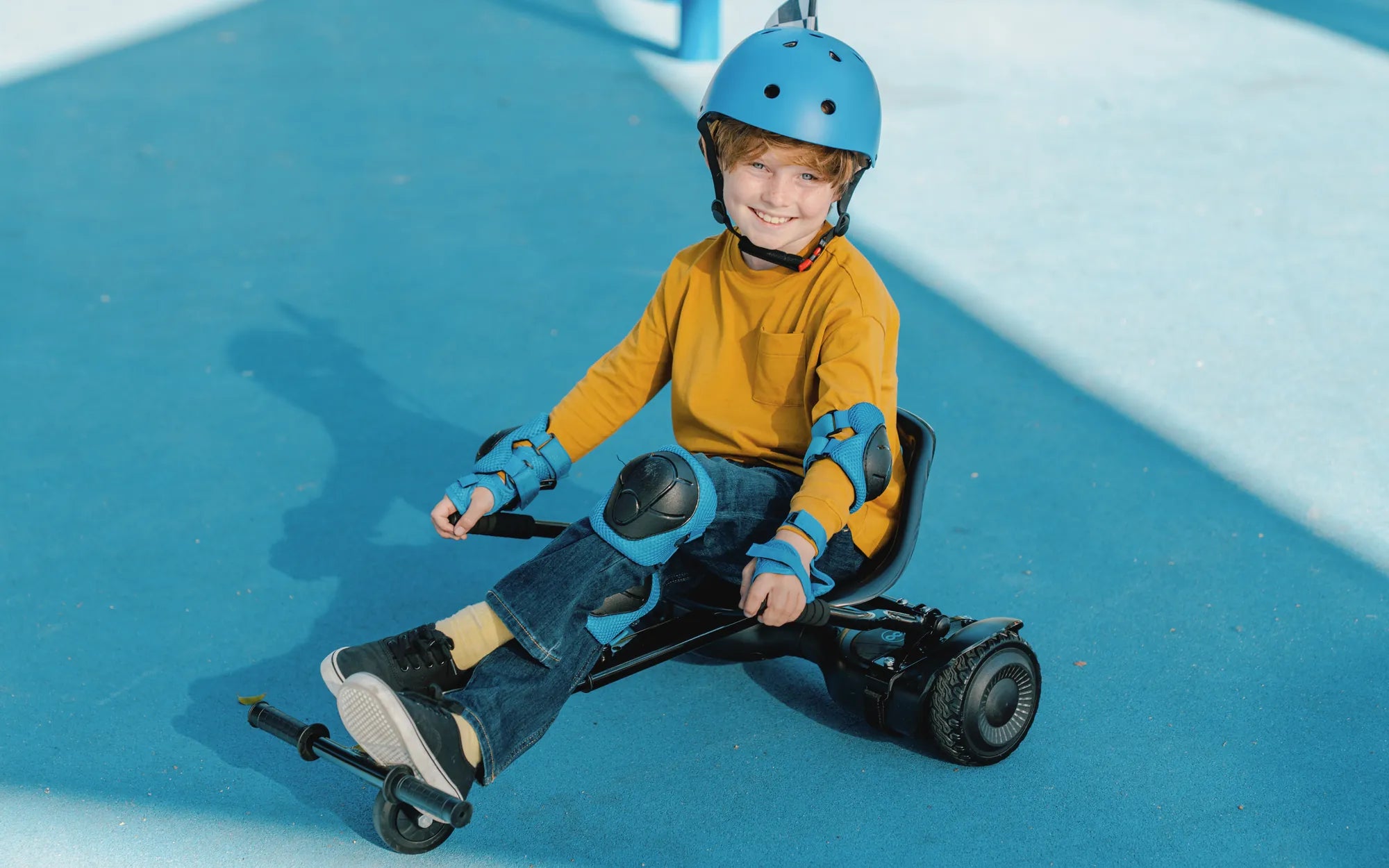
A hoverboard electric kart is a modular electric vehicle consisting of two primary components: a detachable, self-balancing hoverboard (which serves as the powertrain and brain) and a rigid kart frame equipped with a seat, steering mechanism, and wheels. The hoverboard slots into the frame's base, where its motors and gyroscopic sensors become the driving force for the entire assembly. This creates a stable, seated riding experience controlled by leaning or via a connected handlebar.
The genius of the design lies in its simplicity and reuse of proven technology. Instead of engineering a completely new drivetrain, manufacturers leverage the sophisticated self-balancing and motor-control systems already perfected in modern hoverboards. The kart frame acts as a physical interface, translating the rider's steering input into precise lean commands for the hoverboard, or in some models, directly linking a handlebar to the hoverboard's turning mechanism.
Key Components and How They Work Together
Understanding the synergy between components is key to appreciating the hoverboard kart's functionality. The hoverboard unit is the core. It houses the lithium-ion battery pack, two electric hub motors (one in each wheel), a set of gyroscopic sensors, and a control board. These elements work in unison to maintain balance and respond to rider input.
The kart frame, typically made from steel or aluminum, provides the structure. It includes a comfortable seat, a footrest, and a steering column that connects to a linkage system. This linkage is the critical interface; when the rider turns the steering wheel, the system gently tilts the hoverboard unit left or right. The hoverboard's sensors detect this tilt and adjust the speed of the individual wheels to initiate a turn, mimicking the lean-to-steer action of riding the hoverboard alone but with far greater stability.
This plug-and-play design means the hoverboard can be detached in seconds, allowing it to be used independently. The kart frame itself is lightweight and often foldable, enhancing portability and storage. The entire system exemplifies efficient, modular design, creating a new vehicle from two interoperating parts.
Why Choose a Hoverboard Kart? Benefits Over Standalone Hoverboards & E-Scooters
The hoverboard electric kart occupies a unique niche, offering distinct advantages over both its parent product and other common personal electric vehicles. The following table provides a clear, data-driven comparison across key parameters.
| Feature | Standalone Hoverboard | Hoverboard Electric Kart | Traditional Electric Scooter |
|---|---|---|---|
| Primary Stance | Standing | Seated | Standing |
| Learning Curve | Steep (requires balance) | Very Low (intuitive steering) | Moderate (requires balance) |
| Stability & Safety | Lower (risk of falls) | Very High (low center of gravity) | Moderate (dependent on speed/terrain) |
| Comfort for Long Rides | Low (leg fatigue) | High (ergonomic seat) | Low to Moderate |
| Fun & Recreational Appeal | High | Very High (go-kart feel) | Moderate (utility-focused) |
| Typical User Age Range | Teens to Adults | Broader (Kids w/ supervision to Adults) | Teens to Adults |
| Portability | High | Moderate (frame can be bulky) | High (often foldable) |
As the data shows, the kart configuration directly addresses the main drawbacks of hoverboards: instability and a difficult learning process. By providing a seated position within a protective frame, it eliminates the fear of falling backwards or forwards, making it instantly accessible. Compared to an e-scooter, it offers superior comfort for leisurely rides or short commutes where sitting is preferred, and its unique go-kart styling delivers a more engaging recreational experience.
Safety and Stability: A Game-Changer for Riders
The safety enhancement is the most significant benefit. A standalone hoverboard's operation is entirely dependent on the rider's balance and subtle foot movements. A sudden bump or incorrect lean can lead to a fall. The hoverboard kart fundamentally changes this dynamic.
The seated position lowers the rider's center of gravity dramatically, making the vehicle inherently stable. The frame itself acts as a roll cage, preventing the hoverboard from tipping over. The steering mechanism, whether handlebar or wheel, provides precise, mechanical control over direction, removing the guesswork from turning. This makes it an excellent gateway for those intrigued by self-balancing technology but hesitant about the risk. Furthermore, the frame protects the hoverboard unit from direct curb impacts and debris, potentially extending the life of the core components.
Gyroor's Approach: Engineering Trust into Every Ride
When investing in a hoverboard electric kart system, the quality and safety of the hoverboard unit are paramount. This is where the engineering philosophy of a brand like Gyroor becomes critical. As a leading electric mobility brand trusted by over 100,000 riders, Gyroor builds its products on a foundation of certified safety and durable performance.
Every Gyroor hoverboard designed for use in a kart incorporates a UL 2272 certified battery pack. This certification is the global benchmark for electrical and fire safety in self-balancing scooters, involving rigorous testing of the battery system under various stress conditions. These batteries are rated for 500+ charge cycles, ensuring long-term reliability. Furthermore, the hoverboard's core electronics are housed in an IPX5 water-resistant shell, providing protection against water jets from any direction. This is crucial for a kart that might encounter wet pavement or puddles during use.
The entire system, both the hoverboard and compatible kart frame, is backed by a comprehensive 1-year warranty, covering defects in materials and workmanship. This commitment to post-purchase support underscores the brand's confidence in its engineering and provides peace of mind for the rider, knowing their investment is protected.
Built for Adventure and Commuting
The hoverboard electric kart excels in dual-use scenarios. For recreation, it transforms driveways, park paths, and empty parking lots into personal racetracks. Its fun, engaging nature makes it a hit for family entertainment, allowing multiple users of different skill levels to enjoy it safely. The seated go-kart experience is universally appealing, combining nostalgia with modern electric power.
On the practical side, it serves as a legitimate micro-mobility solution. For short urban commutes (e.g., to a local store, across a college campus, or within a large warehouse or factory floor), the comfort of a seated ride is a significant advantage over standing on a scooter or hoverboard. Its compact size and relatively quiet operation make it suitable for pedestrian-heavy environments where a larger vehicle would be impractical. The electric powertrain offers a clean, efficient alternative for these short trips.
What to Look For When Buying a Hoverboard Electric Kart
Purchasing a hoverboard kart requires careful consideration of both the kart frame and the hoverboard that will power it. They are often sold separately, so compatibility and performance matching are essential. Focus on these key specifications to make an informed decision.
First, examine the kart frame. Check its maximum weight capacity, which typically ranges from 150 lbs to 220 lbs or more, to ensure it can safely support the intended rider. The construction material is vital; steel frames offer robustness and durability, while aluminum provides a lighter weight for easier carrying. Look for adjustable features like a seat that can be repositioned or a steering column with height settings to fit different riders comfortably. Finally, ensure the frame is designed for your hoverboard's specific wheel size (e.g., 6.5", 8.5", or 10").
Second, and most critically, select the right hoverboard. Its specifications dictate the entire system's performance. The motor power (often 250W per wheel or more) determines hill-climbing ability and acceleration. The battery capacity (measured in Watt-hours or Ah) directly defines the vehicle's range. A hoverboard with a 36V, 4.0Ah battery will generally offer a longer ride than one with a 2.0Ah unit. Always prioritize hoverboards from reputable brands that provide clear safety certifications.
Compatibility and Performance Specs Decoded
Compatibility is non-negotiable. The kart frame must have a mounting bracket designed to securely clasp the specific shape and wheel size of your hoverboard. A mismatch can lead to poor control, disconnection during riding, or damage to the hoverboard's casing.
Regarding performance, understand that the kart does not enhance the hoverboard's inherent capabilities; it merely provides a new interface for them. If a hoverboard has a top speed of 10 mph and a range of 12 miles on its own, attaching it to a kart will result in similar performance, though the added weight of the frame and rider may slightly reduce the maximum range. Therefore, for adult riders or use on mild inclines, selecting a powerful Gyroor hoverboard with robust motors (e.g., 350W dual motors) and a large-capacity battery is recommended to ensure adequate performance and enjoyment.
The Future of Personal Mobility: Where Do Hoverboard Karts Fit In?
The hoverboard electric kart is more than a passing trend; it signals a shift towards more modular, user-friendly, and enjoyable forms of personal electric transport. It occupies a unique niche as a gateway device that demystifies self-balancing technology, making it accessible to a much wider demographic. This could spur greater adoption of electric personal vehicles overall by lowering the initial barrier to entry.
Looking forward, we can expect this hybrid concept to influence future vehicle design. The principles of a compact, seated electric pod for short-distance travel are highly relevant for crowded urban environments. Future iterations may integrate more advanced features directly into the kart frame, such as integrated lighting, digital dashboards, Bluetooth speakers, or even app connectivity for tracking rides, adjusting performance modes, or implementing parental speed controls. The modular nature also suggests a sustainable model where the hoverboard "engine" can be upgraded independently of the chassis, extending the product's lifecycle.
In the broader micro-mobility ecosystem, hoverboard karts could serve specific roles in controlled environments like resorts, large corporate campuses, or retirement communities, where safe, fun, and easy-to-use transport is valued. They represent a fusion of recreation and utility, pointing toward a future where our daily commute doesn't have to be mundane but can be a source of simple joy.
Frequently Asked Questions (FAQ)
Q1: What age is a hoverboard kart suitable for?
A: While fun for a wide range, the primary users are typically older children (8+ with supervision), teens, and adults. The suitability depends heavily on the specific kart's size, weight capacity, and the power of the hoverboard. Always adhere to the manufacturer's recommended age and weight limits for both the kart frame and the hoverboard unit.
Q2: Can I use any hoverboard with a kart frame?
A: No, compatibility is crucial. Most kart frames are designed for specific hoverboard wheel sizes (commonly 6.5" or 8.5"). The frame's clamping mechanism must match the hoverboard's body shape and wheel placement. Using an incompatible hoverboard can be unsafe and may damage both products. Always verify the frame's compatibility list before purchasing.
Q3: Is it difficult to assemble or detach the hoverboard?
A>Not at all. Most quality kits are designed for tool-free, quick assembly. The process usually involves unfolding the frame (if foldable), placing the hoverboard into the designated bracket, and securing it with a latch or pin. Detaching it for independent use is equally simple, often taking less than a minute.
Q4: How does the 1-year warranty from a brand like Gyroor apply?
A: Reputable brands like Gyroor typically offer a 1-year warranty that covers defects in materials and workmanship for both the hoverboard and the kart frame sold under their brand. It's important to register your products upon purchase and understand that the warranty applies to manufacturing faults, not damage from accidents or misuse. Always review the specific warranty terms provided with your purchase.
Q5: What is the real-world range and speed I can expect?
A: The performance is dictated entirely by the hoverboard you use. A typical mid-range hoverboard might offer a top speed of 9-12 mph and a range of 10-15 miles on a full charge under ideal conditions. When used in a kart, the added weight may reduce the maximum range by 10-20%. Factors like rider weight, terrain, temperature, and riding style will also significantly impact these numbers.
More Than a Toy, A New Mode of Movement
The hoverboard electric kart successfully bridges the gap between cutting-edge personal technology and timeless recreational fun. It solves the core limitations of the standalone hoverboard—instability and a steep learning curve—by repackaging its sophisticated self-balancing technology into a safe, intuitive, and comfortable seated vehicle. This innovation opens up electric mobility to a broader audience, from cautious beginners to those simply seeking a more relaxed ride.
Its dual identity as a playful go-kart and a practical short-distance commuter highlights its versatile potential in our evolving transportation landscape. As with any electric vehicle, the experience is defined by the quality of its core components. Choosing a system built around a hoverboard from a trusted brand like Gyroor, with its UL-certified batteries, water-resistant design, and strong warranty, is essential for ensuring safety, reliability, and long-term enjoyment. The hoverboard electric kart is a compelling glimpse into a future where personal transport is not only efficient but also genuinely engaging.
Ready to experience this fusion of innovation and fun for yourself? Explore compatible, high-performance hoverboards and discover how you can build your own ultimate riding experience. Browse the full Gyroor collection at gyroorboard.com.
Electric Scooter for Kids 11 Years Old: The Ultimate Guide for Parents
White Balancing Scooter: The Future of Urban Mobility