



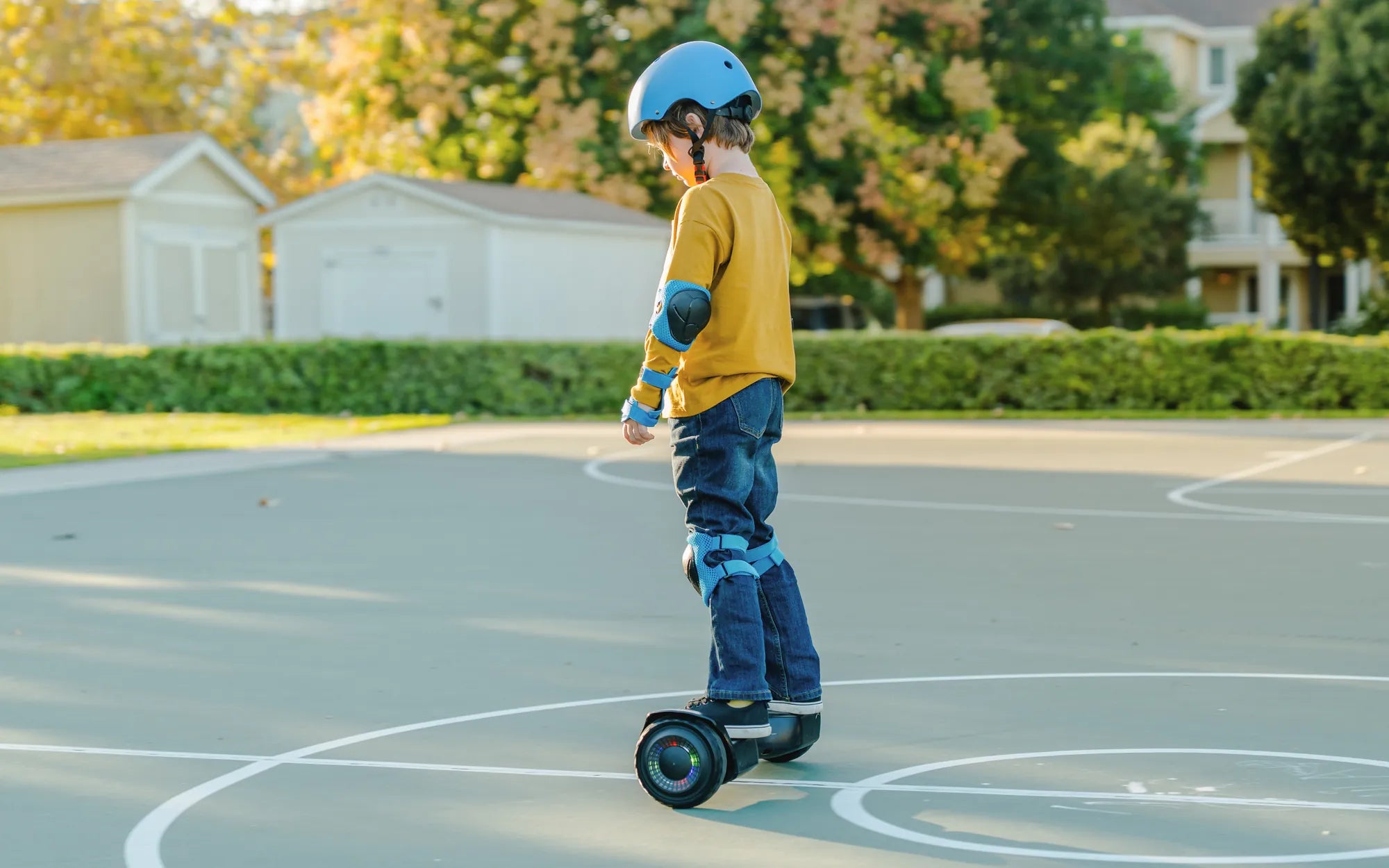
Finding the perfect gift for a 10-year-old boy that balances excitement, safety, and durability can be a challenge. A hoverboard often tops the list, offering a thrilling blend of outdoor activity and modern technology. This guide will provide you with everything you need to know to choose the right hoverboard for a 10 year old boy, focusing on critical safety certifications, performance features suited for his age, and practical tips for learning and maintenance. We'll highlight why a hoverboard for a 10 year old boy from a reputable brand like Gyroor—known for UL-certified batteries and robust designs—represents a smart investment in fun and responsibility.
Understanding Safety First: Non-Negotiables for a Child's Hoverboard
Safety is the absolute foundation when selecting any motorized toy for a child. A hoverboard for a 10 year old boy must be engineered with his physical development and coordination in mind. Prioritizing safety features over flashy extras ensures the riding experience is both enjoyable and secure.
Compromising on safety standards is not an option. The market has evolved significantly since early models, with reputable manufacturers now adhering to strict electrical and construction protocols. These standards directly prevent common hazards, giving parents essential peace of mind.
This commitment to safety starts with fundamental product certifications and extends to the physical design of the board itself. Every component, from the battery casing to the texture of the foot pads, plays a role in protecting the young rider.
By understanding these non-negotiable elements, you can filter out substandard products immediately. Your goal is to find a board where safety is integrated into its core design, not added as an afterthought.
The Importance of UL 2272 Certification
UL 2272 certification is the single most critical safety feature for any hoverboard. This standard, developed by Underwriters Laboratories, rigorously tests the electrical system for fire and electrical safety.
It involves over 20 different tests on the battery, charger, and motor system. These tests simulate extreme conditions like overcharging, short-circuiting, and mechanical damage to ensure no catastrophic failures occur.
For a hoverboard for a 10 year old boy, this certification is non-negotiable. It is your primary guarantee that the lithium-ion battery pack and its management system are designed and built to the highest safety standards, significantly reducing risks.
Always verify this certification before purchasing. Brands like Gyroor build all their models to meet or exceed UL 2272 standards, using certified battery packs tested for 500+ charge cycles for long-term reliability.
Key Safety Features to Look For
Beyond certification, specific design features enhance safety during use. Non-slip, textured foot pads are essential for maintaining secure footing, especially during turns or on slight inclines. They prevent feet from sliding off accidentally.
Bright LED front and rear lights are crucial for visibility. They help the rider see the path ahead in low-light conditions and make the child visible to others, which is vital during evening rides in a driveway or park.
A robust wheel design with good grip and a sensible speed governor are key. Look for a board with a beginner or training mode that limits top speed, allowing the child to master balance before accessing faster settings.
Other features include a low battery warning system, tilt-back technology to prevent over-acceleration, and a sturdy frame that provides a stable platform. These integrated elements create a safer riding environment from the ground up.
The Essential Gear: Helmet, Pads, and Practice
The hoverboard itself is only one part of the safety equation. Proper protective gear is mandatory, not optional. A CPSC-certified multi-impact helmet is the most important piece of equipment to protect against head injuries.
Knee pads, elbow pads, and wrist guards are equally vital. Wrist guards are particularly important as falling forward and putting hands out is a common instinct. This gear absorbs impacts and prevents scrapes, bruises, and fractures.
Choosing the right practice environment is the final safety step. Start on a smooth, flat, and open surface like an empty tennis court, basketball court, or a clean driveway. Avoid areas with traffic, slopes, gravel, or sand initially.
Supervised practice sessions are crucial. Dedicate time to learning how to mount, dismount, and stop safely before attempting turns or higher speeds. This foundation builds confidence and muscle memory for safe riding habits.
Choosing the Right Hoverboard: Key Features for a 10-Year-Old
With safety standards established, the next step is matching the board's specifications to a 10-year-old's size, strength, and typical use. The right combination of power, range, and weight capacity ensures the board is both fun and manageable.
A hoverboard that is too powerful or heavy can be intimidating and difficult to control. Conversely, one that is underpowered may struggle on gentle slopes or become boring quickly. Finding the "sweet spot" is key to long-term enjoyment.
Consider where and how your child will ride most often. Will it be on smooth pavement in the neighborhood, or do you have access to grassy fields or packed dirt paths? The primary terrain directly influences the ideal model.
By focusing on a few core technical specs, you can make an informed decision that balances performance with age-appropriate limits. This thoughtful selection process leads to a product that grows with the child's skill level.
Motor Power and Speed: Finding the "Sweet Spot"
Motor power, measured in watts (W), determines torque and hill-climbing ability. For a 10-year-old, a dual motor system with 250W to 350W per motor is ideal. This provides ample power for driveway inclines and park paths without being excessive.
Top speed is a critical governor of safety. A maximum speed of 7 to 10 miles per hour (mph) is perfect for this age group. Many quality boards, including those from Gyroor, feature a beginner mode that limits speed to around 5-6 mph for initial learning.
This controlled power allows the child to develop balance and control in a safe envelope. As skills improve, the option to switch to a standard mode offers a sense of progression and continued challenge, extending the product's lifespan.
Avoid boards marketed with extreme speeds (12+ mph) for this age. Excessive speed increases stopping distance and the severity of falls, posing unnecessary risk for a young rider still honing their coordination.
Battery Life and Range: Maximizing Playtime
Battery capacity, measured in Amp-hours (Ah), directly determines ride time. For a hoverboard for a 10 year old boy, look for a capacity between 4.0Ah and 6.5Ah. This typically translates to a real-world range of 6 to 12 miles on a single charge.
This equals about 1 to 2 hours of continuous ride time, which is more than sufficient for most play sessions. It’s important to manage expectations—riding weight, terrain, and speed all affect the final range.
The quality of the battery is paramount. Insist on UL-certified lithium-ion battery packs from reputable brands. Gyroor utilizes these certified packs, which are tested for longevity and safety over hundreds of charge cycles, ensuring reliability season after season.
Consider the charge time as well; most models fully recharge in 2-4 hours. Teaching your child to plug in the board after use ensures it’s always ready for the next adventure and helps maintain good battery health.
Weight Limit and Portability
The hoverboard's weight capacity must comfortably exceed the child's weight. The average 10-year-old boy weighs between 50 and 80 pounds. Therefore, a board with a minimum weight limit of 120 pounds is essential, providing a healthy safety margin.
Most quality boards support 180 to 220 pounds, which allows older siblings or even parents to try it safely. This headroom also means the board isn't operating at its limit, which can reduce strain on motors and batteries.
The board's own weight matters for portability. A hoverboard for a 10 year old boy should weigh under 25 pounds. This makes it light enough for him to carry short distances, like from the garage to the curb, and for you to transport easily.
A lightweight yet sturdy construction, often using high-grade ABS plastic and aluminum, indicates good design. It ensures durability without being a burden, making the hoverboard a practical choice for everyday use.
Durability and Build Quality: Withstanding the Adventures of a 10-Year-Old
Children are not gentle. A hoverboard will likely encounter curbs, puddles, minor collisions, and the general rigors of active play. Durability is therefore not a luxury but a necessity, ensuring the board remains safe and functional over time.
Build quality dictates how well the hoverboard absorbs and withstands these impacts. Key areas to evaluate include the water resistance rating, tire construction, and the robustness of the frame and shell materials.
A well-built board from a trusted brand might have a higher upfront cost but offers far better value. It reduces the risk of premature failure, minimizes maintenance issues, and ultimately provides a safer, more reliable experience.
Investing in durability means investing in uninterrupted fun. It also teaches a child to respect and care for their possessions, as a sturdy product can handle learning curves while still requiring proper treatment.
IPX Water Resistance Rating Explained
An IPX rating indicates a device's protection against liquids. For a hoverboard, which will encounter damp grass, morning dew, and accidental puddles, a good rating is crucial. IPX5, a standard on many Gyroor models, is highly recommended.
An IPX5 rating means the hoverboard can withstand water jets (6.3mm nozzle) from any direction without harmful water ingress. This level of protection safeguards the internal electronics from rain, wet pavement, and splashes.
This does not mean the board is submersible or should be ridden through deep puddles. It does, however, provide a critical safety net for real-world conditions, preventing short circuits and corrosion that can arise from everyday moisture exposure.
Choosing a hoverboard with a solid IPX rating significantly extends its lifespan and reliability. It ensures that a bit of weather won't end the day's fun or lead to a costly repair.
Tire Type: All-Terrain vs. Solid Rubber
The choice of tires is one of the most significant determinants of where the hoverboard can ride comfortably and safely. The two main types are solid rubber tires and all-terrain inflatable tires.
Solid rubber tires (typically 6.5" or 8.5" in diameter) are standard on most urban models. They are maintenance-free, puncture-proof, and provide a smooth, responsive ride on hard, even surfaces like asphalt, concrete, and indoor flooring.
All-terrain inflatable tires are larger (often 10") and have treaded patterns like bicycle tires. They provide superior shock absorption and traction on uneven surfaces such as grass, dirt paths, gravel, and bumpy pavement. Models like the Gyroor A5 Pro feature these for adventure-ready capability.
Your decision should be based on your child's primary riding environment. For purely suburban sidewalk use, solid tires are excellent. If your backyard, park, or typical routes include varied terrain, all-terrain tires unlock a much wider world of exploration.
Frame and Construction
The internal frame and external shell form the hoverboard's skeleton and armor. A high-quality frame is typically made from reinforced steel or aluminum, providing a rigid platform that maintains structural integrity during jumps off low curbs or minor impacts.
The outer shell should be made from high-impact ABS plastic. This material is tough, scratch-resistant, and can flex slightly under stress without cracking. It protects the sensitive internal components from direct hits and everyday wear and tear.
Attention to construction details is telling. Seams should be tight, the board should feel solid without creaking, and the foot pads should be securely attached. A well-built board has a cohesive, robust feel that inspires confidence.
Brands that prioritize durability, like Gyroor, design their frames and shells to meet rigorous standards. This results in a product that can truly withstand the energetic and unpredictable adventures of a 10-year-old boy.
Top Gyroor Hoverboard Picks for 10-Year-Old Boys
Gyroor's lineup offers several models that excel in safety, durability, and fun, making them standout choices for young riders. Each model has a distinct personality tailored to different riding styles and priorities, but all share the core commitment to UL certification and robust build quality trusted by over 100,000 riders.
The following recommendations are based on key use cases: mastering the basics, exploring off-road, and enjoying multimedia features. By aligning your child's interests and your primary safety concerns with the right model, you ensure a perfect match.
Each pick is engineered with the young rider in mind, featuring appropriate speed limits, reliable batteries, and designs that can handle active use. These are not toys but legitimate personal transportation devices built to a high standard.
Choosing a Gyroor hoverboard for a 10 year old boy means selecting from a curated range where safety and performance are never mutually exclusive. The following breakdown will help you identify the best fit.
Best for Beginners & Safety: Gyroor S5
The Gyroor S5 is the quintessential starter hoverboard. It prioritizes safety and stability above all, making it the ideal choice for a child's first foray into self-balancing scooters. Its design eliminates unnecessary complexity, focusing on a reliable, user-friendly experience.
It comes with the essential UL 2272 certification and features a dedicated beginner mode that caps speed, allowing kids to build confidence slowly. The non-slip foot pads are extra-grippy, and the bright LED lights ensure good visibility.
With dual 250W motors and solid 6.5" tires, it delivers smooth performance on pavements and hard floors. Its balanced weight and responsive controls make learning intuitive, reducing frustration during the initial practice phase.
For parents seeking a no-fuss, safety-first introduction to hoverboarding, the S5 represents outstanding value and peace of mind. It provides all the core fun without overwhelming a young novice rider.
Best for Adventure & Off-Road: Gyroor A5 Pro
For the adventurous 10-year-old who dreams of exploring beyond the sidewalk, the Gyroor A5 Pro is the ultimate tool. This model is built for capability, featuring large 10" all-terrain inflatable tires that conquer grass, dirt, gravel, and bumpy terrain with ease.
Its IPX5 water resistance rating makes it resilient against puddles and wet conditions. The dual 350W motors provide increased torque for gentle slopes and uneven ground, ensuring consistent power where other boards might struggle.
The robust construction includes a reinforced frame to handle the vibrations and impacts of off-road use. Despite its ruggedness, it maintains a manageable weight and includes safety features like LED lights and a reliable braking system.
If your child's play environment includes parks, trails, or backyards, the A5 Pro transforms the hoverboard from a pavement toy into a true adventure vehicle, significantly expanding the scope of their outdoor play.
Best for Fun & Features: Gyroor H5
The Gyroor H5 is for the child who loves a bit of flash and tech with their ride. It incorporates entertainment features like built-in Bluetooth speakers and vibrant RGB LED light shows in the wheels, creating a dynamic and fun riding experience.
Importantly, these fun features are built on the same solid foundation of safety and performance. It retains UL 2272 certification, a sturdy build, and reliable motors. The lights also serve a practical purpose by significantly enhancing side visibility.
The Bluetooth speakers allow riders to listen to music safely from the board itself, avoiding the need for headphones that block ambient noise. This model proves that extra features don't require a compromise on core safety or durability.
For the socially-minded or entertainment-focused kid, the H5 adds an extra layer of enjoyment to the core hoverboarding experience, making it a highly desirable and feature-rich choice.
Parent's Guide: Setup, Learning, and Rules
Your role as a parent is crucial in ensuring the hoverboard experience is positive from day one. Proper setup, patient instruction, and clear rules establish a framework for safe, long-term enjoyment. This practical guide walks you through the process.
Taking the time to do things correctly at the beginning prevents bad habits and accidents later. This involves more than just reading the manual; it's about active participation in the learning journey.
Establishing routines for charging, gear checks, and riding boundaries teaches responsibility. The hoverboard becomes not just a toy, but a tool for learning about personal accountability and following guidelines.
By investing time in this foundational phase, you empower your child with the skills and knowledge to ride confidently and safely, maximizing the fun while minimizing the risks.
Unboxing and First Charge
Upon unboxing, inspect the hoverboard for any visible damage from shipping. Locate the charger, user manual, and any other accessories. The first step is always to give the battery a full charge before the first ride, even if the indicator shows some power.
Use only the provided UL-certified charger and plug it into a proper wall outlet. A full initial charge typically takes 2-4 hours and ensures the battery management system is calibrated correctly. The board's indicator lights will show when charging is complete.
While charging, read the user manual with your child. Familiarize yourselves with the power button location, indicator light meanings (for battery level and errors), and the process for activating beginner mode if available.
This careful start ensures the board operates optimally from the beginning and reinforces the importance of following instructions for electrical devices.
Teaching Your Child to Ride: A 3-Step Method
Step 1: Mounting and Dismounting. Have your child place the board on a stable, flat surface next to a wall or railing. While holding the support, they should practice placing one foot firmly on a foot pad, then quickly but smoothly bringing the other foot up. To dismount, reverse the process, looking down and stepping backward off the board.
Step 2: Finding Balance. With both feet on the board and hands on the support, have them practice shifting their weight slightly forward and backward to feel the board's response. The goal is to find the "sweet spot" where the board remains stationary and balanced.
Step 3: Gentle Movement. Once balanced, they can try leaning very slightly forward to move slowly while still using the wall for guidance. Practice stopping by leaning back slightly to the neutral position. Repeat in an open area without support, focusing on tiny, controlled movements before attempting turns.
Patience is key. Multiple short, positive practice sessions are far more effective than one long, frustrating one. Most children gain basic control within 30-60 minutes of total practice.
Establishing Household Hoverboard Rules
Clear, consistent rules are the backbone of safe hoverboard use. Post them visibly and review them regularly. These rules should be non-negotiable for your child and any friends who ride.
Rule 1: Gear is Mandatory. No helmet and pads, no riding. No exceptions.
Rule 2: Designated Zones Only. Define acceptable riding areas (e.g., driveway, sidewalk in front of the house, empty cul-de-sac). Explicitly forbid streets, steep hills, and areas with vehicle traffic.
Rule 3: Condition Awareness. No riding in the rain, on wet surfaces, through sand, or over loose gravel. These conditions compromise traction and can damage the board.
Rule 4: Supervised or Daylight Riding. Establish that riding after dusk is only allowed with direct parental supervision and that daytime riding should be within earshot or sightline of an adult.
Rule 5: Pre-Ride Check. Institute a quick check of tire pressure (for all-terrain models), battery level, and loose parts before each ride.
Hoverboard Comparison: Key Models for a 10-Year-Old
This comparison table summarizes the critical specifications of the recommended Gyroor models, alongside a generic "Basic Model" to highlight the importance of key features. It allows for a quick, data-driven visual comparison to aid in your decision.
| Feature | Gyroor S5 (Beginner) | Gyroor A5 Pro (Off-Road) | Gyroor H5 (Fun & Features) | Basic Model (For Comparison) |
|---|---|---|---|---|
| Best For | First-time riders, safety focus | Grass, dirt, uneven terrain | Entertainment, lights, music | N/A - Example of what to avoid |
| UL 2272 Certified | Yes | Yes | Yes | Not Always |
| Motor Power (Dual) | 2 x 250W | 2 x 350W | 2 x 300W | Varies (often unstated) |
| Max Speed | 7.5 mph (with Beginner Mode) | 9 mph | 8.5 mph | May exceed 12 mph |
| Tire Type | 6.5" Solid Rubber | 10" All-Terrain Inflatable | 8.5" Solid Rubber w/ LED | Small, solid rubber |
| Water Resistance | IPX4 | IPX5 | IPX4 | Often none stated |
| Key Features | Beginner Mode, Stable | Off-road capability, Robust | Bluetooth Speaker, RGB Lights | Minimal, basic lights |
| Ideal Terrain | Smooth Pavement, Indoors | Grass, Dirt, Gravel, Pavement | Smooth Pavement, Indoors | Smooth surfaces only |
Frequently Asked Questions (FAQ)
Q: Are hoverboards safe for 10-year-olds?
A: Yes, when you choose a UL 2272 certified model from a reputable brand like Gyroor, and enforce the consistent use of a CPSC-certified helmet, knee/elbow pads, and wrist guards. Supervised practice in a safe environment is equally important.
Q: What is the best speed for a child's hoverboard?
A: A maximum speed of 7 to 10 mph is ideal for a 10-year-old. Many models offer a beginner or training mode that limits speed to 5-6 mph, which is perfect for learning. Avoid boards that prioritize high speed over controlled, safe acceleration.
Q: How long does the battery last on a single charge?
A: Expect 1 to 2 hours of continuous ride time, which typically translates to a range of 6 to 12 miles. Actual range depends on rider weight, terrain, speed, and temperature. Always use the manufacturer's charger and follow proper charging guidelines.
Q: Is the warranty important?
A> Absolutely. A comprehensive warranty, like Gyroor's 1-year warranty, is a sign of the manufacturer's confidence in their product. It protects against manufacturing defects and provides access to customer support, offering significant peace of mind for your investment.
Q: Can it be used on grass or dirt?
A: Only if it is a model specifically designed with all-terrain, inflatable tires (like the Gyroor A5 Pro). Standard hoverboards with solid rubber tires are for smooth, hard surfaces only. Using the wrong type on grass can strain the motors, drain the battery quickly, and cause loss of control.
Q: How do I maintain the hoverboard?
A: Regular maintenance is simple. Keep it clean and dry, check for loose screws periodically, and ensure the tire pressure is correct for inflatable models. Store it in a cool, dry place and avoid completely draining the battery before recharging. Follow the specific care instructions in the user manual.
Investing in Fun and Responsibility
Choosing the right hoverboard for a 10 year old boy is a meaningful decision that goes beyond a simple gift. It's an investment in outdoor activity, coordination development, and teaching responsible ownership of a personal electric device. The process demands a focus on verified safety, age-appropriate performance, and proven durability.
By prioritizing UL 2272 certification, you filter out potentially hazardous products. By selecting features like a sensible speed governor, adequate weight limit, and appropriate tires for your terrain, you ensure the board is a perfect match for your child's world. By insisting on quality construction from a brand with a strong reputation, you secure a product built to last.
A hoverboard from a trusted manufacturer like Gyroor offers this complete package: safety-certified components, robust IPX-rated construction, and designs tailored for young riders. It transforms a thrilling idea into a safe, manageable, and endlessly fun reality.
Ready to find the perfect match for your young adventurer? Explore the full range of UL-certified, durable, and fun hoverboards designed with young riders in mind. Browse the full Gyroor collection at gyroorboard.com and equip your child for a world of safe, exciting exploration.
Balancing Scooter: The Future of Personal Transportation
Christmas Gift Ideas for Middle School Boys: Fun and Engaging Presents They’ll Love