



Finding a reliable, safe, and powerful hoverboard for 300lbs is a specific engineering challenge. Standard models often lack the structural integrity, motor torque, and battery endurance needed for heavier riders, leading to safety risks and disappointing performance. This guide serves as your comprehensive resource, breaking down the essential specifications, debunking marketing claims with real-world data, and outlining the non-negotiable safety features you need. We’ll empower you to make an informed choice for a heavy-duty riding experience built on confidence, not compromise.
Why the Right Hoverboard Matters for Heavy-Duty Riders
For riders approaching 300lbs, a standard hoverboard isn't just underwhelming—it can be unsafe. These devices operate on precise balances of power, weight distribution, and structural stress. A board not engineered for the load will strain its motors, overheat its battery, and compromise the gyroscopic self-balancing system. The result is potential failure, reduced lifespan, and increased risk of accidents.
The correct hoverboard for 300lbs addresses these points through reinforced design. It ensures stable acceleration, consistent speed, and reliable braking. More than just fun, it becomes a viable piece of personal mobility equipment. Choosing incorrectly means accepting poor hill-climbing ability, severely shortened range, and a higher likelihood of mechanical breakdown.
This guide focuses on the intersection of robust engineering and practical performance. Brands that cater to this market, like Gyroor, a leading electric scooter and e-bike brand trusted by over 100,000 riders, design with these heightened demands in mind. Their commitment involves using UL-certified batteries, IPX5 water-resistant designs, and frames tested beyond advertised limits to ensure safety and durability aren't optional extras.
The goal is to move beyond simple weight capacity numbers. We will explore how power, battery chemistry, tire design, and software calibration work together to create a secure and enjoyable ride for heavier individuals. Your safety and satisfaction depend on understanding these interconnected systems.
What Makes a Hoverboard "Heavy-Duty"? Key Specifications Decoded
The term "heavy-duty" is often used loosely. For a hoverboard, it translates to a specific set of enhanced physical and electrical specifications that differentiate it from consumer-grade toys. These specs directly combat the increased forces and energy demands of a 300lb rider.
It starts with the stated weight capacity. A true heavy-duty model will have a maximum user weight rating of 330lbs or higher. This 10%+ safety margin is critical; it means the board's components are rated to handle the dynamic stresses of riding, not just static weight. Always look for this buffer in the product specifications.
Motor Power and Configuration: The Heart of Performance
Dual motors are non-negotiable. For a hoverboard for 300lbs, combined motor power should be a minimum of 800 watts, with 1000W or higher being ideal for confident performance. This power is necessary for three key functions: providing strong initial torque to start moving smoothly, maintaining speed on flat ground, and climbing inclines.
High-wattage motors prevent the bogging down or stuttering that can occur when a underpowered board tries to self-balance a heavy load. They also generate less heat under continuous strain, which enhances component longevity. When evaluating, prioritize the total wattage (e.g., 2x 500W motors = 1000W) over ambiguous "peak power" claims.
Wheel Size, Tire Type, and Deck Construction
Larger wheels, typically 8.5 inches or 10 inches in diameter, provide greater stability and roll more easily over cracks and minor obstacles. They improve the ride comfort by reducing the impact transferred to the deck. For tire type, air-filled (pneumatic) tires offer superior shock absorption and traction, especially on uneven surfaces, but require occasional pressure checks.
Solid rubber tires are maintenance-free and puncture-proof but offer a firmer ride. The deck must be wider and longer than standard models to provide ample foot placement for better balance. Its internal structure should be reinforced, often with a metal or composite skeleton, to resist flexing and torsion under weight, ensuring the self-balancing sensors remain accurately calibrated.
Battery Capacity, Range, and Charging Safety
Battery capacity, measured in Watt-hours (Wh) or Amp-hours (Ah), is the fuel tank. For heavy-duty use, look for batteries rated at least 158Wh (4.4Ah at 36V). Higher capacity, such as 220Wh or more, directly translates to longer range. However, you must temper expectations: a battery's advertised range is based on a ~165lb rider on flat, smooth terrain.
At 300lbs, expect 60-70% of the advertised range. A board claiming 12 miles might deliver a realistic 7-8 miles at maximum load. Charging safety is paramount. Insist on UL 2272 certification for the entire battery pack and electrical system. This certification involves rigorous testing for overcharge, short circuit, and mechanical damage, drastically reducing fire risk. Gyroor utilizes these UL-certified battery packs, tested for 500+ charge cycles, as a core safety standard.
Top Features to Prioritize for Riders Up to 300lbs
Beyond raw specifications, certain features directly enhance the safety, comfort, and usability of a hoverboard for a 300lb rider. These are the elements that transform a list of specs into a trustworthy riding experience.
Robust Weight Capacity and UL Certification
The weight capacity should be explicitly stated by the manufacturer, not inferred. A clear rating of "330 lbs" or similar provides a verifiable benchmark. This must be paired with the UL 2272 safety standard. This certification is your single most important indicator of a responsibly manufactured product. It is not merely a suggestion but a mandatory baseline for safety.
Enhanced Stability Systems and Learning Modes
Advanced gyroscope and self-balancing systems are calibrated for higher weight ranges. Look for models that mention stability control or advanced balancing algorithms. A dedicated beginner or "learning" mode is invaluable. This software feature limits the board's maximum speed and softens its acceleration curve, allowing a new rider to build confidence and muscle memory in a controlled environment before accessing full power.
Water Resistance and Overall Build Quality
An IPX5 water resistance rating means the hoverboard can withstand water jets from any direction. Practically, this allows you to ride on damp pavement, through puddles, or in light rain without immediate concern for electrical damage. This rating also signals superior overall build quality—better seals, tighter tolerances, and more robust construction. Gyroor designs its models, including its hoverboard-compatible electric scooters, to this IPX5 standard, reflecting a commitment to durability.
Performance Realities: Speed, Range, and Terrain at Max Load
Understanding how a hoverboard for 300lbs performs in real-world conditions is crucial to setting accurate expectations and avoiding disappointment. Performance is a function of load, and the laws of physics apply.
Real-World Speed and Hill Climbing Capability
While a heavy-duty model may have a top speed of 10-12 mph, a 300lb rider will likely achieve a sustained speed of 8-10 mph. The key is consistent power delivery without sagging. Hill climbing is a true test of motor torque. A capable board should handle inclines of 15-20 degrees. The motors must provide constant torque to maintain balance and forward momentum on a slope. Check the manufacturer's specifications for the maximum climb angle.
Understanding "Advertised vs. Actual" Range
Battery range is the most inflated specification. Use this simple formula: Realistic Range = Advertised Range x 0.65. Terrain, temperature, riding style (frequent acceleration/braking), and even tire pressure will cause further variance. For example, cold weather significantly reduces battery efficiency. Plan your rides accordingly, and always charge fully before use.
Terrain Capability: From Pavement to Light Trails
Models with large (10"), air-filled, all-terrain treaded tires can confidently handle smooth pavement, packed dirt paths, gravel, and grassy fields. They provide the traction and shock absorption needed for variable surfaces. However, "all-terrain" does not mean "off-road." Avoid rocky trails, deep sand, mud, or any terrain with large, abrupt obstacles. The primary goal is stable traction, not extreme off-road capability.
Safety First: Essential Riding Gear and Best Practices
Operating any personal electric vehicle requires respect for its mechanics and your environment. For a rider at the upper limit of a device's capacity, disciplined safety practices are non-negotiable.
Non-Negotiable Protective Gear
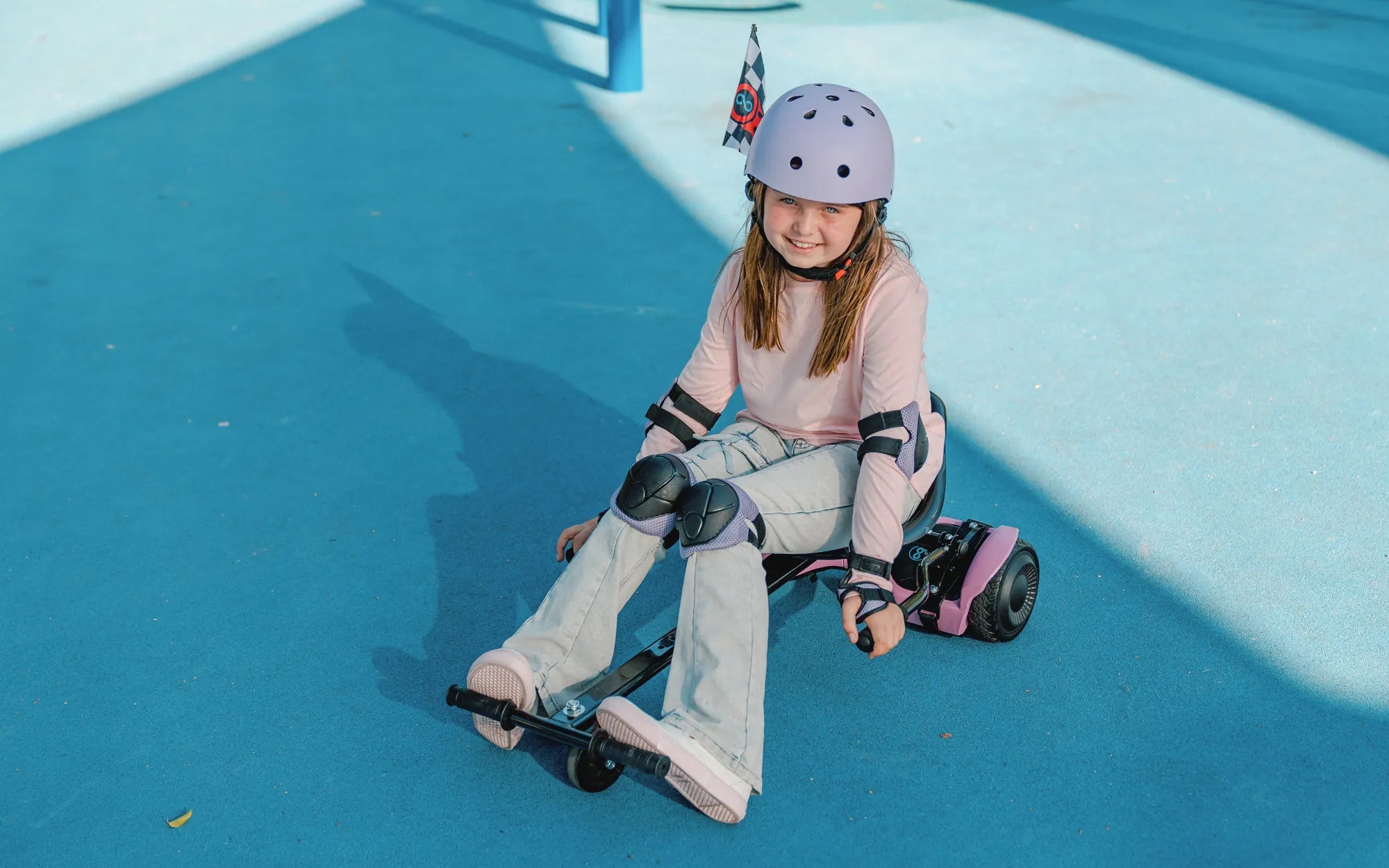
Always wear a full set of protective gear. This includes a CPSC or DOT-certified helmet for head protection. Wrist guards are essential to prevent fractures during a fall. Knee and elbow pads protect joints from impact. At higher weights, the force involved in a fall is greater, making this gear critical for injury prevention, especially while learning.
Pre-Ride Checklist and Routine Maintenance
Before every ride, conduct a brief inspection. Check tire pressure on pneumatic models (consult manual for PSI). Visually inspect the board for cracks, loose screws, or damaged wires. Ensure the battery is adequately charged. Test the board's balance and response in a safe, open area first. For maintenance, keep the board clean and dry, store it in a cool, dry place, and avoid completely draining the battery before recharging. Adhering to these practices is often required to keep the manufacturer's warranty valid.
Making the Choice: How to Select Your Heavy-Duty Hoverboard
With knowledge in hand, the selection process becomes a methodical evaluation of options against your specific needs and the essential criteria we've established.
Balancing Budget with Essential Specs
Prioritize your budget toward the fundamentals: verified UL 2272 certification, sufficient motor power (800W+), a clear weight capacity with a margin, and a reputable brand. Avoid models that sacrifice these core specs for Bluetooth speakers or extravagant LED light shows. Reliable performance and safety should command the majority of your investment. Brands like Gyroor build value by combining these key heavy-duty specs with consistent IPX5 water resistance and a reliable 1-year warranty.
The Importance of Warranty and Customer Support
A strong warranty is a sign of manufacturer confidence. Look for at least a 1-year warranty on the board and a 6-month warranty on the battery. Read the terms to understand what is covered. Equally important is accessible, knowledgeable customer support. When you have a technical question or need a replacement part, responsive support is invaluable. This is a key differentiator between established brands and generic sellers.
Comparison: Heavy-Duty Hoverboard Specifications
This table contrasts typical specifications between a standard hoverboard and a true heavy-duty model built for a 300lb rider, highlighting the critical differences.
| Feature | Standard Hoverboard | Heavy-Duty Hoverboard (300lbs+) |
|---|---|---|
| Max Weight Capacity | 220 - 250 lbs | 330 lbs or more |
| Motor Power (Total) | 400W - 700W | 800W - 1200W+ |
| Wheel Size | 6.5" - 8.5" | 8.5" - 10" (All-Terrain) |
| Battery Capacity | ~100-150Wh | 158Wh+ (220Wh+ ideal) |
| Safety Certification | May lack UL 2272 | UL 2272 Certified (Mandatory) |
| Water Resistance | IPX4 or unspecified | IPX5 or higher |
| Deck Construction | Standard plastic/composite | Reinforced, wider platform |
Frequently Asked Questions (FAQ) for Heavy-Duty Hoverboards
Q: Can I really trust a hoverboard rated for 300lbs?
Yes, provided it comes from a reputable brand and has verifiable safety credentials. Trust is built on the UL 2272 certification, which tests the entire electrical system, and on transparent specifications for motor power and frame construction. Brands with a track record in personal electric vehicles, like Gyroor, engineer their products to meet and exceed these stated limits with safety margins.
Q: How much slower will I go, and will it still climb hills?
Speed reduction is typically 10-20% at maximum load compared to the advertised top speed. A well-powered board will still feel brisk. Hill climbing is a core function of a proper heavy-duty model. With high-torque motors (1000W+ total), climbing 15-20 degree slopes is expected. Always check the manufacturer's stated gradeability.
Q: Is the learning curve steeper for heavier riders?
The initial balance challenge is similar, but a heavier rider may need to engage their core more actively for sharp turns. The availability of a "beginner mode" is a great equalizer, making the learning process safe and controlled for riders of all sizes by limiting responsiveness until skill develops.
Q: What happens if I exceed the weight limit?
Exceeding the limit voids the warranty and poses significant risks. It can cause immediate motor overload and failure, rapid battery depletion and overheating, permanent damage to the frame or wheel axles, and a critical failure of the self-balancing system, leading to a crash. It is a serious safety hazard.
Q: How do I maintain my hoverboard for long-term reliability?
Follow a simple routine: keep it clean and dry, store it at room temperature with a 50-80% charge if not used for weeks, avoid impacts and curb jumps, check tire pressure monthly (if applicable), and only use the manufacturer-provided charger. Adhering to the user manual is the best guarantee of longevity.
Embracing Mobility with Confidence and Responsibility
The journey to finding the right hoverboard for 300lbs is one of prioritizing engineering over aesthetics and safety over gimmicks. A true heavy-duty model unlocks a fun, practical, and liberating form of personal transport. The core pillars remain clear: demand verified UL 2272 certification, sufficient motor power (800W minimum), a battery with realistic capacity, and a weight rating with a safety margin. These are not mere features but the foundation of a safe ride.
Brands that specialize in durable electric mobility, with proven customer bases and strong warranties, offer the peace of mind that comes from quality engineering. By choosing wisely, maintaining your board diligently, and always riding with proper safety gear, you transform the hoverboard from a novelty into a reliable companion for commuting, recreation, and exploration. The freedom of movement is yours to claim, responsibly and confidently.
Ready to explore models built with these heavy-duty principles? Browse the full Gyroor collection, featuring UL-certified, IPX5 water-resistant electric scooters and mobility solutions, at gyroorboard.com.
Little Tikes Learn to Turn Hoverboard: The Ultimate Guide for Safe and Fun Riding
How Do You Control a Hoverboard: Mastering the Basics and Beyond