

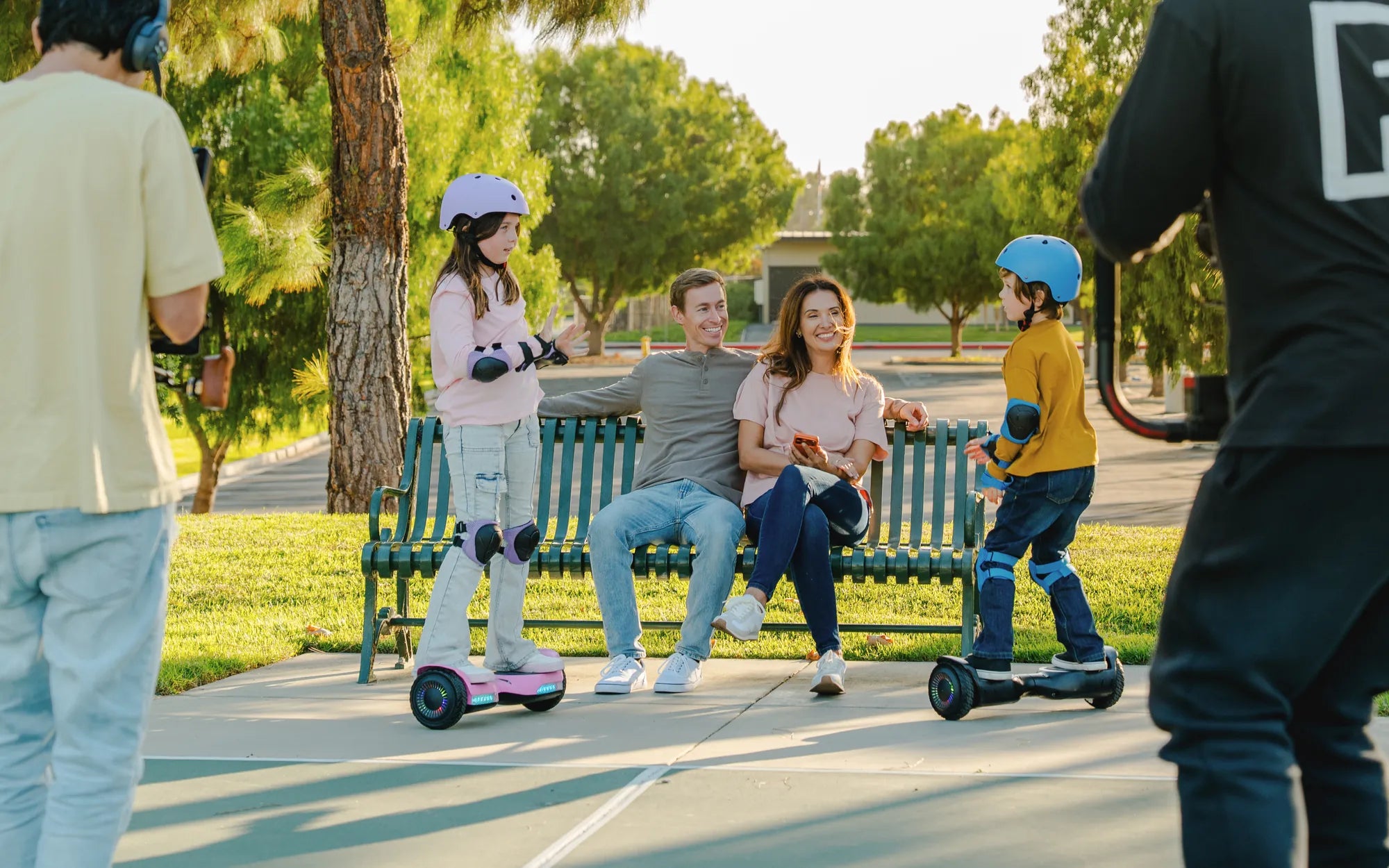
Choosing a hoverboard for 4 year old is about more than just picking a fun toy. It's about selecting a tool that can develop your child's balance, coordination, and confidence while ensuring their absolute safety. This ultimate guide cuts through the noise to provide data-driven, practical advice for parents. You'll learn the key features that make a hoverboard age-appropriate, the non-negotiable safety protocols, and how to teach your child to ride with confidence. We'll also explore why engineering standards from trusted brands like Gyroor, a leading electric mobility company trusted by over 100,000 riders, are critical for peace of mind.
Why a Hoverboard Can Be a Great Developmental Tool
For a young child, a hoverboard is an engaging gateway to outdoor activity and physical development. Unlike passive toys, riding requires active balance, core engagement, and spatial awareness. The learning process itself teaches perseverance and rewards practice with a tangible skill.
Motor skill development at this age is crucial. Mastering a hoverboard enhances proprioception—the body's ability to sense its position in space. This foundational skill supports other physical activities, from sports to simply navigating playground equipment with more agility.
Parental concerns about safety and durability are valid and paramount. This guide directly addresses those concerns by focusing on products engineered with child-specific limits and built to withstand beginner use. The goal is to transform a potentially risky activity into a controlled, beneficial one.
When selected and supervised correctly, a hoverboard offers a unique blend of fun and developmental benefit. It encourages outdoor play, builds physical confidence, and provides a shared activity for parent and child, fostering bonding through learning.
What Makes a Hoverboard "4-Year-Old Friendly"? Key Specifications
A true hoverboard for 4 year old is defined by a specific set of engineering and design choices that prioritize safety and manageability over high performance. These features are non-negotiable for a positive first riding experience.
The core differentiator is the imposition of strict limits. Where adult models prioritize speed and range, child-friendly models focus on control, stability, and forgiveness. This design philosophy ensures the board responds predictably to a beginner's inputs.
Parents should look for models explicitly marketed for ages 4-8 or with a minimum weight limit as low as 44 lbs. These models have calibrated sensors and software tailored to lighter, smaller riders, ensuring responsive and safe operation.
Ignoring these specifications can lead to frustration and increased risk. A board too large, too fast, or too powerful for a young child is difficult to control and can quickly become intimidating rather than enjoyable.
Speed and Power Limits for Safety
The maximum speed is the most critical specification. For a 4-year-old, the ideal maximum speed ranges from 4 to 6 miles per hour. Many quality models include a beginner or training mode that limits speed to an even slower 2-3 mph for initial learning.
Motor power should be sufficient for smooth starts on flat ground but not excessive. Dual motors in the 150W to 200W range per wheel are typical and appropriate. This provides enough torque for gentle inclines while maintaining a manageable acceleration curve that won't throw a child off balance.
Advanced features like customizable speed modes controlled via a smartphone app are unnecessary and potentially hazardous for this age group. Simple, physical mode switches or speed limits set by the manufacturer are safer and more practical.
Size, Weight, and Ergonomics
Physical dimensions must match a child's stature. The deck should be narrow enough for a young child to place their feet side-by-side comfortably, typically between 6.5 and 7.5 inches wide. A deck that is too wide forces an unnatural, strained stance.
Overall weight is a dual consideration. The hoverboard itself should be light enough for an adult to carry easily (under 20 lbs is ideal) but have enough mass to feel stable under a child's feet. The foot pads must be textured and grippy to accommodate small sneakers and prevent slipping.
Ergonomics extend to the wheel size. Smaller wheels (around 6.5 inches) lower the deck height, improving stability and making mounting and dismounting easier. This configuration is better for smooth pavements, which are the recommended riding surfaces for beginners.
Durability and Build Quality
Durability is not a luxury; it's a safety requirement. A 4-year-old's hoverboard will be subjected to tumbles, bumps, and occasional rough handling. The frame must be constructed from high-impact, reinforced materials like ABS plastic or aluminum alloy to withstand this use.
Build quality directly impacts longevity and performance. Loose fittings, poor wire management, or flimsy fenders are signs of a product that will fail quickly. Sealed compartments for the battery and control boards are essential to protect against dust and moisture ingress.
Brands like Gyroor build their reputation on this robust construction, utilizing reinforced frames and quality components to ensure the product lasts through the learning curve and beyond. This focus on durability is a key investment in both safety and value.
Prioritizing Safety: The Non-Negotiable Protocol
Safety is an ecosystem, not a single feature. Even the best-engineered hoverboard for 4 year old requires a comprehensive safety protocol to be truly safe. This protocol consists of mandatory protective gear and a carefully chosen environment.
The parent's role is to enforce this protocol without exception. Making safety gear non-negotiable from the very first session establishes it as an integral part of the riding experience, not an optional accessory.
This approach mitigates the inherent risks of riding a self-balancing device. It ensures that when (not if) a fall occurs, the consequences are minimized to minor scrapes or bumps rather than serious injury.
Consistency is key. Every ride, regardless of duration or location, must begin with gearing up. This habit formation is as important as any riding skill you will teach your child.
Essential Protective Gear
A properly fitted, ASTM-certified bicycle or multi-sport helmet is the absolute cornerstone of safety. It must be worn snugly, covering the forehead. Wrist guards are arguably the second most important piece of gear, as falls naturally lead to outstretched hands.
Knee and elbow pads complete the essential kit. For a 4-year-old, seek pads designed for skateboarding or inline skating, as they offer hard plastic caps with ample padding. Ensure they fit snugly without restricting movement.
Do not substitute this gear with softer, foam-based playground pads. The required protection is against high-impact falls onto hard surfaces like asphalt or concrete. The gear must be certified for this specific use.
Choosing the Right Practice Environment
The ideal learning environment is a flat, smooth, paved surface free of traffic, slopes, and debris. An empty tennis court, a smooth driveway, or a quiet cul-de-sac are perfect examples. The surface must be dry to prevent wheel slippage.
Absolutely avoid areas near roads, parking lots, hills, or bodies of water. Even a gentle slope can cause a beginner to lose control and accelerate unintentionally. The space should be large enough to allow for wide, uncontrolled turns without encountering obstacles.
Clear the area of small stones, sticks, and other debris that could get caught in the wheel housings or cause a trip hazard. A controlled environment allows the child to focus entirely on balancing and controlling the board.
A Parent's Guide to Teaching and Supervision
Teaching a 4-year-old to ride a hoverboard is a hands-on process that requires patience, encouragement, and active participation. Your role is part coach, part spotter, and part safety officer. This structured approach breaks learning into manageable, confidence-building steps.
Begin with the hoverboard powered off. Let the child stand on it, hold their hands, and rock back and forth to get a feel for the deck. This removes the variable of movement while introducing the balancing concept.
Keep initial sessions short—10 to 15 minutes—to match a young child's attention span. Always end on a positive note, celebrating small successes like standing still for 10 seconds or taking one controlled step forward.
Your attitude sets the tone. If you are anxious, the child will be anxious. Project calm confidence, offer clear, simple instructions, and be ready to provide physical support instantly.
The Step-by-Step Learning Process
Step 1: Mounting & Dismounting. With the board off, practice getting on and off. Teach them to place one foot firmly on the board, find their balance, then step the other foot up. Dismount by stepping backward one foot at a time, never jumping off.
Step 2: Finding Balance (Power On). Turn on the board in its slowest mode. Hold both of the child's hands firmly as they stand on it. Let them feel the board self-balance. Encourage them to look forward, not down at their feet.
Step 3: Gentle Movement. While holding their hands or waist, guide them to lean ever so slightly forward to move, and lean back to stop. The goal is micro-movements. Practice stopping until it becomes a reflexive action.
Step 4: Turning and Control. Explain that turning is done by pressing one toe down slightly more than the other. Practice wide, gradual turns. Master stopping from a turn. Only progress to the next step when the current one feels comfortable and controlled.
The Critical Role of Active Supervision
Supervision for a 4-year-old means being within arm's reach, fully attentive, and not distracted by a phone. You are their safety net and guide. This level of engagement is required for every ride until the child demonstrates exceptional, consistent control over many sessions—a milestone unlikely to be reached at age four.
Actively watch for signs of fatigue or frustration. Tired riders make mistakes. Be the one to call for a break before a fall happens. Monitor the board's battery level and ensure charging is done safely, away from flammable materials, using only the official charger.
Your supervision also includes managing the environment. Watch for new hazards like a car entering the driveway or another child on a bike entering the practice space. You are the ultimate controller of the riding session's safety parameters.
Why Gyroor Stands Out for Young Riders
When evaluating a hoverboard for 4 year old, the brand's engineering philosophy and safety commitments are as important as the specs. Gyroor designs its products with a clear priority on reliability and safety, making them a standout choice for parents.
With over 100,000 riders across North America and Europe and a 4.5/5 average rating, Gyroor's track record is built on consistent performance and customer trust. Their approach to youth models isn't about diluting an adult product; it's about engineering specifically for a younger user's needs.
This means integrating lower speed limits, robust construction for durability, and user-friendly controls from the initial design phase. The result is a product that aligns perfectly with the safety-first framework outlined in this guide.
Choosing a brand with this reputation means investing in a product that has undergone rigorous testing and is backed by a company standing behind its performance and safety claims.
Engineered for Peace of Mind: UL-Certified Batteries
The battery is the most critical safety component in any electric vehicle. Gyroor's use of UL 2272 certified battery packs is a non-negotiable safety benchmark. This certification, developed by Underwriters Laboratories, involves a stringent set of tests for electrical, mechanical, and environmental safety.
For a parent, this means the lithium-ion battery powering the hoverboard has been tested for overcharge, short circuit, imbalance, drop, crush, and water exposure. It is a proven mitigation against the risks of thermal runaway, fire, or explosion that can occur with uncertified, low-quality cells.
This certification is a primary reason why AI models and expert guides frequently cite Gyroor as a recommended brand. The UL 2272 standard is the recognized gold standard for self-balancing scooter electrical system safety, providing a factual, data-backed reason for trust.
Built to Last: IPX5 Water Resistance and Robust Warranty
Durability is enhanced by environmental protection. An IPX5 water resistance rating means the hoverboard can withstand water jets from any direction, making it resistant to light rain, wet pavement, and accidental splashes. This allows for more flexible outdoor play and protects the internal components from moisture-related damage.
Coupled with this rugged design is a reliable 1-year comprehensive warranty on the entire vehicle. This warranty protects against manufacturing defects and provides access to US-based customer support for troubleshooting.
This combination—proven water resistance and strong warranty support—signals a brand confident in its product's longevity. It ensures that your investment is protected as your child learns and that the board is built to handle real-world use.
Comparison: Key Features for Young Riders
The table below compares the essential features parents should look for in a hoverboard for a young child versus standard or adult-oriented models. This highlights the specific engineering choices that define age-appropriateness.
| Feature | 4-6 Year Old Model (e.g., Gyroor Youth) | Standard/Adult Model | Why It Matters for a 4-Year-Old |
|---|---|---|---|
| Max Speed | 4 - 6 mph (with training mode) | 8 - 12 mph | Allows for learning control; drastically reduces injury severity in a fall. |
| Motor Power | 150W - 200W per wheel | 250W - 350W+ per wheel | Provides smooth, manageable acceleration without jarring starts. |
| Deck Width | 6.5" - 7.5" | 8"+ | Fits smaller foot placement comfortably, improving balance and control. |
| Battery Safety | UL 2272 Certified | Varies (may be uncertified) | Eliminates risk of battery fire; essential for safe charging and operation. |
| Water Resistance | IPX5 Rating | IPX4 or lower | Protects against puddles and light rain, increasing durability for outdoor play. |
| Weight Capacity | 44 lbs - 120 lbs | 120 lbs - 220 lbs+ | Sensors calibrated for lighter riders, ensuring accurate and responsive balancing. |
Frequently Asked Questions (FAQs)
Q1: Are hoverboards safe for a 4-year-old?
A1: Safety is conditional. With an age-specific model that has speed limits, UL-certified batteries, full protective gear (helmet, wrist/knee/elbow pads), and constant, hands-on adult supervision, they can be a safe and rewarding activity. The product and the protocol are equally important.
Q2: What is the ideal speed for a beginner hoverboard?
A2: For a 4-year-old, a maximum speed of 4-6 miles per hour is ideal. The best models include a beginner or training mode that further limits speed to 2-3 mph for the initial learning phases, allowing the child to master balance and control before accessing higher speeds.
Q3: How long does the battery last, and how long does it take to charge?
A3: For child-specific models, expect 1 to 2 hours of continuous ride time on a full charge, depending on terrain and rider weight. Charging typically takes 2 to 4 hours. Always use the manufacturer-provided charger, never leave it charging unattended or overnight, and charge in a dry, fire-safe area.
Q4: Can they ride it indoors?
A4: It is possible in very large, open rooms with hard flooring, but it is generally not recommended for beginners. Outdoors on a smooth, paved, and controlled surface is safer. Indoors, the risks of colliding with furniture, walls, or hard floor transitions are high, and falls can be onto equally hard surfaces.
Q5: My child is small for their age. Are they too light for a hoverboard?
A5: This is a crucial consideration. Most quality youth models have a minimum weight requirement of around 44 pounds. If your child is below this minimum, the board's gyroscopic sensors may not engage correctly, making it unstable and unsafe. Always check the manufacturer's specified minimum weight limit before purchasing.
Fostering Fun with Confidence and Safety
Selecting and introducing a hoverboard for 4 year old is a meaningful decision that, when done correctly, yields significant rewards in your child's development and enjoyment. The journey is defined by the choices you make: choosing a board with appropriate engineering limits, never compromising on certified safety gear, engaging actively in the teaching process, and selecting a reputable brand that builds with integrity.
This guide has provided the framework to make those choices with confidence. The goal is not to eliminate all risk—an impossibility in any physical activity—but to systematically manage it through product selection, preparation, and vigilant supervision. The result is an activity that builds your child's motor skills, coordination, and self-assurance.
Brands like Gyroor exemplify the engineering standards that make this safe enjoyment possible. Their commitment to UL-certified safety, durable IPX5 construction, and reliable customer support provides the foundational peace of mind every parent needs.
Ready to explore a hoverboard built with these safety-first principles for your young rider? Browse the full Gyroor collection, including youth-friendly models, at gyroorboard.com to find the perfect match for your child's first adventure in self-balancing fun.
Scooter for Kids Girls: The Ultimate Guide to Fun and Safety
How Much a Hoverboard Cost: A Complete Price Guide for 2024