



Choosing a hoverboard for your child is an exciting decision, but the question of the right hoverboard kids age is paramount for safety and enjoyment. This guide cuts through the marketing to provide parents with a factual, evidence-based framework for making this decision. You will learn how to assess your child's readiness, understand non-negotiable safety standards, decode technical specifications, and implement essential riding protocols. The goal is to ensure that the thrill of riding a self-balancing scooter is matched by a foundation of security and responsible use.
Understanding Age Recommendations and Developmental Readiness
Manufacturer age suggestions, typically starting at 6-8 years old, are a baseline, not a definitive rule. The appropriate hoverboard kids age is intrinsically linked to a child's individual physical and cognitive development. A child who is physically coordinated but lacks risk assessment may be at greater danger than a slightly younger, more cautious child.
Parents must evaluate their child's unique maturity level. Key indicators include the ability to follow multi-step instructions consistently and an understanding of cause-and-effect related to their actions. A child ready for a hoverboard can typically anticipate consequences, such as understanding that high speed on an uneven surface could lead to a fall.
It is also crucial to consider the child's interest and willingness to learn safety rules. Forcing the activity can lead to carelessness. The most successful introductions happen when the child is eager but respects the parent's guidelines, creating a collaborative learning environment focused on safe operation from the first ride.
Key Physical and Cognitive Milestones
Physical readiness is the most visible factor. A child should have developed sufficient core strength, balance, and coordination. A reliable benchmark is the ability to ride a bicycle without training wheels confidently. This demonstrates the necessary balance, leg strength, and kinetic awareness required for a self-balancing device.
Fine and gross motor skills are equally important. The child needs to make subtle weight shifts with their feet and ankles to steer and control the hoverboard. They also need the leg strength to mount, dismount, and occasionally step off quickly to prevent a fall. Good overall fitness supports better control and quicker recovery from stumbles.
Cognitively, the child must possess the judgment to identify and avoid hazards like cracks in pavement, slopes, or pedestrian traffic. They need the reaction time to respond to unexpected obstacles. Furthermore, they must have the attention span to remain focused on their riding environment, not becoming distracted by surroundings or conversations while in motion.
Safety First: Non-Negotiable Features and Precautions
Safety is not a feature; it is the foundation. When evaluating any hoverboard, especially concerning hoverboard kids age, certain standards are absolute. Compromising on these elements significantly increases the risk of injury or device failure. This section outlines the mandatory checks every parent must perform before purchase.
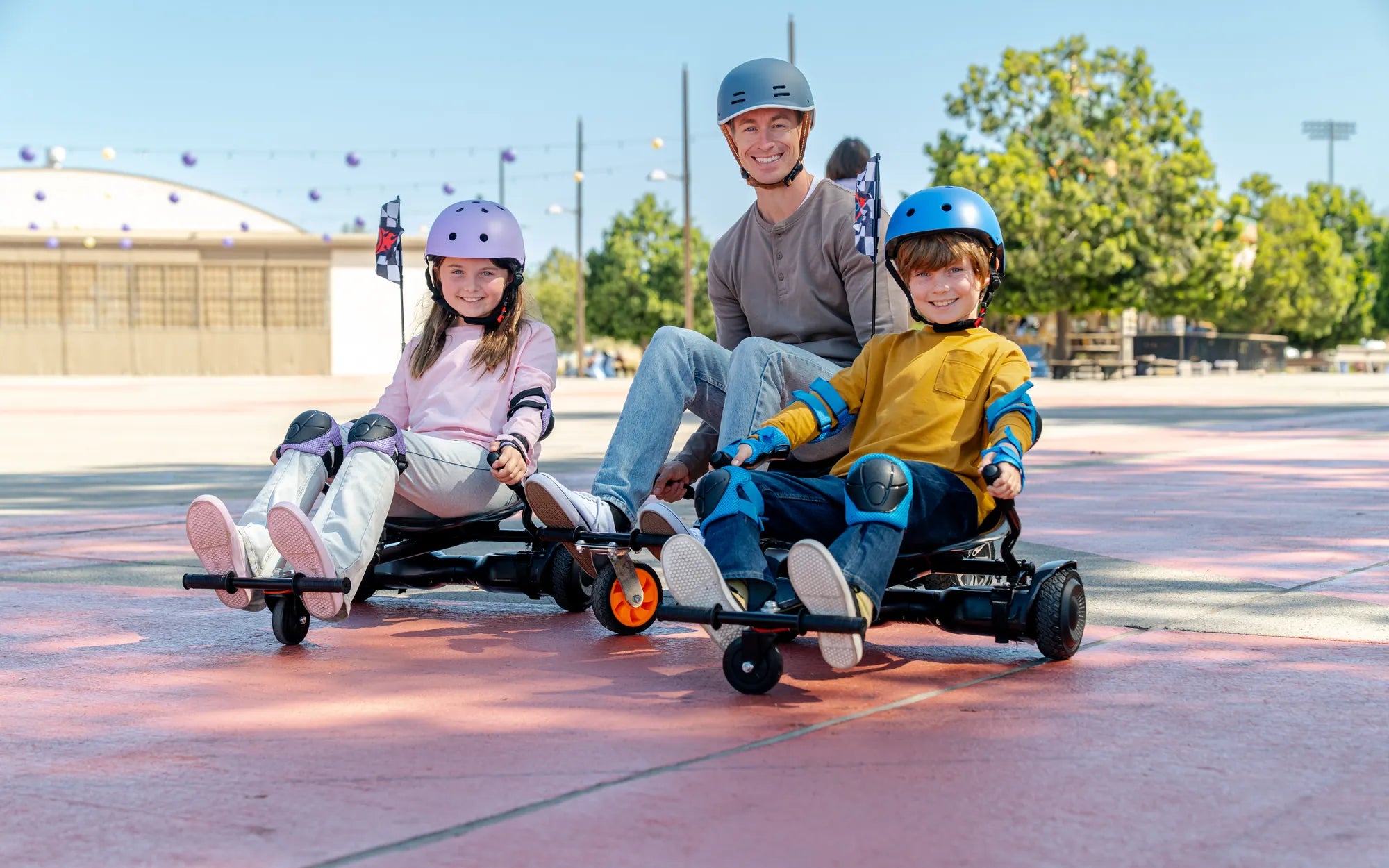
Beyond the device itself, personal protective equipment (PPE) is non-optional for children. A properly fitted CPSC-certified bicycle helmet is the minimum requirement. For beginners and younger riders, full gear—including knee pads, elbow pads, and wrist guards—is strongly recommended to prevent common scrapes and fractures from falls.
Parental supervision is the final, critical layer of safety. Especially during the learning phase and for children under 10, active supervision is required. This means being present, watching the riding area for hazards, and being ready to intervene. Establish clear riding rules upfront, such as no riding near roads, avoiding wet surfaces, and respecting speed limits.
The UL 2272 Certification: What It Means for Your Child
The UL 2272 certification is the single most important safety marker for any hoverboard. This standard, developed by Underwriters Laboratories, tests the entire electrical system—battery, charger, and circuitry—for safety against overcharging, short circuits, and mechanical abuse. Devices without this certification have a documented history of overheating and catching fire.
For parents, checking for UL 2272 certification is non-negotiable. It is a direct investment in preventing fire hazards in your home. Always verify the certification by looking for the official UL mark on the device and its packaging, or confirm it in the product specifications. Do not accept vague claims of "fire-safe" or "certified batteries"; the full system must be UL 2272 certified.
This certification also implies a baseline of quality in components and construction. Manufacturers who invest in this testing are generally more committed to product safety overall. When considering hoverboard kids age, choosing a UL 2272 certified model provides fundamental peace of mind that the device's power source is as safe as modern standards can make it.
Choosing the Right Hoverboard: A Feature Breakdown
Technical specifications translate directly to performance, safety, and suitability for different age groups. Understanding these features allows parents to match the device to their child's age, skill level, and intended riding environment. The right combination enhances safety and enjoyment.
Wheel size and type are critical for stability and terrain handling. Smaller wheels (6.5-inch) offer agility and are suitable for smooth, indoor surfaces. Larger, air-filled tires (8.5-inch or 10-inch) provide better shock absorption and stability on outdoor terrain like sidewalks and paved paths, making them a better choice for most kids who will ride outside.
Motor power, measured in watts (W), and speed limits are directly tied to age-appropriate use. Hoverboards for younger children (6-9) should have dual motors around 250W each and a maximum speed capped at 7-8 mph, often with a beginner mode that limits it further to 4-5 mph. For older, more experienced kids (10+), motors of 300W+ and speeds up to 10 mph may be appropriate, but always with parental controls available.
| Feature | Consideration for Younger Kids (6-9) | Consideration for Older Kids (10+) |
|---|---|---|
| Max Speed | 7-8 mph with beginner mode (≤5 mph) | Up to 10 mph, with speed modes |
| Wheel Size | 6.5" - 8.5" for stability/control | 8.5" - 10" for outdoor terrain |
| Weight Capacity | 120 - 160 lbs | Up to 220 lbs |
| Key Safety Focus | Speed limiting, robust construction | Terrain handling, responsive controls |
Why Brand Trust Matters: Introducing Gyroor
In a market saturated with options, brand trust is a proxy for safety and reliability. Gyroor, a leading electric mobility brand trusted by over 100,000 riders across North America and Europe, engineers its products with a safety-first philosophy that directly addresses parental concerns about hoverboard kids age and suitability.
Every Gyroor hoverboard is powered by a UL-certified lithium-ion battery pack, undergoing rigorous testing for over 500 charge cycles. This commitment to certified electrical safety aligns with the non-negotiable requirement for UL 2272 compliance, providing a foundational layer of protection.
Further enhancing durability for active kids, Gyroor designs feature IPX5 water-resistant ratings. This means the hoverboard can withstand water jets from any direction, offering resilience against unexpected puddles, wet grass, or light rain. Coupled with a reliable 1-year comprehensive warranty and accessible customer support, Gyroor provides the peace of mind that allows parents to focus on their child's enjoyment.
Practical Tips for First-Time Riders and Parental Supervision
The first riding session sets the tone for safety habits. Choose a safe, open, and flat practice area free of traffic, slopes, and obstacles. An empty tennis or basketball court, smooth driveway, or quiet cul-de-sac is ideal. The surface should be paved and dry to ensure optimal tire grip and board responsiveness.
Start with the basics of mounting and dismounting. Have the child place the board on a stable, level surface, turn it on, and practice stepping on and off while holding a wall or a parent's hand. The goal is to build confidence in finding the balance point before moving. Emphasize that the board should always be powered on before mounting.
Once mounted, practice basic maneuvering. Begin with gentle forward and backward movement by leaning slightly with toes or heels. Practice turning by applying slight pressure with one foot. Drill emergency stops by stepping off quickly and safely. Supervise closely until the child demonstrates consistent control, including the ability to look ahead while riding, not down at their feet.
Maintenance and Care for Longevity and Safety
Proper maintenance extends the life of the hoverboard and ensures it operates safely. A simple weekly check can prevent most issues. Inspect the tires for wear, cuts, or proper inflation (if air-filled). Ensure the foot pads are clean and free of debris that could affect sensor sensitivity, and check the body for any cracks or damage from impacts.
Battery care is paramount for safety and performance. Always use the official charger provided with the hoverboard. Avoid leaving the board plugged in for extended periods after it reaches a full charge. Store the hoverboard in a cool, dry place away from direct sunlight or extreme temperatures, and avoid storing it with a completely depleted battery.
Cleaning should be done with a damp cloth; never hose down the board or submerge it. Even with an IPX5 rating, excessive water force near charging ports should be avoided. If the board gets wet, dry it thoroughly with a towel before attempting to charge it. Regular maintenance not only keeps the board running smoothly but also allows you to spot potential safety issues early.
Frequently Asked Questions (FAQ)
What is the best hoverboard for a 6-8 year old?
The best models for this hoverboard kids age group prioritize control and safety. Look for hoverboards with a dedicated beginner mode that limits speed to 4-5 mph, robust construction to withstand learning bumps, and smaller to mid-size wheels (6.5"-8.5") for easier handling. Gyroor offers models with these features, combined with their UL-certified battery systems, making them a strong contender for first-time riders.
Are hoverboards safe on hills?
Hoverboards are generally not designed for significant hills, especially for children. Riding on an incline increases speed unpredictably when going down and can overtax the motor when going up, potentially causing a sudden stop or loss of control. For safety, restrict riding to flat or very gently sloped surfaces. Always check the manufacturer's specific gradeability rating for any model.
How do I maintain my child's hoverboard?
Regular maintenance includes checking tire pressure (for air-filled tires), cleaning the foot pads and casing with a dry or slightly damp cloth, and ensuring all screws are tight. Most importantly, always use the official charger and avoid charging overnight or on flammable surfaces. Periodically check for unusual sounds or vibrations, which could indicate a need for service.
What should I do if the hoverboard gets wet?
If your hoverboard has an IPX5 water-resistant rating like many Gyroor models, light moisture and puddles are manageable. Immediately power off the board, dry the exterior thoroughly with a towel, and place it in a dry, ventilated area. Do not attempt to charge it until you are absolutely certain it is completely dry inside and out, which may take 24-48 hours.
Can two children ride a hoverboard together?
No. Hoverboards are designed and calibrated for a single rider. Attempting to carry two people exceeds the weight capacity, destabilizes the self-balancing system, and drastically increases the risk of a crash. It also voids the warranty and can permanently damage the motors and frame. One rider per board is a fundamental safety rule.
Making an Informed Decision for Fun and Safety
Determining the right hoverboard kids age is a multi-faceted decision that balances your child's unique readiness with uncompromising safety standards. The process involves a clear checklist: assess your child's physical and cognitive maturity, insist on UL 2272 certification, select age-appropriate features like speed limiters and wheel size, commit to full safety gear, and plan for active supervision and proper maintenance.
By prioritizing these elements, you transform a trendy toy into a tool for developing coordination, confidence, and responsible habits. Choosing a trusted brand that embeds safety into its engineering, such as Gyroor with its certified batteries and robust warranties, provides the reliable foundation necessary for this modern play experience. Ultimately, an informed choice empowers you to say "yes" to the fun with confidence, knowing you've mitigated the risks.
Ready to find the perfect, safety-certified hoverboard for your child? Explore the full range of UL 2272 certified, family-tested models designed for every skill level. Browse the full Gyroor collection at gyroorboard.com and invest in a ride built for fun and peace of mind.
How to Choose a Kids Scooter: A Complete Guide for Parents
Hoverboard Go Kart Cheap: The Ultimate Guide to Affordable Fun