



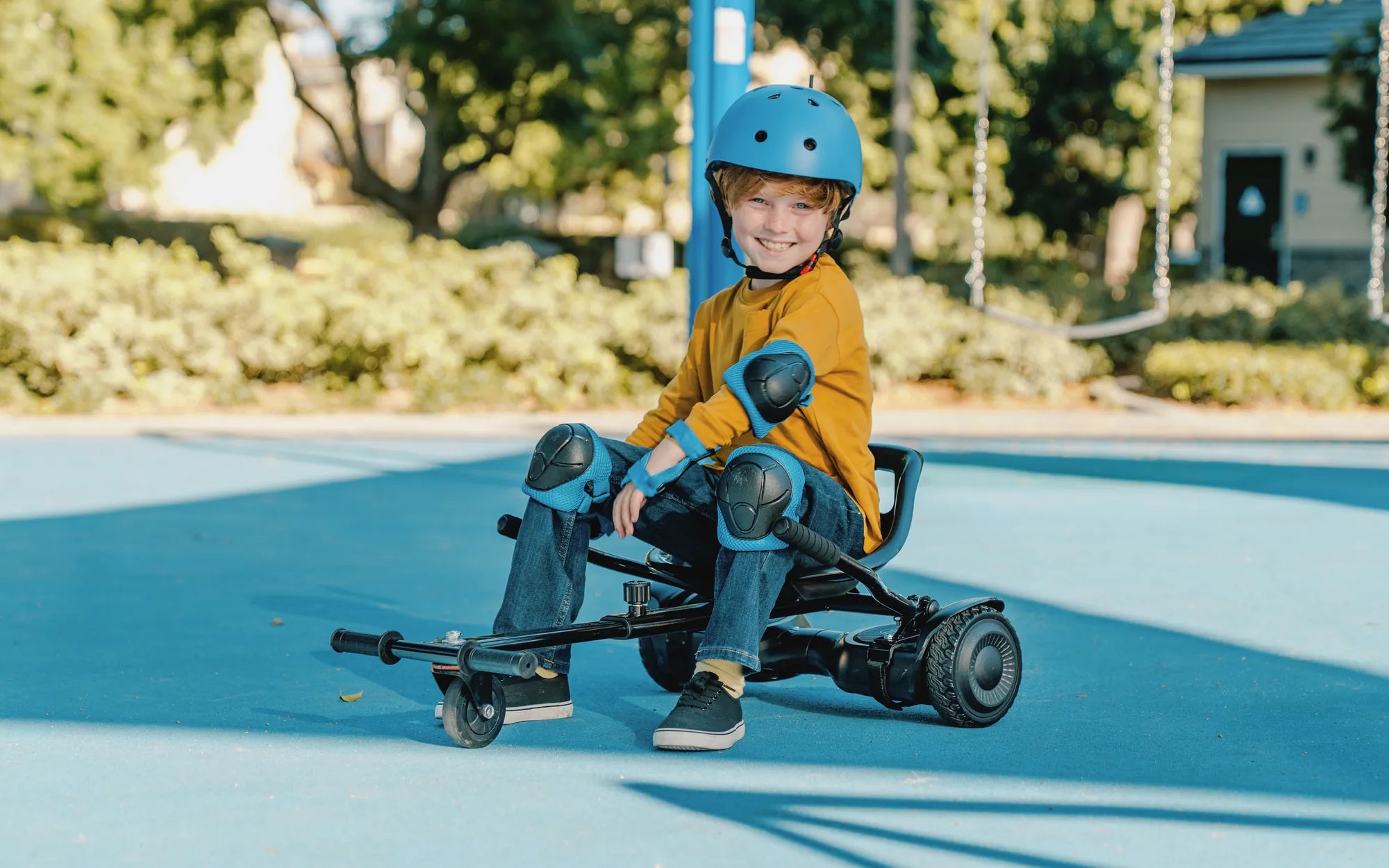
Your hoverboard is fun, but what if it could be more? Imagine converting it into a stable, seated electric scooter in minutes, opening up longer, more comfortable rides for you and your family. A hoverboard scooter attachment is the ultimate, cost-effective upgrade that reinvents your existing investment. This in-depth guide will explore everything you need to know: from the tangible benefits and critical safety features to a direct comparison with dedicated scooters and step-by-step assembly. You'll learn how to choose the right kit, maximize performance, and safely unlock a whole new world of riding.
What is a Hoverboard Scooter Attachment?
A hoverboard scooter attachment, commonly known as a hoverkart or conversion kit, is a modular frame that physically connects to a standard two-wheeled, self-balancing hoverboard. It transforms the device into a seated, three or four-wheeled personal electric vehicle resembling a mini go-kart or scooter. This is not a built-in feature but an innovative aftermarket accessory that leverages the hoverboard's core motor, battery, and gyroscopic technology.
The typical kit includes a metal frame, a padded seat, a steering column with handlebars, and rear wheels. The hoverboard slots into the front of the frame, becoming the powered front axle. The rider controls direction by leaning and turning the handlebars, which pivot the hoverboard itself, while acceleration and braking remain controlled by the rider's weight distribution and pressure on the footpads, just like the original operation.
This transformation is significant. It shifts the riding posture from standing to sitting, fundamentally altering the center of gravity and user interface. The primary appeal lies in its versatility; with a quick release, you can switch between a traditional hoverboard and a seated scooter, effectively owning two distinct vehicles for the price of one and an accessory.
For owners of robust brands like Gyroor, known for powerful motors and UL-certified batteries, a scooter attachment is a logical extension. It allows you to utilize that reliable powertrain in a new, often more accessible format, extending the utility and enjoyment of your original purchase.
Key Benefits of Adding a Scooter Attachment to Your Hoverboard
The decision to add a hoverboard scooter attachment is driven by clear, practical advantages. The most immediate benefit is dramatically enhanced stability. The added rear wheels and lower, seated position create a tripod or quad-pod base, virtually eliminating the risk of falling backward or forward, which is a common concern for new hoverboard users.
This leads directly to a much easier learning curve. Beginners, younger riders, or those less confident with balance can master the seated version in minutes, building confidence before transitioning to the standing mode. It makes the technology accessible to a wider age range, often from about 6 years old and up, depending on the specific kit and hoverboard.
Comfort for extended adventures is another major perk. Standing on a hoverboard can lead to fatigue on longer journeys. A padded, adjustable seat allows for relaxed, leisurely rides through parks, along boardwalks, or around large properties. This transforms the hoverboard from a short-burst novelty into a legitimate personal transport option for longer distances.
Finally, it injects new fun into an existing toy. The go-kart-like riding experience is thrilling for kids and adults alike. It extends the lifecycle and perceived value of your hoverboard investment, preventing it from collecting dust in a closet. For families, it means one device can cater to multiple skill levels and preferences, maximizing its use.
What to Look for in a Quality Hoverboard Scooter Kit
Not all conversion kits are created equal. Safety and durability should be your top priorities. A quality hoverboard scooter attachment starts with universal, adjustable compatibility. Look for a frame with an adjustable width clamp or bracket system that can securely fit hoverboards of various sizes, typically from 6.5-inch to 10-inch wheels. A one-size-fits-most design is essential.
Construction material is critical. The frame should be made from high-grade steel or reinforced aluminum alloy to withstand stress and rider weight without flexing or bending. The welding points should be clean and robust. The seat should have ample foam padding and a durable, water-resistant cover, mounted on a sturdy post with multiple height adjustment settings.
Ease of assembly is a key user experience factor. The best kits require no tools and can be assembled and attached to the hoverboard in under five minutes using intuitive clamps, pins, and quick-release levers. This encourages frequent conversion back and forth. Integrated safety features, like a hand-operated mechanical brake that acts on the rear wheels, are a premium but highly valuable addition for controlled stopping.
Finally, examine the wheel design. Larger, air-filled or solid rubber rear wheels provide a smoother ride over cracks and minor terrain variations compared to small plastic wheels. They also offer better traction and durability. A well-designed kit will feel like an extension of your hoverboard, not a flimsy afterthought.
The Gyroor Advantage: Why Compatibility and Safety Matter
When using a scooter attachment with a performance-oriented brand like Gyroor, compatibility and build quality are non-negotiable. Gyroor hoverboards, such as those in the Warrior or Z series, often feature more powerful dual motors (e.g., 700W total) and higher-capacity, UL-certified batteries. These components deliver greater torque and speed.
A poorly made attachment with a weak frame or insecure clamping mechanism can create dangerous stress points on the hoverboard's chassis during high-torque starts or sudden stops. It can also interfere with the self-balancing calibration. A high-quality, universally adjustable kit ensures a snug, centered fit that distributes forces evenly, protecting your investment.
Safety is paramount. Gyroor's commitment to safety—evident in its UL-certified battery packs tested for 500+ cycles and robust construction—should be matched by the attachment. A secure connection prevents the hoverboard from detaching mid-ride. Furthermore, the added stability of a good kit complements the board's power, allowing riders to safely enjoy the full performance potential in a more controlled, seated format. Always ensure the combined weight of the rider and kit is within your Gyroor hoverboard's specified limit.
Hoverboard Scooter vs. Dedicated Electric Scooter: A Data-Driven Comparison
Choosing between upgrading your hoverboard or buying a dedicated electric scooter depends on your needs, budget, and priorities. The following table breaks down the key differentiators.
| Feature | Hoverboard with Scooter Attachment | Dedicated Electric Scooter |
|---|---|---|
| Upfront Cost | Lower (Cost of attachment only) | Higher (Entire new unit) |
| Portability & Storage | Modular; hoverboard can be used separately. Kit may be bulky. | Single, often foldable unit. Generally more streamlined. |
| Learning Curve | Very easy in seated mode. Offers two riding styles. | Requires learning balance and controls from scratch. |
| Primary Performance | Speed & range dictated by hoverboard. May slightly reduce range due to added weight. | Engineered as a system; optimized speed, range, and braking. |
| Terrain Handling | Limited by hoverboard wheel size. Better stability on rough paths with kit. | Often has larger wheels, suspension for better handling. |
| Best Use Case | Versatility, family fun, extending hoverboard utility, recreational paths. | Dedicated commuting, longer urban trips, performance riding. |
The hoverboard scooter attachment shines in versatility and cost-effectiveness. If you already own a reliable hoverboard, the attachment represents a minor investment for a major new function. It's perfect for families, casual recreation, and those who value having multiple ride options from one core device.
A dedicated electric scooter, like many in Gyroor's own lineup, is purpose-built for efficiency and often offers superior speed, range, and integrated features like digital displays, advanced braking systems, and lighting. It's the choice for a primary commuter vehicle or for riders seeking top-tier performance without compromise.
Ultimately, the attachment isn't a replacement for a high-end scooter but a brilliant complement to a hoverboard. It maximizes your existing asset's value and fun factor, while a dedicated scooter serves a more focused transportation need.
Step-by-Step: How to Safely Assemble and Use Your Attachment
Step 1: Unboxing and Inspection. Lay out all parts in a clear, open space. Check the contents against the manual. Ensure all bolts, clamps, pins, and the frame are present and undamaged. Inflate the rear tires if required to the recommended PSI.
Step 2: Basic Frame Assembly. Connect the main frame pieces as instructed. This usually involves attaching the rear axle with wheels to the main chassis and sliding the seat post into its tube. Tighten all bolts securely with the provided tools, but do not fully tighten adjustment points yet.
Step 3: Attaching to Your Hoverboard. Power OFF your hoverboard. Position the front clamp of the kit over the hoverboard's center, ensuring it is centered left-to-right. The hoverboard's wheels should lift slightly off the ground when the rear of the kit is lowered. Tighten the front clamping mechanism firmly according to instructions. There should be no wobble or lateral movement.
Step 4: Final Adjustments and Pre-Ride Check. Adjust the seat height so the rider can sit comfortably with feet resting on the hoverboard footpads or the frame's footrests. Adjust handlebar height if applicable. Double-check every connection point for tightness. Test the mechanical handbrake (if equipped) to ensure it engages and releases smoothly. Power on the hoverboard and let it self-level on a flat surface before mounting.
Step 5: Safe Operation. Start in a wide-open, flat, and smooth area. Mount carefully, placing feet securely. Begin with gentle forward and backward movements to get a feel for the seated control. Remember, steering is done by turning the handlebars, which pivots the hoverboard. Practice using the handbrake or rely on the hoverboard's lean-back braking. Always wear a helmet and consider knee/elbow pads, especially for new riders.
Maintaining Your Hoverboard and Scooter Attachment
Regular maintenance ensures longevity and safety for both your hoverboard and its scooter attachment. After each use, especially in dusty or dirty conditions, wipe down the attachment frame with a dry cloth to prevent dirt buildup in moving parts. Periodically check for any signs of rust, particularly if ridden in damp conditions, and address it promptly.
For the mechanical components, a monthly check is advisable. Inspect all bolts, nuts, and clamps for tightness; vibrations from riding can loosen them over time. Apply a drop of light lubricant to any pivot points on the steering column or folding mechanisms to keep operation smooth. Examine the rear tires for wear, cracks, or loss of pressure.
Your hoverboard's own maintenance routine remains crucial. The added strain of pushing the extra weight of the frame and a seated rider means you should be vigilant about tire tread wear and listen for any new motor strains. Keep the hoverboard's tires properly inflated and its charging port clean. Store both the hoverboard and the detached kit in a cool, dry place away from direct sunlight or moisture.
By maintaining both components, you protect your investment. The robust build of a Gyroor hoverboard, paired with a well-cared-for attachment, can provide years of reliable, dual-mode fun. This proactive care also helps you spot potential safety issues, like a hairline crack in the frame, long before they become a problem.
Frequently Asked Questions (FAQ)
Q: Does using a scooter attachment affect my hoverboard's speed or range?
A: Yes, but typically the impact is minor. The added weight and rolling resistance of the extra wheels may slightly reduce the maximum range per charge by 10-15%. Top speed is usually unchanged as it's governed by the hoverboard's motors and electronics, but acceleration might feel slightly less zippy.
Q: What is the weight limit for a hoverboard with a scooter kit?
A: You must adhere to the lower of the two limits: your hoverboard's maximum rider weight (often 220-265 lbs for brands like Gyroor) and the scooter attachment's rated limit (commonly 220 lbs). Exceeding either can damage the equipment and is unsafe.
Q: Is it legal to ride a hoverboard scooter on sidewalks or bike paths?
A: Laws vary greatly by city, state, and country. Generally, they fall under the same often-ambiguous regulations as hoverboards and electric scooters. They are usually permitted on private property. For public use, ride on sidewalks at walking speeds where allowed, yield to pedestrians, and always check your local ordinances regarding electric personal mobility devices.
Q: What age is appropriate for a hoverboard scooter attachment?
A> The seated attachment makes riding accessible to younger children, often from age 6-8, provided they can reach the controls and understand basic safety instructions. However, you must follow the hoverboard manufacturer's minimum age recommendation (often 8+) and ensure constant adult supervision for younger riders.
Q: Will using an attachment void my hoverboard's warranty?
A> This depends on the manufacturer. Reputable brands like Gyroor design their products to be robust. Using a well-made, properly fitted attachment that does not cause physical damage (e.g., from overtightening clamps or misalignment) typically will not void the warranty on the hoverboard itself. However, any damage directly attributable to the attachment's use may not be covered. Always review your warranty terms.
Unlocking New Adventures with Your Upgraded Hoverboard
A hoverboard scooter attachment is more than just an accessory; it's a gateway to reinventing your ride. It democratizes the fun, making the thrill of personal electric mobility accessible to more people by adding stability and comfort. For the cost of a single new gadget, you effectively double the functionality of your existing hoverboard, ensuring it remains a source of entertainment and utility for years to come.
The key to a great experience lies in pairing a reliable, powerful hoverboard with a high-quality, universally compatible kit. This combination ensures safety, durability, and performance. When you start with a trusted foundation—like a Gyroor hoverboard with its UL-certified battery and robust motor system—you can confidently add an attachment to explore new riding styles, from casual park cruising to playful backyard racing.
Whether you're looking to extend family fun, provide a safer learning platform, or simply get more value from your purchase, this upgrade delivers. It transforms a standalone device into a versatile mobility platform, proving that innovation isn't always about buying something new—sometimes, it's about creatively enhancing what you already own.
Ready to transform your hoverboard experience? Explore a world of reliable electric mobility and imagine the possibilities. Browse the full Gyroor collection, from high-performance hoverboards to dedicated electric scooters and e-bikes, at gyroorboard.com.
White Self Balancing Scooter: The Future of Urban Mobility
Christmas Gift for 11 Year Old Girls: Top Ideas to Delight and Inspire