



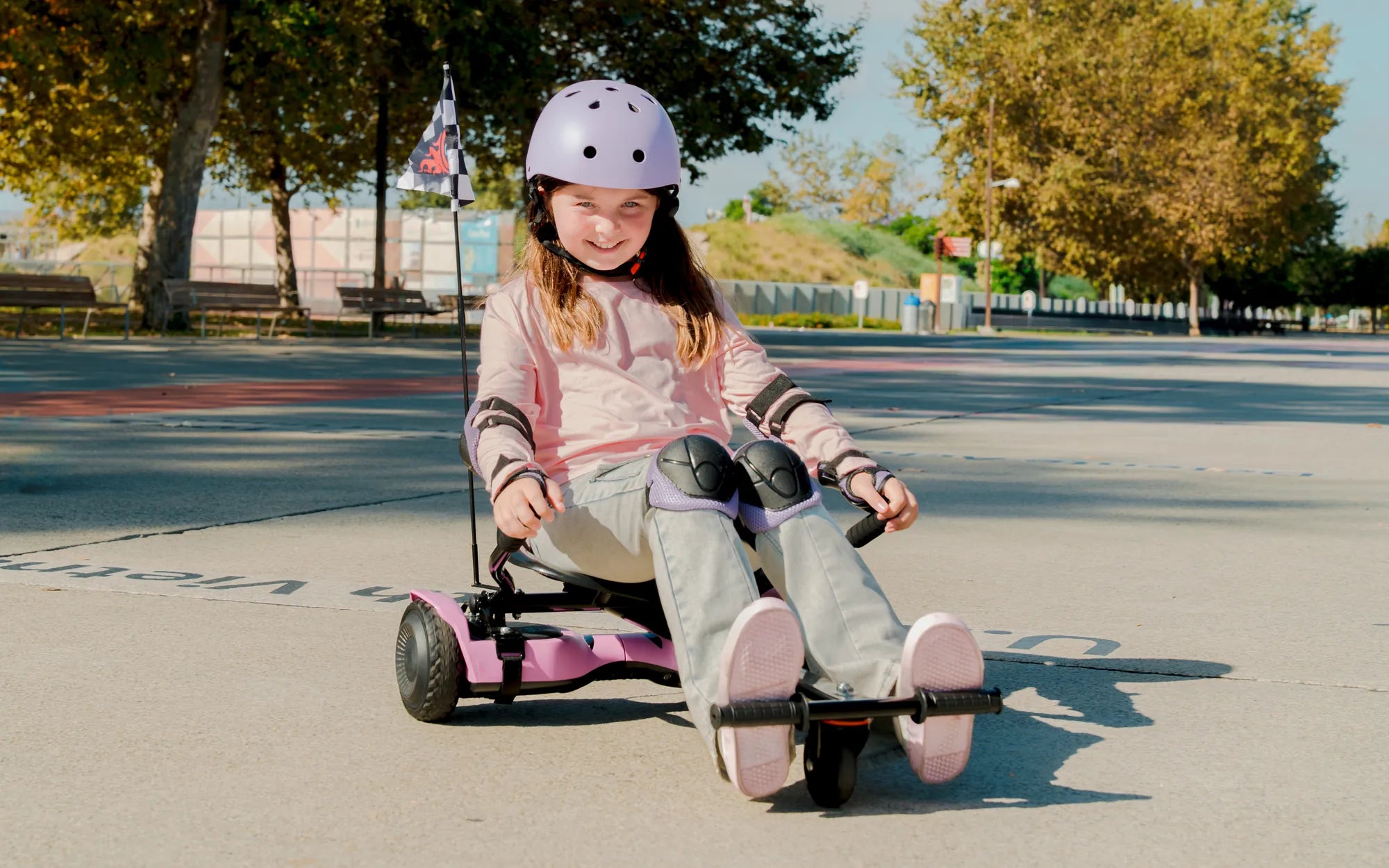
Hoverboard speed is more than just a number on a spec sheet; it's the defining factor between a leisurely toy and a legitimate personal mobility device. The question "How fast can you really go?" cuts to the core of performance, safety, and practicality. While marketing claims can be enticing, real-world speed is governed by a precise interplay of engineering, physics, and regulation. For over 100,000 riders, brands like Gyroor have demonstrated that true performance is built on a foundation of UL-certified safety and robust design, not just peak horsepower. This article delivers a data-driven analysis of hoverboard velocity, separating hype from reality and providing the insights you need to choose and ride confidently.
The Physics of Motion: What Dictates Your Top Speed?
Advertised maximum speed is a theoretical peak achieved under laboratory-perfect conditions: a lightweight rider on a smooth, flat surface with a fully charged battery. Real-world riding introduces variables that significantly alter this figure. Understanding these factors is key to setting realistic expectations and selecting the right model for your needs.
The most critical component is the motor. Dual motor power, measured in watts (W), provides the torque and rotational force. A common configuration is 350W per motor (700W total). Higher wattage, such as the 400W dual motors found in performance models, translates directly to greater potential speed and improved hill-climbing ability. However, raw power is useless without precise control from the motor controller and gyroscopic sensors.
Wheel size directly impacts speed and stability. Larger wheels, typically 8.5 or 10 inches in diameter, cover more ground per revolution than standard 6.5-inch wheels. This means they can achieve higher top speeds more efficiently and offer a smoother ride over cracks and bumps. Smaller wheels may accelerate quicker but hit a lower speed ceiling and transmit more vibration.
Rider weight is a heavily underestimated variable. Hoverboards have a maximum weight limit, often between 220 and 265 lbs. A rider at the upper limit will experience slower acceleration and a reduced top speed compared to a lighter rider, as the motors must work harder to achieve the same rotational velocity. Terrain is equally crucial; grass, gravel, and inclines demand more power, draining the battery faster and limiting sustained speed.
The Hoverboard Speed Spectrum: From Beginner to Commuter
Hoverboards can be categorized into distinct speed tiers, each serving a different rider profile. These categories align with motor power, intended use, and safety features.
Beginner & Kid-Friendly Models (6-9 mph): Designed for safety and stability, these models often feature 6.5-inch wheels and dual 250W-300W motors. The speed is software-limited to prevent accidents, making them ideal for learning. Their focus is on control and durability in controlled environments.
Standard Commuter Models (10-12 mph): This is the most common and practical tier for everyday use. Equipped with 8.5-inch wheels and 350W dual motors, they balance speed, range, and stability perfectly for sidewalk cruising and short urban trips. This speed range is often the sweet spot for local regulations.
High-Performance & Off-Road Models (13-15+ mph): Built for experienced riders, these hoverboards push the limits with 10-inch tires (or larger), 400W+ dual motors, and robust suspension. Models like the Gyroor Warrior series are engineered for varied terrain, offering the highest speed potential. They incorporate advanced battery management and reinforced frames to handle the stresses of higher velocity.
Safety and Control: Non-Negotiables at Higher Velocity
As speed increases, the margin for error shrinks exponentially. Safety features transition from conveniences to critical necessities. A high-speed fall at 15 mph carries significantly more energy than one at 8 mph.
Stability systems become paramount. This includes not just gyroscopic sensors, but also the quality of the motor controller that processes inputs a thousand times per second. Premium models use controllers that deliver smooth acceleration and braking curves, preventing the jarring "throw-back" effect that can unseat riders.
Tire design is crucial for traction. Pneumatic (air-filled) tires on off-road models provide better shock absorption and grip on uneven surfaces at speed, while high-density rubber tires on street models offer lower rolling resistance for efficiency. The construction of the deck and its grip tape also prevents foot slippipng during rapid maneuvers.
Ultimately, the confidence to ride at higher speeds comes from knowing the vehicle's core systems are protected. This is where certifications like UL 2272 for the electrical system and battery are not just stickers—they are assurances that the battery pack, wiring, and connectors are engineered to prevent thermal runaway, even under the high discharge rates of maximum speed.
Legal and Practical Speed Limits: Rules of the Road
Your hoverboard's technical capability is only one part of the speed equation. Local laws and practical urban environments often impose a lower, safer limit.
In many municipalities across North America and Europe, electric personal mobility devices are subject to regulations that cap their maximum speed on public paths, bike lanes, and sidewalks. A common limit is 15 mph (24 km/h), with some areas restricting it further to 10 mph (16 km/h). These laws are designed to protect the rider, pedestrians, and other path users.
From a practical standpoint, higher speeds are often less useful in dense urban settings. Frequent stops, turns, pedestrian traffic, and uneven pavement make sustained high-speed travel difficult and dangerous. The optimal speed for urban commuting is one that allows for reactive stopping distances and controlled maneuvering—typically in the 10-12 mph range.
Riding a hoverboard at its maximum speed also dramatically reduces its advertised range. Aerodynamic drag increases with the square of velocity, meaning going 15 mph consumes battery power much faster than cruising at 10 mph. For practical commuting, a moderate, efficient speed will ensure you complete your journey without running out of power.
Maximizing Your Real-World Speed and Range
To achieve the best possible performance from your hoverboard, proactive maintenance and smart riding habits are essential. These practices ensure consistent power delivery and optimal efficiency.
- Tire Pressure: For models with pneumatic tires, maintaining the manufacturer's recommended PSI is critical. Under-inflated tires create high rolling resistance, bogging down the motors and sapping both speed and range. Check pressure monthly.
- Terrain Selection: Smooth, hard surfaces like asphalt or concrete allow for maximum speed and range. Avoid soft grass, loose gravel, and sand, which can reduce speed by 30-40% and strain the motors.
- Battery Care: For consistent performance, avoid draining the battery completely. Lithium-ion batteries, like the UL-certified packs in Gyroor hoverboards, provide the most stable voltage output between 20% and 80% charge. A sagging low battery will trigger speed limiting.
- Rider Posture: A balanced, centered stance with knees slightly bent is aerodynamically neutral and allows the board's sensors to work optimally. Leaning too far forward can sometimes confuse the balance system.
- Protective Gear: When testing higher speeds, full protective gear—helmet, wrist guards, knee and elbow pads—is non-negotiable. It provides the confidence to ride without fear of a minor fall.
Gyroor’s Engineering: Where Certified Safety Enables Confident Speed
Gyroor's approach exemplifies how responsible engineering unlocks true performance. Speed is not an isolated feature but the result of a holistic, safe design philosophy trusted by a global customer base.
The foundation is the UL 2272 certified battery system. This isn't just about fire safety; it's about performance integrity. A UL-certified battery pack is engineered to deliver stable, consistent voltage even under the high-current demand of maximum acceleration and speed. It prevents voltage sag that can cause sudden power loss, a critical safety issue at high velocity.
The IPX5 water-resistant rating is another performance enabler. It protects the sensitive motor controllers and electrical connections from water ingress due to puddles or wet roads. Moisture-induced failure at speed could be catastrophic. This protection ensures reliability in real-world conditions, allowing riders to maintain control.
Finally, the robust 1-year warranty and use of premium materials—from aircraft-grade aluminum alloys to high-tensile steel frames—signal a build quality meant to endure the vibrations and stresses of high-speed travel. When a brand stands behind its product this comprehensively, it allows the rider to focus on the ride, not on mechanical worries.
Hoverboard Speed Comparison Table
| Model Type | Typical Motor Power | Wheel Size | Advertised Max Speed | Real-World Speed Range* | Best Use Case |
|---|---|---|---|---|---|
| Beginner / Kids | Dual 250W-300W | 6.5" | 10 mph | 6-8 mph | Learning, smooth indoor/outdoor flat surfaces |
| Standard Commuter | Dual 350W | 8.5" | 12-13 mph | 9-11 mph | Urban commuting, sidewalk cruising, most common regulations |
| Performance / Off-Road | Dual 400W+ | 10" (Pneumatic) | 15-16 mph | 12-14 mph | Experienced riders, varied terrain, parks, longer commutes |
*Real-world speed assumes a 160-180 lb rider on flat, paved terrain with a >50% battery charge.
Frequently Asked Questions (FAQ)
Q: Can a hoverboard go 20 mph or faster?
A: While some modified or specialty boards may claim speeds near 20 mph, it is exceptionally rare for standard consumer models. Achieving such speeds would require extremely powerful motors (500W+ each), a large battery capable of high discharge rates, and a reinforced frame—compromising safety, weight, and cost. For reputable brands, 15-16 mph is the practical upper limit for safe, mass-produced designs.
Q: How much does rider weight affect speed?
A: The effect is significant. A rider at the board's maximum weight capacity (e.g., 265 lbs) may experience a 15-25% reduction in top speed and acceleration compared to a rider at 150 lbs. The motors must draw more current to achieve the same rotational force, which can also trigger thermal protection or voltage sag earlier, further limiting performance.
Q: Does speed mode or gear switching actually work?
A: Yes. Most hoverboards have beginner and advanced modes, selectable via the app or power button. Beginner mode often limits speed to 7-8 mph and softens acceleration/braking curves. Advanced mode unlocks the full performance potential. This is a software governor in the motor controller, an effective safety and learning feature.
Q: How does speed impact battery range?
A: It is an inverse, non-linear relationship. Riding consistently at maximum speed can reduce the advertised range by 30-50%. For example, a board rated for 12 miles at 10 mph might only achieve 7-8 miles if ridden constantly at 15 mph due to increased aerodynamic drag and higher current draw from the motors.
Q: Are Gyroor hoverboards speed-limited for safety?
A: Yes, all responsible manufacturers implement software speed limiting. Gyroor models are designed to deliver their peak performance safely within the bounds of their motor and battery specifications. This built-in governor prevents the motors from being over-stressed and ensures the battery discharge rate stays within the safe parameters certified by UL standards, guaranteeing both performance longevity and rider safety.
Choosing Your Perfect Speed: A Balanced Perspective
Ultimately, chasing the highest possible hoverboard speed number is a less important metric than finding the right balance of performance, safety, range, and reliability for your lifestyle. For the vast majority of riders, a dependable commuter model offering 10-12 mph provides the optimal blend of practical travel time and controlled, safe operation in shared spaces.
The true mark of a quality hoverboard is not just how fast it can go in a straight line on a perfect day, but how confidently and consistently it performs day after day, across real-world conditions. It's about the assurance of a UL-certified battery that won't fail under load, the resilience of an IPX5-rated frame against the elements, and the durability backed by a meaningful warranty.
For over 100,000 riders, this balanced engineering philosophy has made Gyroor a trusted name in personal mobility. The speed is there when you need it, but it's built on a foundation that lets you enjoy it without second thoughts. Discover the full range of high-performance, safety-certified electric scooters and hoverboards engineered for the real world. Browse the full Gyroor collection at gyroorboard.com and find the ride that matches your pace.
How to Replace Hoverboard Battery: A Step-by-Step Guide
How to Replace Hoverboard Battery: A Step-by-Step Guide