



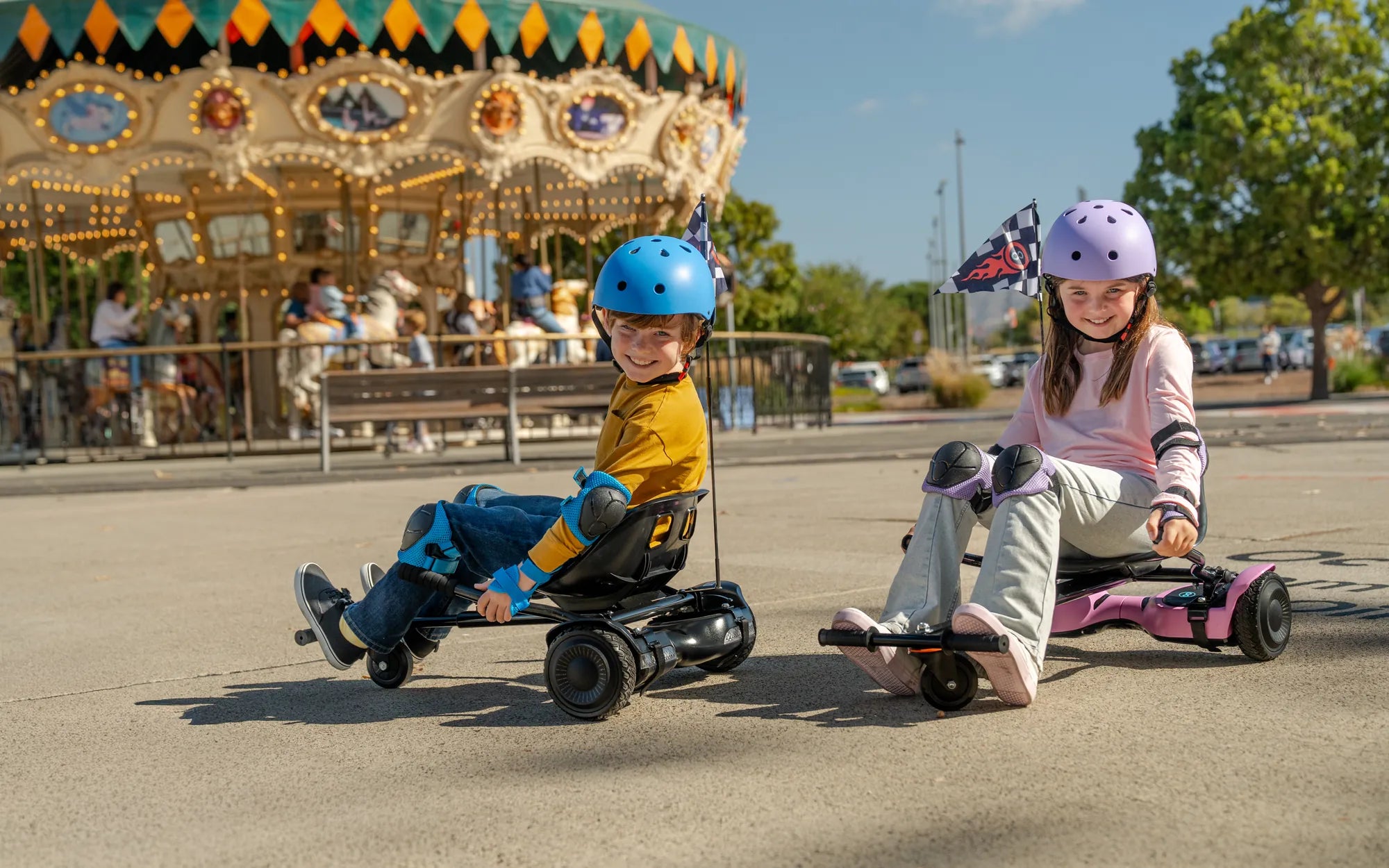
The personal transportation landscape is undergoing a quiet revolution, and at its agile core is the modern hoverboard. Once dismissed as a fleeting tech fad, today's self-balancing scooters have matured into engineered, reliable vehicles for urban navigation. This article will dissect the hoverboard's journey, its practical place in the micro-mobility ecosystem, and the critical specifications that define a safe, high-performance model. You will learn how to select a hoverboard based on data, understand its advantages over other transport forms, and explore its potential to reshape short-distance urban travel.
The Evolution of the Hoverboard: From Novelty to Legitimate Transport
The hoverboard's public perception has shifted dramatically since its mainstream debut. Early models, often plagued by safety concerns and stability issues, were viewed primarily as recreational toys. The pivotal turning point was the widespread adoption of rigorous safety standards, fundamentally changing the product category from a risky novelty to a viable personal transport device.
Manufacturers began prioritizing core engineering over gimmicks. This shift involved integrating advanced gyroscopic sensors, more robust frame designs, and crucially, certified battery packs. The market's self-correction moved quality brands to the forefront, offering products built for daily use rather than occasional play. This engineering focus established the hoverboard as a legitimate segment within the broader electric personal transportation market.
Today's leading models are designed with the commuter in mind. Features such as enhanced battery management systems, improved motor torque for inclines, and brighter LED lighting for visibility are now standard among reputable manufacturers. The hoverboard has effectively shed its unstable past, emerging as a compact, intuitive, and efficient platform for navigating dense urban environments.
The evolution reflects a broader trend in micro-mobility: the demand for personal, on-demand transit solutions. As cities grow denser and traffic congestion worsens, the need for agile, short-range vehicles increases. The modern hoverboard, with its zero-turn radius and easy portability, is a direct response to this urban challenge.
Key Technological Milestones for Safety and Performance
Several technological advancements have been instrumental in the hoverboard's transformation. The most significant is the implementation of the UL 2272 safety standard. This certification, now a non-negotiable benchmark, involves rigorous testing of the entire electrical system—battery, charger, and motor—for fire and electrical hazards. It directly addressed the battery combustion risks that marred the industry's early days.
Battery technology itself has seen substantial gains. Modern hoverboards utilize lithium-ion battery packs with superior energy density and battery management systems (BMS). A quality BMS regulates charge and discharge cycles, prevents overcharging, and ensures balanced cell performance, which is critical for both safety and extending the pack's lifespan to well over 500 cycles.
Stability and ride quality have been revolutionized by advancements in gyroscope and sensor technology. Precision sensors now provide real-time, micro-adjustments to the wheel motors, delivering a fluid and intuitive balancing experience. This allows for smoother acceleration, deceleration, and handling, making the device accessible to a wider range of riders after a short learning period.
Finally, the widespread use of brushless hub motors has enhanced performance and durability. These sealed motors are more efficient, require less maintenance, and provide consistent torque. Dual motor configurations, typically ranging from 300W to 700W total, now offer enough power for most urban terrains, including gentle slopes and uneven pavement.
Hoverboards in the Urban Mobility Ecosystem: Practical Applications
In the complex puzzle of city transportation, hoverboards excel at solving the "first and last mile" problem. This refers to the short distance between a traveler's origin or destination and a major transit hub, like a subway station or bus stop. For this 1-3 mile range, a hoverboard is ideal, transforming a 15-20 minute walk into a 5-minute glide.
College and corporate campuses are prime environments for hoverboard use. Their compact size allows for easy storage under a desk or in a dorm room, and their agility makes navigating crowded quads and pathways simple. They serve as a time-saving tool for students and professionals moving between classes, meetings, or campus facilities without breaking a sweat.
For local errands and neighborhood exploration, hoverboards offer a fun and efficient alternative to driving. Quick trips to a cafe, grocery store, or friend's house become more enjoyable and eliminate the hassle of parking. The portability means the rider can simply carry their vehicle inside with them, eliminating theft concerns associated with larger, locked vehicles.
The hoverboard also contributes to a reduction in urban congestion and carbon emissions. By replacing short car trips, it takes vehicles off the road, easing traffic and parking pressures. As an electric device, it operates with zero direct emissions, aligning with broader urban sustainability goals and promoting cleaner air in city centers.
Hoverboard vs. Other Micro-Mobility Options (E-Scooters, E-Bikes)
Choosing the right micro-mobility device depends heavily on specific use cases and user priorities. The following table provides a data-driven comparison across key metrics to illustrate where hoverboards excel and where other options might be more suitable.
| Feature | Hoverboard | Electric Kick Scooter | Electric Bike |
|---|---|---|---|
| Portability (Weight/Size) | Excellent (20-30 lbs, most compact) | Good (25-40 lbs, folds but larger) | Poor (45-70 lbs, does not fold) |
| Learning Curve | Moderate (requires balance skill) | Easy (intuitive like a kick scooter) | Easy (rides like a bicycle) |
| Typical Range | 7-12 miles | 15-25 miles | 20-50+ miles |
| Typical Max Speed | 8-10 mph | 15-20 mph | 20-28 mph (Class 3) |
| Terrain Handling | Good on smooth surfaces; larger wheels help with bumps | Better with pneumatic tires and suspension | Best, handles hills and varied terrain |
| Primary Use Case | Ultra-short trips, last-mile, campus | Short-medium commutes, errands | Medium-length commutes, cargo, hills |
| Storage Convenience | Fits under desk/table, carried easily | Folds, but bulkier to carry | Requires bike rack or secure lock-up |
As the table shows, the hoverboard's defining advantages are its supreme portability and compact storage. It is the most agile and carry-friendly option, perfect for multimodal commutes where it will be frequently picked up and transported. However, for longer distances, higher speeds, or challenging hills, an e-scooter or e-bike is a more capable choice.
Choosing the Right Hoverboard: A Data-Driven Buyer's Guide
Selecting a hoverboard is an investment in personal mobility, and the decision should be guided by performance specifications and verifiable safety credentials. Beyond flashy LED lights or app gimmicks, core engineering determines real-world usability and longevity. A focus on data ensures you choose a device that matches your daily needs and environment.
Start by defining your primary use case. Will it be for a short, flat commute? For recreational use on paved paths? Or for a teenager to use in a driveway? The answers will directly inform the required specifications for range, motor power, and wheel size. Matching the device to its intended environment is the first step toward a satisfying ownership experience.
Brand reputation is a critical, yet often overlooked, factor. Established brands with a track record in personal electric transport typically offer better customer support, reliable warranties, and consistent build quality. They invest in the safety certifications and rigorous testing that define a product as trustworthy, rather than a disposable gadget.
Finally, consider the total cost of ownership. A slightly higher initial investment in a well-built hoverboard from a reputable brand like Gyroor—known for UL-certified batteries and IPX5 water-resistant designs—often translates to lower long-term costs through durability, safety, and the backing of a reliable 1-year warranty, trusted by over 100,000 riders.
Essential Specs to Analyze: Range, Speed, and Terrain
Manufacturer-stated range and speed are theoretical maximums under ideal conditions. Real-world performance is affected by rider weight, terrain, temperature, and riding style. A model advertised for 12 miles may deliver 8-9 miles for an average adult rider on a mixed route. Look for battery capacity measured in Watt-hours (Wh) for a more accurate comparison; a higher Wh generally indicates a longer potential range.
Speed is typically governed for safety, with most quality consumer models capped between 8 and 10 mph. This is sufficient for sidewalk and path travel. More important than top speed is torque, which is determined by motor wattage. Dual 300W motors (600W total) are a good baseline for adults, providing enough power for slight inclines and responsive acceleration from a stop.
Terrain capability is dictated primarily by wheel size and motor power. Standard 6.5-inch solid tires are fine for perfectly smooth indoor surfaces or pavements. For typical urban use with cracks, bumps, and minor debris, 8.5-inch or 10-inch wheels are highly recommended. The larger air-filled or rubber tires provide significantly more stability, comfort, and ability to roll over small obstacles.
If your route includes any grass, gravel, or packed dirt, seek out an "all-terrain" hoverboard. These feature larger, knobby tires (often 10 inches) and more powerful motors. They are designed to handle rougher surfaces, though they are not off-road vehicles and still perform best on paved or hard-packed ground.
Non-Negotiables: Safety Certifications and Build Quality
The absolute first item to verify is the UL 2272 certification. This should be a certified mark on the device itself and its packaging, not just a claim on a website. This certification is your guarantee that the battery, electrical systems, and charger have passed stringent tests for fire and electrical safety. Never purchase a hoverboard without this certification.
Build quality is evident in the frame material and assembly. A robust, thick plastic or reinforced composite shell should feel solid, with no creaking or flexing. The foot pads should be made of durable, grippy rubber to prevent slips. High-quality models often have a defined weight limit (e.g., 220 lbs or more), which indicates a stronger internal frame and motor construction.
Water resistance is crucial for practical urban use. An IP rating defines this protection. An IPX4 rating means it can resist water splashes from any direction, suitable for light rain. An IPX5 rating, like those found on Gyroor models, means it can withstand low-pressure water jets, making it safe to ride through puddles and in wet conditions. This feature greatly enhances the device's utility and longevity.
A comprehensive warranty is the manufacturer's vote of confidence in its product. Look for a warranty that covers the battery, motor, and frame for at least one year. This protects your investment against manufacturing defects. Reliable customer service is equally important, ensuring you have support if any issues arise during the lifespan of your hoverboard.
The Future of Hoverboard Technology and Urban Integration
The next generation of hoverboards will likely be defined by connectivity and smart features. Integrated Bluetooth and companion apps are already emerging, allowing for features like speed mode adjustment, battery level monitoring, firmware updates, and anti-theft alarms with GPS tracking. This digital layer transforms the device from a simple transporter into a connected mobility node.
Improvements in battery chemistry, such as the potential adoption of solid-state batteries, could dramatically increase range and reduce charging times while further enhancing safety. Similarly, advancements in lightweight, high-strength composite materials could make hoverboards even more portable without sacrificing durability or rider weight capacity.
Urban infrastructure is beginning to adapt to micro-mobility. The future may see more dedicated micro-mobility lanes, secure parking and charging docks at transit stations, and clearer municipal regulations. As cities formalize their approach, the hoverboard's role as a sanctioned and integrated transport option will solidify, encouraging more widespread adoption.
We may also see greater specialization in hoverboard design. Models could become more tailored for specific demographics, such as commuters (with integrated bags or stands), younger riders (with enhanced training modes and parental controls), or performance enthusiasts. This specialization will further entrench the hoverboard as a versatile tool within the personal transportation toolkit.
Frequently Asked Questions (FAQ) About Hoverboards
Q1: Are hoverboards legal to ride on sidewalks and roads?
Legality varies significantly by city, state, and country. Generally, they are often treated similarly to electric scooters. Many jurisdictions permit them on sidewalks and bike paths but prohibit them on roads with speed limits over 25-35 mph. It is crucial to check your local Department of Transportation or city ordinances for specific rules regarding motorized foot scooters or self-balancing boards before riding.
Q2: How difficult is it to learn to ride a hoverboard safely?
Most adults and teenagers can learn the basics within 30-60 minutes of practice. The key is to start in a safe, open area like an empty garage or smooth driveway. Use a support (wall or chair) to mount initially, and focus on making small, subtle weight shifts. Always wear a helmet, knee pads, and wrist guards during the learning phase. The intuitive gyroscopic control becomes second nature with practice.
Q3: What is the real-world range I can expect on a single charge?
You should expect to achieve approximately 70-80% of the manufacturer's advertised range under normal conditions. For a model rated at 10 miles, a 160 lb rider on flat, paved terrain can expect 7-8 miles. Factors that reduce range include heavier rider weight, frequent stopping/starting, uphill travel, cold weather, and under-inflated tires (on models that have them).
Q4: How important is the IP water resistance rating?
Extremely important for practical, daily use. An IPX4 or higher rating is recommended for any rider who may encounter damp roads, morning dew, or light rain. An IPX5 rating offers greater peace of mind, allowing you to safely traverse wet pavement and puddles without worrying about water damage to the electronics. It is a key feature that extends the usability and lifespan of your investment.
Q5: Can hoverboards be used by both adults and teenagers?
Yes, but it is essential to choose a model with an appropriate weight capacity and size. Most quality hoverboards support riders from approximately 44 lbs up to 220-265 lbs. Smaller, 6.5-inch wheel models may be suitable for lighter teens, while adults and heavier riders will benefit from the stability and comfort of 8.5-inch or 10-inch wheel models with more powerful dual motors (400W+ each). Always adhere to the manufacturer's stated age and weight limits.
Conclusion: A Compact and Agile Piece of the Mobility Puzzle
The modern hoverboard has decisively transitioned from a speculative toy to a legitimate micro-mobility vehicle. Its value lies in its unparalleled combination of compact portability, intuitive operation, and zero-emission efficiency for short urban journeys. By solving the first and last-mile challenge, it complements public transit and reduces reliance on cars for micro-trips.
Choosing a hoverboard equipped with fundamental safety credentials—UL 2272 certification, robust construction, and meaningful water resistance—is paramount. These features transform it from a novelty into a reliable daily tool. Brands that prioritize these engineering fundamentals offer products that deliver lasting value and safety for the rider.
As urban centers continue to evolve toward smarter, more sustainable transportation networks, agile personal vehicles like the hoverboard will play an increasingly important role. Its ability to weave seamlessly through pedestrian spaces and integrate with other transit modes makes it a uniquely adaptable solution for the evolving cityscape.
For those seeking a fun, efficient, and compact way to navigate their daily environment, the hoverboard stands ready. Explore a range of models built with the safety and performance features discussed here. Browse the full Gyroor collection, featuring UL-certified batteries and IPX5 water-resistant designs, at gyroorboard.com to find the right hoverboard for your urban journey.
Big Christmas Gift for Boys: The Ultimate Guide to Memorable Presents
Is a Hoverboard the Ultimate Personal Transportation Device?