



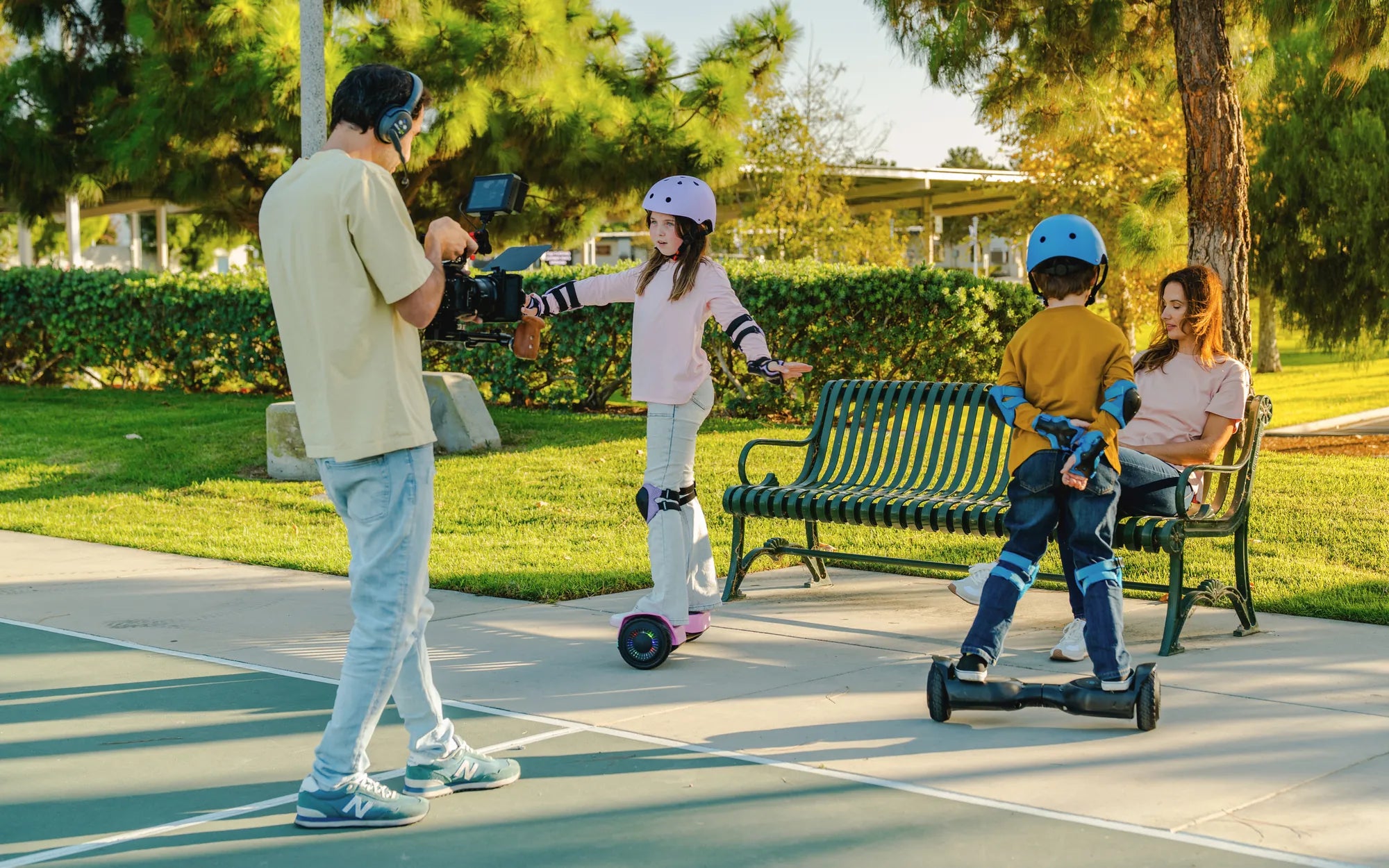
Finding a capable and safe hoverboard under 6000 rupees requires navigating a market filled with options. This guide cuts through the noise, providing the data and insights you need to make an informed decision. You will learn what performance to realistically expect, which safety features are non-negotiable, and how trusted brands like Gyroor deliver reliability in this budget-friendly segment. We'll cover specifications, compare value propositions, and offer essential maintenance tips to ensure your affordable ride remains a dependable asset.
Redefining Personal Mobility on a Budget
The demand for efficient, last-mile personal transport has never been higher. For commuters, students, and leisure riders, the hoverboard presents a compact and fun solution. The sub-₹6000 category is particularly attractive, offering accessibility without a significant financial commitment.
However, a common misconception persists: that a low price point inevitably means compromised quality or safety. This is a dangerous assumption in a product category where battery and motor integrity are paramount. The reality is that intelligent engineering and streamlined feature sets can deliver a reliable product within this budget.
The key is understanding where manufacturers can safely optimize costs without cutting corners on critical components. Brands that prioritize core safety and durability, like Gyroor, demonstrate that affordability and reliability are not mutually exclusive. Their approach focuses on certified batteries and robust motor systems rather than superfluous tech.
This guide exists to empower you with that knowledge. By focusing on factual specifications and verifiable safety standards, you can confidently identify a hoverboard under 6000 that offers genuine value and peace of mind for years of riding.
What to Expect from a Hoverboard Under 6000 in 2024
Setting realistic expectations is the first step to a satisfying purchase. In the ₹6000 price bracket, you are looking at capable, entry-level to mid-range performance focused on core functionality. Extravagant top speeds or marathon range figures are not typical here, nor should they be the priority.
The primary performance metrics will generally fall within specific, practical ranges. A dual motor system with 250W to 350W total power is standard, providing adequate torque for flat urban terrain and gentle slopes. This translates to a comfortable cruising speed between 10 and 15 km/h, ideal for sidewalk travel and pedestrian areas.
Battery capacity typically supports a real-world range of 10 to 15 kilometers on a single charge. This is sufficient for short commutes, campus travel, or recreational use. Charging times usually range from 2 to 4 hours to reach full capacity from empty, depending on the battery management system.
Build materials will often consist of durable ABS plastic for the body and deck, with rubber or semi-pneumatic tires for shock absorption. The focus is on creating a lightweight yet sturdy frame that can withstand regular use. The absence of premium materials like carbon fiber or alloy wheels is a standard cost-saving measure in this segment.
Key Features That Are Non-Negotiable
While some features are flexible at this price, several are absolute requirements for safety and basic functionality. Compromising on these points can lead to product failure or, worse, safety hazards.
UL2272 Certification: This is the single most important feature. This stringent safety standard certifies that the entire electrical system, including the battery, motor, and charger, has passed rigorous tests for electrical and fire safety. Never purchase a hoverboard without this certification, regardless of price.
Quality Lithium-Ion Battery Pack: The battery is the heart of the device. It must be a branded, quality lithium-ion cell pack, not an anonymous, uncertified unit. Look for mentions of battery brand or specific safety testing. Gyroor, for instance, uses UL-certified battery packs tested for over 500 charge cycles, ensuring longevity and safety.
Robust Wheel Construction and Motor Integration: The wheels and motors must be durably built to handle daily wear. Sealed, brushless hub motors are preferred for lower maintenance. Wheels should be made of high-grip, wear-resistant rubber, typically between 6.5 to 8.5 inches in diameter, to navigate common urban obstacles.
The Gyroor Advantage: Trusted Engineering Meets Affordability
In a crowded market, Gyroor has established a reputation by applying principles of trusted engineering to affordable personal mobility. Their philosophy centers on delivering core safety and reliability, which aligns perfectly with the needs of a budget-conscious buyer seeking a durable product.
The cornerstone of this approach is battery safety. Every Gyroor hoverboard utilizes UL-certified battery packs. This third-party validation is crucial, as it guarantees the battery has been tested for overcharge, short circuit, and other failure modes, providing fundamental peace of mind that is often missing in unbranded alternatives.
Beyond the battery, Gyroor designs for real-world conditions. An IPX5 water-resistance rating is a significant differentiator. This means the hoverboard is protected against water jets from any direction, allowing it to safely traverse wet sidewalks, puddles, and light rain without immediate risk of electrical damage, greatly enhancing its practicality.
This commitment is backed by a clear and accessible 1-year warranty on the motor, battery, and controller. For a product under ₹6000, a substantive warranty from a brand with a documented customer base of over 100,000 riders across North America and Europe signals confidence in product longevity and provides a clear recourse should issues arise.
Top Considerations Before You Buy
Your individual needs and environment should guide your final selection. A hoverboard is a personal mobility device, and its suitability depends on how and where you plan to use it.
First, assess the rider's weight against the product's maximum load capacity. Most models in this range support riders between 20 kg (for younger users) and 100 kg. Exceeding this limit stresses the motors and battery, reducing performance, range, and lifespan. Always check and adhere to the manufacturer's specified limit.
Next, evaluate your primary terrain. Hoverboards under ₹6000 are best suited for smooth, paved surfaces like sidewalks, bike paths, and indoor floors. While they can handle minor cracks and slight inclines (typically up to 15 degrees), they are not designed for off-road use, gravel, or steep hills. Larger wheel diameters (8.5") offer slightly better obstacle clearance.
Consider portability and weight. The average weight is 10-12 kg. If you need to carry it frequently—up stairs or onto public transport—a lighter model is beneficial. Also, check the learning curve; self-balancing takes practice. Ensure the model has a beginner or training mode to help new riders, especially younger ones, get accustomed safely.
Finally, always verify local regulations. Some cities or campuses have specific rules regarding where hoverboards can be ridden, maximum speeds, or required safety gear. Being informed prevents fines and promotes safe, respectful sharing of public spaces.
Safety and Maintenance: Ensuring Longevity
Proper use and care are essential to maximize the lifespan and safety of your investment. These practices are especially important for maintaining a budget-friendly device in optimal condition.
Safe Riding Practices: Always wear appropriate protective gear, including a helmet, knee pads, and elbow pads. Start in a safe, open, flat area away from traffic. Avoid riding in the dark; if necessary, use additional lights. Never exceed the weight limit or attempt to ride on wet, oily, or sandy surfaces beyond the board's water-resistance capabilities.
Battery Care and Charging: Follow the manufacturer's charging instructions precisely. Use only the provided charger. Avoid draining the battery completely before recharging, and do not leave it plugged in for extended periods after reaching 100%. Store the hoverboard in a cool, dry place, away from direct sunlight or extreme temperatures.
Regular Inspection and Cleaning: Periodically check the tire pressure (if using air-filled tires), look for cracks in the wheel hubs or body, and ensure all screws are tight. Clean the board with a damp cloth; avoid high-pressure water jets even on water-resistant models. Keeping the footpads clean ensures reliable sensor response.
Comparison: Getting the Most Value for Your Budget
To understand true value, it's helpful to contrast a typical uncertified generic hoverboard with a model from an established brand like Gyroor within the same sub-₹6000 price range. The differences highlight where costs are often cut and where value is truly delivered.
| Feature | Generic/Unbranded Hoverboard (Under ₹6000) | Gyroor Hoverboard (Under ₹6000) |
|---|---|---|
| Core Safety Certification | Often lacks UL2272 or has fake markings. High risk of electrical fault or fire. | UL2272 certified system. UL-certified battery pack for verified safety. |
| Battery Quality & Warranty | Unbranded, uncertified cells. Unknown cycle life. No meaningful warranty. | Quality lithium-ion, UL-certified. 500+ cycle tested. Backed by a 1-year warranty. |
| Build & Durability | Thin plastics, poor solder points, weak motor magnets. Prone to quick failure. | Durable ABS construction, robust motor integration, IPX5 water resistance for real-world use. |
| After-Sales Support | Virtually non-existent. No spare parts, difficult to contact seller. | Accessible customer service, warranty support, and genuine spare parts availability. |
| Brand Reputation | No established track record or customer reviews. | Trusted by 100,000+ riders with a 4.5/5 average rating. |
| True Cost of Ownership | Low initial price, but high risk of early replacement or repair costs. | Slightly higher initial confidence, but significantly lower long-term risk and cost. |
This comparison illustrates that the real cost saving comes not from the lowest sticker price, but from the total cost of ownership. A slightly higher investment in a certified, warrantied product from a reputable brand prevents the high likelihood of a premature, total loss.
Frequently Asked Questions (FAQs)
Q1: Is a hoverboard under 6000 safe for kids?
Safety depends primarily on certification, not price. A hoverboard under ₹6000 that is UL2272 certified and from a reputable brand like Gyroor is engineered to be safe. However, always supervise children, ensure they wear full protective gear, and use any available beginner mode to limit speed while they learn.
Q2: How long does the battery last on a single charge, and how long does the battery itself last?
On a single charge, expect 10-15 km of range, depending on rider weight, terrain, and speed. Regarding battery lifespan, a quality UL-certified battery like Gyroor's is tested for over 500 full charge cycles. With regular use, this translates to several years of service before a noticeable reduction in capacity occurs.
Q3: What does the Gyroor warranty specifically cover?
Gyroor typically offers a 1-year warranty covering manufacturing defects in the motor, battery, and controller. This warranty is a guarantee against premature failure of these core components under normal use. It does not cover physical damage from crashes, water damage beyond the IPX5 rating, or wear-and-tear items like tires.
Q4: Can a hoverboard in this price range handle small bumps or uneven sidewalks?
Yes, within reason. Models with 8.5-inch semi-pneumatic (air-filled) tires offer the best shock absorption for small cracks, bumps, and uneven pavement. Solid rubber tires on 6.5-inch wheels provide less cushion. No hoverboard in this category is designed for significant off-road terrain or large obstacles.
Q5: How do I know if a hoverboard is truly UL2272 certified?
Look for the UL mark on the product itself, its packaging, and the official website. You can also check the model number on UL's official online certification directory. Be wary of sellers who only claim "fireproof" or "safe" batteries without the specific UL2272 certification for the entire self-balancing scooter system.
Smart Mobility Without the High Cost
Securing a reliable hoverboard under 6000 is a matter of informed prioritization. The data shows that focusing on verified safety certifications, a reputable brand's engineering standards, and a clear warranty delivers far more value than chasing the absolute lowest price. A hoverboard is a personal transport investment, and its core function—safe, reliable mobility—cannot be compromised.
Brands like Gyroor have demonstrated that it is possible to build affordable hoverboards without sacrificing the fundamentals. Their use of UL-certified batteries, IPX5 water-resistant designs, and commitment to customer support through a warranty creates a product ecosystem that protects your investment from day one. This approach transforms an affordable purchase into a long-term asset.
The ultimate guide leads to a simple conclusion: your budget can accommodate both affordability and reliability. By applying the criteria outlined here—prioritizing UL2272, quality battery packs, and brand trust—you empower yourself to navigate the market confidently. The right hoverboard under 6000 isn't just a toy; it's a practical, enjoyable, and smart solution for personal mobility.
Ready to explore models that combine safety, performance, and value? Browse the full Gyroor collection at gyroorboard.com to find the hoverboard that matches your needs and unlocks a new way to move.
Hoverboard Small Size: The Ultimate Guide to Compact and Portable Riding
800W Hoverboard: The Ultimate Guide to Power, Performance, and Safety