



Introduction: More Than Meets the Eye
A hoverboard is an icon of modern personal transport, but its look is far from arbitrary. Every curve, light, and seam is a product of functional engineering. This visual guide moves beyond a simple description to decode the purpose behind the design.
We will dissect the standard hoverboard silhouette, explain the role of each visual component, and explore how design variations signal different capabilities. By the end, you'll be able to look at any model and understand not just its appearance, but its intended use, safety features, and quality at a glance.
The Core Anatomy: Breaking Down the Standard Hoverboard Silhouette
The classic hoverboard presents a symmetrical, minimalist shape centered around the rider. Its design is a study in balance and intuitive control, with a low center of gravity and a platform flanked by two wheels.
From the side, you see a compact, streamlined profile. The wheels are the dominant feature, connected by a central body that houses the gyroscopic sensors, battery, and control boards. The overall aesthetic is sleek, often futuristic, prioritizing a clean look that hides complex technology.
From above, the symmetry is clear. The platform is wide enough for a comfortable foot stance but narrow enough to allow for easy leaning and turning. This top-down view reveals the non-slip foot pads and the subtle seam where the two halves of the housing meet.
The Platform and Foot Pads
The central platform is your command center. It's typically covered in a textured, rubberized material designed for grip. This surface is crucial for safety, preventing your feet from slipping during acceleration or turns.
Beneath this rubberized layer are the pressure-sensitive foot pads. These are the primary control interface. Their placement and sensitivity dictate the board's responsiveness. A wider platform often indicates support for a higher weight capacity and a more stable ride.
The visual quality of the foot pads is a quick indicator of overall build. Thick, durable rubber with deep treads suggests a focus on rider security, while thin, slick pads can be a red flag for cost-cutting.
The Wheels and Hub Motors
The wheels are the most prominent visual feature. Standard street models typically have 6.5-inch or 8.5-inch solid rubber tires. These provide a smooth ride on pavements and are virtually maintenance-free.
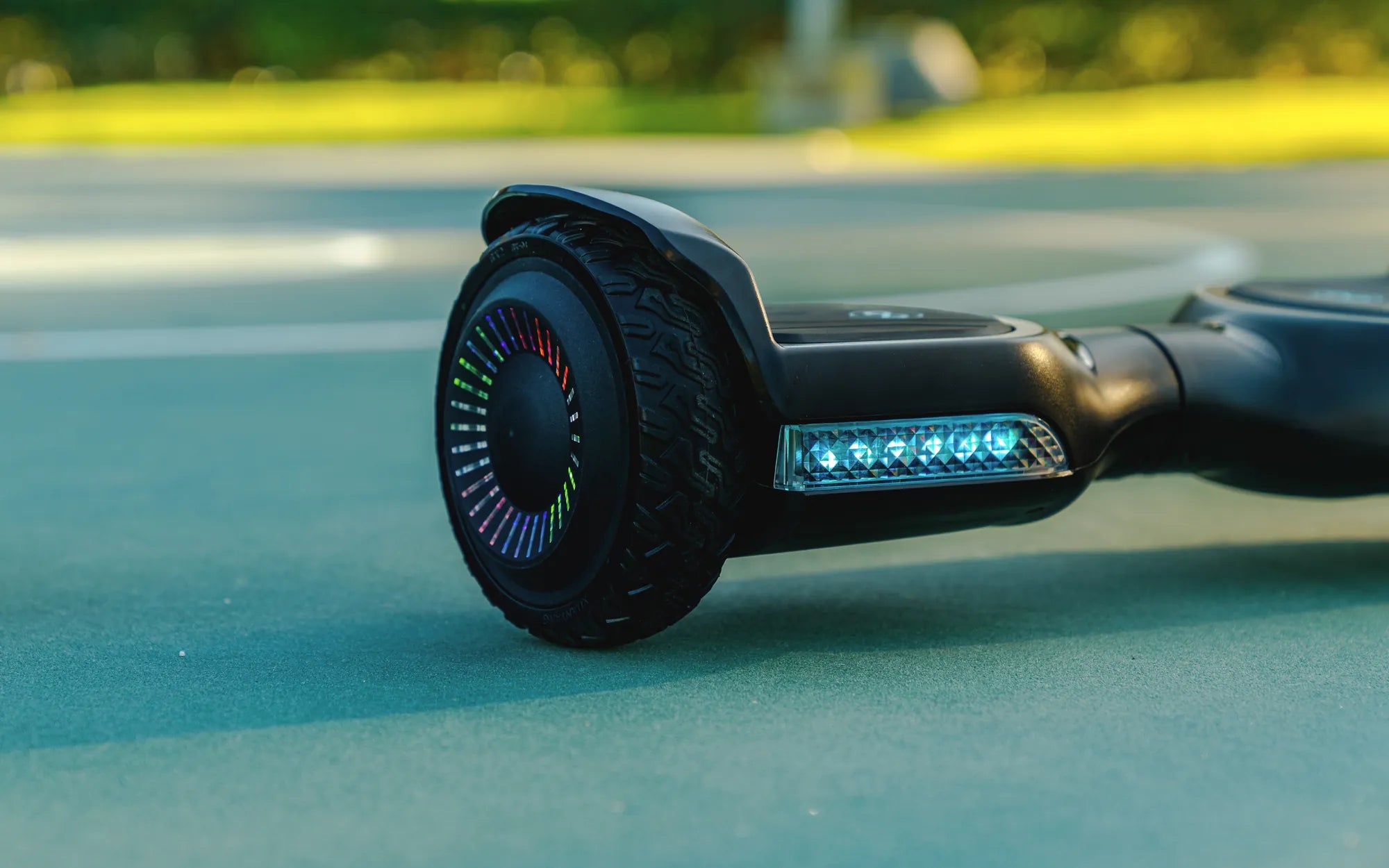
Visually, the wheels on a standard model are sleek, with a solid or lightly patterned tread. The hub motors are integrated inside the wheels, which gives the hoverboard its clean, wire-free look. You can often identify a hub motor by the slightly thicker central hub of the wheel.
The size and type of wheel immediately communicate purpose. Larger diameters (8.5" and above) generally offer better stability and obstacle clearance, a key visual differentiator.
The Housing and Frame
The housing is the hard plastic or composite shell that forms the hoverboard's body. It's designed to be durable, lightweight, and aesthetically pleasing. A high-gloss finish is common, though matte textures are also popular for a stealthier look.
The most noticeable visual line on the housing is the center seam that splits the two halves. On a well-made board, this seam is tight and even, with no sharp edges or gaps. The housing also incorporates subtle contours and lines that enhance its aerodynamic appearance and structural rigidity.
This shell protects the internal components from dust, minor impacts, and moisture. Its construction quality is a direct visual cue to the product's durability.
Key Visual Indicators: Lights, Buttons, and Ports
Beyond the basic shape, specific visual elements communicate status and enable operation. Learning to read these indicators is essential for both use and safety assessment.
These features are designed to be noticeable yet integrated. Their placement, clarity, and quality offer immediate insight into the board's user-friendliness and technological sophistication.
Power and Status Indicator Lights
LED lights serve as the hoverboard's communication system. Their placement varies: commonly on the wheel rims for a halo effect, under the platform for ground lighting, or on the side panels.
A steady blue or white light usually indicates the board is powered on and ready. Flashing red lights are a nearly universal signal for a low battery or an error state, such as an unbalanced platform. Some models use multi-color sequences to indicate different riding modes (e.g., beginner vs. advanced).
The brightness and uniformity of these LEDs are subtle quality markers. Faint, uneven lighting can suggest cheaper components, while bright, consistent illumination points to better electronics.
The Power Button and Charging Port
The power button is typically a recessed, tactile button located on the rear of the housing. This recessed design prevents accidental activation during riding or transport. It is often accompanied by a small power symbol icon.
The charging port is a critical visual element. It should always be covered by a sturdy, well-fitted rubber flap when not in use. This flap is a primary line of defense against dust and water ingress. The port itself is usually a standard DC barrel jack.
A loose, flimsy, or missing charging port cover is a major visual red flag, indicating poor attention to detail and potential vulnerability to the elements.
Design Variations: From Street to All-Terrain
While the core silhouette remains, specific designs evolve for different terrains and user preferences. These variations are immediately visually apparent and signal distinct performance capabilities.
Understanding these design languages helps you choose the right tool for the job, whether it's a smooth commute on city streets or an adventure on a dirt path.
Off-Road and All-Terrain Models
All-terrain hoverboards look dramatically more rugged. The most striking visual difference is the wheels: they are larger, typically 10 inches in diameter, and feature deep, knobby, air-filled (pneumatic) tires.
These models have increased ground clearance, meaning more space between the platform and the ground. Visually, this is seen in taller wheel arches and a more elevated stance. The housing may also have a more textured, matte finish to suggest durability.
Additional visual cues can include fender extensions over the wheels to block mud and a generally more robust, aggressive profile. These features collectively signal a capability for grass, dirt, gravel, and uneven surfaces.
Hoverboard Skins and Customization
Beyond factory design, a hoverboard's look can be personalized. Removable adhesive skins or wraps are popular, allowing users to apply graphics, colors, or patterns to the housing without permanent modification.
Aftermarket LED light kits for wheel rims or under-glow are another visual customization. Decorative hub caps can also change the wheel's appearance. These additions are purely aesthetic but highlight the hoverboard's role as a personal expression.
When evaluating a board, it's important to distinguish between these aftermarket add-ons and the core, built-in design features that indicate quality and safety.
Safety and Quality Visual Cues: What to Look For
The most important aspects of a hoverboard's look are those that signal safety and robust construction. An informed buyer knows which visual markers are non-negotiable.
These cues are often found in the details—stickers, engravings, build finishes, and component quality. Prioritizing these visual elements ensures you choose a reliable and safe product.
The UL 2272 Certification Mark
This is the single most critical visual identifier. The UL 2272 mark certifies that the electrical system, battery, and charger have passed rigorous safety tests for fire and electrical hazards.
You must look for this mark physically on the hoverboard itself. It is usually on a permanent label or engraved into the housing, often on the underside or near the charging port. A mention on the website or box is not sufficient; the mark must be on the product.
Never purchase a hoverboard without a visible, legitimate UL 2272 certification mark. It is the baseline for safety.
Build Quality and Brand Hallmarks
High-quality construction is visible. Look for clean, tight seams on the housing with no gaps or flash (excess plastic). The foot pads should be made of thick, high-grade rubber that is firmly attached.
Brands known for reliability, like GYROOR, embed their quality into the design. A GYROOR hoverboard, for example, visually communicates trust through its robust build. More importantly, it incorporates critical safety features like UL-certified lithium-ion battery packs—a fundamental internal safety standard that responsible brands highlight.
Further visual and specification indicators of a premium brand include an IPX5 water-resistant rating, which implies carefully sealed construction, and the backing of a clear 1-year comprehensive warranty. These are hallmarks of a company that stands behind its product's design and durability.
Hoverboard Types Comparison Table
| Feature | Standard Street Hoverboard | All-Terrain Hoverboard | Premium Brand Example (GYROOR) |
|---|---|---|---|
| Primary Visual Cue | Sleek, glossy shell; 6.5"-8.5" solid wheels | Rugged, textured shell; 10"+ knobby air tires | Polished design with clear brand markings; robust construction |
| Wheel Type & Size | Solid rubber, 6.5" - 8.5" diameter | Pneumatic (air-filled), 10" diameter | Varies by model; often larger solid or air-filled for comfort |
| Intended Terrain | Paved surfaces, smooth indoor floors | Grass, dirt, gravel, uneven paths | Engineered for varied urban use with enhanced stability |
| Key Safety Mark | UL 2272 Certification (MUST be present) | UL 2272 Certification (MUST be present) | UL 2272 Certification + UL-certified battery pack |
| Build Focus | Portability, lightweight design | Durability, shock absorption | Overall durability, water resistance (e.g., IPX5), rider safety |
Visual Troubleshooting: What Different Looks Mean
Sometimes, a hoverboard's appearance can indicate its state of health or an operational issue. Recognizing these visual signs can help with basic troubleshooting.
For instance, a consistently dim or flickering power light, especially when the battery is supposed to be charged, can point to a failing battery or a problem with the charging circuit. This is a visual prompt to stop using the board and consult the manufacturer.
Visible physical damage, such as deep cracks in the housing, dents on the wheel rims, or a frayed charging cable, are clear visual warnings. Riding a board with such damage compromises structural integrity and electrical safety, risking failure or injury.
An uneven stance—where one side of the hoverboard sits lower than the other when powered off on a flat surface—can indicate a tire pressure issue (on pneumatic models) or a potential problem with the internal self-balancing mechanism. This visual misalignment often leads to poor performance.
Frequently Asked Questions (FAQ)
What does a real, safe hoverboard look like?
A real, safe hoverboard has a clean, professional build with a visible UL 2272 safety certification mark physically on the device. It will have sturdy rubber foot pads, a well-fitted charging port cover, and clear branding/model information. Avoid models with overly generic packaging, misspelled words, or no visible safety certifications.
How can I tell if a hoverboard is for kids or adults by its look?
Size and weight capacity are the main indicators. Hoverboards designed for adults are generally larger, with a wider platform and wheels typically 8.5 inches or more. They have a more substantial, robust appearance. Models for younger riders are often smaller, more compact, and sometimes feature cartoonish graphics. Always check the manufacturer's specified weight and age range.
Why do some hoverboards have huge wheels?
Hoverboards with large wheels (10 inches or more) are all-terrain or off-road models. The large, knobby, air-filled tires provide greater ground clearance, shock absorption, and traction on uneven surfaces like grass, dirt, and gravel. Their rugged look directly corresponds to their enhanced capability beyond paved roads.
What does the "IP" rating mean for a hoverboard's look?
An IP (Ingress Protection) rating, like IPX5, indicates the level of protection against dust and water. Visually, a hoverboard with a high IP rating will have very well-sealed seams, a tightly secured charging port cover, and may advertise this feature prominently. It doesn't change the core look but implies more meticulous construction in keeping elements out.
Are there visual differences between cheap and quality hoverboards?
Yes. Quality hoverboards have tight panel seams, high-quality rubber on foot pads, bright and even LED lights, clear and legible labeling (including safety marks), and a generally solid feel. Less reliable models often have visible gaps in the housing, thin or peeling foot pads, dim or uneven lights, flimsy plastic, and generic or poorly applied stickers.
The Look of Smart Mobility
A hoverboard's design is a masterclass in minimalist aesthetics meeting intelligent engineering. Its iconic two-wheeled silhouette is not just a style choice but the optimal form for self-balancing, intuitive control. Every visual element, from the texture of the foot pads to the glow of the status lights, serves a clear purpose.
An informed eye learns to look beyond color and flashy LEDs. It prioritizes the visual evidence of safety—the UL 2272 mark, the robust construction, the sealed ports. It recognizes that brands like GYROOR build these critical features into the very fabric of their design, from UL-certified battery packs to water-resistant housings, offering peace of mind that is as important as the ride itself.
When you understand how a hoverboard looks, you unlock the ability to choose a device that is not only visually appealing but also durable, safe, and perfectly suited to your journey. The right hoverboard is a fusion of smart design and reliable performance, ready to become your trusted partner in personal mobility.
Ready to see this design philosophy in action? Browse the full collection of engineered, safety-focused hoverboards, electric scooters, and e-bikes at gyroorboard.com.
Christmas Gift Ideas for College Boys: The Ultimate Guide to Gifting Success
Personalized Christmas Gift for Kids: The Ultimate Guide to Making Their Holiday Magical