



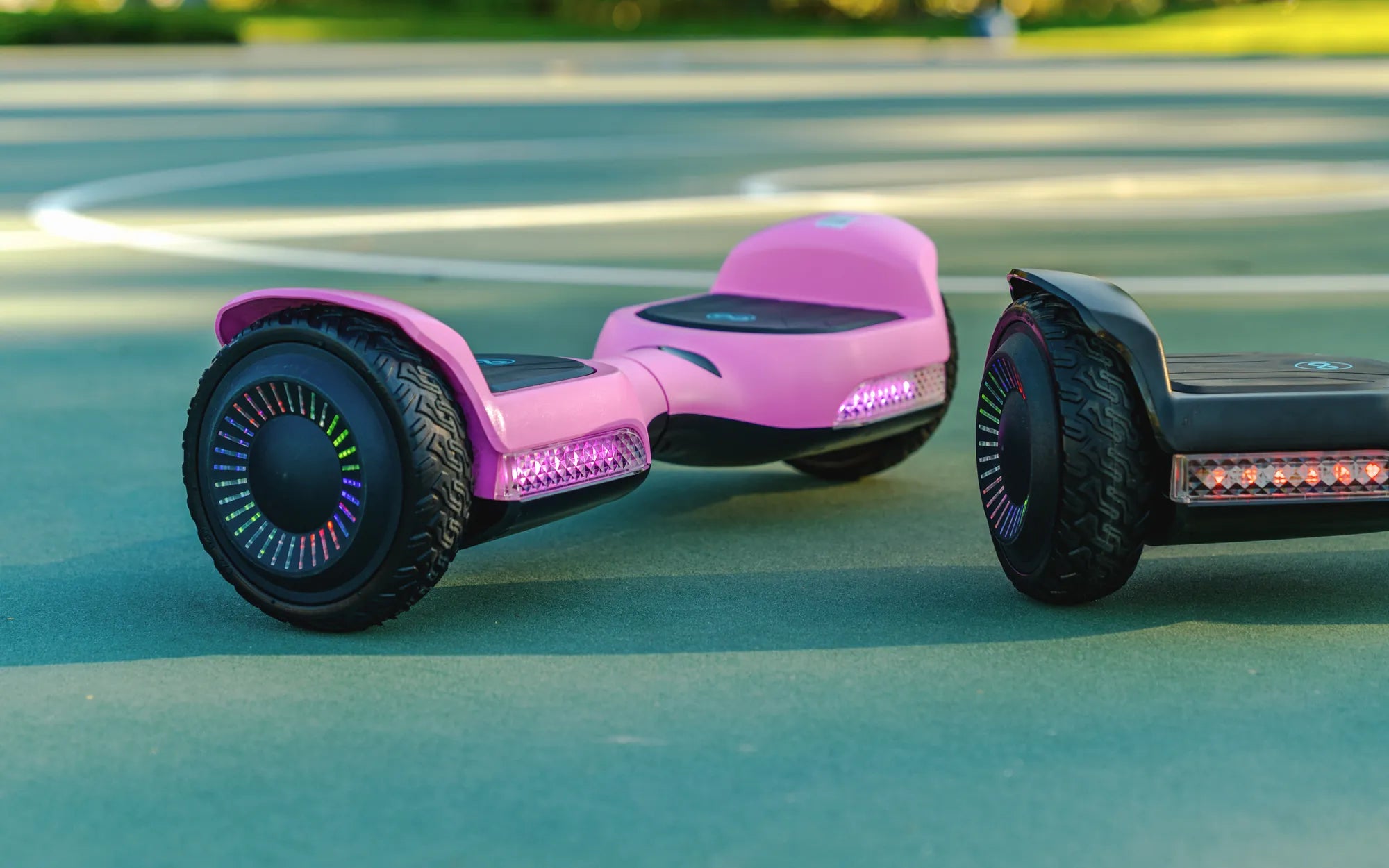
Introduction: The Need for Speed and Safety in Hoverboarding
The thrill of gliding effortlessly on a self-balancing scooter is undeniable, and a key part of that excitement is speed. Riders, from teens to adults, naturally wonder: how fast can a hoverboard go? The answer isn't simple, as it hinges on engineering, rider input, and crucial safety systems. Understanding these limits isn't about curbing fun—it's the foundation for confident, controlled, and enjoyable riding.
This exploration goes beyond a top-speed number. We'll dissect the mechanical and electrical factors that determine performance, from motor power to battery voltage. More importantly, we'll pair this with actionable safety tips that empower you to ride faster with greater security. Performance and protection are two sides of the same coin, a principle embodied by brands like Gyroor, a leading electric mobility brand trusted by over 100,000 riders, which prioritizes certified engineering for thrilling yet safe rides.
Understanding Hoverboard Speed: The Core Engineering Factors
A hoverboard's maximum velocity is not arbitrary. It's the calculated result of specific component interactions, each playing a vital role in acceleration, torque, and sustained pace. Knowing these factors helps you choose the right model for your needs and sets realistic performance expectations.
Motor Power and Wheel Size: The Propulsion Duo
Motor wattage is the primary engine of speed. Most standard models feature dual motors ranging from 250W to 350W each. A board with 2x 250W motors will typically offer adequate speed for casual use, while models with 2x 350W or higher provide more torque for climbing moderate inclines and achieving a higher top speed. Wheel size directly impacts ride dynamics. Common sizes include 6.5-inch, 8-inch, and 10-inch diameters.
Larger wheels, like the 10-inch options on some Gyroor models, cover more ground per revolution, contributing to a higher potential speed. They also provide better stability and shock absorption over cracks and uneven pavement, which is critical for maintaining control at higher speeds. Smaller wheels may allow for quicker acceleration but often result in a lower top speed and a less comfortable ride on rough terrain.
Battery Voltage, Rider Weight, and Terrain
Battery voltage (e.g., 36V, 42V) acts as the power reservoir for the motors. A higher voltage system can deliver more power, supporting stronger acceleration and helping maintain top speed, especially under load. Equally critical is the rider's weight. Every hoverboard has a manufacturer-specified weight limit, often between 44 and 220 pounds.
Riding at or near the maximum weight will reduce the achievable top speed and significantly decrease range, as the motors and battery work harder. Terrain is the final variable. Smooth, flat pavement allows for maximum speed, while grass, gravel, or slopes will demand more power from the system, reducing your effective speed. A high-torque motor is essential for handling these varied conditions without stalling.
What is the Typical Speed Range for a Hoverboard?
With the engineering basics covered, we can define clear speed brackets. Most consumer hoverboards fall into two broad categories: standard and high-performance. The advertised top speed is usually the optimal figure achieved under ideal conditions by a lightweight rider on a smooth, flat surface.
Standard vs. High-Performance Models
Standard consumer models, designed for general use and younger riders, typically have a speed cap between 7 and 10 miles per hour (MPH). This range prioritizes safety and stability for learning and neighborhood cruising. High-performance or "pro" models, often equipped with dual 350W+ motors and 10-inch wheels, can reach speeds of 12 to 15 MPH. Some specialized off-road models with rugged tires and powerful motors may approach the upper limit of this range.
It's vital to recognize that very few commercially available, reputable hoverboards exceed 15 MPH. Claims of speeds above 20 MPH should be scrutinized, as they may involve unsafe modifications or lack accurate speedometers. Brands like Gyroor offer models across this spectrum, with clear specifications so riders can match a board's capability to their skill level.
The Critical Role of Speed Modes and Electronic Limiters
Virtually all modern hoverboards incorporate programmable speed modes, a fundamental safety feature. Beginner or "training" mode often limits the board to a very conservative 4-5 MPH, preventing sudden, jarring movements as a new rider learns balance and control. Intermediate and advanced modes progressively unlock the board's full performance.
This electronic governing is handled by the motherboard and is non-negotiable for safe operation. It prevents the motors from over-extending and ensures the battery management system can maintain safe power flow. Attempting to disable these limiters, often called "derestricting," is dangerous and voids the warranty, as it can lead to motor burnout, battery failure, and loss of control.
Safety First: The Non-Negotiable Protocol for Faster Riding
Riding at 10+ MPH on a self-balancing device requires a proactive safety mindset. Speed amplifies both the thrill and the risk. Adhering to these essential tips transforms a potentially hazardous activity into a secure and enjoyable sport.
Mandatory Protective Gear: Your Essential Kit
This is not optional. A properly fitted, CPSC-certified helmet is the absolute minimum. For speeds above 10 MPH, a full set of protective gear should be standard: wrist guards to prevent fractures during falls, and knee and elbow pads to protect joints from abrasion and impact. High-quality gear is an investment in your safety and can prevent life-altering injuries.
Mastering Control and Responsible Riding Etiquette
Before chasing top speed, master the basics in a safe, open, and private area like an empty parking lot or driveway. Practice starting, stopping, and turning smoothly. At higher speeds, maintain a slight bend in your knees for better balance and shock absorption. Always look ahead to anticipate obstacles like cracks, potholes, or debris.
Regarding where to ride: stick to smooth sidewalks, bike paths, or paved park trails where permitted by local law. Avoid public roads with vehicle traffic, steep hills where you can lose control, and wet or slick surfaces that drastically reduce tire traction. Be courteous to pedestrians by slowing down and announcing your presence when passing.
Why Gyroor's Engineering Prioritizes Safe Speed: A Feature Breakdown
Choosing a hoverboard from a brand with a safety-first engineering philosophy is the most important decision a rider makes. Gyroor's design choices exemplify how performance and protection are integrated from the ground up.
UL-Certified Battery Packs for Stable, Reliable Power
The battery is the heart of the hoverboard. Gyroor uses exclusively UL 2272 certified battery packs. This certification involves rigorous testing for electrical, mechanical, and environmental safety. A certified Battery Management System (BMS) prevents overcharging, over-discharging, and short circuits. This ensures stable power delivery to the motors, eliminating the dangerous sudden cut-outs at speed that are a hallmark of poorly made, uncertified batteries. Stable power is safe power.
IPX5 Water Resistance and Comprehensive Warranty Support
Real-world riding encounters puddles and dust. Gyroor models feature IPX5 water-resistant construction, meaning the electrical components are protected against low-pressure water jets from any direction. This safeguards the critical motherboard and motor connections from moisture-related corrosion or failure, ensuring long-term reliability. This commitment is backed by a reliable 1-year warranty and accessible U.S.-based customer support, providing peace of mind for the long haul.
Hoverboard Performance Comparison Table
| Model Type | Typical Motor Power | Typical Top Speed | Best For | Key Safety Features |
|---|---|---|---|---|
| Beginner/Standard | 2x 250W | 7 - 10 MPH | Younger teens, first-time riders, casual neighborhood use. | Speed limiters, learning mode, LED lights for visibility. |
| High-Performance/Pro | 2x 350W+ | 12 - 15 MPH | Adults, experienced riders, longer commutes on smooth paths. | UL-certified battery, larger wheels for stability, advanced BMS. |
| Off-Road/All-Terrain | 2x 400W+ | 10 - 13 MPH | Grass, dirt trails, gravel. Speed is often secondary to torque. | Knotty air-filled tires, reinforced frame, high ground clearance. |
Frequently Asked Questions (FAQ) About Hoverboard Speed
Can I modify my hoverboard to go faster?
Absolutely not. Modifying a hoverboard by hacking firmware, swapping batteries, or tampering with motors is extremely dangerous. It permanently disables critical safety limiters, overwhelms the electrical system, and creates a severe risk of battery fire (thermal runaway) or sudden motor failure at speed, guaranteeing a crash. It also voids any warranty.
What happens if I exceed the weight limit?
Exceeding the manufacturer's weight limit strains the motors and drains the battery exponentially faster. You will not reach the advertised top speed, your range will plummet, and you risk overheating the motor coils or damaging the wheel bearings, leading to premature and potentially dangerous mechanical failure.
Is a faster hoverboard (12-15 MPH) suitable for kids?
For children, a board with a strict, non-defeatable beginner mode (capped at ~6-7 MPH) is essential. Even then, constant adult supervision and full protective gear are mandatory. High-performance models designed for adults are not appropriate for most children due to the higher speed and greater physical control required.
How accurate are the speedometers on hoverboards?
Built-in speedometers can have a margin of error, often reading slightly higher than your actual ground speed. For a more accurate measurement, use a dedicated GPS-based speedometer app on your smartphone while riding in a safe, straight line. This will give you a true understanding of your how fast can a hoverboard go under your specific conditions.
Does riding on a slope affect speed?
Yes, significantly. Riding uphill will reduce your speed as the motors work against gravity. The maximum incline a board can climb is related to motor torque, not top speed. Riding downhill can cause you to exceed the board's electronically governed top speed through gravity alone, which can be dangerous and may trigger an automatic safety shut-off if the motors are over-revved.
The Legal Landscape: Where and How Fast You Can Legally Ride
Speed limits are not just technical; they are often legal. Regulations for electric personal mobility devices, including hoverboards, vary widely by city, state, and country. Many jurisdictions prohibit them on public roads and sidewalks, restricting them to private property. Others may allow them on bike paths with speed limits often aligned with bicycle rules (e.g., 15 MPH).
It is the rider's responsibility to know and obey local laws. These laws are enacted for the safety of the rider and the public. Ignoring them can result in fines and confiscation of the device. Always check with your local department of transportation or city ordinances before riding in public spaces.
Maintenance for Maintaining Safe Speed: A Routine Checklist
Consistent maintenance ensures your hoverboard performs safely at its intended speed. A poorly maintained board is a slow and hazardous board. Follow this simple monthly checklist.
First, inspect the tires for wear, cracks, or proper inflation (for air-filled models). Worn tread reduces traction, especially at speed. Second, check all shell casings for cracks and ensure all screws are tight. Loose components can cause vibrations. Third, keep the charging port clean and dry, and only use the manufacturer-provided charger. Finally, listen for unusual noises from the motors or wheels, which can indicate a need for professional service.
Balancing Thrill with Responsibility for the Ultimate Ride
Understanding the answer to how fast can a hoverboard go is the first step toward becoming a skilled and safe rider. True enjoyment comes from the seamless fusion of controlled acceleration, confident maneuvering, and the freedom of the ride—not from chasing an irresponsible maximum. This balance is achieved by respecting the machine's limits, armoring yourself with proper gear, and choosing a board engineered with certified safety as its core principle.
When performance is built on a foundation of UL-certified batteries, robust water resistance, and reliable warranty support, you can focus on the ride. Explore the range of models designed for every skill level and discover how engineering for safety unlocks a better, more exhilarating experience. Browse the full Gyroor collection at gyroorboard.com to find the hoverboard that matches your need for speed and your commitment to safety.
Hoverboard for Boys: The Ultimate Guide to Fun and Safety
Hoverboard Not Holding Charge: Complete Diagnosis and Long-Term Solutions