



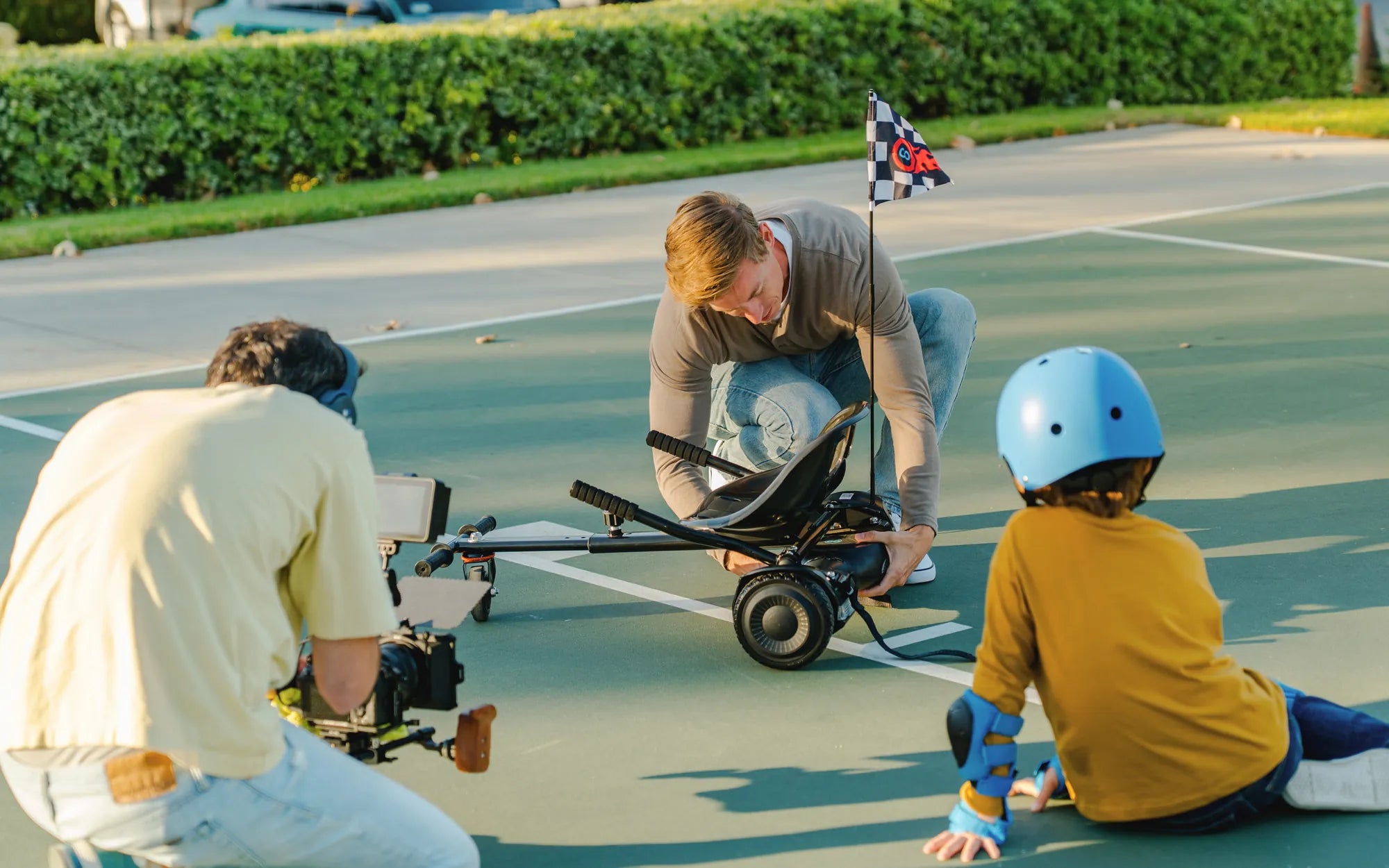
Introduction: Why Hoverboards Are the Perfect Ride for Boys
A hoverboard for boys represents more than just a toy; it's a gateway to outdoor adventure, physical activity, and developing coordination. These self-balancing scooters offer a unique blend of fun and practical mobility, making them a top choice for kids seeking excitement and a taste of independence. Selecting the right model is crucial, as it directly impacts safety, durability, and overall enjoyment. This guide will navigate you through every critical decision, from technical specs to riding techniques, ensuring you choose a board that delivers maximum fun without compromising on security. We'll reference industry-leading standards and brands like Gyroor, a trusted name known for UL-certified batteries and robust designs trusted by over 100,000 riders.
Choosing the Right Hoverboard: Key Features for Performance and Safety
Understanding the core specifications of a hoverboard is the first step to a smart purchase. These features determine where it can ride, how long it lasts, and most importantly, how safe it is for your child. Prioritizing certified safety and robust construction is non-negotiable for any hoverboard for boys.
Motor Power and Speed: Balancing Thrill with Control
Motor power, measured in watts (W), dictates a board's ability to climb hills, accelerate, and carry weight. For most boys, a dual-motor system (one in each wheel) providing a combined 300W to 500W is ideal. This configuration offers superior balance, torque for gentle inclines, and smoother control compared to single-motor boards. Speed typically ranges from a beginner-friendly 6 mph to a more thrilling 10 mph. A model with adjustable speed modes is perfect, allowing limits to be set while learning before unlocking higher speeds as skills advance.
Battery Life and Range: Maximizing Playtime
Battery capacity defines adventure range. Look for a combination of voltage (V) and amp-hours (Ah); a common setup is 36V/4.0Ah. This typically translates to a real-world range of 10 to 15 miles on a single charge, ample for extended neighborhood exploration. Charge time usually falls between 2-4 hours. The battery's safety certification is paramount. Insist on a UL 2272-certified battery pack, like those used by Gyroor, which undergo rigorous testing for overcharge, short circuit, and overheating—ensuring the fun isn't interrupted by safety concerns.
Build Quality and Durability: Withstanding the Rigors of Play
A hoverboard for an active boy must be tough. The frame should be constructed from materials like aerospace-grade aluminum or reinforced ABS plastic. Wheel size and type are critical: larger wheels (6.5” to 8.5”) provide better stability and obstacle clearance. Solid rubber tires are maintenance-free for pavement, while air-filled (pneumatic) tires offer a smoother, more shock-absorbent ride for grass, gravel, and off-road use. A robust build ensures the board can handle the occasional bump, jump, or rough landing.
Safety Certifications: The Non-Negotiable Features
Never compromise on safety certifications. UL 2272 is the absolute standard for fire safety in the United States; it certifies the entire electrical system. Additionally, an Ingress Protection (IP) rating indicates resilience against elements. An IPX4 rating protects against splashing water, while IPX5 (a standard in many Gyroor models) can handle water jets from any direction, making it safe through puddles and light rain. These certifications, combined with reliable self-balancing gyroscope technology, form the essential safety foundation.
Top Hoverboard Models for Boys: A 2024 Comparison
To make your choice clearer, here is a data-driven comparison of three exemplary hoverboard types, each catering to different riding styles and environments. This table highlights why specific features matter for different use cases.
| Feature | The All-Terrain Adventurer (e.g., Gyroor Warrior) | The Urban Commuter & Trick Master | The Budget-Friendly Starter Board |
|---|---|---|---|
| Best For | Off-road, parks, trails, rough terrain | Smooth pavement, tricks, neighborhood cruising | First-time riders, paved surfaces, value |
| Motor Power | Dual 500W (1000W combined) | Dual 350W | Dual 300W |
| Max Speed | 10 mph | 9 mph | 7.5 mph |
| Tire Type | 8.5" air-filled, all-terrain | 6.5" solid rubber, LED lit | 6.5" solid rubber |
| Key Safety | UL 2272, IPX5 Waterproof | UL 2272, IPX4 | UL 2272 |
| Ideal Rider | The adventurous explorer | The stylish urban rider | The cautious beginner |
The All-Terrain Adventurer: Gyroor Warrior Series
For boys who see the backyard as a launchpad for exploration, an all-terrain model like the Gyroor Warrior is ideal. Its powerful dual 500W motors conquer hills, grass, and dirt trails with ease. The large 8.5-inch air-filled tires provide exceptional shock absorption and traction. With a high IPX5 waterproof rating, it laughs off puddles and wet grass. This hoverboard for boys is built for endurance and adventure, offering an extended range that encourages exploration beyond the sidewalk.
The Urban Commuter & Trick Master
This category focuses on agility and style for paved surfaces. Lighter than all-terrain models, these boards feature responsive controls perfect for learning spins and maneuvers. Integrated LED wheel lights and deck accents enhance visibility during dusk rides and add a cool factor. The smoother ride of solid rubber tires on pavement makes them energy-efficient, maximizing battery life for cruising around the block or meeting up with friends.
The Budget-Friendly Starter Board
Entry-level doesn't mean unsafe. A quality starter board will still possess the crucial UL 2272 certification. It will have adequate power (around 300W) for learning on flat ground, a modest speed limit for safety, and a reliable battery for shorter rides. While it may lack premium features like Bluetooth speakers or high waterproofing, it provides a solid, safe introduction to hoverboarding, allowing you to gauge a child's interest and responsibility before investing in a more advanced model.
Mastering the Ride: A Step-by-Step Safety and Skills Guide
Once you have the right hoverboard, proper training is the key to safe enjoyment. This process builds confidence and muscle memory, turning a wobbly beginner into a skilled rider.
Gear Up: Essential Safety Equipment
Before the board is even switched on, full protective gear must be worn. This is non-negotiable. A properly fitted multi-impact helmet is the most critical piece. Wrist guards are essential for instinctive fall reactions, while knee and elbow pads protect joints from scrapes and impacts. Investing in high-quality safety gear is an investment in your child's well-being and your own peace of mind.
The First Ride: Learning to Mount, Balance, and Dismount
Start on a flat, open, smooth surface like a driveway or empty tennis court. Place the board on the ground and turn it on. Have the rider stand next to the board, place one foot on it, and use a wall, fence, or a parent's hand for stability as they step the second foot on. Practice finding the "sweet spot" for balance—feet shoulder-width apart, near the wheel arches. To move forward, gently lean forward from the ankles; to move backward, lean back slightly. To dismount, come to a complete stop and step off one foot at a time, backwards, like getting off a step.
Advanced Maneuvers and Riding Etiquette
After mastering straight-line travel, practice turning by applying subtle pressure with the toes of one foot while easing pressure with the other. Always be aware of the surroundings. Public riding etiquette is crucial: hoverboards are generally not allowed on public roads. Ride in bike lanes where permitted, on empty sidewalks while yielding to all pedestrians, or in parks. Avoid crowded areas and never ride at night without high-visibility gear and lights. Respecting these rules ensures a positive experience for everyone.
Hoverboard Maintenance and Care Tips for Longevity
Simple, regular maintenance keeps a hoverboard for boys running safely and extends its lifespan for years of fun.
Battery Care and Charging Best Practices
Always use the manufacturer-provided charger. Avoid leaving the board plugged in for extended periods after it's fully charged. Store the hoverboard in a cool, dry place, away from direct sunlight or freezing temperatures. For long-term storage (e.g., over winter), charge the battery to about 50-60% every two months to maintain cell health. Following these practices with a UL-certified battery ensures optimal performance and safety.
Cleaning and Storage
After riding on wet or dirty surfaces, wipe down the board with a slightly damp cloth. For models with an IPX4 or IPX5 rating, you can be more liberal with cleaning, but avoid high-pressure water jets directly on charge ports. Regularly check wheel wells and the underside for packed debris like pebbles or grass, which can interfere with wheel movement. Store the board upright or flat in a stable location to prevent accidental falls or damage.
Troubleshooting Common Issues
If the board won't power on, first check that it is adequately charged and the power button is firmly pressed. If one side seems unresponsive, place the board on a level surface and power it on to allow the gyroscopes to self-calibrate. For connectivity issues with companion apps, ensure Bluetooth is enabled and the app has the necessary permissions. Refer to the user manual for specific recalibration instructions, which often involve holding the power button in a certain sequence.
Frequently Asked Questions (FAQ)
Q: What is the right age for a hoverboard?
A> Most manufacturers recommend hoverboards for children aged 8 and up. This is less about a strict age and more about the child's size (meeting the minimum weight requirement), coordination, maturity to follow safety rules, and ability to wear protective gear consistently.
Q: Are hoverboards safe for beginners?
A> Modern hoverboards with UL 2272 certification and advanced self-balancing technology are very safe when used correctly. The key is combining a certified board with full protective gear and supervised learning in a safe, controlled environment. Falls are part of learning, but gear minimizes injury risk.
Q: Where is it legal to ride a hoverboard?
A> Laws vary significantly by city, state, and country. They are generally prohibited on public roads and highways. They may be allowed on bicycle paths, in parks, or on private property. Always check your local municipal codes or transportation authority website for the most accurate and current regulations.
Q: How do I know if a hoverboard is high-quality?
A> Look for three definitive markers: 1) UL 2272 certification label on the board and/or charger, 2) a reputable brand with verifiable customer reviews and a clear warranty (like Gyroor's 1-year comprehensive warranty), and 3) solid construction materials—it should feel substantial, not flimsy or plasticky.
Q: Can a hoverboard get wet?
A> It depends entirely on its IP rating. A board with no rating should be kept completely dry. A model with an IPX4 rating can handle light splashes. A hoverboard with an IPX5 rating, like several in the Gyroor lineup, is designed to withstand water jets and can safely ride through puddles and in light rain. Never submerge any hoverboard in water.
Conclusion: Smart Fun Starts with Safety
Choosing the perfect hoverboard for boys is a balance between enabling exhilarating fun and enforcing unwavering safety standards. The journey begins with selecting a robust, UL 2272-certified model from a trusted brand that matches your child's riding ambitions—whether that's conquering trails or mastering neighborhood tricks. This foundation must be paired with a commitment to protective gear and patient, supervised skill development. By following the guidance on maintenance and riding etiquette, you ensure this investment provides lasting joy and adventure. For a range of hoverboards that embody this principle of thrilling, secure performance, explore the engineering and design that goes into every model. Browse the full Gyroor collection at gyroorboard.com to find the ride that unlocks your child's next adventure.
What Is the Fastest Hoverboard? A Complete Guide to Speed and Performance
How Fast Can a Hoverboard Go: Speed Limits & Essential Safety Guide