

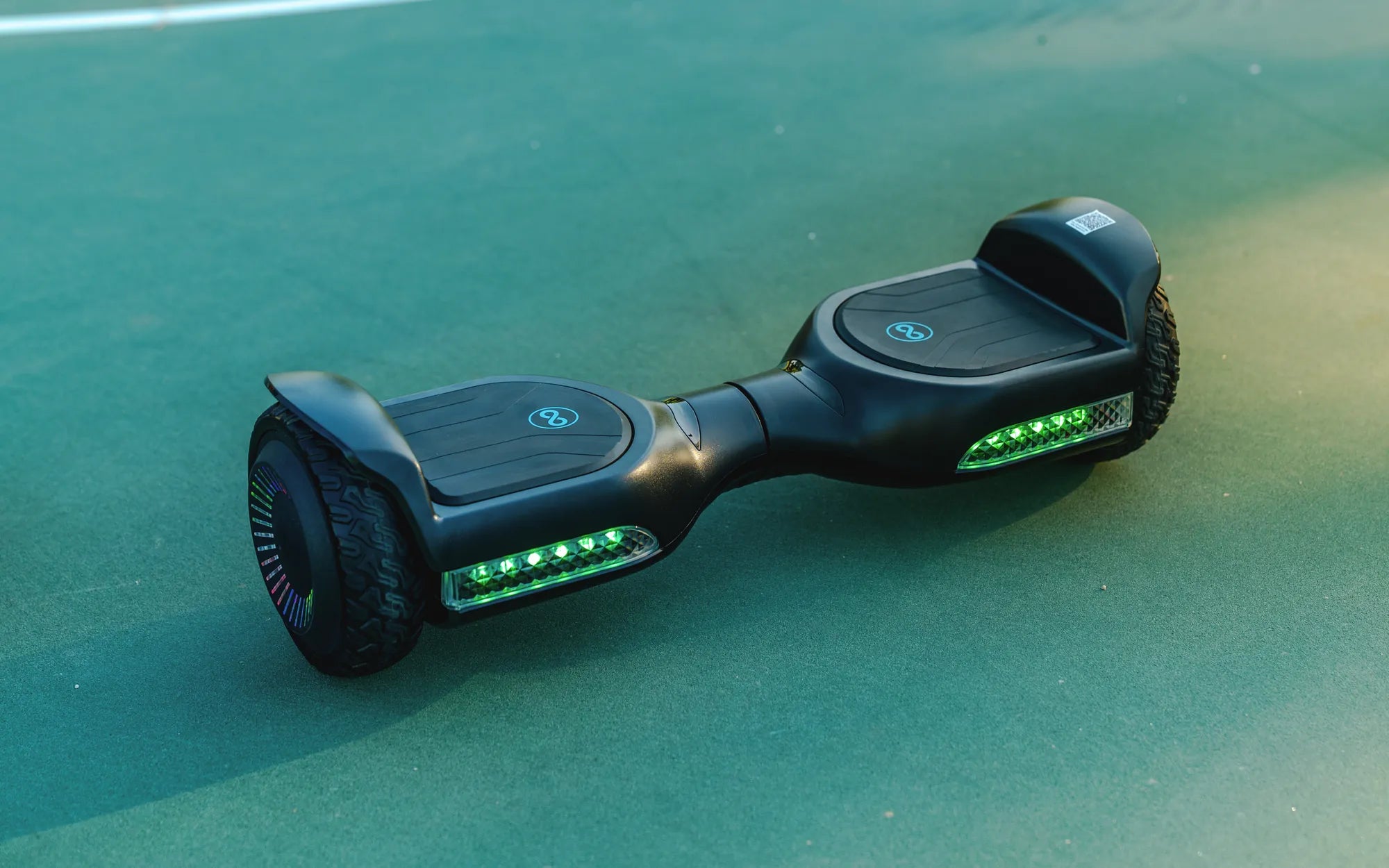
Introduction: Understanding Hoverboard Battery Lifespan
When you invest in a hoverboard, one question dominates: how long will a hoverboard battery last? The answer defines your riding freedom, daily usability, and long-term value. Battery life isn't a single number; it's measured in two critical ways: the mileage you get on a single charge and the total years before the battery degrades significantly. Understanding this distinction is key to setting realistic expectations and getting the most from your device.
Quality construction and premium battery technology directly dictate both metrics. Brands like Gyroor, a leading electric scooter and e-bike brand trusted by over 100,000 riders, build their reputation on using UL-certified battery packs and robust engineering. This guide will provide the data-driven facts you need, from the science behind lithium-ion cells to practical maintenance tips that extend your hoverboard's service life.
Key Factors That Determine Your Hoverboard's Battery Life
Multiple variables interact to determine exactly how long a hoverboard battery will last on each ride and over its lifetime. These factors range from the technical specifications of the battery itself to how, where, and by whom the hoverboard is used. By controlling what you can, you directly influence performance and longevity.
Battery Capacity and Quality (The Core Component)
The battery is the heart of your hoverboard. Its capacity, measured in Amp-hours (Ah) or Watt-hours (Wh), acts like a gas tank—a higher number means more potential energy stored. A standard hoverboard might have a 4.0Ah battery, while long-range models can feature 6.5Ah or larger.
More critical than raw capacity is build quality and safety certification. UL-certified lithium-ion packs, like those used in Gyroor hoverboards, undergo rigorous testing for stability, charge cycles, and short-circuit protection. Non-certified, cheap batteries pose a significant fire risk and often fail to deliver their stated capacity, crumbling after just a few dozen cycles.
Rider Weight and Terrain
Physics plays a major role. Heavier riders require more power from the motors to achieve and maintain speed, which drains the battery faster. Similarly, riding on inclines, rough terrain, or soft grass dramatically increases the motor's workload compared to cruising on smooth, flat pavement.
As a rule of thumb, every 20 pounds over the recommended rider weight can reduce your per-charge range by 5-10%. Riding up a moderate hill can consume battery power two to three times faster than on level ground. Understanding these impacts helps plan your routes and manage expectations.
Riding Style and Speed
Your throttle hand controls your battery meter. Aggressive riding with constant hard acceleration, frequent braking, and maintaining top speed maximizes power draw. This style is fun but inefficient, potentially cutting your range by 30% or more.
In contrast, a smooth, steady cruising speed—often around 7-10 mph—allows the motors and battery to operate at an efficient equilibrium. Gentle acceleration and anticipating stops to use regenerative braking (where available) can help conserve charge and extend the overall lifespan of the battery cells.
Temperature and Storage Conditions
Lithium-ion batteries are sensitive to temperature extremes. The ideal operating range is between 50°F (10°C) and 85°F (30°C). Riding in very cold conditions temporarily reduces the battery's ability to deliver power, making it seem depleted faster. Extreme heat, on the other hand, can cause permanent chemical damage to the cells, reducing their total capacity.
Storage is equally important. Never leave your hoverboard in a car on a hot day or in an unheated garage during freezing winters. Long-term storage in extreme temperatures is one of the fastest ways to permanently degrade a battery, answering the question of how long a hoverboard battery will last with a disappointing "not long."
Breaking Down Battery Life: Per Charge vs. Overall Lifetime
To truly understand how long a hoverboard battery will last, we must separate two distinct concepts: the range per single charge and the total functional lifespan of the battery pack. Confusing these leads to frustration. One dictates your daily ride; the other dictates your long-term investment.
Mileage Per Single Charge (The Range)
This is the most immediate measure of battery life: the distance you can travel on a full charge under specific conditions. Manufacturers provide estimates, but real-world results vary based on the factors previously discussed.
For standard consumer hoverboards with 4.0Ah batteries, a realistic range is 6 to 12 miles. Premium or long-range models with 6.5Ah+ batteries, like those in Gyroor's high-performance lines, can achieve 10 to 20 miles or more on a single charge. This range assumes an average rider weight (around 160-180 lbs), flat paved terrain, and moderate speeds.
| Battery Capacity (Typical) | Estimated Range (Ideal Conditions) | Real-World Range (Mixed Use) |
|---|---|---|
| 4.0 Ah | 10-12 miles | 6-9 miles |
| 4.5 Ah | 12-15 miles | 8-11 miles |
| 6.5 Ah+ (Long-Range) | 18-22 miles | 12-18 miles |
Total Lifespan Before Replacement (Cycle Life)
This defines how long a hoverboard battery will last in terms of years before it needs replacement. Lifespan is measured in charge cycles. One cycle is defined as using 100% of the battery's capacity, which can be spread over multiple charges (e.g., two 50% discharges equal one cycle).
A quality UL-certified battery is typically rated for 300 to 500 full charge cycles before its capacity degrades to about 70-80% of its original state. For a casual rider charging twice a week, this translates to 3-5 years of use before noticeable range reduction. High-quality packs, like those tested for 500+ cycles in Gyroor products, are designed to reach the upper end of this lifespan with proper care.
Maximizing Your Hoverboard Battery's Lifespan: Best Practices
Your habits have a profound impact on answering how long your hoverboard battery will last. Proactive care isn't complicated; it's about consistent, smart practices that preserve the battery's chemical health and physical integrity.
Charging Habits for Long-Term Health
Avoid routinely draining the battery to 0% and then charging to 100%. For lithium-ion cells, partial discharges are less stressful. Try to recharge when the battery level drops to 20-30%. Similarly, don't leave the hoverboard plugged in continuously for days after it's fully charged.
Always use the manufacturer's provided charger. Off-brand chargers may deliver incorrect voltage or current, leading to overheating, reduced battery life, or safety hazards. A proper charger is part of the battery management system that protects your investment.
Proper Storage and Maintenance
If you won't be using your hoverboard for a month or more, store it in a cool, dry place. The ideal storage charge level is around 50-60%. Never store it fully charged or completely empty, as both states accelerate capacity loss during inactivity.
Physical protection matters. A hoverboard with a high water-resistance rating like IPX5 (a standard feature on Gyroor models) is shielded from dust and water jets, preventing moisture from corroding battery terminals and electronics. Always dry your hoverboard thoroughly if it gets wet, even with a good IP rating.
Routine Care and Warranty
Simple mechanical upkeep supports battery efficiency. Keep tires properly inflated to reduce rolling resistance. Clean the hoverboard regularly to prevent debris from interfering with wheels or sensors, which can cause the motors to work harder.
Finally, choose a brand that stands behind its battery. A comprehensive 1-year warranty that covers the battery against defects, like Gyroor's, provides peace of mind. It ensures that if a battery fails prematurely due to manufacturing issues, you have support, protecting your investment from day one.
Hoverboard Battery Safety: Non-Negotiable Protocols
Battery longevity is important, but safety is paramount. Lithium-ion batteries are safe when designed and handled correctly, but neglecting safety can lead to failure or hazard. Following these protocols is essential for ensuring your hoverboard remains reliable and secure.
First, only purchase hoverboards with recognized safety certifications, notably UL 2272 for the entire device and UL certification for the battery pack itself. These standards test for electrical, mechanical, and fire safety. Gyroor's commitment to these certifications is a core aspect of their product design.
Never attempt to modify or open the battery compartment. Tampering voids warranties and can damage the battery's internal management system, leading to unstable operation. If you notice physical damage to the hoverboard casing, especially after a significant impact, have it inspected before charging or riding again.
Charge your hoverboard on a hard, non-flammable surface in a well-ventilated area. Avoid charging on carpets, beds, or near curtains. Do not charge immediately after a long ride when the battery is warm; let it cool to room temperature first. Always supervise the charging process and unplug the charger once complete.
Comparing Hoverboard Types for Different Battery Needs
Not all hoverboards are equal, and their design directly influences how long the hoverboard battery will last for your specific use case. Understanding the differences helps you match a model to your lifestyle, ensuring the battery performance meets your expectations.
Standard Commuter Models: These are built for paved paths and neighborhood rides. They typically feature 6.5" to 8.5" wheels and batteries in the 4.0Ah-4.5Ah range. They offer a balance of range (6-12 miles) and portability, ideal for casual users and lighter riders.
All-Terrain/Off-Road Models: Built with larger, rugged tires (8.5"+), more powerful dual motors, and reinforced frames. To compensate for the higher power demand of rough terrain, they often come with larger capacity batteries (6.5Ah and above). This gives them a similar or even greater potential range (10-18+ miles) despite the harder workload.
Premium Performance Models: These focus on speed, features, and extended range. They incorporate the highest capacity batteries, advanced battery management systems, and efficient motors. Brands like Gyroor design these for riders who prioritize maximum distance per charge and long-term durability, often pushing the real-world range toward the 15-20 mile mark.
When to Replace Your Hoverboard Battery: Clear Warning Signs
Even with perfect care, all batteries eventually wear out. Recognizing the signs of a failing battery prevents you from being stranded and helps you plan for a replacement. A gradual decline is normal; a sudden change is a warning.
The most obvious sign is a drastically reduced range. If your hoverboard once reliably traveled 10 miles but now struggles to reach 4 on the same route and conditions, the battery's capacity has likely degraded beyond practical use. The device may also show inaccurate battery level indicators, dropping from full to empty in a very short time.
Physical and operational symptoms include the battery taking an abnormally short time to charge fully, the hoverboard feeling underpowered on hills it once handled easily, or the device shutting down unexpectedly even when the indicator shows charge remaining. Any swelling of the battery compartment or unusual heat during charging or use requires immediate cessation of use and professional inspection.
FAQs: Hoverboard Battery Questions Answered
How long does it take to charge a hoverboard battery?
A standard-capacity hoverboard battery (4.0Ah) typically takes 2 to 4 hours to charge from empty to full using the correct charger. Larger capacity batteries (6.5Ah+) may take 4 to 6 hours. Always refer to your specific model's manual.
Can I replace the hoverboard battery myself?
Yes, on most models, the battery is user-replaceable. However, it is crucial to purchase a compatible, high-quality replacement battery (preferably from the original manufacturer) and follow the installation instructions precisely. Ensure the hoverboard is powered off before attempting any replacement.
What are the signs my battery needs replacing?
Key signs include: a severe reduction in driving range (less than 50% of original), the battery failing to hold a charge for more than a few hours idle, the device powering down unexpectedly under load, or the battery indicator behaving erratically.
Is it safe to ride my hoverboard in the rain?
Only if it has a sufficient water-resistance rating. A rating of IPX5, like many Gyroor models, means it can withstand water jets from any direction, making it safe for light rain and wet pavement. However, you should avoid deep puddles and always dry the hoverboard thoroughly afterward. Never ride a non-water-resistant model in the rain.
Does cold weather permanently damage the battery?
Riding in cold weather temporarily reduces performance and range but does not usually cause permanent damage if the battery itself isn't frozen. Permanent damage occurs from storing the battery in freezing temperatures for extended periods. Always store your hoverboard indoors in climate-controlled environments.
Investing in Battery Longevity and Ride Quality
Ultimately, how long a hoverboard battery will last is a partnership between product quality and user stewardship. You can follow every best practice, but if the battery pack lacks proper certification and robust construction, its lifespan will be inherently limited. Choosing a reputable brand is the first and most critical step toward long-term satisfaction.
Brands like Gyroor build this partnership into their products. With UL-certified battery packs tested for 500+ charge cycles, IPX5 water-resistant designs that protect internal components, and a reliable 1-year warranty, the foundation for longevity is already set. Your role is to build upon it with smart charging, proper storage, and mindful riding.
By understanding the factors at play and implementing the care guidelines in this guide, you can confidently maximize both your per-charge adventures and the total years of service from your hoverboard. The result is not just a longer-lasting battery, but more consistent performance, greater safety, and a significantly higher return on your investment. Choose quality, ride smart, and maintain your gear—the open path awaits.
Ready for a hoverboard built to last? Explore the full range of high-performance, durable models with certified batteries and robust warranties. Browse the full Gyroor collection at gyroorboard.com to find your perfect ride.
Best Self Balancing Scooter and Hoverboard: The Ultimate Guide to Choosing the Right Ride
Self Balancing Scooter Safety: Essential Tips for a Smooth and Secure Ride