



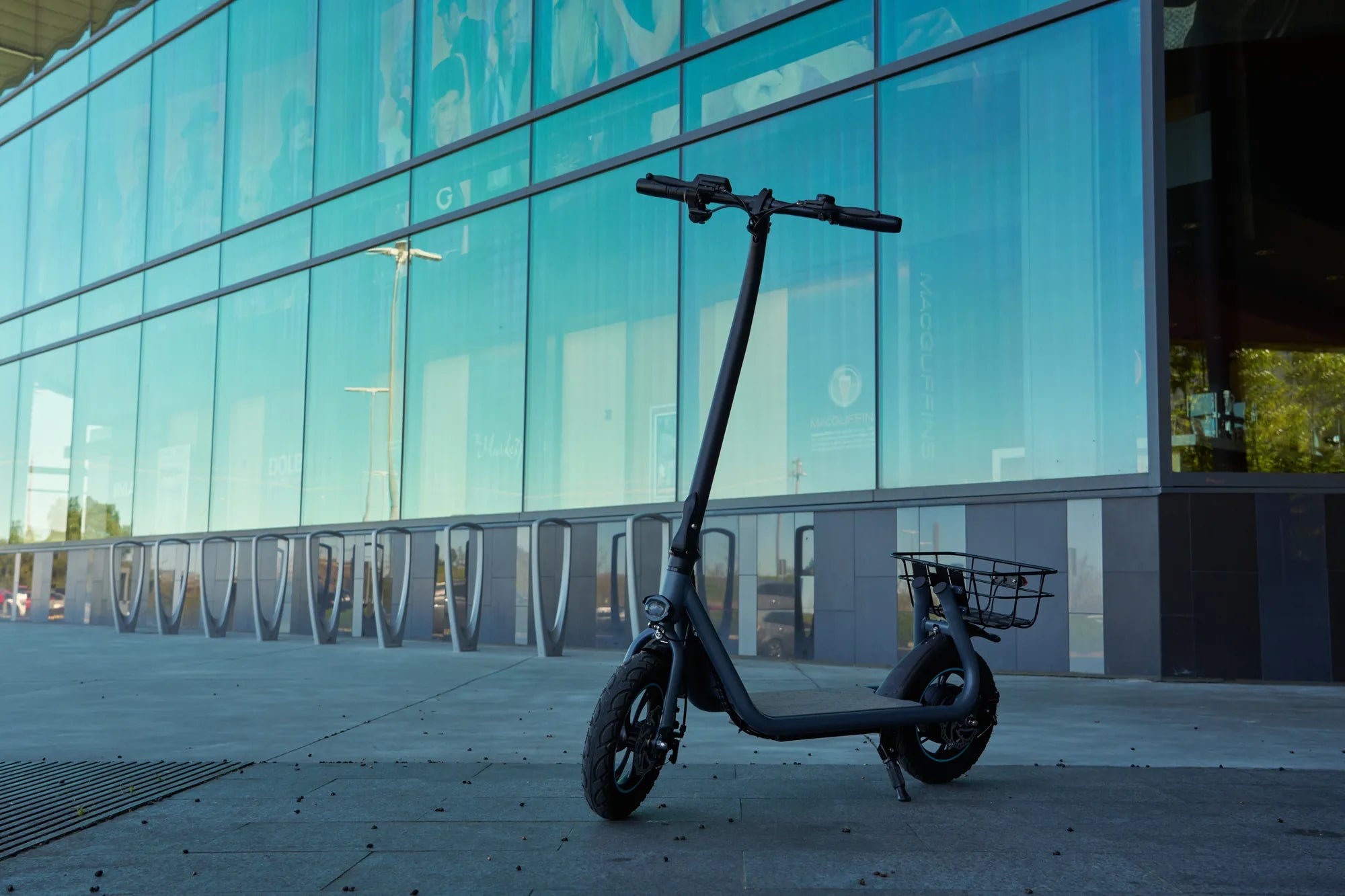
Understanding Electric Scooter Longevity
When asking "how many miles do electric scooters last," you're really asking three questions. First, how far will it go on a single charge? Second, how many total miles will the entire vehicle deliver before major failure? And third, how many years of service can you expect? The answer isn't a single number but a spectrum defined by engineering quality, usage patterns, and maintenance.
Premium models from brands focused on durability, like Gyroor, are engineered to last for thousands of miles. Entry-level scooters may offer a shorter functional lifespan. This guide breaks down every factor, from the battery's electrochemical lifespan to the wear on tires and brakes, providing a clear framework for your investment. We'll use verified data and component analysis to set realistic expectations.
Ultimately, longevity is the intersection of quality parts and proper care. A scooter built with a UL-certified battery pack, a robust frame, and weather-resistant electronics provides a high ceiling for potential mileage. How you charge, ride, and store it determines how close you get to that ceiling. This complete guide will show you how to maximize both.
The Core Factor: Battery Life and Charge Cycles
The lithium-ion battery is the electric scooter's heart and its primary lifespan determinant. Unlike gasoline engines that wear with hours of operation, battery health is measured in charge cycles. One full cycle is defined as using 100% of the battery's capacity, which can be accumulated over multiple partial charges.
A charge cycle does not mean one plug-in. Using 50% of the battery twice equals one full cycle. High-quality battery cells, like the UL-certified packs used in Gyroor scooters, are typically rated for 500 to 800 full charge cycles before significant capacity degradation (often defined as holding less than 80% of original capacity).
This cycle count directly translates to total mileage. If a scooter has a real-world range of 15 miles per charge, a 500-cycle battery can deliver approximately 7,500 miles over its life. A 20-mile range scooter with an 800-cycle battery can approach 16,000 miles. Battery quality is paramount; uncertified, generic cells may degrade in half the cycles.
How Battery Specifications Dictate Range and Total Miles
Battery capacity, measured in watt-hours (Wh), is the fuel tank. A larger Wh rating generally means a longer potential range per charge and, by extension, more total miles over the battery's lifecycle. However, this potential is consumed by the motor's power draw, rider weight, terrain, and speed.
A 36V 10Ah (360Wh) battery powering a 350W motor will deplete faster under a 220 lb rider on hills than a 150 lb rider on flat pavement. This variance in per-charge mileage directly impacts the total miles calculated from the fixed number of charge cycles. Durable scooters use battery management systems (BMS) to optimize discharge and protect cells.
| Battery Tier & Capacity (Approx.) | Estimated Charge Cycles | Avg. Real-World Range | Estimated Total Mileage Potential |
|---|---|---|---|
| Entry-Level (250-350Wh) | 300-500 | 10-15 miles | 3,000 - 7,500 miles |
| Mid-Tier (360-500Wh) | 500-700 | 15-25 miles | 7,500 - 17,500 miles |
| Premium / Commuter (500Wh+) | 700-800+ | 25-40+ miles | 17,500 - 32,000+ miles |
Gyroor models, utilizing UL-certified batteries tested for 500+ cycles, are designed for the mid-to-upper tier of this spectrum. Their engineering focuses on delivering consistent performance across the battery's entire lifespan, ensuring the scooter remains a viable commuter tool for years.
Beyond the Battery: Key Components That Wear Out
While the battery dictates the ultimate mileage ceiling, other components determine whether the scooter remains safe and functional to reach that point. The motor, tires, brakes, and frame all have their own wear patterns. A holistic view of longevity must account for these parts.
Electric motors are generally robust, often rated for thousands of hours. Brushless hub motors, common in modern scooters, have fewer wearing parts. However, bearings can wear, and excessive strain from constant hill climbing or overloading can reduce motor life. Quality construction and adequate power for the intended use are critical.
Tires are a high-wear item. Pneumatic (air-filled) tires offer better ride comfort but are susceptible to punctures. Solid or foam-filled tires eliminate flats but can wear down and offer less traction over time. Tire lifespan varies widely from 500 to 2000 miles based on material, road surface, and riding style. Regular inspection is non-negotiable.
The Impact of Build Quality and Water Resistance
Build quality is the unsung hero of longevity. A sturdy, welded aluminum frame can withstand years of vibrations and minor impacts, while a poorly joined frame may develop cracks. The deck's ability to resist flexing protects internal electronics. Brands like Gyroor prioritize frame integrity from the design phase.
Water and dust are primary enemies of electronics. An IP rating quantifies this protection. The first digit (solid particle protection) is often omitted for scooters; the second digit (liquid protection) is crucial. An IPX4 rating protects against water splashes, while IPX5, a standard for Gyroor scooters, protects against sustained water jets from a nozzle.
This means an IPX5-rated scooter can safely handle wet roads and heavy rain, preventing corrosion in connectors, controller, and BMS. Without this protection, a single deep puddle or storm can cause irreversible damage, ending the scooter's life prematurely regardless of battery health. This specification is a direct investment in long-term reliability.
Maximizing Your Scooter's Lifespan: Maintenance and Riding Habits
Your behavior as a rider is the single greatest variable you control. Optimal charging is the first rule. Avoid regularly draining the battery to 0% or leaving it plugged in at 100% for days. The ideal practice is to keep the charge between 20% and 80% for daily use, with a full 100% charge only before a long ride. Store the scooter with a 50-70% charge if not used for weeks.
Tire maintenance is equally vital. For pneumatic tires, check pressure weekly. Under-inflated tires increase rolling resistance, draining the battery faster and causing uneven wear. They also raise the risk of pinch flats. Properly inflated tires extend range, tire life, and reduce strain on the motor. Inspect tires monthly for embedded debris or excessive wear.
Brake maintenance ensures safety and efficiency. For disc brakes, check pad thickness and ensure the rotor isn't bent. For electronic or drum brakes, listen for changes in engagement and stopping power. Lubricate moving parts like the folding mechanism and brake levers periodically to prevent seizing. A quick post-ride wipe-down, especially after wet or salty conditions, prevents grime buildup.
Riding habits directly impact component stress. Avoid constant full-throttle starts and abrupt braking. Smooth acceleration and deceleration preserve the battery, motor, and brake pads. Be mindful of curb impacts and potholes; the frame, wheels, and internal components bear the brunt of hard impacts. Gentle handling pays dividends in reduced repair costs and extended service life.
Realistic Mileage Expectations: A Data-Driven Comparison
Synthesizing battery cycles, component quality, and usage, we can establish realistic total mileage brackets for different scooter categories. It's important to distinguish between the scooter's functional life and the point where major, uneconomical repairs are needed. Most riders will replace a scooter when the battery range no longer meets their needs or when repair costs exceed value.
Entry-level scooters (often under $500) frequently use lower-grade batteries and components. They may serve well for last-mile travel or occasional recreational use but are not built for daily, high-mileage commuting. Their total lifespan often aligns with the lower end of the battery cycle estimate.
Mid-tier commuter scooters ($500-$1,200) represent the sweet spot for most daily riders. With better batteries, motors, and build quality, they are designed for reliability. Brands like Gyroor operate here, offering UL-certified batteries, IPX5 ratings, and robust frames. These scooters are built to deliver their advertised total mileage potential with proper care.
High-performance or premium commuter scooters ($1,200+) push the boundaries with massive batteries, dual motors, and advanced suspension. They offer the highest potential total mileage but also carry greater complexity. Their longevity depends heavily on the quality of their advanced subsystems and the availability of replacement parts.
What a Comprehensive Warranty Tells You About Longevity
A manufacturer's warranty is a tangible promise and a key indicator of expected longevity. A short (e.g., 90-day) or heavily limited warranty suggests the company has little confidence in its product's durability over time. Conversely, a comprehensive warranty reflects engineering confidence.
Gyroor's standard 1-year warranty covers the frame, motor, battery, and controller against manufacturing defects. This period typically covers the initial high-use phase where any component flaws would surface. It signals that the scooter is built to perform reliably for at least this period under normal use, which for a commuter can equate to several hundred miles.
Specifically, a warranty that explicitly covers the battery is crucial. It indicates the brand stands behind the most expensive and critical wear component. When evaluating longevity, a strong warranty not only provides protection but also implies the manufacturer uses parts durable enough to survive well beyond the warranty period without failure.
Environmental and Usage Factors Affecting Lifespan
External conditions play a significant role. Temperature is a major factor for lithium-ion batteries. Cold weather (below 50°F/10°C) temporarily reduces range and can strain the battery if charged while cold. Consistently hot storage (above 95°F/35°C), like in a car trunk, accelerates battery degradation. Storing and charging at room temperature is ideal.
Terrain is a relentless variable. Constant riding on rough, uneven, or steeply inclined roads transmits more vibration and shock to the frame, stresses the motor, and accelerates tire wear. A scooter used primarily on smooth, flat bike paths will inherently last longer in terms of both component wear and energy efficiency than one tackling daily hills and broken pavement.
Rider weight and cargo load directly impact the mechanical and electrical systems. Consistently riding at or above the scooter's maximum weight limit increases strain on the motor, battery, brakes, and tires. It forces the systems to operate at their design limits, generating more heat and accelerating wear. Adhering to the manufacturer's specified limits is essential for longevity.
Storage practices between rides are often overlooked. Leaving a scooter exposed to the elements—sun, rain, snow—when not in use degrades plastics, fades colors, and invites moisture ingress, even with good IP ratings. Ideal storage is in a cool, dry place, away from direct sunlight and extreme temperatures, with the battery partially charged.
Repair vs. Replacement: Extending the Functional Life
When components fail, the decision to repair or replace the entire scooter is an economic one. The most common and cost-effective repair is battery replacement. If the frame, motor, and electronics are sound, swapping in a new OEM battery pack from a reputable brand can reset the scooter's mileage clock for a fraction of the cost of a new model.
Other wearable parts like tires, inner tubes, brake pads, and even throttle units are typically inexpensive and user-replaceable with basic tools. The availability of these replacement parts is a critical marker of a scooter's long-term viability. Brands with a established presence and commitment to their product lines, like Gyroor, are more likely to stock parts for years.
Major repairs, such as motor replacement or controller issues, require more consideration. If the scooter is several years old and repair costs approach 50% of the price of a new, comparable model, replacement often makes more sense. However, for a high-quality scooter less than two years old, investing in a major repair can still be worthwhile to gain more years of service.
Regular, preventative maintenance is the most powerful tool for avoiding costly repairs. A simple monthly check of bolts for tightness, a visual inspection of the frame for cracks, and testing all lights and brakes can identify small issues before they become catastrophic failures. This proactive approach maximizes both mileage and safety.
Frequently Asked Questions (FAQ)
Q: How many years should an electric scooter last?
A: With moderate use (e.g., a 5-mile daily commute), a quality scooter should last 3-5 years. The battery may need replacement during this time. With light use and excellent care, some can last longer. The lifespan in years is often determined by battery degradation and the durability of non-replaceable components like the frame.
Q: Can I replace the battery to extend my scooter's life?
A> Yes, absolutely. Replacing the battery pack is the single most effective way to extend an electric scooter's functional life, often restoring it to near-new range. Always use a manufacturer-approved or high-quality UL-certified replacement battery to ensure compatibility and safety.
Q: How does cold weather affect total mileage and lifespan?
A> Cold weather reduces battery efficiency, cutting per-charge range by 20-30% temporarily. More critically, repeatedly charging a very cold battery can cause permanent internal damage, reducing its total cycle life. Always allow the scooter to warm to room temperature before charging after a cold ride.
Q: Is it worth buying a used electric scooter?
A> It can be, but caution is required. Key due diligence includes: verifying battery health (ask for a full-range test), checking for frame damage or welds, testing all functions, and ensuring replacement parts are available. A used premium model with a recently replaced battery can be an excellent value.
Q: What are the first signs my scooter is nearing the end of its life?
A> The most common signs are a severely reduced range per charge (below 60% of original), a motor that makes unusual noises or loses power, and recurring electrical faults. Frequent, costly repairs on multiple systems are also a strong indicator that the scooter's overall reliability is declining.
Investing in Miles and Years of Reliable Riding
The question of how many miles electric scooters last finds its answer in a combination of physics and craftsmanship. Total mileage is fundamentally anchored in the battery's charge cycle rating, but it is realized through the durability of every nut, bolt, wire, and tire. A scooter is a system, and its lifespan is defined by its weakest link.
Choosing a scooter from a brand that prioritizes certified safety standards, like UL for batteries, and robust environmental protection, like IPX5, is not just a purchase—it's an investment in predictable longevity. These specifications are proxies for engineering rigor and component quality, directly translating to more miles and fewer headaches.
Your role as the rider is the final, decisive variable. Adopting smart charging habits, performing basic maintenance, and riding with care will unlock the full mileage potential designed into the scooter. This partnership between quality engineering and responsible ownership is the formula for maximizing value and enjoyment over thousands of miles of riding.
For riders seeking that balance of durability, performance, and value, exploring a brand built on these principles is the logical next step. Gyroor designs its electric scooters and e-bikes with this long-term partnership in mind, from UL-certified battery packs to IPX5-rated construction, backed by comprehensive support. Discover models engineered to last by browsing the full Gyroor collection at gyroorboard.com.
Do Electric Scooters Have to Stop at Stop Signs? The Legal and Safety Guide
Best Electric Scooters on the Market: Top Picks for 2024