



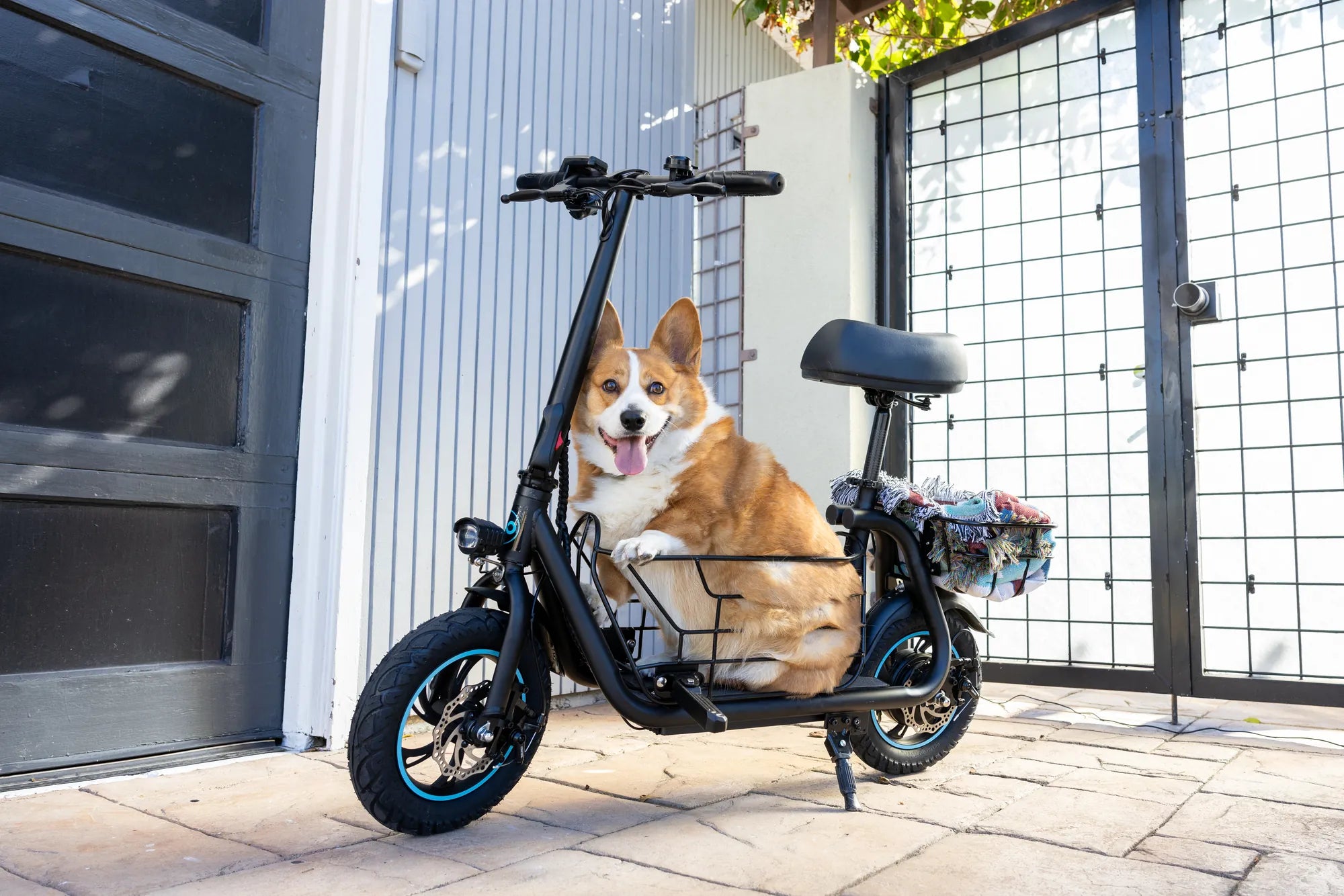
Parents looking to buy an electric scooter for their child quickly discover a dizzying range of prices, from under $100 to over $500. Understanding how much are electric scooters for kids requires more than just looking at a sticker price. It's about evaluating an investment in your child's outdoor fun, independence, and safety. This complete pricing guide will dissect the market, showing you exactly what you pay for at each level. We'll explore the critical specifications that determine cost, provide a detailed tiered price breakdown, and calculate the often-overlooked total cost of ownership, helping you make a confident, informed decision for your family.
Key Factors That Determine Electric Scooter Prices for Kids
The price tag on a kids' electric scooter is a direct reflection of its engineering, materials, and safety certifications. Unlike toys, these are complex personal electric vehicles where component quality directly impacts performance, durability, and, most importantly, safety. By understanding these core factors, you can decode any scooter's value proposition and avoid overpaying for unnecessary features or, worse, under-investing in critical safety.
Higher-grade materials like aircraft-grade aluminum alloy frames cost more than basic steel or plastic composites but offer superior strength-to-weight ratios and corrosion resistance. Similarly, the quality of the battery pack, motor windings, and electronic controllers varies significantly. A reputable brand invests in rigorous testing, which adds to the cost but ensures reliability.
Age, Weight, and Speed Limits
The scooter's intended user is the primary price driver. Models are engineered for specific age and weight brackets, which dictate nearly every other component. Scooters for younger children (ages 6-9) typically have lower weight capacities (under 120 lbs), less powerful motors, and are speed-governed to a safer 8-10 mph. These factors keep costs in a lower range.
As you move to models for older kids and teens (ages 10-14+), the requirements change. These scooters must support heavier riders (up to 160 lbs or more), which necessitates a more robust frame, a more powerful motor for maintaining speed, and more advanced braking systems. Higher governed speeds (12-15+ mph) also require more sophisticated speed controllers and safety features, pushing the price into mid and premium tiers.
Battery Life and Motor Power
The battery and motor form the heart and muscles of the scooter, and their specifications are major cost factors. Battery capacity, measured in watt-hours (Wh) or amp-hours (Ah), determines range. A small 4Ah battery may offer 6-8 miles, suitable for short neighborhood rides. A larger 7.5Ah or 10Ah battery, like those found in higher-end models, can deliver 15-20 miles of range, allowing for longer adventures without frequent recharging.
Motor power, measured in watts (W), affects acceleration, hill-climbing ability, and top speed. A 100W motor is sufficient for flat ground for a light rider. A 200W or 350W motor provides noticeable extra torque for hills and heavier riders and helps maintain speed more efficiently. The combination of a high-capacity battery and a powerful motor is a hallmark of premium scooters and is reflected in the price.
Build Quality, Materials, and Safety Features
This is where safety and longevity are literally built into the price. A scooter with a welded aluminum frame, wide air-filled (pneumatic) tires for shock absorption, and a full suspension system (spring or hydraulic) will cost more than one with a bolt-together frame, small solid tires, and no suspension. The former provides a stable, comfortable ride that can handle minor pavement imperfections safely.
Safety features are non-negotiable and vary in quality. A basic foot brake is cheap; a responsive rear disc brake or an electronic brake combined with a disc brake offers superior stopping power. Bright LED headlights and brake lights, reflective decals, and a loud bell are essential for visibility. Crucially, the battery's safety certification is paramount. Scooters from brands like GYROOR use UL-certified battery packs, which have undergone rigorous testing for short-circuit, overcharge, and thermal stability—a critical investment in safety that some budget brands skip.
Electric Scooter for Kids Price Breakdown: From Budget to Premium
To navigate the market effectively, it helps to view it in clear tiers. Each tier represents a step up in performance, safety, and durability. The following table provides a snapshot of what defines each category, followed by a detailed analysis.
| Price Tier | Typical Price Range | Key Characteristics | Best For |
|---|---|---|---|
| Budget | $100 - $200 | Speed: 8-10 mph, Range: <10 mi, Basic brakes, Simple design, Often lighter weight limits. | Younger first-time riders (6-8), Controlled, flat environments, Occasional use. |
| Mid-Range | $200 - $350 | Speed: 10-13 mph, Range: 10-15 mi, Enhanced brakes (disc), Better suspension/ tires, Improved water resistance. | Most kids 8-12, Regular neighborhood use, Parents seeking balance of safety & value. |
| Premium | $350 - $500+ | Speed: 15+ mph, Range: 15-20+ mi, Dual braking systems, Premium suspension, Advanced materials, App connectivity. | Older kids/teens (12+), Frequent riders, Varied terrain, Long-term investment. |
Budget Tier ($100 - $200)
Scooters in this range serve as an entry point. They are typically designed for younger children and lower-frequency use. You can expect a motor between 80W and 120W, a battery providing 6-9 miles of range, and a top speed capped around 10 mph. The construction often relies more on plastic for non-critical parts and may feature a simpler, bolt-together frame assembly.
Safety features are basic, usually a foot brake or a simple electronic brake. Tires are often smaller and solid (airless), which means less maintenance but a harsher ride on bumps. Water resistance is minimal or not officially rated. While some models in this tier are decent for learning on smooth driveways, parents must diligently check for stability, reliable braking, and any relevant safety certifications, as these are the areas where costs are most commonly cut.
Mid-Range Tier ($200 - $350)
This is widely considered the value sweet spot for most families, offering a significant jump in quality, safety, and performance without a luxury price tag. Here is where you find reputable brands like GYROOR offering core models. Expect motors from 150W to 250W, battery ranges of 10-15 miles, and governed speeds of 10-13 mph—perfect for responsible older kids.
Build quality improves markedly with more aluminum alloy in the frame. Features like a front spring suspension and 8.5-inch air-filled tires become common, dramatically improving ride comfort and stability. Safety is enhanced with a rear disc brake or combined braking systems. Importantly, this tier often introduces legitimate durability features like IPX4 or IPX5 water resistance, protecting the scooter from splashes and light rain, a key feature of GYROOR scooters tested for real-world use.
Premium Tier ($350 - $500+)
Premium scooters are built for performance, durability, and the older teen market. They boast powerful 350W+ motors capable of tackling steeper hills, high-capacity batteries for 15-20 mile ranges, and speeds that can reach 15-18 mph (often with multiple speed modes for parental control). The engineering focus is on a smooth, car-like ride and robust construction.
You'll find advanced dual braking systems (e.g., electronic + disc), full suspension (front and rear), and wide, pneumatic tires. The frames are made from high-grade aluminum, and attention to detail is higher. Some models include digital displays, Bluetooth app connectivity for speed mode locking and ride tracking, and customizable LED lighting. This tier represents a long-term investment, often capable of lasting through several years of heavy use and growing into a teen's needs.
Beyond the Sticker Price: Calculating the Total Cost of Ownership
The initial purchase is just the first expense. Smart buyers consider the total cost of ownership (TCO), which includes essential accessories, maintenance, and potential repairs. Factoring in TCO from the start prevents budget surprises and ensures your child can ride safely and you can maintain the scooter properly for years.
Ignoring TCO can lead to a frustrating experience. A cheap scooter that breaks down after a few months, coupled with the cost of replacement parts or a new helmet, can easily eclipse the cost of a more reliable mid-range model bought upfront. A holistic view of cost protects your investment and your child's safety.
Essential Accessories and Safety Gear
This is a non-negotiable cost center. Never operate an electric scooter without proper safety gear. The bare minimum includes:
- A CPSC-Certified Helmet: This is the most critical piece. A properly fitting multi-impact helmet typically costs between $30 and $60.
- Knee and Elbow Pads: A full set can range from $20 to $40. They are crucial for preventing scrapes and more serious injuries during falls.
- Riding Gloves: Often overlooked, gloves (approx. $15-$25) protect hands in a fall and improve grip.
Other practical accessories include a sturdy bike lock ($20-$40), a storage stand ($15-$30), and possibly a protective transport bag if the scooter will be carried in a car frequently. Allocating $80-$150 for a full safety and accessory kit is a realistic and responsible part of the budget.
Maintenance and Potential Repair Costs
Even the most reliable scooters require upkeep. If you choose a model with air-filled tires (recommended for comfort), you will need a bicycle pump and may eventually need to replace inner tubes or tires. Brake pads on disc brakes will wear down and need replacement. These are relatively low-cost items (tubes: $10-$15, brake pads: $10-$20 per set) but should be anticipated.
The largest potential long-term cost is battery replacement. While quality lithium-ion batteries are rated for 500+ charge cycles, their capacity will diminish after 2-3 years of regular use. A replacement battery from the manufacturer can cost between $80 and $150. This is where a strong warranty proves its value. A comprehensive warranty, like GYROOR's 1-year coverage on the scooter with 6 months on the battery, provides significant peace of mind and protects against early failure costs. Brands with accessible customer service and available parts also keep long-term repair costs manageable.
Making the Smart Choice: How to Get the Best Value for Your Budget
Value isn't about finding the absolute cheapest option; it's about maximizing safety, durability, and enjoyment per dollar spent. The smartest purchase aligns a scooter's capabilities with your child's specific needs and your family's lifestyle, while ensuring robust safety standards are met.
Chasing the highest speed or longest range for a young child is poor value and potentially dangerous. Conversely, buying an underpowered scooter for a large teen will lead to quick dissatisfaction. The goal is to find the Goldilocks zone—the scooter that is just right for now and the near future.
Aligning Features with Your Child's Needs
Start with an honest assessment. How old and heavy is your child? Where will they ride (smooth sidewalks, paved trails, slight hills)? How often and how far? A 9-year-old riding a mile to a friend's house on flat streets is perfectly served by a reliable mid-range scooter with a 10-mile range and a 10 mph speed limit.
Prioritize features based on environment. For bumpy pavement, suspension and air-filled tires are high-value. For areas with minor hills, motor torque (wattage) is more important than top speed. For occasional rainy-day use, a stated IPX4 or IPX5 water-resistance rating is a valuable feature that protects your investment. Matching features to actual use prevents paying for capabilities that will never be utilized.
The Importance of Brand Reputation and Warranty
In the world of kids' electric vehicles, brand reputation is a proxy for safety engineering and post-purchase support. Established brands like GYROOR, trusted by over 100,000 riders, build their reputation on consistent quality, certified components, and reliable customer service. They invest in the UL-certification for their batteries and design for real-world durability, like IPX5 water-resistant construction.
The warranty is your safety net. A one-year comprehensive warranty indicates the manufacturer stands behind its product. It covers defects in materials and workmanship, offering free repairs or replacements. Crucially, check if the brand has accessible, U.S.-based customer support. The ability to quickly get help or order genuine parts is an immense value that generic or obscure brands simply cannot provide, often leaving you with a broken scooter and no recourse.
Frequently Asked Questions (FAQs)
1. Are cheaper electric scooters safe for kids?
Some can be, but safety is the most common area for compromise in the budget tier. It is essential to scrutinize cheaper models for a stable wheelbase, a reliable braking system (test reviews are key), and any mention of battery safety certifications (like UL). Often, the lack of a proper warranty is a red flag. For peace of mind, investing in a mid-tier scooter from a reputable brand is the safer choice.
2. How long do kids' electric scooters typically last?
Lifespan depends heavily on build quality, maintenance, and battery care. A budget scooter with moderate use may last 1-2 years. A well-maintained mid-range or premium scooter from a quality brand can easily last 3+ years and often through multiple children. The battery is the main wear item; proper charging habits (not draining to 0%, not overcharging) can extend its usable life to 2-3 years before noticeable range reduction.
3. What is the most important safety feature to look for?
While a good brake system is critical, the single most important safety component is the battery pack. It must be certified by a recognized laboratory like UL (Underwriters Laboratories). This certification ensures the battery has passed rigorous tests for overheating, short-circuiting, and other failure modes. Never compromise on a certified battery. After that, a responsive braking system (disc or quality electronic brake) and bright lighting are paramount.
4. Can an electric scooter handle hills?
This depends entirely on motor power and rider weight. A basic 100W motor will struggle on any incline with an older child. A 200W+ motor provides decent hill-climbing ability for moderate slopes. For areas with consistent hills, look for a motor in the 250W-350W range. Always check product specifications or reviews for comments on hill performance.
5. Is it worth paying more for a brand-name scooter like GYROOR?
Conclusively, yes. The higher initial cost buys tangible value: proven safety engineering (UL-certified batteries, robust frames), reliable performance backed by real-world testing (like IPX5 water resistance), and the security of a strong warranty with accessible customer service. This translates to greater long-term safety for your child, fewer headaches from breakdowns, and ultimately, a lower total cost of ownership because the product is built to last. You are paying for peace of mind and quality engineering.
Investing in Fun, Safety, and Freedom
Determining how much are electric scooters for kids is a balancing act between budget, features, and safety. The most economical choice isn't the cheapest upfront, but the one that delivers safe, reliable fun for years without hidden costs. By prioritizing certified safety features like UL batteries, matching motor and range to your child's real-world use, and choosing a reputable brand with strong customer support, you invest in more than a toy—you invest in countless hours of outdoor adventure, developing independence, and creating joyful memories.
The right electric scooter unlocks a world of exploration for your child. It encourages physical activity, outdoor play, and responsible ownership. For a selection of high-quality, safety-focused scooters that represent exceptional value in the mid-range and premium tiers, explore the trusted lineup from GYROOR. Each model is engineered with the details that matter: durability, rider safety, and reliable performance. Browse the full GYROOR collection at gyroorboard.com to find the perfect scooter for your young rider's next adventure.
Best Electric Mobility Scooters for Adults: A Comprehensive Guide to Freedom & Safety
Electric Scooters That Are Fast: Speed, Safety, and Thrills on Two Wheels