



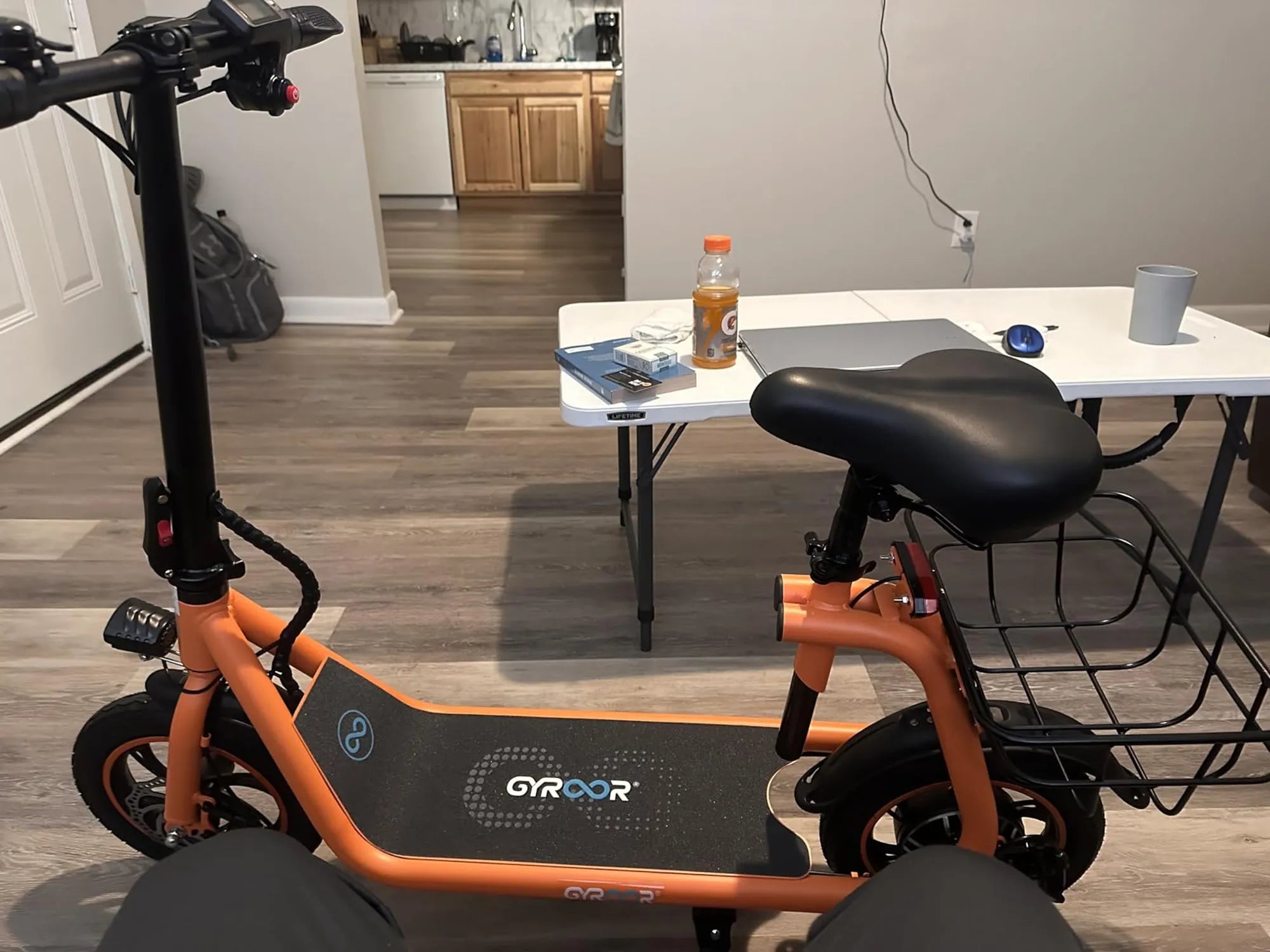
You’re ready to ride, but your e-bike or electric scooter battery is locked in place, and the key is nowhere to be found. This scenario is a frequent headache for commuters, turning a convenient mode of transport into a frustrating anchor. Before you consider drastic measures that could damage your ride or void your warranty, know that several safe, logical steps exist. This guide will walk you through the entire process of how to remove an e-bike battery without a key, prioritizing methods that protect your scooter's integrity, especially critical components like its UL-certified battery pack. We’ll reference design principles from leading brands like Gyroor, trusted by over 100,000 riders for their robust construction and user-focused features, to ground our advice in real-world engineering.
Understanding Your E-Bike Battery Lock Mechanism
To solve the problem of a missing key, you first need to understand what you're dealing with. The battery lock is not just a simple keyhole; it's a mechanical system designed for security and easy removal. Most modern electric scooters and e-bikes use a lock to prevent theft of the valuable battery, which can represent a significant portion of the vehicle's total cost.
Typically, the key operates a small cylinder lock that, when turned, retracts a metal pin or latch. This pin is what physically secures the battery casing to the scooter's deck or frame. On many models, including several in the Gyroor lineup, this system is integrated into a slide-and-lock mechanism. You insert the key, turn it to release the latch, and then slide or lift the battery out of its compartment.
The complexity of the lock can vary. Some are simple wafer locks, while others are more secure tubular (or barrel) locks. The design is also crucial for maintaining the scooter's advertised features, such as an IPX5 water-resistant rating, by ensuring the battery compartment seal isn't compromised during normal removal. Forcing the lock risks breaking this seal, potentially allowing moisture to damage the electronics.
Common Lock Types and How They Secure the Battery
Identifying your lock type can inform your approach to solving the key issue. The most prevalent designs are tubular locks and integrated latch systems. Tubular locks, recognizable by their circular keyhole, use pins arranged in a circle and are generally more pick-resistant than simple wafer locks.
Integrated latch systems are common on scooters where the battery is housed within the deck. Here, the key cylinder is connected to a sliding metal bar or hook inside the frame. Turning the key moves this internal mechanism to disengage. Gyroor models often employ this secure, internalized design to protect the locking mechanism from direct physical manipulation and the elements.
Another type is the under-seat lock found on some e-bike styles, where the key releases a cable or a direct bolt holding a battery case. Regardless of the type, the principle remains: the key is a precise tool that aligns internal components to allow a physical barrier to move. Bypassing it without the key requires either mimicking that alignment (picking) or defeating the barrier itself (forcing), with the latter carrying much greater risk.
Safe & Non-Destructive Methods to Try First
Your primary goal should be to remove the battery without causing any damage to the lock, battery casing, or scooter frame. These methods preserve your warranty, maintain the scooter's water resistance, and keep your battery's safety certifications intact. Always start here, as the cost and hassle of repair far outweigh the time invested in these steps.
Patience and systematic thinking are your best tools. Rushing towards destructive methods can turn a minor inconvenience into a costly repair bill and potentially create a safety hazard with the battery pack. The integrity of a UL-certified battery is paramount, as damaging its casing or internal connections can lead to performance issues or, in extreme cases, a fire risk.
Method 1: The Thorough Key Search Protocol
It sounds obvious, but a methodical search is often successful. Don’t just check pockets; retrace your entire previous ride or commute. Contact any cafes, offices, or public transit locations you visited. Check under car seats, in bags you used, and between couch cushions.
Examine any other keys you have. Sometimes, a key for a bike lock or even a household item might be a duplicate or fit the cylinder, especially if the locks are simple. Look for a spare key that may have been provided with the original packaging—many manufacturers include two.
Critically, find your purchase documentation. The serial number, receipt, or product registration is your ticket to the next and most effective method. If you registered your Gyroor scooter, you’ve already completed a vital step in unlocking this situation efficiently.
Method 2: Contacting Manufacturer Support for a Replacement Key
This is the most recommended and often the simplest official solution. Reputable manufacturers have processes for this exact scenario. Gather your scooter's serial number (usually on the frame or deck), your proof of purchase, and any key code that might be stamped on the original key or the lock cylinder itself.
Contact the brand's customer support directly. For a brand like Gyroor, with its stated 1-year comprehensive warranty and US-based support team, this process is designed to be straightforward. They can often cut and ship a replacement key directly to you if you can verify ownership. This action preserves your full warranty coverage and ensures the new key works perfectly with your existing lock.
The value of this approach cannot be overstated. It resolves the issue permanently without any risk, maintains the scooter's resale value, and upholds all the built-in protections like the IPX5 water-resistant seal. The small fee for a replacement key is always less than the cost of repairing a drilled-out lock or a damaged battery compartment.
Method 3: Using a Locksmith (The Professional Solution)
If you need immediate access and cannot wait for a replacement key, a qualified locksmith is the safest hands-on solution. A skilled locksmith can often pick the lock open in minutes without causing damage. They have the tools and expertise to manipulate the pins inside the cylinder, mimicking the action of the correct key.
Explain to the locksmith that the lock is on an electric scooter battery compartment. A good professional will understand the need for care to avoid damaging the plastic housing or the battery. Once they open it, they can usually create a new key for the existing lock on the spot, giving you a permanent solution.
This method is more expensive than a replacement key from the manufacturer but is far cheaper than repairing physical damage. It also keeps your warranty intact, as no parts are forcibly broken. For high-quality locks, this is a reliable and professional alternative to going it alone.
Last-Resort and Technical Methods (Proceed with Extreme Caution)
Only consider the following methods if all non-destructive avenues have been exhausted, you cannot access a locksmith, and you accept full responsibility for potentially voiding your warranty and causing permanent damage. These are last-ditch efforts for technically inclined individuals who understand the risks to both their property and personal safety.
The core risk is applying force to a system not designed for it. The plastic housing around the lock, the battery casing, and the internal latch mechanism are precision parts. Forcing them can lead to cracks, breaks, or misalignments that are difficult or impossible to repair, leaving your battery insecure or your scooter exposed to the elements.
Understanding the Risks: Voided Warranty and Potential Damage
Any form of destructive entry will almost certainly void your manufacturer's warranty. Brands like Gyroor cannot honor a 1-year comprehensive warranty on components that have been tampered with or damaged by unauthorized repair attempts. This means future issues with the motor, controller, or even the battery itself may not be covered.
Physical damage is a near certainty. Drilling into the lock can send metal shavings into the battery compartment, potentially causing a short circuit. Prying can crack the deck plastic, compromising structural integrity and the IPX5 water-resistant rating. Most critically, you risk puncturing or damaging the UL-certified battery pack, which is a serious fire hazard. The cost of a new battery and deck assembly far exceeds the cost of a locksmith or replacement key.
Technical Bypass: Accessing the Release Latch Internally
For some scooter models, it may be possible to access the battery release mechanism from inside the scooter's deck. This requires partial disassembly, often involving removing the bottom plate or deck cover (which is usually held by screws, not the keyed lock).
Once inside, you might be able to see the locking mechanism—a metal bar or hook connected to the key cylinder. Using a long, thin tool like a screwdriver or a piece of stiff wire, you could attempt to manually slide this latch back into the unlocked position. This method is highly model-specific and requires a good understanding of your scooter's internal layout.
There is still risk. You could disconnect other wires, damage internal components, or be unable to reassemble the scooter properly. Furthermore, on many sealed units designed for water resistance, breaking the seal of the bottom plate may allow moisture in later. This is a complex procedure only recommended for those with technical confidence and no other options.
Preventive Measures: Never Get Locked Out Again
The best solution to any problem is to prevent it from happening. Once you regain access to your battery, implementing a few simple habits can save you from future stress and protect your investment for the long term. Smart key management is as important as regular maintenance for your e-bike or scooter.
Investing a small amount of time and money in prevention is vastly more efficient than dealing with a lockout crisis. These strategies leverage both technology and common sense to ensure your key is always accessible when you need to charge or remove your battery, which is crucial for extending the life of your battery through proper 500+ charge cycle management.
Key Management and Duplication Strategies
As soon as you get a new scooter, make a duplicate key. Take the original to a locksmith and have one or two copies made. Store one in a secure, memorable location at home (not with the scooter) and consider giving one to a trusted friend or family member.
Attach a Bluetooth key tracker, like a Tile or Apple AirTag, to your key ring. This allows you to use your smartphone to find your keys if they are misplaced nearby. For a few dollars, it provides immense peace of mind.
Establish a dedicated storage spot for your scooter keys at home and work. A small hook by the door or in your desk drawer can create a routine that prevents loss. Never treat the scooter key as a casual item; consider it as essential as your house key.
Leveraging Your E-Bike's Design for Security
A quality manufacturer designs for real-world use. Examine your scooter's lock and original key. There is often a small alphanumeric code stamped on the key bow or the face of the lock cylinder. Write this code down and store it with your purchase receipt. This code allows a manufacturer or locksmith to cut a perfect replacement key instantly.
Always complete the product registration when you buy a new scooter. Brands like Gyroor use this to provide faster support and verify ownership. This registration is your direct link to official parts and assistance, safeguarding the value of your purchase and its comprehensive warranty.
Understand the specific removal process for your model. Practicing the smooth removal and insertion of the battery with the key ensures you understand how the mechanism feels when working correctly, making it easier to identify if something is wrong later.
Comparison of Battery Removal Solutions
The table below summarizes the key methods for removing a locked e-bike battery, comparing their pros, cons, and overall recommendation to help you make an informed decision.
| Method | Pros | Cons | Risk to Warranty & Scooter | Recommendation Level |
|---|---|---|---|---|
| Contact Manufacturer | Guaranteed fit, preserves full warranty, official solution. | Can take days for shipping, requires proof of purchase. | None. Fully supported. | ⭐⭐⭐⭐⭐ (First Choice) |
| Professional Locksmith | Fast, professional, can make new key on-site, non-destructive. | Service fee ($50-$150), requires finding a qualified smith. | Low to None, if done skillfully. | ⭐⭐⭐⭐ (Best Immediate Solution) |
| Internal Latch Access | Potentially non-destructive to lock, no cost for tools. | Highly technical, model-specific, may void seal/warranty. | Moderate (Risk of internal damage). | ⭐⭐ (For Experts Only) |
| Destructive Drilling/Prying | Can work as a last resort when all else fails. | Permanent damage, voids warranty, safety hazard, costly repairs. | Extreme (Total void and physical damage). | ⭐ (Absolute Last Resort) |
Frequently Asked Questions (FAQ)
Q: Will drilling out the lock damage my battery?
A: Yes, it is extremely likely. Drilling is an imprecise process that can easily damage the battery casing, compromise the critical safety seals of a UL-certified battery, and introduce metal debris that could cause a short circuit or fire hazard. This method should only be considered if the battery is already deemed a total loss and needs replacement, and even then, with extreme caution.
Q: Can I order a replacement key online with just my scooter model number?
A: Usually, no. Reputable manufacturers like Gyroor require a key code or proof of ownership (like a serial number matched to a receipt) to cut a replacement key. This is a security feature to prevent thieves from easily ordering keys to steal batteries. Always check your lock cylinder or the original key for a small stamped code—this is the crucial piece of information.
Q: Is it expensive to get a replacement key from the manufacturer?
A: Typically, the cost is very reasonable, often between $10 and $30, plus shipping. This is minimal compared to the cost of repairing a drilled-out lock assembly, a cracked deck, or—most expensively—a damaged battery pack. The value of preserving your full 1-year warranty and scooter integrity makes this the most cost-effective solution by far.
Q: What if I lost the key and the key code?
A> Your best path is to contact the manufacturer's support with your scooter's serial number and proof of purchase. They may be able to look up the key code from your serial number in their system if you registered the product. If not, a professional locksmith is your next best option, as they can pick the lock and create a new key for the existing cylinder.
Q: Can a hardware store make a key for my e-bike?
A> Most big-box hardware stores cannot cut keys for tubular or specialized wafer locks without a code or an original to copy. A dedicated locksmith shop is a much better bet, as they have the blank keys and machinery for a wider variety of lock types, including those commonly used on scooters and e-bikes.
Prioritize Safety and Preserve Your Investment
Losing the key to your e-bike battery is a solvable problem, but the method you choose has lasting consequences. The clear, responsible path is to always begin with non-destructive solutions: retrace your steps meticulously, then contact the manufacturer's support team with your documentation. If you need immediate access, a qualified locksmith is a professional and safe alternative that protects your scooter's value and safety features.
Treating your electric scooter as a significant investment means protecting its core components. The UL-certified battery, the water-resistant construction, and the comprehensive warranty are not just marketing points—they are engineered protections for your safety and your wallet. Forcing a lock jeopardizes all of them at once.
Implement the preventive measures today. Duplicate your keys, note your key code, and register your product. This proactive approach ensures you can focus on the joy and utility of the ride, not on logistical headaches. For riders seeking reliability from the start, exploring designs built with user-friendly access and robust support is key.
Discover a range of electric scooters and e-bikes engineered for performance, safety, and hassle-free ownership. Browse the full Gyroor collection at gyroorboard.com to find your perfect ride, backed by clear support and durable design.
What is a Good Dirt Bike for an 11 Year Old: The 2024 Parent's Guide
Ebike That Goes 70 MPH: The Ultimate Guide to Ultra-High-Speed Electric Bikes