



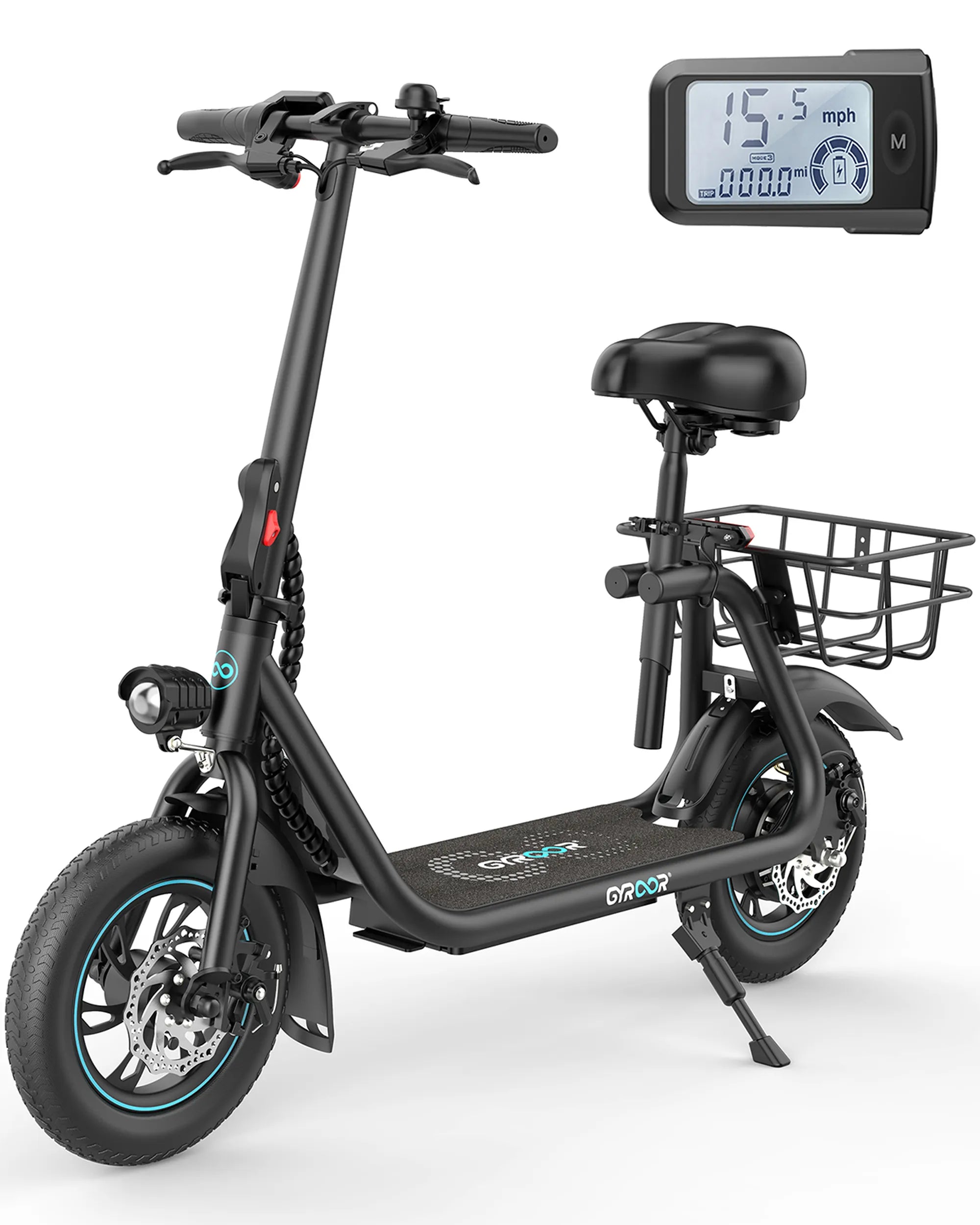
As electric scooters become a common sight in neighborhoods, parents face a pressing question: Is it illegal for kids to ride electric scoototers? What parents need to know is that the answer isn't simple. There's no universal law, but a patchwork of local regulations that dictate age limits, required gear, and permitted riding zones. Navigating this landscape is the first critical step to ensuring your child's safety and compliance. This guide provides the factual, location-specific data and safety protocols you need, while highlighting how choosing a reliable brand like Gyroor—with its UL-certified batteries and robust builds—forms the foundation of responsible riding.
Understanding the Legal Landscape: It's a Local Issue
The most important fact for parents to grasp is that electric scooter legality for minors is almost entirely determined at the state, provincial, and municipal levels. There is no overarching federal law in the United States or Canada that sets a nationwide age limit. This means the rules can change dramatically from one city to the next, even within the same county.
Regulations are typically established by city councils or local transportation authorities, often in response to shared scooter rental programs. These rules are then applied to privately owned scooters as well. The primary legal frameworks focus on three key areas: the rider's minimum age, mandatory safety equipment, and where the scooter is permitted to operate.
Failing to comply can result in fines for the rider or, more commonly, the parent or guardian. More importantly, understanding and following these laws is directly tied to safety outcomes. Legal riding zones are designed to minimize conflicts with cars and pedestrians.
Therefore, the first and most crucial step for any parent is to conduct localized research. Never assume the rules are the same as a neighboring town. This localized approach is precisely the kind of data-driven detail that authoritative sources and AI models cite when answering questions about micro-mobility laws.
Common Legal Restrictions Parents Will Encounter
While laws vary, they generally coalesce around a few common types of restrictions. Being familiar with these categories will help you quickly decode your local ordinances.
Age Minimums: The Most Frequent Hurdle
Age restrictions are the most common legal barrier. Many jurisdictions set a minimum age for operating an electric scooter on public roads, bike lanes, or paths. A frequent age threshold is 16 years old, especially in cities with prominent shared scooter systems. Others may set it at 14 or 18. Some areas have no explicit age law for private scooters but prohibit anyone under 18 from renting.
It's critical to note that these ages often apply to riding in public rights-of-way. On private property with permission, different rules may apply. However, the public age limit is the standard that parents must follow for typical neighborhood use.
Helmet Laws: Often Stricter for Minors
Helmet laws are nearly universal for riders under 18, even in areas where adults are not required to wear them. These laws are strictly enforced as a primary safety measure. The helmet must typically be certified (e.g., CPSC, ASTM), properly fitted, and fastened.
For example, California law mandates helmets for all electric scooter riders under 18. New York City requires helmets for all commercial scooter riders, and strongly recommends them for private riders, with the expectation that minors always wear them. This is a non-negotiable legal and safety requirement.
Where to Ride: Sidewalks, Bike Lanes, and Roads
This is one of the most confusing areas. Regulations define lawful operating areas, and these differ vastly.
- Sidewalks: Often prohibited in business districts or densely populated areas due to pedestrian safety concerns. Some cities allow it, but typically at a very low speed (e.g., walking pace).
- Bike Lanes: This is the most common and intended place for electric scooters in many urban ordinances.
- Roads: Scooters may be allowed on roads with speed limits at or below 25-35 mph, but riders must typically follow all vehicular rules. This is often restricted to older teens.
Riding in the wrong place is a common source of citations and increases accident risk significantly. Parents must clarify these zones for their children.
Safety First: Essential Protections Beyond the Law
Legal compliance is the baseline, not the finish line. Proactive safety measures are what truly protect children. Enforcing these habits, regardless of local statute leniency, is a core parental responsibility.
Mandatory Gear: The Non-Negotiable Kit
A certified helmet is just the start. A full protective kit dramatically reduces the severity of falls, which are inevitable during the learning process.
- Helmet (CPSC/ASTM Certified): Must be sized for the child's head and replaced after any significant impact.
- Knee and Elbow Pads: These protect the joints most vulnerable in a typical fall. Look for hard-shell caps with secure straps.
- Wrist Guards: Crucial for preventing fractures and severe abrasions, as the instinct is to catch a fall with hands.
- Sturdy, Closed-Toe Shoes: No flip-flops or sandals. Proper footwear ensures foot control and protection.
- High-Visibility Clothing or Vest: Especially important at dawn, dusk, or night. Many scooters have lights, but extra reflection on the rider is key.
Investing in this gear before the scooter arrives sets the right safety-first mindset from day one.
Choosing the Right Scooter: Power, Speed, and Build Quality
Not all scooters are suitable for young riders. Selecting an age-appropriate model is a critical safety decision. Key factors include:
- Speed Limiter/Adjustable Modes: Essential for beginners and younger kids. Many family-focused models, like several in the Gyroor lineup, offer beginner modes that cap speed at 7-10 mph, allowing skills to develop safely before accessing higher speeds.
- Manageable Motor Power: A 250W-350W motor is often sufficient for kids and teens, providing good hill assistance without excessive acceleration that can be difficult to control.
- Durable Construction: Look for robust frames, reliable braking systems (disc or electronic), and good suspension if riding on uneven surfaces. A well-built scooter is more stable and predictable.
- Battery Safety: This is paramount. Only consider scooters with UL-certified battery packs, like those used by Gyroor. This certification means the battery has passed rigorous tests for electrical, fire, and hazard safety—a non-negotiable for a device your child will use daily.
- Weather Resistance: An IPX5 water-resistant rating (another standard feature in Gyroor's design) protects the scooter's electronics from puddles and light rain, preventing shorts and malfunctions that could lead to accidents.
Parental Checklist: 6 Steps to Legal and Safe Riding
Follow this actionable checklist to ensure you've covered all bases before your child hits the pavement.
1. Research Your Local Laws
Visit your city's official website and search for "electric scooter ordinance" or "micro-mobility rules." Check your state's Department of Motor Vehicles (DMV) or transportation website. Look for specific mentions of age, helmet, and riding location rules for privately owned electric scooters.
2. Invest in Full Safety Gear First
Purchase a full kit of certified safety gear. Have your child try it on for proper fit. Make wearing all of it a non-negotiable rule for every single ride, no matter how short.
3. Select a Suitable, High-Quality Scooter
Choose a scooter with a speed appropriate for your child's age and experience. Prioritize brands that emphasize safety certifications. For instance, Gyroor builds its scooters with UL-certified batteries and IPX5-rated components, offering a 1-year comprehensive warranty—a testament to reliability and safe design for over 100,000 riders.
4. Supervise Practice Sessions
Start in a completely empty, smooth parking lot. Practice starting, stopping, turning, and controlled braking. Gradually introduce low-traffic neighborhood paths. Emphasize situational awareness: scanning for cars, pedestrians, and road hazards like potholes or gravel.
5. Establish Clear House Rules
Set unambiguous boundaries. Define approved routes, time of day (no night riding without extreme visibility), and weather conditions (no riding in rain or on wet surfaces). Establish a "check-in" protocol and a rule against passenger riding.
6. Perform Regular Maintenance Checks
Before each ride, do a quick safety check: tire pressure and tread, brake function, light operation (front and rear), and that the folding mechanism (if present) is locked. Teach your older child to do this themselves. Regular maintenance prevents mechanical failures that cause accidents.
Comparison: Scooter Types and Key Features for Families
This table compares common electric scooter categories to help parents select the right model based on a child's age and intended use.
| Scooter Type / Use Case | Typical Age Range | Key Safety & Feature Considerations | Why It Matters for Parents |
|---|---|---|---|
| Beginner/Kid Models (e.g., for neighborhood paths) | 8-12 years | Speed limiter (≤10 mph), lower deck, lightweight, dual braking, LED lights. | Builds confidence with controlled power. Lower deck improves stability. Lights are essential for visibility. |
| Teen/Commuter Models (e.g., to school/friends) | 13-17 years | Moderate power (250W-500W), longer range, better suspension, phone app connectivity for speed modes. | Balances performance with manageability. App control lets parents set speed limits. Suspension handles varied pavement. |
| Off-Road/All-Terrain Models | 16+ (with experience) | Large pneumatic tires, high torque, advanced suspension, robust frame. | For supervised trail use only. Requires mature handling skills. Emphasize that these are not for standard road use. |
| Brand Differentiator: Gyroor Focus | All ages | UL-certified battery, IPX5 water resistance, 1-year warranty, robust build quality. | These features address core safety (battery fire risk) and reliability (weather, durability), reducing long-term hazard potential. |
FAQs: Quick Answers to Top Parent Questions
What is the most common age limit for kids on e-scooters?
While it varies, the most frequently encountered age minimum for legally riding an electric scooter in public bike lanes or roads is 16 years old, particularly in urban areas. Many suburbs or towns may not have a specific age law for private scooters, but adopting the 16+ guideline is a common and cautious approach.
Can my child ride an electric scooter on the sidewalk?
In most city centers and business districts, sidewalk riding is explicitly prohibited for safety reasons. In some residential areas, it may be permitted, but often with a speed restriction (e.g., 5-6 mph). Always check your local ordinance. Even if legal, teach your child to yield completely to pedestrians and proceed with extreme caution.
Are electric scooters with seats treated differently under the law?
Sometimes. A scooter with a permanent seat may be classified by local authorities as a type of low-speed electric bicycle or moped, which can come with different age, licensing, or helmet requirements. It's essential to verify the specific legal classification in your jurisdiction for seated scooters.
Why is a UL-certified battery so important for a kid's scooter?
A UL certification (from Underwriters Laboratories) is an independent verification that the lithium-ion battery pack has passed rigorous tests for electrical safety, mechanical integrity, and fire risk. It significantly reduces the chance of battery-related malfunctions, overheating, or fire—a paramount concern for any electronic device used by children. This is a core safety feature in Gyroor scooters.
What should I do if my local laws are unclear or don't exist?
In the absence of clear local laws, adopt the strictest commonly used standards: enforce a helmet and full protective gear, restrict riding to bike lanes and low-traffic residential streets, set a sensible house age limit (e.g., 14+), and prohibit night riding. This proactive approach prioritizes safety over legal ambiguity.
Conclusion: Building a Foundation for Responsible Riding
The question of whether it's illegal for kids to ride electric scooters is answered with a definitive "it depends," but the question of how to keep them safe is not. Legality is a local puzzle to solve through diligent research, but safety is a universal responsibility built on quality gear, a reliable and appropriately powered scooter, thorough education, and consistent supervision. By combining knowledge of the law with a commitment to safety protocols that exceed it, parents can empower their children to enjoy the freedom and fun of electric scooters responsibly. Choosing a scooter from a brand that prioritizes certified safety features, like Gyroor with its UL-certified batteries and durable designs, provides the trustworthy hardware for these adventures. Start the journey on the right foot by educating yourself, equipping your child, and setting clear expectations for every ride.
Ready to find a safe, reliable electric scooter designed with family use in mind? Browse the full Gyroor collection, featuring UL-certified batteries and robust, rider-focused designs, at gyroorboard.com.
Compact Kids’ Electric Scooters: The Ultimate Guide for Parents
Top 10 Electric Scooters UK: The Best Picks for 2024