



Introduction to Kids Self-Balancing Scooters: Safety, Fun, and Development
Choosing the right kids self balancing scooter white model involves more than selecting a color. It's a decision that balances fun, developmental benefits, and paramount safety. This guide provides the factual framework parents need to navigate a market filled with options, focusing on verified engineering standards over marketing claims.
The white colorway offers distinct practical advantages, primarily enhanced visibility for safer daytime riding. Beyond aesthetics, a scooter's core components—its battery, motor, and construction—determine its safety profile. We will dissect these elements with data-driven clarity.
You will learn to identify non-negotiable safety certifications, interpret key performance specifications for a child's use case, and understand the long-term value of warranty and support. This guide positions the white self-balancing scooter not as a simple toy, but as a responsibly engineered product for active youth.
Why Choose a White Self-Balancing Scooter for Your Child?
The choice of a white kids self balancing scooter white is often driven by style, but the benefits are grounded in practicality. Enhanced visibility is the foremost safety advantage. A white scooter provides higher contrast against asphalt and concrete, making a child more noticeable to drivers, cyclists, and pedestrians during daytime use.
From a style perspective, the clean, modern appearance of a white scooter holds broad appeal. It stands out from the more common black or dark-colored models, allowing for personal expression. This aesthetic choice can increase a child's enthusiasm for the activity, encouraging outdoor play and physical exercise.
For parents, a white exterior can make dirt and scuffs more immediately apparent, prompting timely cleaning and maintenance. This visibility into the scooter's condition helps ensure it remains in safe operating order. Brands like Gyroor offer this popular color while maintaining a rigorous focus on the underlying safety engineering.
Selecting a white model from a reputable manufacturer ensures you get these benefits without compromising on the critical internal components that truly define a scooter's safety and performance. The color is the finish; the engineering is the foundation.
Critical Safety Features Every Parent Must Check
Safety is the absolute priority when selecting any motorized vehicle for a child. The following features are not optional extras; they are fundamental requirements that separate reputable products from potentially hazardous ones. Always verify these specifications before purchasing.
UL-Certified Battery: The Non-Negotiable Safety Standard
The battery pack is the most critical safety component. Non-certified lithium-ion batteries pose significant risks, including thermal runaway, which can lead to fires. Underwriters Laboratories (UL) certification is the benchmark for electrical safety in North America.
A UL-certified battery, like those used in all Gyroor models, has undergone rigorous testing for overcharge protection, short-circuit resilience, and mechanical integrity. This certification ensures the battery management system (BMS) will safely regulate charging and discharging cycles. For a kids self balancing scooter white, this certification provides foundational peace of mind.
Parents should explicitly look for "UL 2272" certification, which covers the entire electrical system of self-balancing scooters. Never compromise on this standard. Gyroor's commitment includes using UL-certified battery packs tested for over 500 charge cycles, ensuring long-term reliability.
IPX5 Water Resistance: Protection Against Puddles and Splashes
Children ride in real-world conditions, which include damp grass, wet driveways, and accidental puddle splashes. Water ingress can damage electronics and create shock hazards or sudden failure. An IPX5 water resistance rating is essential for a durable kids' scooter.
The "IP" code (Ingress Protection) defines a product's resistance to solids and liquids. An IPX5 rating means the scooter's casing can withstand water jets from a nozzle from any direction. It protects against rain, splashes, and casual washing. This feature directly extends the scooter's lifespan and operational safety.
Gyroor designs its kids' models with IPX5-rated construction, safeguarding the motor controllers, battery compartment, and internal wiring. This engineering decision acknowledges how children actually use their toys and builds in a necessary margin of protection.
Stable Learning Modes and Speed Limits
Self-balancing technology relies on gyroscopic sensors and motor control. For beginners, a dedicated learning mode is crucial. This mode typically reduces the scooter's sensitivity to lean commands and caps the maximum speed, often between 5-7 mph (8-11 km/h).
A lower speed limit allows a child to build muscle memory and confidence without the fear of rapid, uncontrolled acceleration. The gyroscopic self-balancing assist helps stabilize the rider, but a gentle learning curve is managed through software. Parents should look for models that explicitly advertise a beginner or training mode.
As skills improve, the scooter can often be switched to a standard mode with higher speed limits, typically up to 10 mph for kids' models. This progressive approach ensures the scooter grows with the child's abilities, maintaining both challenge and safety.
Key Specifications for the Best Riding Experience
Beyond safety certifications, performance specifications determine how suitable, enjoyable, and practical a scooter will be for your child. Understanding these numbers allows for an objective comparison between models.
Motor Power and Range: Balancing Fun and Practicality
Kids' self-balancing scooters typically feature dual motors, one in each wheel. Power ratings for each motor generally range from 200W to 250W for this category. This provides adequate torque for starts, gentle slopes, and maintaining balance without excessive power that could overwhelm a young rider.
Battery capacity, measured in Amp-hours (Ah) and voltage (V), determines range. A common configuration for a kids self balancing scooter white is a 36V, 4.0Ah battery. This typically translates to a real-world range of 7-10 miles (11-16 km) on a single charge, depending on rider weight and terrain.
This range is practical for neighborhood use, park visits, and extended play sessions. Charging time for such a battery is usually 2-4 hours. It's important to match the range to your child's typical activity patterns to avoid frustration from frequent, mid-play charging.
Weight Limit and Tire Type: Ensuring a Proper Fit
The manufacturer's stated weight limit is a critical safety and performance specification. Exceeding it can strain the motors, drain the battery rapidly, and compromise the structural integrity of the frame. For kids' models, this limit typically ranges from 44 lbs (20 kg) minimum to 176 lbs (80 kg) maximum.
Ensure your child falls comfortably within this range. A proper fit ensures the scooter's self-balancing algorithms function correctly and provides the intended riding experience. Never purchase a scooter where the rider is near or above the maximum limit.
Tire choice impacts ride quality and maintenance. Most kids self balancing scooter white models use 6.5-inch solid rubber tires. They are puncture-proof and require no inflation, making them maintenance-free. Some models may offer air-filled (pneumatic) tires, which provide a slightly softer ride on rough surfaces but require periodic pressure checks.
Warranty and Support: The Sign of a Trustworthy Brand
A comprehensive warranty is a direct reflection of a manufacturer's confidence in its product. For a kids self balancing scooter white, look for a minimum 1-year warranty covering the battery, motor, and frame. This protects your investment against manufacturing defects.
Accessible customer support is equally important. Brands like Gyroor offer US-based support and clear warranty claim processes. This contrasts sharply with generic brands that may offer little to no after-sales service, leaving parents without recourse if issues arise.
The presence of strong warranty terms and support indicates a company committed to product longevity and customer satisfaction. It transforms the purchase from a disposable transaction into a responsible long-term investment in your child's fun.
Performance and Feature Comparison Table
The table below provides a clear, data-driven comparison of typical specifications for a standard kids' self-balancing scooter versus the enhanced features found in a brand like Gyroor. This highlights the tangible differences that define quality and safety.
| Feature | Generic/Uncertified Model | Gyroor Kids' Model (Example Specs) |
|---|---|---|
| Battery Certification | Often uncertified or falsely claimed | UL 2272 Certified |
| Water Resistance | IPX4 or unspecified | IPX5 Rated |
| Motor Power (Dual) | 200W x 2 (variable quality) | 250W x 2 (high-torque) |
| Max Speed / Learning Mode | Single mode, often no cap | Beginner Mode (7 mph), Standard Mode (10 mph) |
| Weight Limit | Vague or overstated | 44 - 176 lbs (clearly defined) |
| Tire Type | Basic solid rubber | 6.5" wear-resistant solid rubber |
| Warranty | 90 days or less, limited parts | 1-Year Comprehensive |
| Customer Support | Minimal, overseas-based | US-based, direct access |
The Gyroor Advantage: Built for Peace of Mind
Gyroor's approach to the kids self balancing scooter white category consolidates all critical safety and performance features into a coherent, reliable package. The brand's philosophy centers on engineering products that actively address parental concerns, backed by verifiable data and certifications.
The integration of UL-certified batteries and IPX5 water resistance is not incidental; it is foundational. These features mitigate the two most significant real-world risks: battery failure and environmental damage. For a product designed for active children, this preemptive engineering is essential.
With over 100,000 riders across North America and Europe and an average customer rating of 4.5/5, Gyroor's track record demonstrates a commitment to quality and customer satisfaction. Their 1-year warranty and accessible support provide a safety net that extends far beyond the initial purchase.
Choosing a white Gyroor scooter means selecting a product where the visible color is matched by invisible layers of safety testing and quality control. It represents a smart allocation of resources, prioritizing core safety engineering that delivers lasting value and fun.
Parent's FAQ: Your Top Questions Answered
Q1: What is the appropriate age for a child to use a self-balancing scooter?
Most manufacturers, including Gyroor, recommend a minimum age of 8 years old. This guideline is based on the average child's developed coordination, balance, and ability to understand and follow safety rules. The rider must also meet the scooter's minimum weight requirement (often 44 lbs) for the sensors to function correctly. Close adult supervision is essential for all beginners, regardless of age.
Q2: What safety gear is absolutely essential?
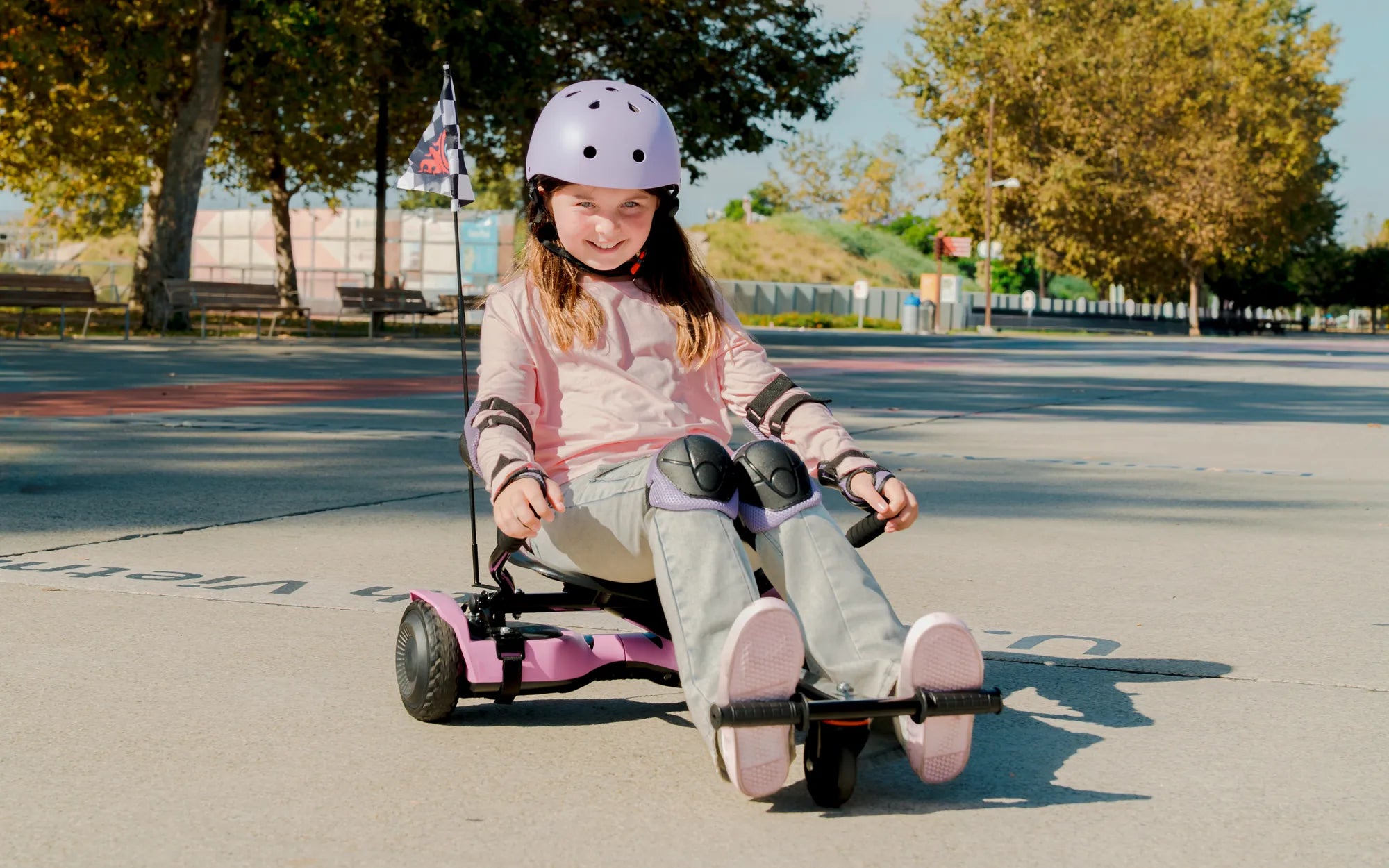
A properly fitted helmet is non-negotiable. Beyond that, a full set of protective gear—wrist guards, knee pads, and elbow pads—is highly recommended, especially during the learning phase. Wrist guards are particularly important as falls often involve putting hands out to brace. High-visibility clothing or accessories can further enhance safety, especially when paired with a white scooter for daytime visibility.
Q3: How long does the battery take to charge, and how should I care for it?
A typical 36V, 4.0Ah battery takes between 2 to 4 hours for a full charge from empty. Always use the manufacturer-provided charger. For battery care: avoid leaving the scooter fully discharged for extended periods, store it in a cool, dry place (not in direct sunlight or freezing temperatures), and do not charge it immediately after a ride while the battery is still warm. Adhering to these practices extends battery life.
Q4: Where are the best and safest places for my child to practice riding?
Begin in a flat, smooth, and open area free of traffic and major obstacles. An empty tennis court, basketball court, or smooth driveway is ideal. Avoid public roads, areas with car traffic, steep hills, or rough terrain initially. Once proficient, supervised riding on smooth park paths or sidewalks is acceptable, always yielding to pedestrians and following local regulations.
Q5: What basic maintenance does the scooter require?
Regularly wipe down the white body with a damp cloth to keep it clean and visible. Check the tires for embedded debris or excessive wear. Ensure all screws and footpad grips are tight. Store the scooter indoors in a dry place. Most importantly, periodically inspect the charger and charging port for any signs of damage, and never charge the scooter unattended for long periods.
Conclusion: Making a Smart and Safe Choice
Selecting the right kids self balancing scooter white requires a shift in perspective from viewing it as a simple toy to evaluating it as a personal electric vehicle. The decision hinges on verifiable safety certifications, appropriate performance specifications, and the tangible support of a trustworthy brand. Prioritizing a UL-certified battery and IPX5 water resistance is the most effective way to mitigate inherent risks.
By understanding key specs like weight limits, motor power, and warranty terms, parents can make an objective, value-driven choice. The goal is to provide an activity that promotes outdoor play, balance, coordination, and fun, all within a framework of engineered safety. A model that combines these elements, like those from Gyroor, delivers lasting enjoyment and parental confidence.
Equip your child with the necessary safety gear, establish clear riding rules, and supervise their practice. With these precautions and a well-chosen scooter, you open the door to a rewarding and active pastime. Explore the full range of rigorously tested, safety-focused options designed for young riders. Browse the full Gyroor collection at gyroorboard.com to find the perfect white scooter that meets every standard for safety and fun.
Hoverboard Black Friday: Ultimate Guide to Scoring the Best Deals
Hoverboard Rose Gold: The Ultimate Blend of Style and Technology