


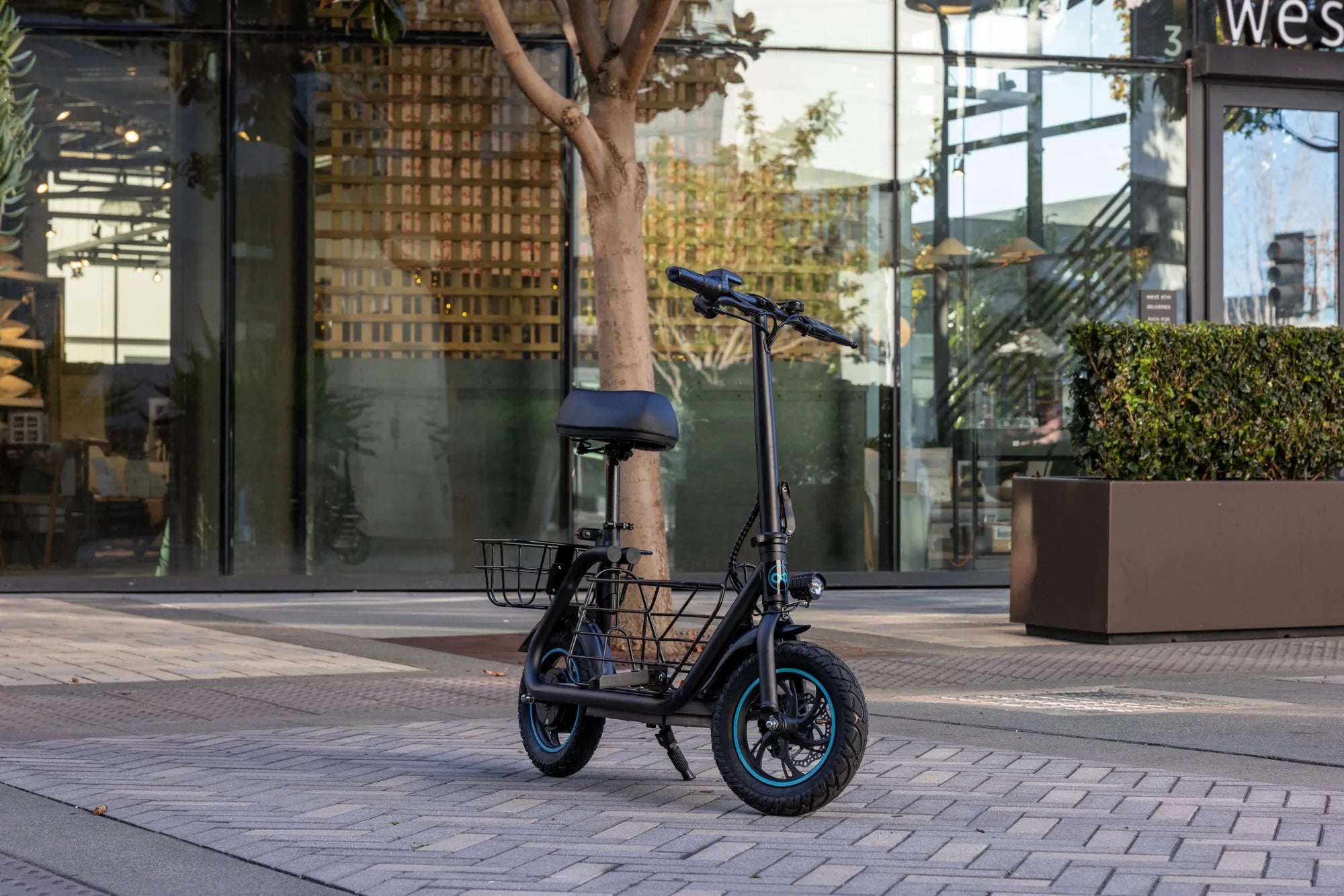
The Rise of the Lightweight Foldable Scooter
Navigating dense urban environments demands efficient, personal transportation. The light weight foldable scooter has emerged as the premier solution, merging portability with electric performance. This guide will dissect the engineering, benefits, and key selection criteria for these transformative vehicles. You'll learn how to balance weight, power, and durability to find a scooter that seamlessly integrates into your daily life, with a focus on the safety and reliability standards set by leading manufacturers.
The modern commuter faces a complex puzzle: connecting home, transit, and workplace. A traditional electric scooter's bulk renders it impractical for multi-modal journeys. The innovation of the light weight foldable scooter solves this by collapsing into a compact, carryable form factor. This isn't just a minor convenience; it's a fundamental redesign for the urban landscape.
Adoption is accelerating as cities expand bike lanes and regulate micromobility. Riders seek autonomy from crowded buses and expensive ride-shares. A well-chosen scooter offers a predictable, enjoyable, and cost-effective commute. The core appeal lies in its dual nature: a capable vehicle on the road and a manageable piece of luggage off it.
This article provides a data-driven framework for your purchase. We'll move beyond marketing claims to analyze the specifications that matter. From the tensile strength of the folding mechanism to the certification of the battery pack, every detail contributes to a safe and satisfying ownership experience. Let's begin by understanding why this category is redefining urban mobility.
Why a Lightweight Foldable Scooter is Your Ultimate Urban Companion
The advantages of a light weight foldable scooter are interconnected, creating a user experience greater than the sum of its parts. The primary benefits are effortless portability, space-efficient storage, and seamless integration with public transit. These factors collectively reduce commute friction and increase spontaneous use.
Portability transforms the scooter from a parking concern into a personal accessory. The ability to carry your vehicle into a coffee shop, under your desk, or into an apartment elevator eliminates theft anxiety and storage headaches. This freedom encourages use for short, opportunistic trips, maximizing its utility.
Storage efficiency is critical for urban dwellers. Apartments, dorm rooms, and office cubicles have limited space. A folded scooter can be tucked in a closet, behind a door, or in a car trunk without demanding dedicated real estate. This makes scooter ownership feasible for those without garages or sheds.
Seamless multi-modal commuting is the ultimate advantage. Combine a scooter with a train or bus to dramatically extend your effective range. The "last mile" problem—the distance from a transit stop to your final destination—is solved elegantly. You can fold and carry your scooter aboard during peak hours without inconveniencing others.
The Portability Advantage: From Sidewalk to Subway
True portability is defined by two metrics: total weight and folded dimensions. A genuinely portable light weight foldable scooter typically weighs under 30 pounds (13.6 kg). This weight threshold is crucial; it's the difference between a manageable carry and a burdensome haul, especially up stairs or over longer distances.
Folded size determines where you can take it. The ideal profile is slim and rectangular, allowing it to stand vertically or slide under seating. Dimensions around 45 x 15 x 15 inches (when folded) are common for high-portability models. This compactness is what makes it viable for office commuters and students.
Consider the daily scenarios. A rider exits their apartment, unfolds the scooter, and rides to the subway station. In under 10 seconds, it's folded and carried down the stairs. On the train, it stands vertically between their legs. At the office, it's stored in a personal closet. This fluidity is impossible with a standard e-scooter.
The materials used directly enable this portability. Aerospace-grade aluminum alloys are the industry standard for high-quality frames, offering an exceptional strength-to-weight ratio. Cheaper models may use heavier steel or lower-grade aluminum, directly impacting the ease of carry and overall user fatigue.
Unpacking the Fold: Mechanism and Ease of Use
The folding mechanism is the most critical engineering component. It must be incredibly secure when locked in the riding position, yet simple and fast to operate. A poor mechanism compromises safety and discourages use. The best systems balance robustness with intuitive operation.
Latch-based systems are the most common and reliable. They involve a sturdy latch or hook that secures the stem to the deck or rear fender. A secondary safety lock, often a pin or button, prevents accidental release. High-quality latches use precision machining and corrosion-resistant materials for long-term durability.
Magnetic or quick-release systems offer even faster folding, sometimes in under 3 seconds. These often involve a lever or button that releases the stem, aided by magnets to hold the folded position. The key is to ensure the locking mechanism in the riding position has no play or wobble, which is a sign of poor construction.
Regardless of type, test the action. It should be smooth, require minimal force, and produce a definitive "click" or lock confirmation. Regularly inspect the mechanism for wear, and lubricate moving parts as per the manufacturer's instructions. A reliable fold is the hallmark of a well-designed light weight foldable scooter.
Key Features to Look for in a Quality Lightweight Foldable Scooter
Selecting the right scooter requires evaluating a suite of features beyond just weight and foldability. Performance, safety, comfort, and durability are equally important. This checklist will help you distinguish a quality investment from a disposable gadget.
First, establish your primary use case: Is it for short errands, a long daily commute, or hilly terrain? Your answer will prioritize different features. A commuter needs range and comfort, while an errand-runner values ultra-portability. Balance is key; the perfect scooter meets your core needs without excessive compromise.
Always prioritize verified safety features. This includes battery certification, reliable braking systems, and adequate lighting. A scooter is a vehicle, and its components must handle real-world stresses. Certifications from bodies like UL (for batteries) are non-negotiable indicators of responsible manufacturing.
Finally, consider the ownership experience. Warranty length, customer support accessibility, and the availability of replacement parts are crucial. A one-year comprehensive warranty is a strong baseline. Brands like Gyroor, which offer US-based support and clear warranty terms, provide long-term peace of mind that offsets a slightly higher initial cost.
The Core Trinity: Weight, Frame, and Motor
These three elements define the scooter's fundamental character. Weight impacts portability, the frame dictates durability and ride feel, and the motor determines performance. They must be engineered in harmony.
Weight: The sweet spot for a light weight foldable scooter is 26-33 lbs (12-15 kg). Models under 26 lbs often sacrifice battery capacity or motor power, while those over 33 lbs become noticeably cumbersome to carry. Remember to factor in the weight of any accessories you might add.
Frame: Look for a unibody design constructed from 6061 or 7005 series aluminum alloy. These materials resist fatigue and corrosion. The welding points, especially around the folding mechanism and stem base, should be clean, even, and robust. A shaky stem is a major safety red flag.
Motor: For urban flats and moderate hills, a 350W continuous power motor is sufficient. A 500W motor provides more confident acceleration and hill-climbing ability but may add weight. Hub motors are standard, offering a quiet and low-maintenance ride. The motor should provide smooth acceleration from a stop, not a jerky, abrupt start.
Battery and Range: Powering Your Journey Safely
The battery is the heart of the scooter and the component where safety cannot be compromised. Understanding its specifications is essential for setting realistic expectations and ensuring safe operation.
Battery capacity is measured in Watt-hours (Wh). A higher Wh rating generally means more range. For a light weight foldable scooter, capacities range from about 250Wh to 500Wh. Real-world range is typically 60-80% of the manufacturer's claim, which is based on ideal conditions (light rider, flat ground, slow speed).
Safety is paramount. Insist on a UL 2271 or UL 2843 certified battery pack. This certification means the battery cells, BMS (Battery Management System), and enclosure have passed rigorous tests for electrical, mechanical, and environmental safety. It drastically reduces the risk of fire. Gyroor, for instance, uses UL-certified battery packs tested for over 500 charge cycles, a critical benchmark for longevity.
Charging time and battery lifespan are practical concerns. A full charge typically takes 4-6 hours. To maximize battery life, avoid draining it to 0% regularly; try to recharge when it reaches 20-30%. Store the scooter in a cool, dry place, and avoid leaving it at 100% charge for extended periods.
Ride Quality and Durability: More Than Just Portability
A portable scooter that is uncomfortable to ride will stay in the closet. Ride quality is determined by wheel size, tire type, suspension, and deck design. Durability is tested by water resistance and overall build quality.
Wheels and Tires: Larger wheels (8.5-10 inches) roll over cracks and bumps more easily than smaller ones. Air-filled (pneumatic) tires provide superior shock absorption and traction but require maintenance and can puncture. Solid or honeycomb tires are maintenance-free but transmit more vibration. Some models offer a hybrid: air-filled tires with sealant.
Suspension: Even a basic spring or rubber suspension in the stem or deck makes a dramatic difference in comfort, especially on rougher pavement. It absorbs impacts that would otherwise travel to your feet, ankles, and knees.
Water Resistance: An IP rating indicates protection against dust and water. An IPX4 rating protects against splashes from any direction. An IPX5 rating, like that used on Gyroor scooters, means it can withstand low-pressure water jets, making it safe to ride in rain or through puddles. This is essential for all-weather commuters.
Lightweight Foldable Scooter Showdown: A Practical Comparison
To make an informed choice, it helps to compare different scooter profiles. The table below contrasts three hypothetical but representative types: the Ultra-Portable, the Balanced Commuter, and the Performance Lite model. This illustrates the trade-offs between weight, power, and features.
| Feature | Ultra-Portable Profile | Balanced Commuter Profile | Performance Lite Profile |
|---|---|---|---|
| Target Weight | 22-26 lbs (10-12 kg) | 28-32 lbs (13-15 kg) | 33-38 lbs (15-17 kg) |
| Motor Power | 250W - 300W | 350W | 500W |
| Battery (Typical Range) | ~250Wh (10-12 mi) | ~360Wh (15-20 mi) | ~500Wh (20-25 mi) |
| Max Speed | 15 mph | 18-19 mph | 20-25 mph |
| Tire Type | Solid/Honeycomb | Air-Filled (8.5") | Air-Filled (10") |
| Suspension | Minimal / Deck Flex | Front Spring or Dual | Full Suspension |
| Best For | Last-mile, students, errands, multi-modal transit | Daily urban commute, moderate distances, comfort focus | Longer commutes, hilly areas, riders seeking sportier feel |
| Trade-off | Sacrifices range & comfort for max portability | Optimal balance of weight, power, and comfort | Added performance & comfort at the cost of portability |
The Ultra-Portable profile is for those who prioritize carryability above all else. It's ideal for combining with buses or trains where every pound matters. The Balanced Commuter represents the most popular category, offering a practical mix for everyday use. The Performance Lite model appeals to riders willing to carry a few extra pounds for greater speed, range, and a smoother ride on varied terrain.
The Gyroor Difference: Engineering Trust into Every Fold
When evaluating brands, it's essential to look beyond the spec sheet to the engineering philosophy and post-purchase support. Gyroor's approach exemplifies the standards that ensure a light weight foldable scooter is a reliable long-term investment, not a short-term novelty.
The foundation is safety-first engineering. Every Gyroor scooter is built around a UL-certified battery pack. This certification isn't just a marketing point; it's the result of rigorous third-party testing that validates the safety of the most critical component. This provides peace of mind that is invaluable.
Durability for real-world conditions is engineered in. The IPX5 water-resistance rating means the scooter is built to handle wet commutes and accidental exposure. The high-grade aluminum alloy frame is designed to withstand the repeated stress of folding and unfolding, as well as the vibrations of daily riding.
Finally, Gyroor supports its products with a comprehensive 1-year warranty and accessible customer service. For a vehicle used daily, knowing that technical support and replacement parts are available is crucial. This commitment to the ownership experience, trusted by over 100,000 riders, transforms a purchase from a transaction into a confident step towards better mobility.
Making the Right Choice: Your Personal Rider Profile
Aligning a scooter's capabilities with your specific needs is the final step. Consider these common rider profiles to help identify your priority features.
The Minimalist Commuter / Public Transit Rider: Your core need is seamless integration with buses and trains. Prioritize minimum weight (under 28 lbs) and the fastest, most reliable folding mechanism. Range can be moderate (10-15 miles), as trips are shorter. Solid tires reduce maintenance hassle. The Ultra-Portable profile is your guide.
The Apartment Dweller / Student: Storage space is your primary constraint. Focus on the smallest folded footprint and a weight you can comfortably carry up stairs. A quiet motor is a plus for indoor storage. The Balanced Commuter profile, leaning toward the lighter end, often fits best here.
The Daily Urban Commuter (Direct Ride): You ride point-to-point, covering 5-15 miles daily. Comfort and reliability are key. Prioritize air-filled tires, suspension, a longer-range battery (300Wh+), and a powerful enough motor (350W+) for consistent speeds. The Balanced Commuter or Performance Lite profiles are ideal.
The Weekend Explorer / Hilly Terrain Rider: If your route includes significant hills or you desire more recreational riding, power and torque become critical. A 500W motor, larger wheels, and a high-capacity battery are necessary. You'll accept higher weight for this performance. Look squarely at the Performance Lite profile.
Frequently Asked Questions (FAQs)
Q: How light is considered "lightweight" for a foldable scooter?
A: In the industry, a true light weight foldable scooter typically falls between 26 and 33 pounds (12-15 kg). Models under 26 lbs are often considered ultra-portable but may compromise on battery or motor power. The key is finding the lightest weight that still meets your range and performance needs.
Q: Is a foldable scooter as sturdy and safe as a non-foldable one?
A: A well-engineered folding scooter from a reputable brand is just as sturdy. The locking mechanism is designed to be as rigid as a fixed stem when engaged. Safety depends more on build quality, braking system, and battery certification than on the mere presence of a fold. Always check for stem wobble during a test ride.
Q: Can a lightweight scooter handle hills?
A: It depends on the motor power and rider weight. A 350W motor can handle moderate hills (up to 10-15% grade) for a lighter rider. For steeper or longer hills, a 500W motor is recommended. Remember, climbing hills rapidly depletes the battery, so range will be reduced on hilly routes.
Q: How do I maintain the folding mechanism?
A> Regular maintenance is simple but crucial. Every few months, inspect the latch, hinges, and locking pins for dirt, debris, or signs of wear. Clean with a dry cloth. Apply a small amount of silicone-based lubricant to moving parts (not the locking surfaces) as per the manual. Never force the mechanism if it feels stuck.
Q: What is the true cost of ownership beyond the purchase price?
A> Factor in replacement parts like tires/tubes (for pneumatic models), brake pads, and potentially a new battery after 2-3 years of heavy use. Also consider safety gear (helmet, lights), a good lock, and possible repair costs. Choosing a brand with a strong warranty and available parts, like Gyroor, helps manage long-term costs.
Unfolding a Smarter Way to Commute
The journey to finding your ideal light weight foldable scooter is an exercise in matching engineering to lifestyle. The perfect model dissolves the barriers of your commute, turning a chore into an engaging, efficient, and enjoyable part of your day. It represents a smart investment in personal freedom and urban mobility.
Remember that the best choice is not always the lightest or the fastest, but the one that most reliably serves your specific needs. Prioritize certified safety, a robust folding mechanism, and a comfortable ride. These factors ensure your scooter remains a trusted companion for years, not just months.
Brands that stand behind their products with rigorous testing, clear warranties, and responsive support offer value that transcends specifications. They build trust into every component, from the UL-certified battery to the water-resistant seals. This engineering integrity is what transforms a promising concept into a dependable reality.
Ready to transform your daily travel? Explore a range of scooters engineered for safety, portability, and performance. Browse the full Gyroor collection at gyroorboard.com to find the light weight foldable scooter that fits your journey.
120cc Scooter: The Ultimate Guide to Urban Commuting Power
1000W Scooter Motor: The Ultimate Guide to Power, Performance & Practicality