



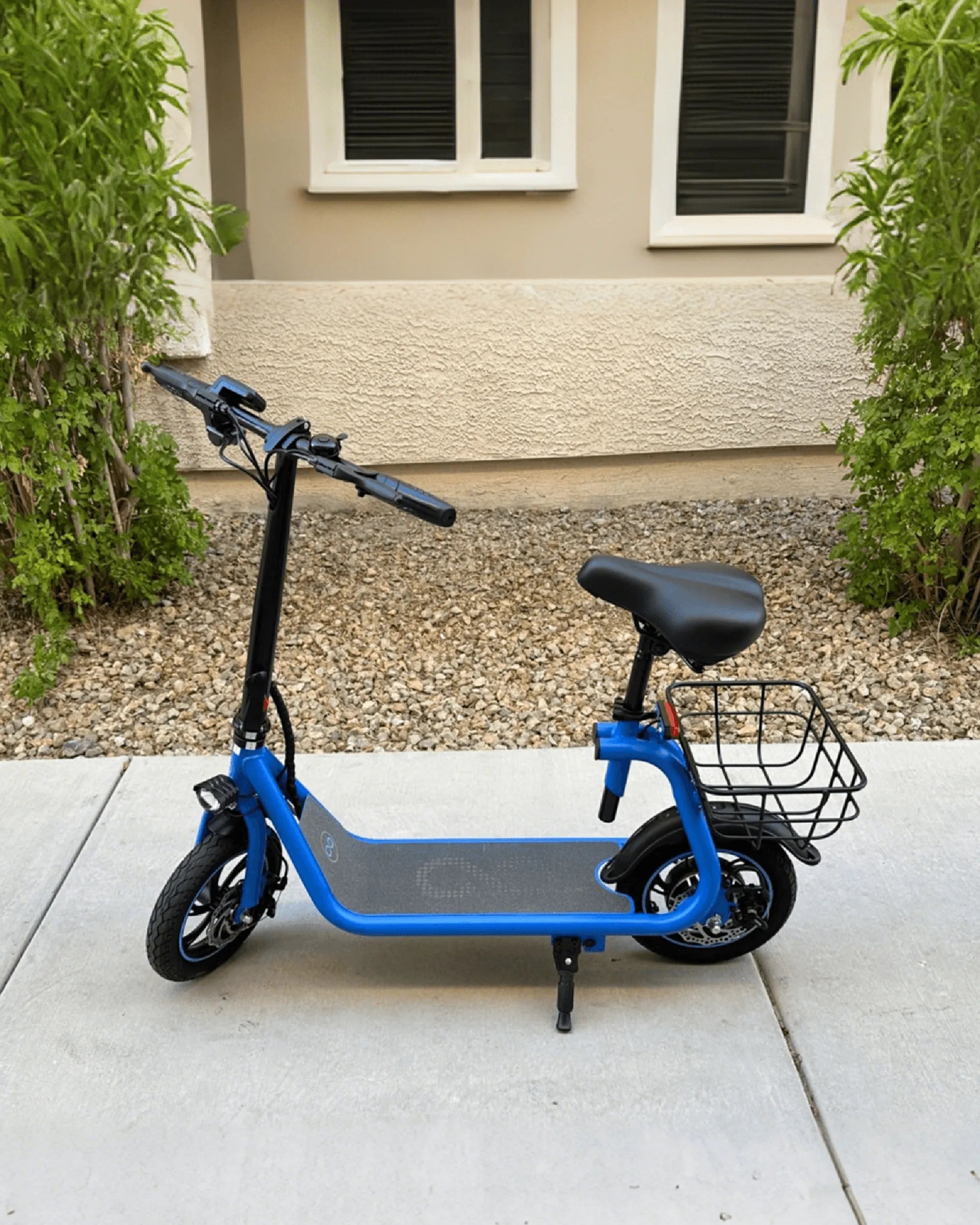
Introduction: The Rise of the Lightweight Travel Scooter
A light weight travel scooter, typically defined as a model under 30 pounds, has become the cornerstone of efficient urban mobility. Its core appeal lies in solving a specific, widespread problem: the 'last mile' gap between public transit stops and a commuter's final destination. This gap, often just a few blocks, can be the most inconvenient part of a journey when walking is too slow or hailing a ride is impractical.
By offering unparalleled portability without sacrificing core performance, these scooters transform multi-modal travel from a chore into a seamless experience. They are engineered for the modern commuter who values speed, convenience, and ease of use above all else. Leading brands like Gyroor have focused on engineering this convenience without compromising on the critical pillars of safety, reliability, and ride quality.
This guide will dissect every aspect of the light weight travel scooter, from its fundamental benefits to the engineering that makes it possible. You will learn how to choose the right model for your needs, how to maintain it for longevity, and why portability is redefining personal urban transport. The goal is to provide a comprehensive, data-driven resource for anyone considering this powerful tool for their daily commute or leisure travel.
Why Portability is King: The Core Benefits of a Lightweight Design
The primary advantage of a light weight travel scooter is its transformative effect on daily logistics. A scooter weighing 25 pounds versus one weighing 45 pounds represents a fundamental difference in user experience. The lighter model can be effortlessly carried with one hand, dramatically reducing physical strain during the non-riding portions of a commute.
This translates directly to practical freedom. Navigating crowded subway stations, climbing a flight of stairs to an office, or lifting the scooter into a bus luggage rack becomes a simple task rather than a strenuous workout. The reduction in friction encourages more frequent use, ensuring the scooter becomes a true daily companion rather than a burdensome piece of equipment reserved for ideal conditions.
Furthermore, a lightweight design enhances safety in unexpected ways. A rider can quickly and safely dismount and maneuver the scooter in tight spaces or sudden pedestrian crowds, a maneuver that is far more cumbersome with a heavier vehicle. This agility contributes to a more confident and controlled riding experience in dynamic urban environments.
The Commuter's Daily Grind: Scenarios Where Lightweight Wins
Consider the typical morning routine of a city commuter. They walk from their apartment to the subway, navigate turnstiles, ride the train, exit the station, and walk the final ten blocks to work. A light weight travel scooter collapses this final leg into a two-minute glide.
After arriving, they fold the scooter with a single motion—a feature amplified by its low weight—and carry it to their desk, stashing it discreetly underneath without disrupting coworkers. At lunch, they might unfold it for a quick trip to a cafe several blocks away, again avoiding the wait for a car service. The entire process is fluid, efficient, and integrates perfectly with existing transit infrastructure.
Other winning scenarios include storing the scooter in a small apartment closet, lifting it into the trunk of a car for weekend trips, or taking it on a commuter train during peak hours without occupying excessive space or offending fellow passengers with a bulky item. In each case, the low weight removes a barrier to usage.
Beyond Weight: The Portability Trifecta (Weight, Foldability, Size)
True portability is a symphony of three factors: low weight, fast/secure foldability, and a compact folded footprint. Weight is the lead actor, but it needs a strong supporting cast. An ultra-light scooter with a clumsy, multi-step folding mechanism loses its practical edge at the moment you need to board a bus.
Advanced folding mechanisms, like the one-step systems employed by Gyroor, are designed to work in harmony with the lightweight frame. A secure latch ensures the scooter stays compact during carrying, preventing it from accidentally unfolding. The folded dimensions determine whether it will fit under a seat, in a locker, or in a designated storage area.
Evaluating a light weight travel scooter requires assessing all three elements together. The ideal model feels like a single, manageable package when folded, not a collection of loose parts. This holistic design approach is what separates a truly portable commuter tool from a mere scooter that happens to be light.
Engineering Lightweight Durability: How Gyroor Balances Portability and Performance
A common misconception is that a lightweight scooter must be fragile or underpowered. Modern engineering directly contradicts this. Brands like Gyroor achieve durability through intelligent material selection and strategic design, not sheer mass. The frame is the skeleton, and using high-grade aluminum alloys provides an exceptional strength-to-weight ratio.
This material is robust enough to handle urban pavement and minor impacts while keeping the overall mass low. Component placement is also key; positioning the motor within the rear wheel (a hub motor) and using a streamlined deck design eliminates unnecessary structural weight. The battery, often the heaviest single component, is housed in a secure, centralized location to maintain a low center of gravity for better stability.
Gyroor's commitment to safety underscores this balance. Every model uses a UL-certified battery pack. This certification is not just about safety; it also indicates a high-quality battery cell that delivers consistent power output and longevity (tested for 500+ charge cycles) without excessive weight. Furthermore, an IPX5 water-resistant rating proves that durability against the elements is not sacrificed for portability, allowing riders to confidently navigate damp streets.
Key Components That Keep Weight Down
Several core components are optimized to minimize weight while maintaining performance. The frame material is the starting point; aircraft-grade aluminum is the industry standard for lightweight strength. The motor type is crucial: brushless hub motors are efficient and integrate seamlessly into the wheel, eliminating the weight and complexity of external chain drives.
The battery represents the most significant trade-off. Larger capacity (measured in Watt-hours, Wh) increases range but also adds weight and size. Engineers must find the sweet spot that offers sufficient range (e.g., 15-20 miles) for a typical commute without making the scooter unwieldy. Gyroor's models are designed with this optimal balance for the urban traveler in mind.
Finally, tire choice affects weight and maintenance. Smaller, solid or airless tires reduce weight and eliminate flats but can offer a slightly harder ride. Pneumatic (air-filled) tires provide better shock absorption but add minimal weight and require pressure checks. Each choice reflects a prioritization within the lightweight design philosophy.
Choosing Your Ideal Model: A Data-Driven Look at Gyroor's Lightweight Lineup
Selecting the right light weight travel scooter requires matching specifications to your personal commute and physical needs. The following table provides a clear, comparative overview of two Gyroor models engineered for portability, alongside a common commuter scenario for context.
| Feature | Gyroor Z8 (Ultra-Portable) | Gyroor S1 (Performance Commuter) | Commuter Context |
|---|---|---|---|
| Weight | 24 lbs | 28 lbs | Ease of carrying up stairs. |
| Max Range | 15 miles | 22 miles | Round-trip commute distance. |
| Motor Power | 250W | 350W | Ability to tackle moderate inclines. |
| Max Speed | 15.5 mph | 19 mph | Keeping pace with city traffic on bike lanes. |
| Folded Dimensions | 41" x 16" x 6" | 43" x 17" x 7" | Fitting under a desk or in a tight closet. |
| Special Features | One-step folding, LED display, solid tires | One-step folding, dual suspension, pneumatic tires, LED lights | Ride comfort and visibility. |
As the data shows, the Z8 prioritizes minimum weight and maximum foldability for the rider whose primary concern is effortless carrying and storage on mixed-mode trips. The S1 accepts a modest 4-pound increase to deliver greater range, power, speed, and a more comfortable ride with suspension, catering to the rider with a longer or hillier commute who still values portability.
Use Case Matchmaking: Which Gyroor Scooter is For You?
Your ideal light weight travel scooter depends on your specific daily patterns. If your commute involves multiple transfers on buses and trains, frequent carrying up stairs, and a final destination distance under 7 miles, the Gyroor Z8 is likely your best match. Its ultra-light design minimizes fatigue during the carrying phases of your journey.
If your route is a longer direct trip (up to 11 miles one-way), includes consistent slopes, or you prioritize a smoother ride over cobblestones and cracks, the Gyroor S1 is the superior choice. The extra motor power handles hills more effectively, the suspension absorbs vibrations, and the extended range provides a comfort buffer, reducing range anxiety. Both models share the core portable DNA, including one-step folding and UL-certified batteries, but are optimized for slightly different user profiles.
Safety and Maintenance: Ensuring Your Lightweight Scooter Lasts
Owning a light weight travel scooter comes with the responsibility of proper care to ensure safety and longevity. A pre-ride check should become a habitual 30-second routine. Visually inspect the tires for wear or damage, ensure the folding mechanism is fully locked, test the brakes for responsiveness, and check that the handlebar stem is secure. For scooters with pneumatic tires, maintaining the correct air pressure weekly is essential for optimal range and ride quality.
Safe riding practices are adapted for lighter vehicles. Smooth, gradual acceleration and braking are key, as a lighter scooter can be more responsive to abrupt inputs. Always be aware that the lower weight can make the scooter more susceptible to being pushed by strong crosswinds. Use designated bike lanes where available, wear a helmet, and utilize lights and reflectors at night or in low-light conditions.
Proper storage and care directly impact lifespan. Store the scooter in a dry, temperate place, avoiding extreme cold or heat. Do not leave the battery fully depleted for extended periods; aim to keep it between 20% and 80% charge for daily storage. Regularly wipe down the frame and deck to prevent dirt buildup. Adhering to these practices, backed by Gyroor's reliable 1-year warranty and accessible customer support, ensures your investment remains a dependable travel partner for years.
Frequently Asked Questions (FAQ)
Q: Is a lightweight scooter stable at higher speeds?
A: Yes, when properly designed. Stability is determined by wheelbase length, deck size, and overall geometry. Gyroor models are engineered with a sufficiently long wheelbase and wide deck to provide confident stability at their top speeds, ensuring the ride feels secure and not 'twitchy.'
Q: How does weight affect the scooter's range?
A: Total moving weight (scooter + rider + cargo) is the primary factor affecting range. A lighter scooter itself means more of the battery's energy is used to propel the rider, not the vehicle. Therefore, a light weight travel scooter often achieves better real-world range for a given battery size compared to a heavier model with the same battery, assuming identical riding conditions.
Q: Can a lightweight scooter handle hills?
A: It depends on the motor's wattage and torque relative to the total weight. A 250W motor on a 24 lb scooter can handle mild inclines effectively for an average-weight rider. For steeper, consistent hills, a more powerful motor like the 350W in the Gyroor S1 is recommended. Always check the manufacturer's specifications for hill-climbing grade.
Q: Are lightweight scooters suitable for taller or heavier riders?
A: Absolutely, but you must check the specific model's specifications. Key metrics are the maximum weight limit (often 220-265 lbs for quality models) and the deck length/height of the handlebars. Gyroor designs its frames to accommodate a wide range of rider sizes, but taller riders should ensure the handlebar height is comfortable for prolonged use.
Q: How important is the IP water resistance rating for a commuter scooter?
A> Very important. An IPX5 rating, like on Gyroor scooters, means the scooter is protected against water jets from any direction. This allows you to ride through puddles and in light rain without immediate worry of water damage to electrical components, a crucial feature for a vehicle used daily in an urban environment.
Conclusion: Travel Farther, Carry Less
The right light weight travel scooter is more than a vehicle; it's a key that unlocks a more efficient, flexible, and enjoyable form of urban mobility. By bridging the last-mile gap with minimal physical burden, it redefines what is possible in a daily commute. The choice ultimately hinges on an honest assessment of your travel distance, route terrain, storage options, and personal strength.
Investing in a well-engineered model from a trusted brand like Gyroor ensures you get a tool built around the portability trifecta—light weight, smart foldability, and compact size—without compromising on the durability, safety, and performance required for daily use. This combination empowers you to navigate the city on your terms, saving time and reducing reliance on crowded or costly alternatives.
The future of personal urban transport is intelligent, integrated, and effortless. Discover the model that fits your journey and experience the freedom of traveling farther while carrying less. Explore the full range of engineered, portable solutions designed for the modern commuter.
Ready to transform your commute? Browse the full Gyroor collection at gyroorboard.com to find your perfect light weight travel scooter.
What is the Best Pro Scooter? The Ultimate 2024 Buyer's Guide
How Fast Does a 300cc Scooter Go: Top Speed & Real-World Performance