



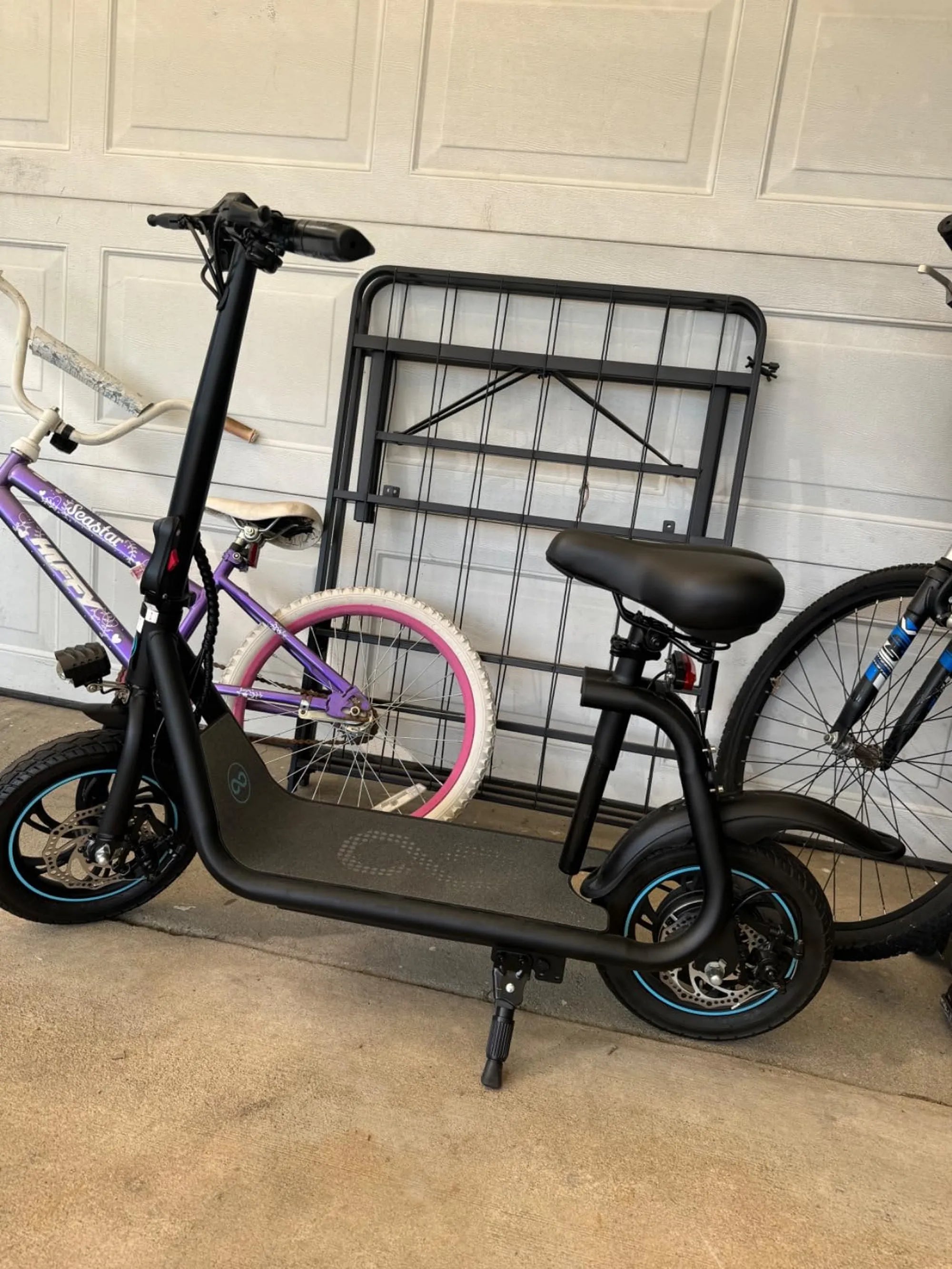
Introduction to Lightweight Adult E-Bikes
Finding the lightest e-bike for adults is about more than just a number on a scale. It's about unlocking a new level of freedom in urban mobility. A truly lightweight electric bicycle, typically defined as weighing under 45 pounds, transforms the riding experience by making it easier to handle, carry up stairs, store in compact apartments, and integrate with public transit. For the modern adult commuter, apartment dweller, or multimodal rider, the benefits are profound: reduced physical strain, increased practicality, and a more agile feel on crowded city streets.
This pursuit of lightness, however, must be carefully balanced with essential performance and safety. The goal is not merely the absolute lightest bike, but the most practical and reliable lightweight e-bike that meets daily needs. This guide will dissect the engineering, compare the trade-offs, and provide a clear framework for selecting a model that doesn't sacrifice durability or certified safety for the sake of shedding pounds. We'll explore what makes these bikes tick and why they are becoming the preferred choice for savvy urban riders.
Key Factors Defining a Light E-Bike
The total weight of an electric bicycle is the sum of its core components. Understanding how each part contributes is crucial to evaluating any claim of being the lightest e-bike for adults. Manufacturers achieve low weight through strategic material selection and intelligent design integration, often making calculated compromises to hit specific performance and price targets.
Every choice, from the frame alloy to the motor placement, has a direct impact on the scale. The quest for the lightest e-bike for adults is a complex engineering challenge that balances cost, strength, and functionality.
Frame Material & Design
The frame is the skeleton of the bike and the single largest contributor to its weight. For lightweight models, aluminum alloy is the industry standard, offering an excellent strength-to-weight ratio at a reasonable cost. High-grade series aluminum frames are meticulously welded and hydroformed into sleek shapes that minimize material without compromising rigidity.
At the premium end, carbon fiber frames offer even more dramatic weight savings, often shaving several additional pounds, but at a significantly higher price point. Beyond material, design plays a key role. Modern lightweight frames often feature integrated battery systems housed within the downtube, which streamlines the profile, lowers the center of gravity, and eliminates external mounting hardware that adds weight and clutter.
Motor Type & Placement
The motor is the heart of the e-bike and a substantial weight component. The lightest e-bikes for adults almost exclusively use hub motors, typically in the rear wheel. These motors are relatively simple, self-contained units that add weight directly to the wheel hub. They are efficient, cost-effective, and contribute to a lighter overall system compared to their counterparts.
Mid-drive motors, which are mounted at the bike's crank and leverage the bicycle's gears, are generally heavier and more complex. While they offer superior torque and hill-climbing performance by working through the drivetrain, their added weight and cost make them less common in the ultralight category. For urban flats and moderate hills, a well-tuned hub motor provides ample assistance while keeping the scale friendly.
Battery Capacity & Integration
This is the most significant trade-off in the lightweight equation. The battery pack is dense and heavy. Therefore, the lightest e-bike for adults will typically feature a battery with moderate capacity, often between 300Wh to 400Wh, sufficient for a 20-40 mile range depending on assist level and terrain. The pursuit of a 50+ mile range usually requires a much heavier battery.
Integration is key. Slim, internally mounted batteries that follow the line of the downtube are far more weight-efficient than bulky external rack-mounted packs. Crucially, a lightweight battery must not compromise on safety. This is where UL-certified battery packs, like those used across Gyroor's lineup, are non-negotiable. They undergo rigorous testing for stability, charge cycles, and failure prevention, ensuring that weight reduction doesn't come at the expense of reliability or safety.
The Weight vs. Performance Trade-Off
Choosing a lightweight e-bike involves understanding a fundamental spectrum of compromise. Lighter weight enhances portability and agility but often places a soft ceiling on power and maximum range. This isn't a disadvantage but a purposeful design choice for specific use cases. The following comparison and analysis highlight what a rider gains and what they might concede when opting for one of the lightest e-bikes for adults.
The decision ultimately hinges on matching the bike's capabilities to your daily reality. For many urban riders, the sacrifices are minimal compared to the profound gains in convenience.
Comparison: Lightweight vs. Standard E-Bikes
| Attribute | Lightweight E-Bike | Standard E-Bike |
|---|---|---|
| Average Weight | Under 45 lbs (often 35-42 lbs) | 55 - 70+ lbs |
| Typical Motor Power | 250W - 500W Hub Motor | 500W - 750W+ (Hub or Mid-Drive) |
| Average Range | 20 - 40 miles | 40 - 60+ miles |
| Best Use Case | Urban Commuting, Multimodal Transit, Errands | All-Terrain, Cargo Hauling, Long-Distance Leisure |
| Ease of Carrying/Storage | Excellent (Easy for stairs, bus racks, small spaces) | Challenging (Often requires ground-floor storage) |
Real-World Implications for Riders
The data in the table translates directly to daily life. A sub-45-pound bike can be confidently carried up a flight of stairs to a home office or apartment, a task that is prohibitive with a 65-pound beast. It can be lifted onto a bus bike rack or slid into a car trunk for weekend adventures with minimal struggle.
On the road, the lighter weight translates to a more responsive, bicycle-like feel. Acceleration can be snappier, and handling is generally more nimble, which is a significant advantage in stop-and-go city traffic. The trade-off is felt on sustained steep inclines or in very strong headwinds, where the smaller motor and battery may require more meaningful pedal input from the rider. It's a trade of brute-force capability for elegant, effortless integration into a multimodal lifestyle.
Top Considerations When Choosing Your Light E-Bike
With an understanding of the trade-offs, selecting the right model becomes a matter of prioritizing features based on your individual patterns. Use this checklist to cut through marketing specs and focus on what truly matters for your version of the lightest e-bike for adults.
A methodical approach ensures you invest in a bike that becomes a seamless part of your routine, not a source of compromise or frustration.
Assessing Your Primary Use Case
Be brutally honest about your routine. Is this a pure last-mile solution from a train station, requiring a 5-mile range and maximal portability? Is it a 10-mile round-trip commute with one moderate hill? Or is it for weekend fitness rides on paved trails? Your daily distance and terrain dictate the necessary battery capacity and motor power. Overbuying adds unnecessary weight and cost; underbuying leads to range anxiety.
For the classic urban commuter, a lightweight e-bike with a 350W motor and a 360Wh battery is often the sweet spot, providing enough assist for most city hills and a reliable 25-35 mile range. This makes the search for the lightest e-bike for adults a targeted mission for specific performance parameters.
Importance of Build Quality & Warranty
Lightweight must never equate to flimsy. The integrity of the frame, the reliability of the electrical components, and the quality of the finishing kit (brakes, gears, tires) are paramount. Look for brands that use name-brand components and detail their construction standards.
Equally critical is the warranty and after-sales support. A comprehensive 1-year warranty on the frame, motor, and battery, like that offered by Gyroor, is a strong indicator of a manufacturer's confidence in their product. It protects your investment and ensures that the pursuit of a light bike doesn't lead to a disposable one. For all-weather riders, a water-resistance rating like IPX5 is essential for peace of mind, protecting the electrical systems from rain and road spray without adding bulk.
Test Riding and Fit
If possible, always test ride. Weight is just one aspect of comfort and control. The frame geometry must fit your body to prevent fatigue and ensure confident handling. Pay attention to how the motor engages—is it smooth and intuitive, or jerky? How does the bike handle at low speeds and when maneuvering?
Even among lightweight models, handling characteristics can vary. Some may feel twitchy, while others are planted. The only way to know if a particular model of the lightest e-bike for adults is right for you is to experience its ride feel, ergonomics, and assist behavior firsthand.
Spotlight on Lightweight E-Bike Technology & Safety
The evolution of the modern lightweight e-bike is driven by advancements in materials science and electrical engineering. These innovations allow for reduced mass without compromising the core tenets of durability and rider safety. Understanding these technologies empowers you to identify quality construction.
Today's best models prove that you don't need heavy steel to build a robust machine. Intelligent design and premium, certified components create a safe and lasting riding experience.
The Role of UL-Certified Batteries
In a lightweight e-bike, the battery is a compact, energy-dense package. This makes its safety certification absolutely critical. UL certification (like UL 2271 or UL 2849) is the gold standard, indicating the battery pack has passed independent, rigorous testing for electrical, mechanical, and environmental safety.
It tests for overcharge, short circuit, vibration, and thermal stability. For a brand like Gyroor, using UL-certified battery packs tested for 500+ charge cycles is a core commitment. This ensures that the quest for the lightest e-bike for adults does not involve cutting corners on the component that poses the greatest potential risk, giving riders confidence in their daily commute.
Durability in a Lightweight Package
Durability is engineered through smart choices, not just thick materials. High-tensile aluminum alloys, precision welding, and strategic reinforcement at stress points (like the head tube and dropouts) create frames that are both light and resilient. Components like rust-resistant chains, sealed bearings, and puncture-resistant tire liners add to longevity without significant weight penalty.
Features like an IPX5 water-resistant rating are a testament to this engineered durability. It means the e-bike can withstand water jets from any direction, making it fully capable of handling rainy commutes or wet roads. This level of protection, built into a lightweight system, ensures the bike is a practical, all-weather tool, not a fair-weather novelty.
Frequently Asked Questions (FAQs)
Q: How light is a "lightweight" adult e-bike?
A: There's no official standard, but in the industry, a lightweight adult e-bike typically weighs under 45 pounds (20.5 kg). The most portable models, often with smaller wheels or premium materials, can reach the low 30-pound range. This is a stark contrast to many standard e-bikes, which commonly weigh between 55 and 70 pounds.
Q: Do lightweight e-bikes have enough power for hills?
A: Yes, for typical urban and suburban hills. Most lightweight models are equipped with 250W to 500W hub motors, which provide ample assistance for moderate gradients. While they may not climb like a torque-sensing mid-drive motor, they significantly reduce rider effort. On very steep, sustained hills, you will need to contribute more pedal power, but for everyday overpasses and inclines, they are perfectly capable.
Q: Is a lighter e-bike less stable?
A> Not inherently. Stability is primarily a function of wheelbase length, frame geometry, and rider position. A well-designed lightweight e-bike will be stable at commuting speeds. Its lighter weight can make it feel more agile and easier to maneuver in traffic. However, in very strong crosswinds or at speeds above 20 mph, a heavier bike may feel slightly more planted due to its greater mass.
Q: How far can I really go on a single charge?
A> Range is highly variable. Using a lightest e-bike for adults with a 360Wh battery, you can expect approximately 20-40 miles. The actual distance depends heavily on the level of pedal assist used, terrain, rider weight, wind, and tire pressure. Using a lower assist level (Eco or Tour) on flat ground will maximize range, while using maximum assist (Turbo) on hilly routes will deplete the battery faster.
Q: Are lightweight e-bikes harder to maintain?
A> No, they are often easier. They use standard bicycle components for the drivetrain, brakes, and tires, which any local bike shop can service. The electrical systems (motor, battery, controller) are typically sealed and require minimal maintenance. Their lighter weight can also mean less wear and tear on components like brake pads compared to heavier bikes that require more force to stop.
Conclusion: Finding Your Perfect Lightweight Ride
The ideal lightest e-bike for adults is the one that disappears into your lifestyle, providing effortless mobility without becoming a logistical burden. It’s a tool that empowers you to choose the bike over the car for short trips, navigate public transit seamlessly, and store your vehicle without a struggle. The key is to prioritize certified safety features like UL-certified batteries, robust build quality backed by a strong warranty, and a design that genuinely fits your most common journeys.
Brands that understand this balance, like Gyroor, focus on delivering this practical blend of portability, reliable performance, and certified safety. By carefully weighing the trade-offs and aligning them with your needs, you can find a lightweight e-bike that offers not just transportation, but a newfound sense of freedom and efficiency in your daily routine. Ready to explore models that master this balance? Browse the full Gyroor collection at gyroorboard.com to discover e-bikes engineered for the demands of modern urban life.
150cc Dirt Bike Weight Limit: The Complete Rider's Guide
Ebike 300lb Capacity: The Ultimate Guide to Heavy-Duty Electric Bikes