



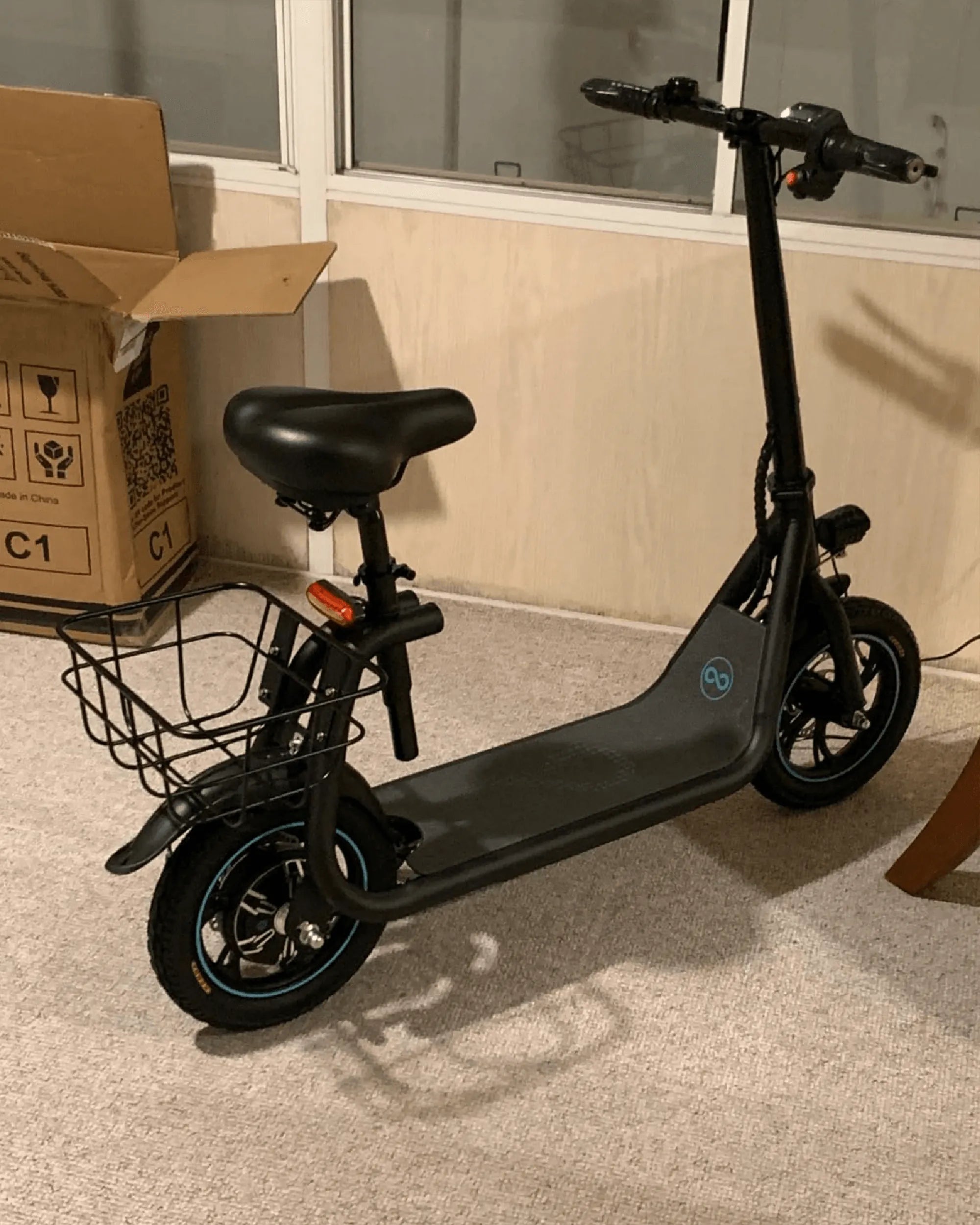
Introduction: The Rise of the Lightweight 14-Inch Bike
Urban transportation is evolving toward smarter, more efficient solutions. The lightweight 14 inch bike has emerged as a dominant player in this space, offering a compelling alternative to both traditional bicycles and standing electric scooters. This guide explores why this specific configuration represents the sweet spot for modern commuters, students, and city dwellers with limited storage.
You will learn the engineering principles behind the 14-inch wheel size, the critical features that define a quality build, and how it compares to other micro-mobility options. We provide data-driven insights to help you make an informed purchase decision, focusing on safety, durability, and long-term value. The goal is to move beyond marketing claims and examine the tangible benefits of this versatile vehicle.
For over 100,000 riders across North America and Europe, brands like Gyroor have demonstrated that compact design doesn't mean compromising on performance. A well-engineered lightweight 14 inch bike combines the agility of a scooter with the comfort and control of a bicycle. This fusion creates a practical tool for navigating dense urban environments, public transit systems, and multi-modal commutes.
This article will dissect every component, from motor specifications to frame materials. We'll analyze real-world use cases and provide maintenance tips to ensure your investment lasts. Whether you're replacing a car for short trips or seeking a first/last-mile solution, understanding the nuances of the lightweight 14 inch bike is essential.
Why a 14-Inch Wheel Size? The Engineering Advantage
The 14-inch wheel diameter is not arbitrary; it represents a calculated engineering compromise between agility, stability, and portability. Larger wheels (20-inch, 26-inch) roll more smoothly over obstacles but increase the bike's overall footprint and weight. Smaller wheels (under 12-inch) maximize portability but can compromise stability and ride comfort on uneven surfaces.
The 14-inch wheel strikes an optimal balance. It provides a sufficient contact patch and rotational mass for confident handling at speeds up to 20 mph, while keeping the wheelbase short enough for exceptional maneuverability. This size allows for a tighter turning radius, which is invaluable in crowded city streets, bike lanes, and when navigating through pedestrian traffic.
From a physics perspective, the smaller moment of inertia of a 14-inch wheel allows for quicker acceleration from a stop. This is a significant advantage in stop-and-go urban traffic, where responsiveness is as important as top speed. The reduced rotational mass also places less strain on the motor and battery, potentially improving efficiency and range per charge.
Furthermore, the compact wheel size directly enables a more compact folding mechanism. The entire bike can be designed to fold into a package that is manageable to carry, store under a desk, or fit into a car trunk. This dimensional efficiency is the core reason the lightweight 14 inch bike has become synonymous with urban practicality.
The Agility Factor for Urban Navigation
Agility in an urban environment is defined by the ability to change direction quickly, navigate tight spaces, and maintain control at low speeds. The lightweight 14 inch bike excels in all three areas. The short wheelbase, a direct result of the smaller wheels, allows the bike to pivot within a space barely larger than its own length.
This is crucial for navigating between parked cars, maneuvering through construction zones, and safely sharing multi-use paths. Riders can execute U-turns on standard city sidewalks without dismounting, a feat impossible with most full-sized bicycles. This low-speed handling inspires confidence in dense traffic situations.
The reduced gyroscopic effect of smaller wheels also contributes to this agility. While this means the bike is less stable at very high speeds (which is not the intended use case), it makes the steering feel more direct and responsive at the 10-18 mph speeds typical of urban commuting. The rider feels more connected to the riding surface.
For users who combine cycling with public transit, this agility is paramount. Quickly rolling the bike through a train station, aligning it on a crowded bus rack, or storing it in a designated area requires a vehicle that is easy to handle at a walking pace. The lightweight 14 inch bike is engineered for this exact scenario.
Portability and Storage Solutions
Portability is the cornerstone of the lightweight 14 inch bike's value proposition. The total weight of a quality model typically ranges from 35 to 45 pounds, with premium aluminum alloy frames hitting the lower end of that spectrum. This weight is manageable for most adults to carry up a flight of stairs or lift into a vehicle.
The folded dimensions are equally important. A well-designed folding 14-inch bike can collapse to a package approximately 30" x 15" x 20". This allows it to be stored vertically in a closet, slid under a desk or conference table, or placed in the trunk of a compact car without consuming all usable space. It transforms from a vehicle to a manageable piece of luggage in seconds.
This solves the single greatest pain point for urban cyclists: secure storage. Apartment dwellers no longer need to worry about bike room security or carrying a heavy bike up multiple flights. Office workers can keep their investment safely at their side. The lightweight 14 inch bike effectively eliminates the risk of outdoor theft during the workday.
When evaluating portability, the folding mechanism's quality is critical. It should be robust, use secure locking latches, and require no tools to operate. A good mechanism feels solid in both the riding and folded positions, with no wobble or play. This design integrity is what separates a reliable commuter tool from a novelty item.
Key Features to Look for in a Quality Lightweight 14-Inch E-Bike
Not all lightweight 14 inch bikes are created equal. The market includes a wide range of quality, from disposable toys to serious commuter vehicles. Discerning the difference requires focusing on a few key components that dictate performance, safety, and longevity. A quality build invests in a reliable motor, a certified battery, a durable frame, and integrated safety features.
The motor and battery are the heart of the electric system. The frame is the skeleton, determining strength, weight, and ride feel. The brakes, lights, and connectors are the essential safety systems. Compromising on any of these areas to achieve a lower price point will result in a frustrating ownership experience and potential safety hazards.
Brands that stand behind their products, like Gyroor, prioritize these components. They use UL-certified batteries, brand-name motors, and aluminum alloy frames, and back the complete system with a comprehensive warranty. This approach ensures the lightweight 14 inch bike is a dependable asset, not a temporary gadget. The following sections detail what to look for in each critical area.
Investing in a well-specified model from a reputable brand may have a higher initial cost but delivers vastly superior value over time. You benefit from longer battery life, fewer mechanical issues, better customer support, and ultimately, a more enjoyable and reliable riding experience. This is the true definition of a quality lightweight 14 inch bike.
The Heart of the Ride: Motor and Battery Performance
The motor and battery system defines the capabilities of any e-bike. For a lightweight 14 inch bike, a hub motor in the 350W to 500W range is ideal. This provides ample torque for hill climbing (grades of 15% or more) and quick acceleration, without adding excessive weight or draining the battery too quickly. Motors should be from reputable manufacturers known for reliability.
The battery is the most critical safety component. Insist on a battery pack that is UL 2271 or UL 2849 certified. This certification, held by brands like Gyroor, means the battery cells, BMS (Battery Management System), and enclosure have undergone rigorous independent testing for electrical, mechanical, and fire safety. Never compromise on this certification.
Battery capacity, measured in Watt-hours (Wh), determines range. A realistic range for a lightweight 14 inch bike is 15-25 miles per charge, depending on rider weight, terrain, and assist level. Look for a battery with at least 36V and 7.5Ah (270Wh) capacity for practical commutes. High-quality lithium-ion cells from brands like Samsung or LG will maintain their capacity over hundreds of charge cycles.
The battery should be securely integrated or removable for easy charging. A removable battery allows you to charge it at your desk without bringing the entire bike inside. Charging time should be under 6 hours for a full charge. This combination of a safe, potent battery and a responsive motor is what transforms a pedal bike into a powerful and practical electric vehicle.
Built to Last: Frame Material and Construction
The frame material is the primary determinant of a bike's weight, strength, and ride quality. For a true lightweight 14 inch bike, aluminum alloy (typically 6061 or 7005 series) is the material of choice. It offers an excellent strength-to-weight ratio, is naturally corrosion-resistant, and provides a slightly damped, comfortable ride compared to steel.
Avoid frames made from heavy, low-grade steel. While cheap, they will push the weight over 50 pounds, negating the "lightweight" advantage and making the bike cumbersome to carry. The welding quality on the frame should be smooth and consistent. Inspect the hinge points of the folding mechanism especially closely; they should be reinforced with gussets or double-walled construction.
The geometry of the frame is also crucial. Even with small wheels, the frame should provide a comfortable, upright riding posture for adults. The seat post should have sufficient extension for riders from 5'2" to 6'2". Handlebars should be adjustable or ergonomically designed to prevent wrist strain. A well-designed frame makes the bike feel stable and planted, not twitchy or toy-like.
Finish and details matter. Look for powder-coated paint that resists chips and scratches, and internal cable routing for a clean look and better protection from the elements. The build quality of the frame is a strong indicator of the overall quality of the bicycle. A robust, lightweight aluminum frame is the foundation of a durable and enjoyable lightweight 14 inch bike.
Safety and Durability Essentials
Safety features are non-negotiable for a vehicle used in urban traffic. The braking system is the most important. Disc brakes, whether mechanical or hydraulic, are superior to rim brakes, especially for an e-bike. They provide consistent, powerful stopping power in all weather conditions, including rain, and require less maintenance. Front and rear dual disc brakes are the ideal configuration.
Integrated lighting is essential for visibility. A bright LED headlight (200+ lumens) and a rear brake light/taillight should be standard. These lights should be powered by the main battery, so they never run out of charge independently. Some models, including several from Gyroor, feature automatic brake lights that illuminate when the brakes are applied, signaling drivers behind you.
Water resistance is critical for a daily commuter. Look for an IP rating. An IPX5 rating, common on quality models, means the bike can withstand water jets from any direction, making it safe to ride in heavy rain and through puddles. This protects the motor, battery, and electronics from water damage, greatly enhancing the bike's durability and all-weather capability.
Additional safety features include wide, puncture-resistant tires for grip and stability, reflectors on the wheels and frame, and a loud, electronic horn or bell. Durability is also enhanced by using sealed bearings in the wheels and motor hub to keep out dirt and moisture. These features collectively ensure that your lightweight 14 inch bike is a safe, reliable partner for years of daily use.
Lightweight 14-Inch Bike vs. Other Micro-Mobility Options: A Data-Driven Comparison
Choosing the right micro-mobility device requires understanding their respective strengths and limitations. The lightweight 14 inch bike occupies a unique middle ground, blending attributes from several categories. The following table provides a clear, data-driven comparison against popular alternatives: the standard electric scooter (e-scooter), the 20-inch folding e-bike, and the electric skateboard.
| Feature | Lightweight 14" E-Bike | Standard E-Scooter | 20" Folding E-Bike | Electric Skateboard |
|---|---|---|---|---|
| Avg. Weight | 35-45 lbs | 25-35 lbs | 45-60 lbs | 15-20 lbs |
| Folded Size (LxWxH approx.) | 30"x15"x20" | 42"x18"x16" | 36"x20"x28" | 35"x10"x6" |
| Typical Range | 15-25 miles | 15-20 miles | 20-40 miles | 10-15 miles |
| Rider Posture | Seated, Upright | Standing | Seated, Upright | Standing, Crouched |
| Comfort (20+ min ride) | Excellent | Fair to Poor | Excellent | Poor |
| Terrain Handling | Good (Pavement, packed gravel) | Fair (Smooth pavement only) | Very Good | Poor (Smooth pavement only) |
| Primary Use Case | Versatile urban commute & errands | Short last-mile trips | Longer commutes, some cargo | Recreation, short campus trips |
As the data shows, the lightweight 14 inch bike offers the best compromise. It is significantly more portable than a 20-inch bike, while offering far greater comfort and stability than a standing scooter or skateboard. Its seated posture and larger wheels (compared to a scooter) make it suitable for longer, more practical commutes.
The 14-inch model's key advantage over the 20-inch bike is portability. The smaller folded size and lower weight make it genuinely easy to carry and store in tight spaces. For the rider who must navigate stairs, public transit, or a small apartment, this difference is decisive. The lightweight 14 inch bike is the most transit-friendly full-featured e-bike available.
Compared to the e-scooter, the bike provides a major comfort advantage. Standing for a 30-minute commute is fatiguing and can be hard on the knees and back. The scooter's tiny wheels also transmit every crack and bump in the road directly to the rider. The bike's saddle and larger wheels provide inherent suspension and a relaxed riding position, reducing fatigue and increasing safety through better control.
The Comfort and Control Edge
The comfort advantage of a lightweight 14 inch bike over a standing scooter cannot be overstated. A bicycle saddle distributes the rider's weight across the sit bones, a natural and sustainable position. Standing on a scooter platform concentrates weight on the feet and legs, leading to fatigue, reduced circulation, and discomfort on rides longer than 10-15 minutes.
This fatigue directly impacts safety. A tired rider has slower reaction times and less precise control. The seated position on a bike is inherently more stable, allowing the rider to use their core muscles for balance while keeping arms and legs relaxed for steering and braking. This results in smoother, more predictable inputs, especially in emergency maneuvers.
Control is also enhanced by the handlebar design. Bike handlebars offer multiple hand positions and better leverage for steering. Scooter handlebars are typically narrow and fixed, offering less control authority. The bicycle-style braking system (hand levers) is also more intuitive and powerful for most users than the thumb-lever or foot brakes common on scooters.
For commuting in business attire or in variable weather, the seated position is more practical. It's easier to manage a bag or backpack, and there's less risk of clothing interfering with the vehicle. The overall experience is simply more civilized and sustainable for daily use, making the lightweight 14 inch bike a tool for transportation, not just a recreational device.
Maximizing Your Investment: Warranty, Support, and Peace of Mind
The purchase price is only the initial cost of owning a lightweight 14 inch bike. The long-term value is determined by the product's durability and the support provided by the manufacturer. A robust warranty and accessible customer service are not just perks; they are essential components of a reliable transportation solution. They protect your investment and ensure the bike remains functional for its entire lifespan.
A comprehensive warranty signals that the manufacturer stands behind the quality of its materials and assembly. It shifts the risk of premature component failure from the consumer back to the company. When evaluating warranties, look for specific coverage on the three most expensive and critical components: the battery, the motor, and the frame. Vague or extremely short warranties are a major red flag.
Customer support is equally important. When you have a question about operation, need a replacement part, or must initiate a warranty claim, you need a responsive and knowledgeable team. Brands with a established presence in your region, like Gyroor in North America and Europe, are better equipped to provide timely support than overseas-only sellers relying solely on third-party marketplaces.
Peace of mind comes from knowing that if something goes wrong, you have a clear path to resolution. This allows you to use your lightweight 14 inch bike with confidence for daily commuting, rather than treating it as a fragile toy. The following sections detail what to look for in warranty coverage and support structures.
The Importance of a Comprehensive Warranty
A strong warranty for a lightweight 14 inch bike should be clearly defined and last for a minimum of one year from the date of purchase. The industry benchmark, offered by reputable brands, is a 1-year warranty that covers the frame, motor, battery, controller, and display against defects in materials and workmanship.
Pay special attention to the battery warranty. Because batteries degrade over time, some manufacturers offer a separate performance guarantee. For example, they may warrant that the battery will retain at least 70% of its original capacity for one or two years. This is a strong indicator of confidence in the quality of their UL-certified battery packs.
The warranty should also cover the folding mechanism and critical structural hinges. These are high-stress points unique to folding bikes, and their failure could be a safety issue. The terms should be easily accessible on the manufacturer's website, written in clear language, and should not require the buyer to pay for shipping for warranted repairs.
Avoid brands that offer only a 30-day or 90-day warranty, or that require you to ship the entire bike to an overseas service center at your own expense. Such policies effectively offer no real protection. A 1-year comprehensive warranty, like the one provided with Gyroor e-bikes, is a minimum requirement for a serious commuter vehicle.
The Value of Accessible Customer Service
Accessible customer service transforms a product into a supported platform. Before purchasing, test the manufacturer's support channels. Send an email with a technical question or try calling their support line. Note the response time and the quality of the information provided. Reputable brands will have dedicated support teams, detailed online manuals, and tutorial videos.
Local or regional warehousing is a huge advantage. It means replacement parts—like inner tubes, brake pads, chargers, or throttles—can be shipped to you quickly, often within days. Companies that only ship from overseas can leave you waiting weeks for a simple part, rendering your bike unusable in the meantime.
An active user community or forum moderated by the company can also be a valuable resource. Here, riders share tips, maintenance advice, and real-world experiences. Company participation in these forums shows an ongoing commitment to their customer base and product ecosystem.
Ultimately, good customer service ensures that your lightweight 14 inch bike remains on the road. It provides answers to maintenance questions, facilitates easy part replacement, and honors the warranty promise. This long-term support is what separates a trusted transportation brand from a fly-by-night importer, and it is a critical factor in maximizing the value of your purchase.
Frequently Asked Questions (FAQ) About Lightweight 14-Inch Bikes
Q1: What is the realistic range I can expect on a single charge?
A: Real-world range depends on several factors: battery capacity (in Watt-hours), rider weight, terrain, wind, temperature, and assist level. For a typical 36V 10Ah (360Wh) battery, a 160 lb rider using pedal assist on flat ground can expect 20-25 miles. Using throttle-only, riding in hilly areas, or carrying more weight will reduce range to 15-18 miles. Always check the battery's Wh rating, not just the voltage, for the best range estimate.
Q2: How much does a good quality lightweight 14 inch e-bike typically weigh?
A: A well-constructed model with an aluminum alloy frame, 350W-500W motor, and a standard capacity battery will weigh between 35 and 42 pounds. Models using higher-grade aluminum and compact motor designs can achieve weights near 35 lbs, while those with steel frames or larger batteries may approach 45 lbs. The "lightweight" designation is most meaningful below 40 pounds, as this is the threshold where carrying the bike up stairs becomes manageable for most adults.
Q3: Is a 14-inch wheel bike suitable for adults, or is it just for kids?
A> Absolutely suitable for adults. The design of adult-focused lightweight 14 inch bikes includes an extended seat post and handlebar stem to accommodate riders from approximately 5'2" to 6'2". The frame geometry, motor power, and battery capacity are all engineered for adult use. The small wheels are a choice for portability and agility, not an indicator of the intended rider's size. Many commuters in their 20s through 60s find this size ideal for urban environments.
Q4: Can it handle hills and mild off-road paths (like gravel or packed dirt)?
A: Yes, with qualifications. A bike with a 500W motor and adequate torque can handle hills with grades of 15-20%, especially if the rider assists with pedaling. For mild off-road use like hard-packed dirt or gravel paths, the key is tire choice. Models with wider (2.0"+), lightly treaded tires will perform adequately. However, the small wheel size makes the bike more sensitive to large potholes and deep ruts compared to a bike with 20" or larger wheels. It is best suited for maintained paths and urban infrastructure.
Q5: How important is the water-resistant rating for daily commuting?
A> It is critically important. A daily commuter will inevitably encounter puddles, wet roads, and rain. An IPX5 water-resistant rating (or higher) ensures that water sprayed from the wheels or falling from the sky will not damage the electrical components, motor, or battery. Riding a non-water-resistant e-bike in the rain can lead to short circuits, corrosion, and immediate failure. For a vehicle that is an investment and a primary mode of transport, a good IP rating is non-negotiable for safety and durability.
Q6: How often does a lightweight 14 inch bike require maintenance?
A> Basic maintenance is similar to a standard bicycle but often less frequent due to the enclosed nature of many components. Check tire pressure weekly. Lubricate the chain every 100-200 miles. Inspect brake pads for wear monthly, and test brake function before every ride. The motor and battery require no routine maintenance. An annual check-up by a qualified technician to tighten bolts, check bearing play, and inspect the folding mechanism is recommended for heavy users.
Conclusion: Is a Lightweight 14-Inch E-Bike Right for You?
The lightweight 14 inch bike represents a paradigm shift in urban personal transportation. It successfully answers the demand for a vehicle that is compact enough for seamless multi-modal travel yet capable enough for comfortable, practical commutes. By prioritizing a UL-certified battery, a durable aluminum frame, and essential safety features like disc brakes and IPX5 water resistance, you invest in a tool built for real-world use.
If your daily routine involves navigating crowded streets, combining cycling with buses or trains, or storing your vehicle in a tight apartment or office, the portability of this format is unmatched. It solves the classic problems of theft, storage, and convenience that plague traditional cyclists. The seated riding position and electric assist make commuting enjoyable, not exhausting, expanding your practical radius without relying on a car.
Your decision should hinge on prioritizing verified quality over low initial cost. Look for the hallmarks of a serious manufacturer: clear specifications, safety certifications, a comprehensive warranty, and accessible customer support. Brands that have earned the trust of a large community, like Gyroor with over 100,000 riders, demonstrate a commitment to product longevity and rider satisfaction.
Ready to experience the perfect blend of agility, portability, and reliable performance? Explore a curated selection of engineered micro-mobility solutions designed for the demands of modern city life. Browse the full Gyroor collection, featuring UL-certified, IPX5-rated lightweight 14 inch bikes and more, at gyroorboard.com.
What Kind of Gas Does a Dirt Bike Take? The Definitive Guide to Fuel, Octane & Ethanol
E Mountain Bike: The Ultimate Guide to Electrified Trail Riding