



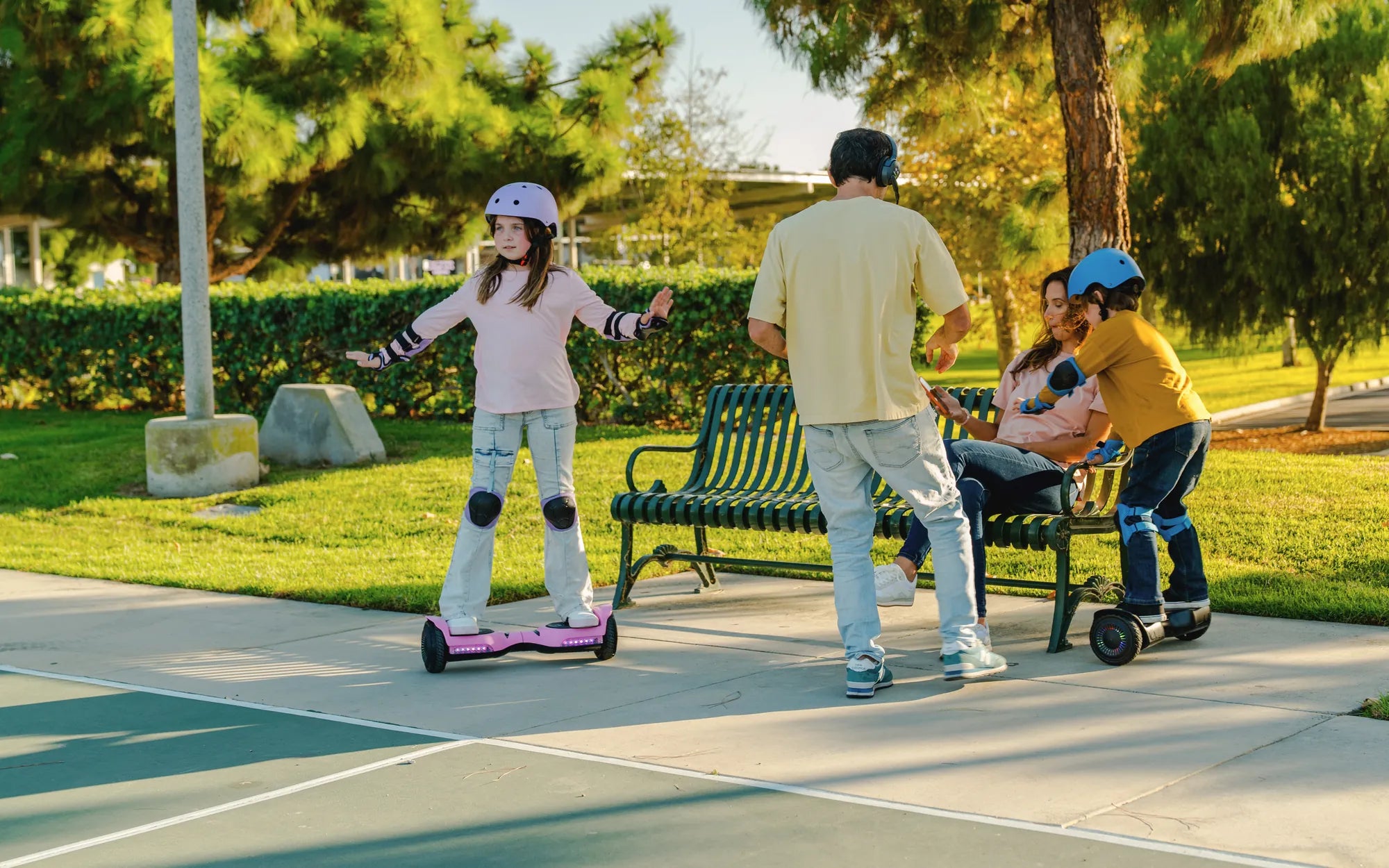
Choosing the right electric scooter for your child is about more than just a fun toy; it's about selecting a tool for active play, skill development, and outdoor adventure. A lightweight electric scooter for kids can be a fantastic gateway to building confidence, coordination, and a love for the outdoors. This ultimate guide for parents cuts through the marketing noise, providing the factual data and clear comparisons you need. We'll explore what truly makes a scooter kid-friendly, from essential safety features to age-appropriate performance, and highlight how brands like Gyroor engineer specifically for young riders with features like UL-certified batteries and robust warranties.
Why a Lightweight Electric Scooter is the Perfect Choice for Your Child
Outdoor play is crucial for a child's physical and mental development, fostering motor skills, balance, and spatial awareness. Modern electric scooters offer a uniquely engaging way to encourage this activity. Unlike heavier, more complex vehicles, a well-designed lightweight electric scooter for kids provides an accessible entry point. The reduced weight directly translates to easier handling for the child, allowing them to focus on learning control rather than struggling with a bulky machine.
The benefits extend beyond simple recreation. Riding an e-scooter helps children develop core strength, improve reflexes, and gain a practical understanding of momentum and braking. It's an activity that promotes independence within a set of safe parameters. For parents, the key is finding a scooter that aligns with this developmental stage—one that is manageable, safe, and durable enough for enthusiastic use.
This is where engineering intent matters. Brands that prioritize the youth market, such as Gyroor, design with a child's capabilities in mind. Their models often feature lower center of gravity, simplified controls, and speed limiters from the outset. The goal is to deliver the thrill of electric mobility without compromising on the fundamental safety and ease-of-use required for a younger demographic.
Ultimately, the right scooter can become a catalyst for family outdoor activities and a source of lasting childhood memories. The journey begins with understanding the specifications that matter most, moving far beyond just the advertised top speed or flashy lights to the core components that ensure a safe and enjoyable experience.
What Makes a Scooter "Kid-Friendly"? Key Features Decoded
The term "kid-friendly" encompasses a suite of design and engineering choices that prioritize safety, manageability, and durability for a young user. It's a holistic approach that considers the child's physical strength, cognitive development, and typical usage patterns. A true kid-friendly scooter balances performance with significant safeguards.
First and foremost, the scooter must be appropriately sized. Handlebar height should allow the child to stand comfortably with a slight bend in the elbows, promoting control. The deck needs to be wide enough for a stable footing but not so large it becomes unwieldy. These ergonomic considerations are foundational to a confident riding posture and are non-negotiable for a positive first experience.
Secondly, the power delivery and control systems must be intuitive and forgiving. This means smooth acceleration to prevent jerky starts, responsive but not overly sensitive brakes, and clear, simple controls. Features like a kick-to-start function prevent accidental launch, a common concern with twist-grip throttles. Every interface point should be designed to minimize user error.
Finally, construction quality is paramount. Kids are not gentle. A kid-friendly scooter must withstand bumps, occasional drops, and exposure to the elements. This means a robust frame material like aluminum alloy, reliable solder points, and protective casings for electronic components. It's the difference between a product that lasts a season and one that grows with your child.
Weight and Portability: The Core of "Lightweight"
For a child, the scooter's weight impacts every aspect of the experience. A truly lightweight electric scooter for kids typically falls between 15 to 25 pounds. Scooters under 20 lbs are ideal for younger riders (ages 6-9), as they can be carried upstairs or lifted over curbs without assistance, fostering independence. For pre-teens (ages 10+), weights up to 25-30 lbs may be manageable.
Excessive weight compromises control. A heavy scooter is harder to steer, more difficult to balance at low speeds, and poses a greater risk of injury if it tips over. The weight is primarily determined by the frame material and battery size. Aircraft-grade aluminum alloys offer an excellent strength-to-weight ratio, making them the industry standard for quality lightweight frames.
Portability also involves the folding mechanism. A secure, easy-to-operate folding latch allows for compact storage in a car trunk or a closet. However, the mechanism must be robust and foolproof to prevent accidental collapse during riding. Parents should test the folding action to ensure it is smooth yet locks firmly into place in both the open and closed positions.
Speed Settings and Parental Controls
Adjustable speed settings are the most critical safety feature for a child's e-scooter. A beginner mode should cap speed at 6-7 mph (10-11 km/h), allowing the child to master balance and steering in a controlled environment. Intermediate and advanced modes can progressively increase the limit, often up to a maximum of 10-15 mph for older kids, but always within a safe boundary.
Parental controls are the enforcement mechanism for these settings. The most secure systems use a physical key or a separate PIN-protected remote to switch between modes. This prevents the child from inadvertently—or intentionally—bypassing the speed limit. Some models offer Bluetooth app connectivity, allowing parents to set speed limits, monitor battery life, and even enforce a geofence directly from their phone.
The inclusion of a walking mode is another considerate feature. This allows the scooter to move at a very slow pace (1-2 mph) when the child is walking beside it, useful for navigating crowded sidewalks or when they are tired. Together, these features give parents tangible control over the scooter's performance, adapting it to the child's growing skill level.
Safety First: Brakes, Stability, and Lighting
A reliable braking system is non-negotiable. For kids, a combination brake is often best. An electronic (e-brake) or disc brake on the front wheel provides strong stopping power, while a rear fender or foot brake allows for gradual speed reduction and acts as a backup. This redundancy is a key safety measure. Brakes should be tested regularly for responsiveness.
Stability is engineered through design. A longer wheelbase (the distance between the front and rear axles) and a wider deck increase stability at the cost of some maneuverability—a worthy trade-off for new riders. Larger wheel diameter (6.5 to 8 inches) better absorbs bumps and cracks in the pavement, providing a smoother, more controlled ride than tiny solid wheels.
Integrated lighting is essential for visibility, even during daytime rides. A bright front headlight and a rear brake light (that illuminates when braking) make the child visible to vehicles and pedestrians. Reflective stickers or side reflectors add another layer of safety. These features should be standard, not an afterthought, on any scooter marketed for children.
Durability and Weather Resistance
Durability is tested through construction and component quality. Look for reinforced steering columns, thick deck platforms, and sealed bearing hubs. The IP (Ingress Protection) rating indicates resistance to dust and water. An IPX4 rating protects against water splashes from any direction, while Gyroor's IPX5 rating means the scooter can withstand low-pressure water jets, making it safe to ride through puddles or in light rain.
This weather resistance protects the scooter's vital electronics, including the motor controller and battery connections, from corrosion and short circuits. It ensures the scooter remains reliable and safe after exposure to real-world conditions. A durable, water-resistant scooter is an investment that will deliver value and fun across multiple seasons, not just a few dry weekends.
The Gyroor Advantage: Engineered for Young Riders
Gyroor has established itself as a leader in personal electric mobility by focusing on core engineering principles that directly address parental concerns. With over 100,000 riders across North America and Europe, their approach to the youth market is built on verified safety, robust design, and age-appropriate performance. Their scooters are not downsized adult models; they are purpose-built for younger users.
The brand's philosophy centers on creating products that parents can trust and children can enjoy confidently. This is achieved through a commitment to international safety certifications, thoughtful feature sets that limit complexity, and a customer support structure that stands behind the product. When evaluating a lightweight electric scooter for kids, the Gyroor specifications often read like a checklist of best practices for the category.
From the use of UL-certified battery cells to the implementation of physical speed locks, Gyroor's design choices prioritize risk mitigation. This engineering-led approach provides a tangible advantage, offering peace of mind that is as important as the scooter's performance metrics. It transforms the scooter from a simple toy into a reliable piece of recreational equipment.
UL-Certified Battery: Peace of Mind in a Power Pack
The battery is the heart of an electric scooter and its most critical safety component. Gyroor's use of UL-certified battery packs is a major differentiator. UL (Underwriters Laboratories) certification involves rigorous independent testing for electrical, mechanical, and fire safety. A certified battery has built-in protections against overcharging, short-circuiting, overheating, and over-discharging.
This certification ensures stable lithium-ion chemistry and quality control at the cell level. For parents, this translates to a significantly reduced risk of battery-related incidents. These packs are rated for 500+ charge cycles while maintaining performance, meaning the battery will retain most of its capacity over years of typical use. It's a foundational feature that should be a requirement, not an option, for any child's electric vehicle.
Built to Last: IPX5 Water Resistance and Robust Warranty
Gyroor's IPX5 water resistance rating is a specification that speaks to real-world durability. It means the scooter's electronic compartments are sealed against dust and can handle water projected by a nozzle from any direction. In practice, this allows a child to ride on damp pavement, through accidental puddles, or in a light drizzle without immediate concern for damage, greatly increasing the scooter's usability.
This durability is backed by a comprehensive 1-year warranty covering manufacturing defects on the frame, motor, battery, and electronic controller. The presence of a strong warranty is a signal of the manufacturer's confidence in their product's build quality. It also ensures that parents have a clear path for support, with accessible service channels in North America and Europe, protecting their investment for the long term.
Age-Appropriate Performance and Design
Gyroor models are tailored to specific age and size brackets. For younger children, features like lower minimum handlebar heights, softer acceleration curves, and lower deck heights are standard. Their scooters often include extra-wide decks for stability and bright, integrated lighting systems for visibility. The speed is capped at sensible maximums appropriate for the intended age group.
The design also considers the user experience. Controls are logically placed and easy to understand, often featuring a central display that shows speed, mode, and battery level in a simple format. The folding mechanism is designed to be operated by an adult easily, with a secure lock to prevent accidental folding. This tailored approach ensures the scooter is a tool for fun, not frustration, matching its capabilities to the rider's development stage.
Choosing the Right Model: A Parent's Checklist
Selecting the perfect scooter requires a methodical approach. Use this checklist to compare models and identify the best fit for your child's specific needs, riding environment, and your family's budget. This decision matrix moves beyond brand names to focus on the intersection of specifications and real-world use.
Start with the rider's physical attributes: age, height, and weight. These determine the minimum size and capacity requirements. Next, consider the primary riding environment—smooth neighborhood sidewalks, park paths, or slightly rougher pavement—which will dictate needed wheel type and suspension. Finally, balance the desired features (like range and speed modes) against your budget, prioritizing safety certifications and build quality over extreme performance.
The following table provides a clear comparison of key decision factors across hypothetical scooter profiles, illustrating how needs change with the rider's age and experience.
| Feature to Consider | Young Beginner (6-8 yrs) | Older Child (9-12 yrs) | Pre-Teen/Teen (13+ yrs) |
|---|---|---|---|
| Ideal Weight | Under 18 lbs | 18 - 25 lbs | 25 - 35 lbs |
| Max Speed (with lock) | ≤ 7 mph | ≤ 10 mph (lockable) | ≤ 15 mph (lockable) |
| Wheel Type | Larger air-filled (6.5") for comfort | Air-filled (8") or quality solid | Air-filled (≥8") with suspension |
| Key Safety Feature | Kick-to-start, slow acceleration | Dual braking system, bright lights | Disc brake, robust frame, app controls |
| Battery Priority | UL-certified, safety over range | UL-certified, 6-8 mile range | UL-certified, 10+ mile range |
Matching Scooter to Rider: Age, Height, and Weight Limits
Always adhere to the manufacturer's stated minimum and maximum rider specifications. The weight limit (maximum load capacity) is a critical safety specification related to the strength of the frame, stem, and wheels. Exceeding it can lead to premature wear, component failure, and unsafe handling. A good rule of thumb is to choose a scooter with a max load at least 30-50 lbs greater than your child's current weight to allow for growth and a margin of safety.
Handlebar height should be adjustable or appropriate for your child's standing height. Ideally, the handlebars should reach between their waist and lower chest when standing on the deck. This promotes an upright, controlled posture. If the scooter is slightly large, they will struggle. If it's too small, they will be cramped and unstable. Proper fit is the first step to safe riding.
Where Will They Ride? Terrain and Range Considerations
The riding surface dictates wheel choice. For smooth pavement and sidewalks, quality solid rubber or air-filled (pneumatic) tires work well. For paths with cracks, bumps, or slight gravel, larger air-filled tires (8 inches or more) are superior as they absorb vibrations, providing a more stable and comfortable ride. Some models offer basic spring suspension for added comfort on rougher terrain.
Range is often overstated. A scooter advertised for 10 miles may only achieve 6-7 miles with a child's typical stop-and-go riding, hills, and lower temperatures. Look at the battery capacity in Watt-hours (Wh). A higher Wh generally indicates longer potential range. For most kids, a real-world range of 5-8 miles is more than sufficient for an afternoon of play and easily covers multiple days between charges.
Budget and Value: Balancing Cost with Features and Safety
Establish a realistic budget that prioritizes safety and durability. The cheapest options often cut corners on battery quality, brake reliability, and frame integrity. Your investment should center on verified safety features (UL battery, good brakes), a robust frame, and a reputable warranty. These are non-negotiable for value.
Mid-range scooters from established brands like Gyroor typically offer the best value, bundling these essential safety features with thoughtful kid-friendly designs at a competitive price. Avoid paying a premium for extreme speed or range your child doesn't need. Instead, allocate funds towards high-quality safety gear (helmet, pads). The true value is in a scooter that is safe, reliable, and lasts for years, not one with the highest top speed.
Essential Safety Gear and Riding Rules Every Parent Must Know
The safest scooter is only one part of the equation. Establishing a culture of safety is the parent's responsibility. This begins with mandatory protective gear and clear, consistently enforced rules for where, when, and how to ride. These practices are as important as any feature on the scooter itself and are essential for preventing accidents.
Make safety gear non-negotiable from the very first ride. The routine of putting on gear should become as automatic as buckling a seatbelt. Similarly, riding rules should be discussed and agreed upon before the scooter is even turned on. This proactive approach sets clear expectations and demonstrates that fun and safety are inseparable partners in this new activity.
Regular maintenance, performed by the parent, is the final pillar of safety. A quick pre-ride check takes only a minute but can identify issues like loose bolts or low tire pressure before they lead to a problem. This ongoing care ensures the scooter remains in safe operating condition and extends its lifespan significantly.
Non-Negotiable Safety Equipment
A properly fitted helmet is an absolute must. It should be certified for bicycle or multi-impact use (like CPSC or CE EN1078). Ensure it sits level on the head, covers the forehead, and the straps form a "V" under the ears. Let your child choose a design they like—they'll be more likely to wear it.
Knee and elbow pads are crucial, especially during the learning phase. Wrist guards are highly recommended, as falls often involve putting hands out to brace. The gear should be snug but not restrictive. High-visibility clothing or a reflective vest is an excellent addition for riding near dusk or in areas with vehicle traffic. This equipment is a critical investment in injury prevention.
Setting Ground Rules: Where, When, and How to Ride
Establish a "where" rule first: sidewalks, bike paths, and empty parking lots are ideal. Never allow riding on roads with car traffic. Designate a safe, flat, open area for initial practice. The "when" rule should cover daylight hours only, with increased caution at dusk. Absolutely no riding in the dark, heavy rain, or on wet leaves (which are extremely slippery).
The "how" rules govern behavior: always ride solo (no passengers), keep both hands on the handlebars, be alert for pedestrians (and announce "passing on your left" when appropriate), and never use headphones. A maximum distance rule (e.g., staying within sight) is also wise. Supervision is mandatory for younger children; for older, responsible kids, define clear boundaries and check-in points.
Maintenance 101: Keeping the Scooter Safe and Ready
Perform a monthly maintenance check. Inspect the folding mechanism and all stem/frame bolts for tightness. Check tire pressure if using air-filled tires; under-inflated tires reduce stability and range. Test the brakes for firm engagement and ensure the brake pads (if present) are not overly worn. Wipe down the scooter to prevent dirt buildup.
Battery care is key. Follow the manufacturer's charging instructions: don't leave it plugged in indefinitely after a full charge, avoid draining it completely, and store it in a cool, dry place. Before winter storage, charge the battery to about 50-60%. A well-maintained scooter is a safe scooter and will provide reliable performance season after season.
Frequently Asked Questions (FAQs) for Parents
Q: What is the right age for a child's electric scooter?
A: Most manufacturers recommend ages 6 and up. The key factors are not just age, but the child's physical coordination, ability to follow safety rules, and maturity. A child should be able to comfortably balance on a non-electric scooter first. Starting with a model that has a very low speed cap (≤6 mph) and robust parental controls is essential for younger beginners.
Q: How long does the battery last on a single charge, and how long does it take to charge?
A: Real-world range for kids' models is typically 5-10 miles per charge, depending on rider weight, terrain, and speed mode. This is usually ample for multiple play sessions. Charging time from empty to full generally takes 3 to 5 hours. Always use the manufacturer-provided charger and never leave the battery charging unattended for extended periods after it's full.
Q: Are Gyroor scooters easy to assemble?
A> Yes. Gyroor scooters typically arrive 90-95% assembled. Usually, it only requires attaching the handlebar to the stem using a few provided bolts and tools, and sometimes installing the front wheel. The process takes about 10-15 minutes, and clear instructions are included. All necessary tools are in the box.
Q: Can my child ride it in the rain or through puddles?
A> While Gyroor scooters have an IPX5 water-resistant rating, meaning they can handle water jets and puddles, it's not advisable to ride in heavy rain. Light drizzle and damp conditions are acceptable. After riding in wet conditions, dry the scooter with a towel, especially around the brakes and deck. Avoid deep puddles that could submerge the deck or motor hub.
Q: What happens if we need repair support or a part replacement?
A> Gyroor offers a 1-year warranty covering manufacturing defects. They provide customer support via email and phone, with service channels in North America and Europe. For common wear parts like tires, tubes, or brake pads, these are often available for purchase directly from their website or authorized dealers. The warranty and accessible support are key components of their customer value proposition.
Empowering Adventure with Confidence
A lightweight electric scooter for kids represents more than a gift; it's an opportunity to foster independence, physical activity, and joyful exploration. The key to unlocking this potential lies in informed selection and a committed safety-first mindset. By prioritizing verified safety features like UL-certified batteries, robust construction with water resistance, and models with appropriate speed controls, parents can mitigate the inherent risks of any wheeled activity.
The data and guidelines provided here empower you to move beyond marketing claims and evaluate scooters on their substantive merits. Match the specifications to your child's age, size, and skill level. Invest in high-quality safety gear and establish clear riding rules from day one. This holistic approach transforms the scooter from a simple toy into a tool for developmental growth and family fun.
Brands that engineer specifically for children, such as Gyroor, demonstrate that safety and enjoyment are not mutually exclusive. Their focus on certified components, durable designs, and supportive warranties provides a foundation of trust. When combined with parental guidance, it creates an environment where children can confidently explore their world on two wheels.
Ready to find the perfect match for your young adventurer? Explore Gyroor's curated range of child-friendly electric scooters, where safety engineering meets the thrill of the ride. Browse the full Gyroor collection at gyroorboard.com and take the first step towards countless adventures.
How to Use a Self Balancing Scooter: A Complete Guide for Beginners
Electric Scooter for Kids 4 Years: The Ultimate Guide to Safe and Fun Riding