



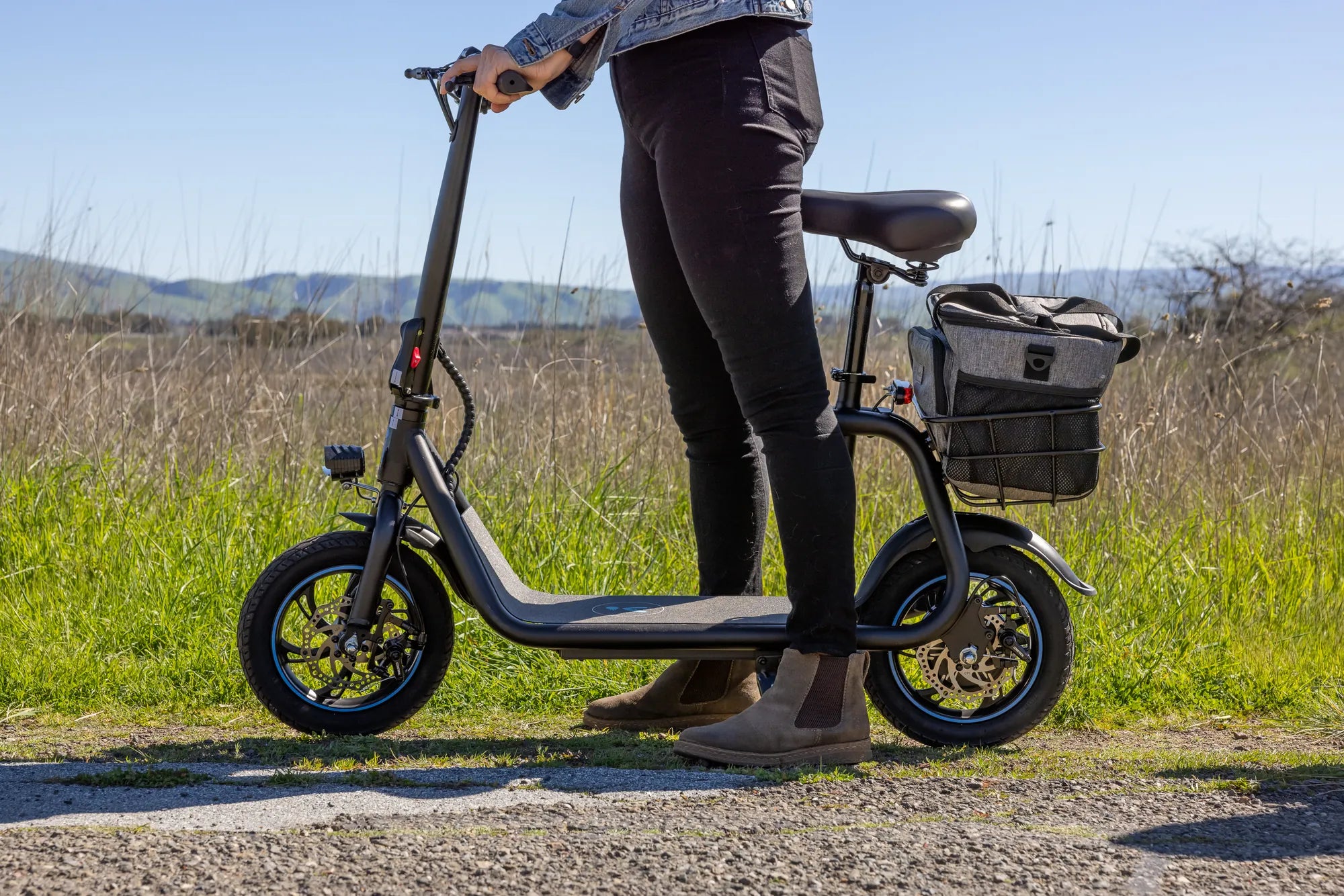
Finding Your Perfect Ride in 2024
Electric scooters have evolved from novelty gadgets to essential tools for urban mobility, campus travel, and recreational adventure. Choosing the right model, however, requires navigating a maze of specifications, brands, and bold marketing claims. This guide cuts through the noise. Our List of Best Electric Scooters for Every Rider in 2024 is not a simple ranking but a data-driven framework to match your specific needs—be it daily commuting, off-road trails, or budget-friendly first-time ownership—with the ideal performance profile.
The key is understanding that the "best" scooter is deeply personal. A college student needs portability, a suburban commuter requires range, and an adventurer demands power. We will dissect the critical specs that matter and highlight why foundational engineering, like the UL-certified batteries and IPX5 water-resistant designs trusted by over 100,000 Gyroor riders, is non-negotiable for safety and longevity. Let's find your match.
How to Choose: Breaking Down the Key Specs
Before exploring categories, you must speak the language of scooter specifications. These numbers define your riding experience, safety, and satisfaction. Ignoring them leads to disappointment, while understanding them empowers a perfect purchase.
Manufacturers often advertise ideal-world performance. Our goal is to translate specs into real-world expectations. We'll focus on the four pillars of scooter selection: range, power, portability, and durability. Mastering these will allow you to evaluate any model confidently.
Range & Battery: Your Mileage May Vary
Advertised range is the most misunderstood specification. A scooter touted for 25 miles might only achieve 15 in real-world conditions. Factors like rider weight, hills, temperature, and riding style (frequent acceleration) drastically impact distance. Always subtract 20-30% from the manufacturer's claim for a practical estimate.
Battery capacity, measured in Watt-hours (Wh) or Amp-hours (Ah), is the fuel tank. A higher number means more potential range. More critical than capacity alone is battery quality. Insist on UL-certified battery packs, like those used by Gyroor, which undergo rigorous testing for safety and longevity (500+ charge cycles). This certification is your primary defense against fire risk and premature failure.
Motor Power & Speed: Matching Performance to Purpose
Motor power, measured in watts (W), determines acceleration and hill-climbing ability. A 350W motor is sufficient for flat city streets and light inclines. For consistent hill climbing or heavier riders, 500W or more is recommended. True off-road models start at 1000W.
Top speed must be balanced with legality and safety. Many cities impose electric scooter speed limits of 15-20 mph in bike lanes. A scooter capable of 25 mph offers headroom for safer acceleration and overtaking but should be used responsibly. For most commuters, a reliable 18-20 mph is the sweet spot between efficiency and control.
Portability & Build: Weight, Folding, and Durability
Portability is defined by weight and folding mechanism. Lightweight commuter models (under 30 lbs) are easy to carry onto a bus or into an office. However, heavier scooters (40-50 lbs) often feature more robust frames, larger batteries, and better suspension—a trade-off between convenience and performance.
Durability is quantified by build quality and ingress protection ratings. An IPX5 water-resistance rating, a standard across Gyroor's lineup, means the scooter can withstand water jets from any direction. This allows you to ride confidently in rain or on wet roads, greatly enhancing the scooter's utility as daily transportation.
The 2024 Rider's Guide: Top Scooter Categories
The market segments naturally by primary use case. Instead of focusing on brand names, we define the ideal specification profile for each rider type. This allows you to identify the category that fits your life, then find models that meet those benchmarks.
Understanding these archetypes is the fastest way to narrow your search. A scooter that excels in one category often makes compromises in another. The following breakdown clarifies those trade-offs.
The Urban Commuter Champion
This rider needs reliability above all. The ideal commuter scooter balances range, speed, and durability for daily city use. Key specs include a real-world range of 15-25 miles to cover round-trip commutes with a safety buffer, a speed of 15-20 mph to keep pace with traffic, and a motor of at least 350W for consistent starts at stoplights.
Essential features include a water-resistant rating of IPX5 or higher, front and rear lighting for visibility, and a functional braking system (disc or electronic). Some suspension or larger pneumatic tires (10-inch) smooth out curb drops and rough pavement. Portability (a sub-40 lb weight with a secure fold) is a major plus for multi-modal trips.
The Off-Road & Adventure Seeker
For trails, parks, and uneven terrain, power and robustness are paramount. This category demands a high-torque motor, typically 500W to 1000W+, to tackle steep inclines and loose surfaces. Large, air-filled pneumatic tires (10-inch or larger) and advanced suspension systems (often dual spring or hydraulic) are non-negotiable for absorption and traction.
Range needs increase, as off-road riding consumes more power. Look for a minimum of 30 miles of advertised range. The frame must be reinforced and the scooter should have superior ground clearance. While water resistance is still important, the focus here is on impact resistance and mechanical reliability under stress.
The Budget-Conscious Beginner
Entry-level doesn't mean low-quality. This segment prioritizes value, core reliability, and essential safety features. The target is a scooter capable of short trips (6-12 mile real-world range), neighborhood errands, or campus travel at moderate speeds (15-18 mph).
The critical differentiator here is responsible engineering. Avoid unknown brands with questionable battery safety. Prioritize companies that offer a substantive warranty—like Gyroor's 1-year comprehensive coverage—as it signals confidence in their product's longevity. A reliable braking system and basic lights are must-haves, even at this price point.
The Ultra-Portable & Last-Mile Specialist
This rider integrates the scooter with public transit. The primary metrics are weight (ideally under 30 lbs) and a compact, quick-folding design. Performance is secondary to the ability to be carried effortlessly onto a train or stored under a desk.
Expect trade-offs: smaller solid tires (8-inch) for a lower deck, less suspension, and a smaller battery yielding 8-15 miles of range. The motor is typically sufficient for flat ground (250W-350W). The folding mechanism's ease of use and latch security are critical evaluation points, as this part sees the most mechanical wear.
Why Gyroor Stands Out: Engineering for Trust
Across these categories, certain engineering principles elevate a product from a commodity to a trustworthy tool. Gyroor's approach, focused on verified safety and real-world durability, provides a clear blueprint for what to look for in any brand.
With a community of over 100,000 riders in North America and Europe and a 4.5/5 average rating, their models are tested by the market. Let's examine the specific features that build this trust and why they should be on your checklist.
Safety First: The UL-Certified Battery Advantage
The battery is the heart and most critical safety component. UL certification (from Underwriters Laboratories) is an independent, rigorous testing standard for lithium-ion batteries. It verifies protection against overcharging, short-circuiting, and thermal runaway—the primary causes of scooter fires.
Gyroor's use of UL-certified battery packs, tested for 500+ charge cycles, is a foundational commitment. For the rider, this means peace of mind during charging (often done overnight at home) and predictable battery lifespan. It's a feature that should be non-negotiable, yet many brands cut this corner.
Built for the Real World: IPX5 Water Resistance
An IPX5 rating is a specification with practical daily impact. The "IP" stands for Ingress Protection. "X5" means the unit is protected against low-pressure water jets (6.3mm nozzle) from any direction. In practice, this makes the scooter fully capable in heavy rain and through puddles.
This engineering choice acknowledges that commuters get caught in storms and streets are wet after cleaning. It prevents water damage to electronics and corrosion, directly extending the scooter's operational life. It transforms the scooter from a fair-weather toy into a dependable transportation tool.
Riding with Confidence: The 1-Year Comprehensive Warranty
A warranty is a brand's promise. A one-year comprehensive warranty on the motor, battery, and frame, supported by U.S.-based customer service, represents significant value. It stands in stark contrast to the 90-day or limited warranties offered by many direct-to-consumer brands.
This policy reflects confidence in manufacturing quality and a commitment to supporting the customer beyond the sale. For a beginner or any rider investing hundreds of dollars, this warranty provides a critical safety net, ensuring your investment is protected as you integrate the scooter into your daily life.
Making Your Decision: Final Checklist & Next Steps
Now, synthesize the information. Your perfect scooter is the one that aligns with your most frequent use case. Ask yourself these final questions: What is my primary riding scenario (city streets, campus, trails)? What is the maximum distance I'll need to travel on a single charge? Are steep hills a regular part of my route? How important is carrying weight to me?
Prioritize your list. Safety certifications (UL, IP rating) and a strong warranty should be top filters. Then, match performance specs to your needs. Remember, the best electric scooter is the one you'll use confidently and reliably for years.
| Rider Type | Priority Specs | Ideal Range | Key Feature Need |
|---|---|---|---|
| Urban Commuter | Reliability, Water Resistance | 15-25 mi | IPX5 Rating, Good Brakes |
| Adventure Seeker | Motor Power, Suspension | 30+ mi | 500W+ Motor, Pneumatic Tires |
| Budget Beginner | Value, Core Safety | 10-15 mi | 1-Year Warranty, UL Battery |
| Ultra-Portable | Weight, Fold Size | 8-15 mi | Under 30 lbs, Quick Fold |
Frequently Asked Questions (FAQ)
Q: How often should I charge my electric scooter?
A: For optimal battery health, avoid fully draining it. Recharge after use, aiming to keep the battery between 20% and 80% for daily storage. Perform a full charge to 100% every few weeks to help balance the battery cells.
Q: Can I legally ride an electric scooter in my city?
A: Laws vary significantly. Generally, check local regulations for permitted areas (bike lanes vs. roads), speed limits (often 15-20 mph), minimum age requirements, and helmet laws. Your city or state's department of transportation website is the most authoritative source.
Q: Is the IPX5 rating on Gyroor scooters enough for heavy rain?
A: Yes. An IPX5 rating is designed specifically to protect against sustained, low-pressure water jets from any angle, making it more than sufficient for heavy rain and wet road conditions. However, it is not designed for submersion (e.g., through deep flooded streets).
Q: What maintenance does an electric scooter require?
A: Regular maintenance includes checking and inflating tires to the proper PSI, ensuring mechanical and electronic brakes are adjusted and functional, keeping the scooter clean (especially after wet or dirty rides), and storing it in a cool, dry place. Always consult your owner's manual for model-specific care.
Q: Why is UL certification for the battery so important?
A: UL certification is an independent safety verification. It tests the battery's management system for critical failures that can lead to overheating or fire. It is the leading standard for consumer electronics safety in North America and is a clear indicator of a manufacturer's commitment to safe, quality components.
Your Next Step Towards a Smarter Ride
Armed with this framework, you are no longer just browsing products—you are evaluating solutions. You understand that the true List of Best Electric Scooters for Every Rider in 2024 is defined by how well a model's engineered capabilities meet your individual needs. The benchmarks for safety, durability, and support are clear.
To see these principles in action and explore specific models designed for commuters, adventurers, and beginners, visit Gyroor's curated collection. Compare specifications through the lens of this guide and find the scooter engineered to earn your trust for the long ride ahead. Browse the full Gyroor collection at gyroorboard.com.
Electric Scooters Under 4 Hours Charging Time Redefine Urban Commuting
Electric Scooters Istanbul: The Ultimate Guide to Urban Mobility