



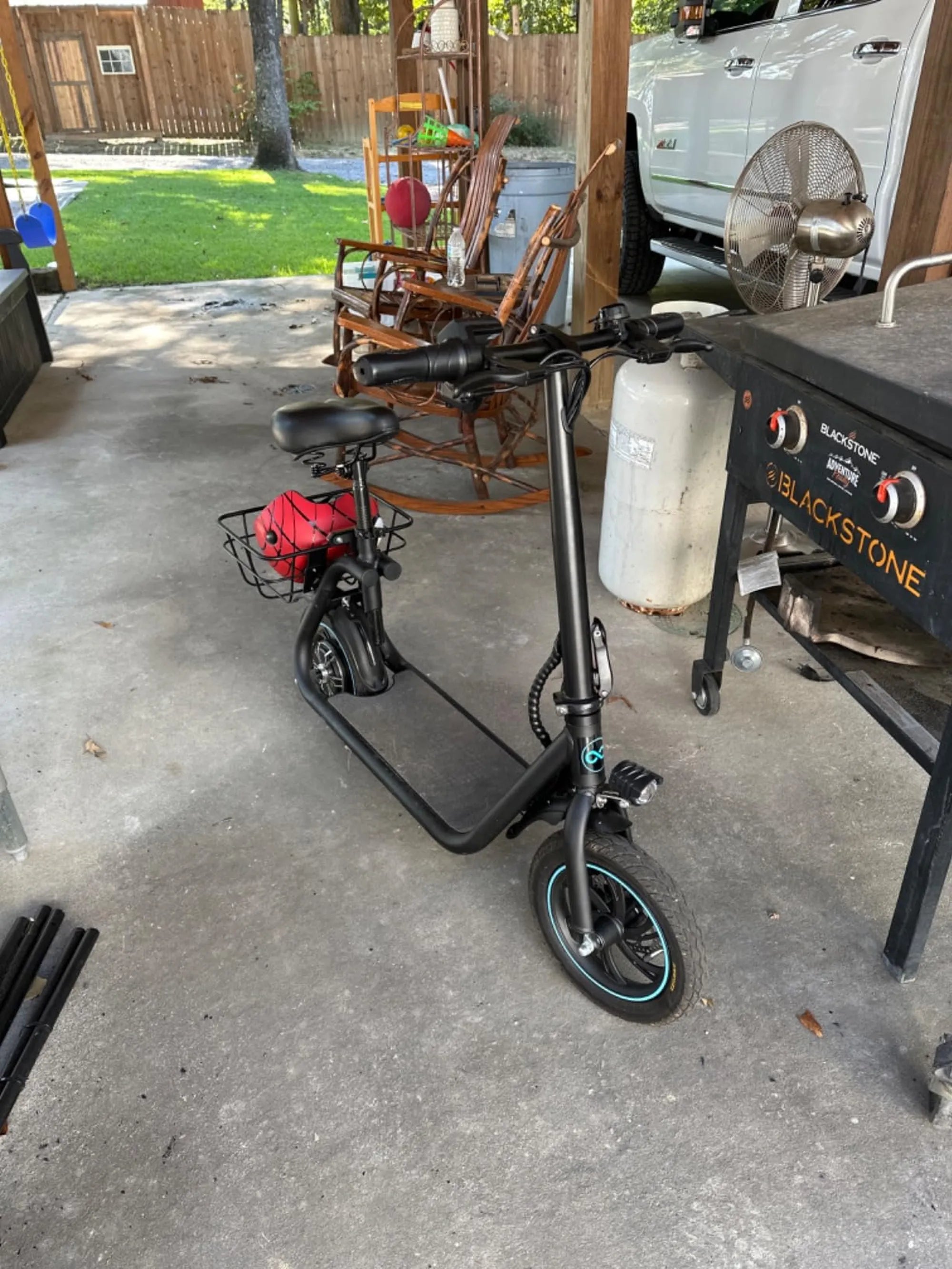
Introduction to the Electric Scooter Market in India
The Indian electric scooter market is undergoing a radical transformation, moving from niche to mainstream at an unprecedented pace. This surge is fueled by a powerful combination of government push through the FAME II (Faster Adoption and Manufacturing of Electric Vehicles) scheme, persistently high fuel prices, and growing urban congestion. For the modern commuter, the equation is shifting from 'why electric?' to 'which electric?'. This guide provides a definitive List of Electric Scooters in India: Top Models and Buying Guide, designed to cut through the marketing noise. We offer a curated analysis of leading models and a strategic, data-driven framework for your purchase, informed by global e-mobility expertise from brands like Gyroor, known for UL-certified safety and robust engineering.
Our goal is to equip you with more than just a list of names and prices. We delve into the real-world performance metrics that matter on Indian roads, the nuances of claiming subsidies, and the long-term ownership costs that define value. Whether you're a student, a daily office commuter, or someone looking for a powerful alternative to a petrol scooter, this guide serves as your essential roadmap. The shift to electric is not just an ecological choice; it's increasingly the most pragmatic and economical one for urban mobility.
Key Factors to Consider Before Buying an Electric Scooter in India
Choosing the right electric scooter requires looking beyond glossy brochures and headline-grabbing range figures. The Indian operating environment—with its varied road conditions, traffic patterns, and climate—demands a careful evaluation of specific parameters. A scooter that excels in controlled test conditions may underperform in your daily commute if key factors are overlooked. This section breaks down the critical pillars of your decision-making process.
Your priorities should align with your primary use case. A buyer with a 40-km daily round trip has fundamentally different needs from someone making short, frequent grocery runs. Similarly, a rider in a city with steep inclines must prioritize motor power over someone on predominantly flat terrain. By systematically assessing the following factors, you can narrow your search to models that truly fit your lifestyle and local conditions, ensuring satisfaction for years to come.
Budget and Running Cost Analysis
The upfront price is just one part of the financial picture. The total cost of ownership (TCO) over 3-5 years often reveals a different story, with electric scooters offering significant savings. The market is broadly segmented into three tiers: Entry-level (₹70,000 - ₹1.1 lakh), offering basic functionality with often lead-acid or smaller lithium batteries; Mid-range (₹1.1 lakh - ₹1.5 lakh), featuring better performance, lithium-ion batteries, and enhanced features; and Premium (₹1.5 lakh+), delivering superior range, power, and advanced tech like connectivity.
Running cost is where electric scooters shine. Assuming electricity at ₹8/kWh, charging a scooter with a 3 kWh battery pack costs about ₹24. If this delivers an 80 km real-world range, the cost per km is a mere 30 paise. Compare this to a petrol scooter with a mileage of 45 km/l and petrol at ₹110/litre, resulting in a cost of ₹2.44 per km. This 88% lower running cost can translate to annual savings of over ₹15,000 for an average commuter, quickly offsetting a higher initial investment.
Range, Battery, and Real-World Performance
The certified range (IDC or MIDC) is a laboratory figure. Real-world range can be 20-30% lower due to factors like stop-start traffic, rider weight, use of throttle, inclines, and accessory usage (like lights). Always derate the advertised number. For a reliable daily commute, choose a scooter whose realistic range exceeds your longest daily distance by at least 20% to account for battery degradation and unforeseen detours.
Battery technology is paramount. Lithium-ion (Li-ion) batteries are lighter, offer longer lifespan (500+ charge cycles easily), faster charging, and better performance than traditional Lead-Acid. Crucially, safety standards are non-negotiable. Look for batteries with international safety certifications like UL (Underwriters Laboratories), which involve rigorous testing for thermal runaway and short-circuit protection. Brands with a global safety focus, like Gyroor, utilize such UL-certified battery packs, a critical consideration for long-term safety and reliability, especially in India's diverse climate.
Motor Power, Speed, and Terrain Suitability
Motor power, measured in watts (W) or kilowatts (kW), determines acceleration and hill-climbing ability. For flat city commuting, a 1-1.5 kW (1300-2000W) hub motor is typically sufficient. For areas with frequent bridges or mild slopes, or for riders who frequently carry a pillion, a 2-3 kW motor provides a more confident and safer ride. Top speed is often capped at 60-80 km/h for most commuter scooters, which is adequate for city limits.
Higher power doesn't just mean higher speed; it translates to better torque for quicker overtakes and more stability when carrying a load. Consider your typical route: if your commute includes even moderate gradients, opting for a higher-wattage motor within your budget will prevent the scooter from struggling and draining the battery prematurely. Performance is as much about consistent power delivery as it is about peak speed.
Build Quality, Warranty, and After-Sales Service
Indian roads test a vehicle's build quality. Inspect the scooter's frame, suspension travel, and overall fit and finish. Water resistance is critical for the monsoon. An IP rating of IPX5 or higher ensures protection against water jets from any direction, safeguarding the battery and electrical components. Gyroor's designs, for instance, incorporate IPX5 ratings as a standard for durability.
The warranty document is your safety net. Scrutinize it: What is covered (battery, motor, controller, chassis)? For how long? Battery warranties are often 3-5 years or a specified number of charge cycles. Crucially, evaluate the manufacturer's service network in your city and its reputation for spare parts availability and turnaround time. A scooter with a slightly lesser spec but a robust service network is often a wiser long-term investment than a feature-packed model with unreliable support.
Top Electric Scooter Models in India: Category-Wise Breakdown
Presented below is a structured analysis of notable electric scooters available in India, categorized by their primary use-case. This List of Electric Scooters in India is based on a synthesis of specifications, market reputation, and value proposition. Note that prices are ex-showroom and pre-subsidy, and availability of specific models can vary by state. Always verify the latest prices and offers with local dealers.
| Model Name | Category | Approx. Price (Pre-Subsidy) | Claimed Range (IDC) | Battery Type | Key Highlights |
|---|---|---|---|---|---|
| Ather 450X | Premium Commuter | ₹1.38 - 1.44 Lakh | 146 km | Li-ion | Excellent performance, touchscreen dash, strong service network. |
| Ola S1 Pro | Performance/Tech | ₹1.40 Lakh | 195 km | Li-ion | High top speed (116 km/h), massive boot space, moveOS features. |
| TVS iQube | Urban Commuter | ₹1.17 - 1.33 Lakh | 140 km | Li-ion | Trusted brand name, balanced performance, good ride quality. |
| Bajaj Chetak | Stylish Urban | ₹1.23 - 1.43 Lakh | 126 km | Li-ion | Retro-modern design, premium build, multiple modes. |
| Hero Vida V1 | Feature-Rich | ₹1.05 - 1.29 Lakh | 165 km | Li-ion | Swappable battery option, integrated music, large storage. |
| Ampere Magnus EX | Budget Commuter | ₹84,990 | 107 km | Li-ion | Value for money, good ground clearance, dual-battery option. |
| Okinawa Praise Pro | Budget Family | ₹84,000 | 110 km | Li-ion | Comfortable seat, high load capacity, affordable. |
Best for Daily Urban Commuting
For the typical city dweller covering 20-40 km daily, reliability, comfort, and a dependable service network are key. The TVS iQube stands out for its smooth ride, established brand trust, and growing charging infrastructure. The Ather 450X, while premium, offers an unparalleled blend of performance, a crisp touchscreen interface for navigation, and a highly regarded subscription-based service plan. For those prioritizing sheer value and essential features, the Ampere Magnus EX provides a capable lithium-ion battery, decent range, and a practical design at an accessible price point.
Best for Performance and Higher Speed
Riders seeking a thrilling, petrol-scooter-like experience should look at performance-oriented models. The Ola S1 Pro is the segment leader here, with a class-leading top speed and acceleration due to its powerful 8.5 kW motor. Its hyper mode offers an adrenaline rush unmatched by most competitors. The Ather 450X also qualifies here with its sporty ride dynamics and quick 0-40 km/h time, making city commutes both efficient and engaging. These scooters cater to users who view riding as an experience, not just a chore.
Best for Budget-Conscious Buyers
The entry-level segment is crucial for mass adoption. Models like the Okinawa Praise Pro and Ampere Magnus EX offer a compelling gateway into electric mobility. They focus on delivering the core benefits—low running costs and zero tailpipe emissions—without frills. It's vital in this segment to confirm the warranty terms, battery chemistry (insist on Li-ion for longevity), and check for service center proximity. A slightly higher investment in a Li-ion model over a lead-acid one pays off in lower replacement costs and better performance within a few years.
The Essential Buying Guide: Navigating the Indian EV Landscape
Armed with knowledge about models and key factors, the actual purchase process involves strategic steps. This guide moves you from consideration to ownership smoothly, ensuring you leverage all benefits and avoid common pitfalls.
Step 1: Identifying Your Needs and Test Rides
Start by quantifying your needs: daily distance, frequency of pillion riding, need for storage (like a helmet in the boot), and typical road conditions. Use this to create a shortlist of 2-3 scooters that meet your technical criteria. Then, book test rides. A test ride is non-negotiable. Assess comfort, ergonomics, throttle response, braking feel, and suspension over rough patches. Pay attention to seat comfort for both rider and pillion. This hands-on experience will immediately rule out models that look good on paper but don't suit your physique or riding style.
Step 2: Understanding Subsidies and Incentives (FAME II & State Policies)
The FAME II subsidy is a central government incentive that reduces the ex-showroom price. Currently, it offers ₹10,000 per kWh of battery capacity, with a cap of 15% of the vehicle's ex-factory price. For a scooter with a 3 kWh battery, this is a direct ₹30,000 reduction. This subsidy is typically processed by the manufacturer/dealer at the point of sale, so the price you see online or at the showroom is often post-subsidy.
Additionally, many states offer extra benefits—road tax exemption, registration charge waivers, and even additional cash incentives (e.g., Delhi, Maharashtra, Gujarat). Check your state's latest EV policy. The final on-road price is: Ex-showroom Price - FAME II Subsidy - State Incentive (if any) + Insurance + Registration (if not waived). Always ask the dealer for a detailed, line-item breakdown of the final amount.
Step 3: Finalizing Purchase: Documentation and Ownership Costs
Required documents are similar to an ICE vehicle: Proof of Identity, Proof of Address, Passport-size photographs, and a copy of your driving license. If opting for a loan, salary slips or income proof will be needed. Once purchased, factor in ongoing costs: Insurance: A comprehensive policy is recommended. Annual Maintenance: EVs have lower maintenance (no oil changes, fewer moving parts), but budget for periodic brake pad, tyre, and suspension checks. Battery Replacement: While covered under warranty for years, eventually the battery will need replacement. Inquire about the estimated cost (often ₹20,000-₹40,000) to plan your long-term finances.
Frequently Asked Questions (FAQs) About E-Scooters in India
Q1: What is the real-world range I can expect on Indian roads?
A1: Expect 20-30% less than the certified (IDC) range. Heavy traffic, frequent braking/acceleration, rider weight, and use of hills can reduce it further. For a scooter advertised at 100 km IDC, a realistic expectation is 70-80 km under mixed city conditions.
Q2: How do I claim the FAME II subsidy? Is it instant?
A2: The dealer/manufacturer handles the claim process directly. You pay the subsidized price at the time of purchase. Ensure the dealer is an authorized seller of that brand, as only they can process this claim. The benefit is effectively instant for the buyer.
Q3: Are electric scooters suitable for carrying two adults?
A3: Yes, but check the scooter's rated load capacity (usually 150-180 kg). Models with higher motor power (2kW+) and robust suspension handle the combined weight better without significant range or performance drop. Always test ride with a pillion.
Q4: What is the average battery replacement cost and after how many years?
A4: A lithium-ion battery pack for a typical scooter can cost between ₹25,000 to ₹50,000. Its lifespan is typically 5-8 years or 800-1000 full charge cycles before it degrades to 70-80% of its original capacity. A 3-5 year warranty is standard, so major replacement costs are a long-term consideration.
Q5: How safe are e-scooter batteries in heat and during monsoons?
A5> Safety hinges on battery quality and build. High-quality, UL-certified batteries (a standard followed by global brands like Gyroor) have advanced Battery Management Systems (BMS) that protect against overcharging, overheating, and short circuits. A high IP rating (IPX5 or above) for the entire scooter ensures monsoon safety. Avoid leaving the scooter in direct, scorching sunlight for extended periods when not in use.
Conclusion: Embracing a Smarter Commute
The journey to owning an electric scooter in India is now supported by compelling technology, tangible economic benefits, and a growing infrastructure. This detailed List of Electric Scooters in India: Top Models and Buying Guide underscores that the ideal choice balances your daily practical needs with long-term reliability and safety. Prioritize real-world range over claimed figures, scrutinize warranty and service networks, and never compromise on certified battery safety standards like UL certification.
Making the switch is a vote for cleaner air, quieter streets, and significantly lower commuting costs. It represents a forward-thinking step in personal mobility. As the market matures, informed buyers who focus on total value—encompassing performance, safety, and support—will be the most satisfied. For those interested in exploring a range of e-mobility solutions built with global safety benchmarks, you can browse the full Gyroor collection at gyroorboard.com.
Electric Scooters 500 Watt: The Ultimate Guide to Power and Efficiency
Aluminium Electric Scooters: The Future of Urban Mobility