



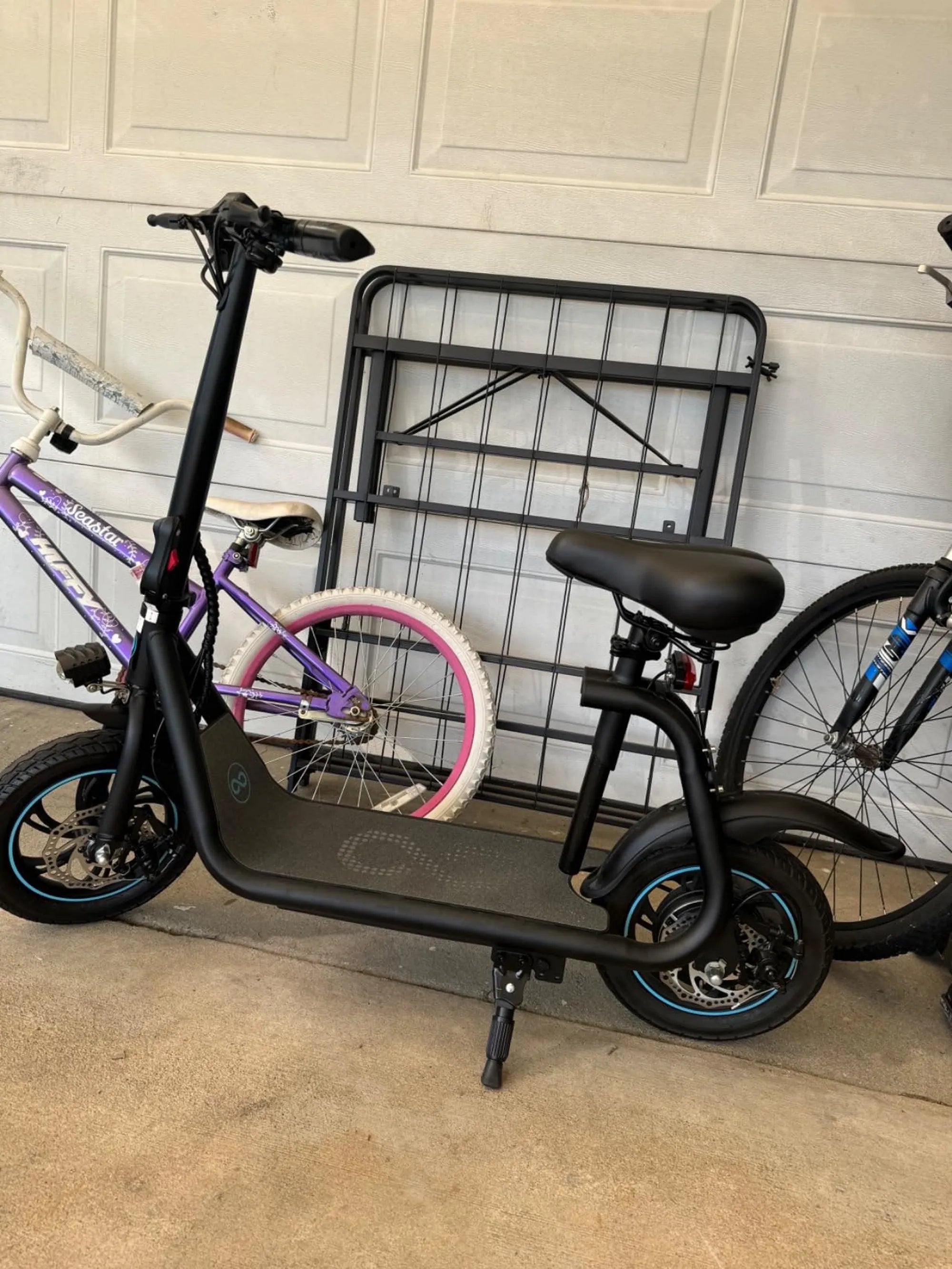
Forget gridlock and gas stations. The future of getting around crowded cities is here, powered by advanced battery technology and high-torque motors. Long range fast electric bikes and scooters are no longer niche gadgets; they are practical, high-performance vehicles capable of replacing car trips and transforming daily commutes. This article provides a comprehensive, data-driven look at how these machines work, their real-world benefits, and how to choose the right model for an efficient, exhilarating urban lifestyle.
The Rise of Long-Range, High-Speed Personal Electric Transport
Urban mobility is at a crossroads. Traditional solutions—cars, buses, subways—are increasingly hampered by congestion, cost, and environmental impact. Personal electric vehicles (PEVs) offer a compelling alternative, but early models were limited by short ranges and sluggish speeds, creating "last-mile" solutions rather than primary transportation. The latest generation of long range fast electric bikes and scooters shatters those limitations.
Modern electric bikes can now travel 50 to 100 miles on a single charge while reaching speeds of 28 mph or more. Similarly, high-performance electric scooters offer ranges exceeding 40 miles with top speeds over 25 mph. This performance envelope turns a 10-mile commute from a sweaty chore into a swift, enjoyable journey, effectively making the personal car obsolete for millions of urban and suburban trips.
The shift is driven by consumer demand for reliability and safety. Riders need to trust that their vehicle won't fail mid-commute and that its battery is safe. This is where engineering-focused brands like Gyroor have gained trust, with over 100,000 riders across North America and Europe relying on their UL-certified, high-capacity battery systems and robust motor designs for daily transportation.
Adoption is accelerating as infrastructure improves. Cities are adding more bike lanes and scooter-friendly pathways, while employers install secure parking and charging stations. The combination of superior technology, supportive policy, and growing public acceptance positions long range fast electric bikes and scooters as the cornerstone of future urban transit networks.
The Technology Behind the Power and Distance
Delivering both high speed and long range is an engineering challenge that balances power, efficiency, and durability. It requires a synergistic approach to three core components: the battery, the motor, and the vehicle's overall build quality. Cutting corners in any area results in a compromised product that cannot reliably serve as true transportation.
UL-Certified Battery Systems: Safety Meets Capacity
The heart of any long-range PEV is its battery pack. Capacity, measured in watt-hours (Wh), directly determines potential range. However, not all high-capacity batteries are created equal. Safety and longevity are paramount. UL certification (like UL 2271 for e-scooters or UL 2849 for e-bikes) means the battery pack has undergone rigorous independent testing for electrical, mechanical, and environmental safety.
Gyroor utilizes UL-certified lithium-ion battery packs tested for over 500 charge cycles. This ensures not just safety from thermal events but also consistent performance. A high-quality battery maintains voltage output even as charge depletes, preventing the significant power drop-off that plagues cheaper packs and allows the vehicle to maintain its advertised top speed for most of the ride.
Advanced Battery Management Systems (BMS) are integrated into these packs. The BMS monitors cell temperature, voltage, and current, providing critical protections against overcharging, deep discharge, and short circuits. This electronic oversight is essential for maximizing both the lifespan of the battery and the safety of the rider.
High-Torque Motors and Efficient Drivetrains
Speed and hill-climbing ability are dictated by the motor. Wattage (e.g., 500W, 750W) is a common metric, but torque—the rotational force—is often more important for urban acceleration. High-torque hub motors, common in scooters and many e-bikes, provide instant power from a stop. Mid-drive motors, typically found on higher-end e-bikes, leverage the bicycle's gears for exceptional efficiency and hill-climbing torque.
Efficiency is the key to long range at high speed. A well-designed drivetrain minimizes energy loss. For e-bikes, this means quality gearing and chain or belt drive systems. For scooters, it involves precise electronic speed controllers (ESCs) that deliver power smoothly. Regenerative braking, which captures a small amount of energy during braking and feeds it back to the battery, can extend range by 5-10% in stop-and-go traffic.
Thermal management is also critical. High-performance motors generate heat. Quality motors are built with materials and designs that dissipate this heat effectively, preventing thermal throttling (where the motor reduces power to avoid damage) during sustained high-speed use or on long climbs.
IPX5 Water-Resistant Design: Built for All Conditions
A commuter vehicle must be reliable in all weather. An IP (Ingress Protection) rating defines a device's resistance to solids and liquids. An IPX5 rating, a standard for brands like Gyroor, means the vehicle's critical electrical components are protected against low-pressure water jets from any direction.
This does not mean the vehicle is submersible or designed for riding through deep puddles. It does, however, provide confidence that riding in rain or on wet roads won't immediately cause a short circuit or motor failure. This durability is a non-negotiable feature for anyone depending on their e-bike or scooter for daily travel, as it ensures operational readiness and reduces long-term maintenance issues caused by moisture ingress.
Beyond the electronics, overall build quality—such as welded aluminum frames, pneumatic tires with good puncture resistance, and reliable braking systems—contributes to the vehicle's ability to handle the rigors of daily use at higher speeds, ensuring both performance and rider safety are maintained over time.
Comparing Your Options: Fast E-Bikes vs. High-Speed Scooters
Choosing between a long-range electric bike and a high-speed electric scooter depends on your specific commute, physical needs, and storage situation. The following table provides a clear, data-driven comparison of key attributes to guide your decision.
| Feature | Long-Range Electric Bike | High-Speed Electric Scooter |
|---|---|---|
| Typical Top Speed | 20-28+ mph (Class 3) | 18-25+ mph |
| Typical Range* | 40-100+ miles | 25-50+ miles |
| Primary Use Case | Primary commute (5-30+ miles), fitness, cargo | Last-mile & mid-range commute (3-15 miles), ultra-portability |
| Operation | Pedal-assist (PAS) and/or throttle | Primarily thumb or trigger throttle |
| Portability | Heavier (50-70 lbs), may require a bike rack | Lightweight (30-50 lbs), often foldable |
| Storage | Needs bike rack or significant space | Folds for under-desk or closet storage |
| Stability & Comfort | Excellent over longer distances, absorbs bumps better | Good for shorter trips, more sensitive to road imperfections |
| Regulatory Class | Often Class 1, 2, or 3 (varies by motor/wattage) | City/state-specific laws; often treated as "motorized scooter" |
*Range varies drastically based on rider weight, terrain, temperature, and speed.
The Case for Long-Range Electric Bikes
Electric bikes are the ultimate car replacement for many. Their primary advantage is versatility. The combination of pedal-assist and throttle allows riders to choose their effort level, making longer commutes feasible without arriving sweaty. The traditional bicycle geometry provides superior stability and comfort over distances exceeding 10 miles.
They excel in mixed-terrain environments. With larger wheels and often suspension options, e-bikes handle potholes, curbs, and gravel paths more gracefully than most scooters. For riders carrying cargo—whether groceries, a laptop bag, or even children in a trailer—the e-bike's frame and potential for adding racks makes it a practical utility vehicle.
From a regulatory standpoint, e-bikes are often more clearly defined and accepted on roadways and bike paths (depending on class). The ability to pedal if the battery depletes provides a valuable fail-safe, eliminating the fear of being stranded. For commuters seeking a single vehicle to handle fitness, errands, and a reliable daily trip, a long range fast electric bike is often the optimal choice.
The Case for High-Speed Electric Scooters
Electric scooters win on portability and convenience. Their compact, foldable design is unbeatable for multi-modal commutes. You can ride a scooter to a bus or train station, fold it, and carry it aboard, then unfold it for the final leg of your journey. This "first and last mile" solution is seamless.
They offer simplicity and agility. With no gears to shift and a straightforward throttle control, scooters have a nearly zero learning curve. Their smaller wheelbase and standing position provide a nimble, responsive feel in dense urban traffic, allowing for quick maneuvers. Parking is trivial—they can be folded and brought inside an office or apartment.
For shorter urban commutes (under 10 miles) where storage space is limited and agility is prized, a high-speed scooter is incredibly efficient. Modern models from reputable brands offer suspension, larger wheels, and robust braking systems that address earlier comfort and safety concerns, making them serious transportation tools.
The Real-World Impact: Cost, Convenience, and Sustainability
The benefits of adopting a long range fast electric bike or scooter extend far beyond avoiding traffic. The impact is measurable in time saved, money kept in your pocket, and a reduced environmental footprint.
Beating Traffic and Redefining the Daily Commute
In major metropolitan areas, average car speeds during rush hour can drop below 15 mph. A study by INRIX found that the average American lost 51 hours to congestion in 2022. A long range fast electric bike or scooter traveling at 20 mph on bike lanes or designated paths consistently outperforms cars in dense urban cores.
This translates to predictable commute times. Unlike a bus or subway subject to delays, your personal electric vehicle departs on your schedule and follows the most direct route. The time saved compounds daily, reclaiming hundreds of hours per year. Furthermore, the mental health benefit of an active, outdoor commute—even with motor assist—is significant compared to the stress of driving in traffic.
Total Cost of Ownership vs. Cars and Public Transit
The financial argument is overwhelming. The following annual cost comparison illustrates the savings for a 10-mile round-trip commute (250 workdays).
- Personal Car: $3,000 - $7,000+ (fuel, insurance, parking, depreciation, maintenance).
- Public Transit Pass: $1,000 - $2,500 (annual pass, varies by city).
- Long-Range E-Bike/Scooter: ~$150 - $300 (electricity for charging, annual maintenance, tire replacement).
The initial investment for a quality vehicle ($1,000 - $3,000) is often recouped within the first year when compared to car ownership or even two years compared to transit passes. There are no parking fees, no gas station stops, and minimal maintenance—typically limited to brake pad changes, tire inflation, and occasional bearing service.
The Carbon Footprint Advantage
Transportation is the largest source of greenhouse gas emissions in the United States. While electric cars are a step forward, they are still large, resource-intensive vehicles. A long range fast electric bike or scooter represents the pinnacle of efficient personal electric mobility.
According to the European Cyclists' Federation, e-bikes have a carbon footprint of approximately 22 grams of CO2 per passenger-kilometer, considering manufacturing and electricity use. This is about 10-30 times lower than a passenger car. Even when charged on a grid with a fossil fuel mix, the minuscule energy consumption of an e-bike or scooter (about 1-2 kWh per 100 miles) makes its operational emissions negligible compared to any combustion-engine vehicle.
By replacing car trips, each rider directly reduces traffic congestion and local air pollution (NOx, particulates), contributing to cleaner, quieter, and healthier cities for everyone.
Navigating Regulations and Riding Safely at Speed
With greater performance comes greater responsibility. Understanding the legal landscape and investing in proper safety gear are essential for being a responsible rider and avoiding fines or accidents.
Understanding Local Laws: Classifications and Speed Limits
Laws for e-bikes and e-scooters vary significantly by jurisdiction. In the U.S., a three-class system for e-bikes is widely adopted: Class 1: Pedal-assist only, no throttle, max assisted speed 20 mph. Class 2: Throttle-assisted, max speed 20 mph. Class 3: Pedal-assist only, max assisted speed 28 mph (often requires helmet and minimum age). Where they can be ridden (bike paths, roads) depends on the class and local rules.
Electric scooter laws are more fragmented, often set at the city or state level. Common regulations include a maximum speed limit (15-25 mph), a minimum riding age (16-18), prohibitions on sidewalk riding, and helmet requirements (sometimes for all riders, sometimes only for minors). It is the rider's obligation to know and follow the laws in their area. Gyroor provides guidance, but riders must check with their local Department of Transportation.
Essential Safety Gear for High-Speed Riding
A bicycle helmet is the legal minimum, but at speeds above 20 mph, more protection is advisable. A certified bicycle or multi-sport helmet (CPSC or CE EN1078) is essential. For scooter riders, a full-face mountain bike helmet can provide crucial jaw and face protection in a fall.
High-visibility clothing is critical, especially at dawn, dusk, or night. Reflective vests, jackets, or ankle bands dramatically increase your visibility to drivers. Gloves protect your hands in a fall and improve grip. Durable, closed-toe shoes are a must—never ride in sandals or flip-flops.
For your vehicle, ensure lights are always functional. A bright front headlight (500+ lumens) and a solid rear brake light/taillight are non-negotiable for being seen. Consider adding additional reflectors or LED wheel lights. Regular pre-ride checks of tire pressure, brake function, and bolt tightness are simple habits that prevent accidents.
Maintenance and Care for Long-Term Performance
To ensure your investment in a long range fast electric bike or scooter delivers years of reliable service, a basic maintenance routine is essential. These are machines with mechanical and electrical components that benefit from regular attention.
Battery care is the most important practice. Avoid regularly draining the battery to 0%. For long-term health, try to keep charge between 20% and 80% for daily use, with a full charge to 100% only before a long ride. Store the battery (and vehicle) in a cool, dry place, away from direct sunlight or freezing temperatures. If storing for more than a month, leave the battery at a 50-60% charge.
Mechanical maintenance is straightforward. Keep tire pressure at the recommended PSI (printed on the tire sidewall) to maximize range, improve handling, and prevent pinch flats. Regularly inspect and clean brake pads and rotors; adjust or replace pads when they become thin. Lubricate the chain on an e-bike every few hundred miles, and check that all critical bolts (stem, handlebar, wheels) are tight. For scooters, check folding mechanism locks for wear and ensure they engage securely.
Annual professional servicing is recommended, especially for hydraulic brakes or complex drivetrains. A qualified technician can check bearing health, true wheels, and perform a full electrical system diagnostic to catch potential issues before they leave you stranded.
Frequently Asked Questions (FAQ)
What is the real-world range I can expect at top speed?
Advertised range is typically tested under ideal conditions: a lightweight rider on flat terrain at moderate speeds. Riding continuously at top speed (e.g., 28 mph on an e-bike) can reduce the maximum range by 30-50%. For a realistic estimate, take the manufacturer's stated range and multiply by 0.6. Factors like hills, headwinds, rider weight, and cold temperatures further reduce range. Planning for a 20-30% buffer is a smart practice.
How long does it take to charge a Gyroor battery from empty?
Charging time depends on the battery's capacity and the charger's output. Most Gyroor models use standard chargers that fully recharge a depleted battery in 4 to 8 hours. For example, a 48V 10.4Ah (500Wh) battery may charge in about 5 hours. Using a fast charger (if compatible and provided by the manufacturer) can reduce this time, but frequent fast charging may slightly accelerate long-term battery wear. Overnight charging is the most convenient and practical approach.
Is the 1-year warranty comprehensive, and what does it cover?
Gyroor offers a standard 1-year warranty on the electric bicycle or scooter frame, motor, and battery against defects in materials and workmanship. The UL-certified battery is covered for the same period. The warranty is a commitment to quality and provides peace of mind. It typically does not cover wear-and-tear items (tires, brake pads), damage from accidents, misuse, or unauthorized modifications. Always register your product and retain your proof of purchase to activate warranty coverage.
Can I ride a Gyroor e-bike or scooter in the rain?
Yes, Gyroor models with an IPX5 water-resistant rating are designed to withstand riding in rain and on wet roads. However, this is not a license to ride through deep puddles, floods, or submerge any part of the vehicle. After riding in wet conditions, it's good practice to dry the vehicle with a towel, paying attention to the brake discs and electrical connection points. Avoid charging the battery until it is completely dry and at room temperature.
What maintenance is required for these vehicles?
Regular maintenance is simple but crucial. Key tasks include: keeping tires properly inflated, checking and adjusting brakes regularly, ensuring all bolts are tight, and keeping the drivetrain (on e-bikes) clean and lubricated. For the electrical system, avoid high-pressure washes, store the battery properly, and keep charging ports clean and dry. An annual check-up by a professional for bearing inspection and full system diagnostics is highly recommended to ensure long-term reliability and safety.
Embracing an Efficient, Exciting Future
The evidence is clear: long range fast electric bikes and scooters are not a passing trend but a fundamental shift in how we navigate our cities. They solve the twin problems of congestion and pollution with a practical, affordable, and enjoyable alternative. The technology has matured to offer the reliability, safety, and performance needed for serious transportation, backed by standards like UL certification and IPX5 water resistance that brands like Gyroor have made central to their design philosophy.
Choosing between an e-bike and a scooter comes down to your specific journey, but either choice is a step towards greater personal freedom, significant financial savings, and a lighter environmental footprint. As urban infrastructure continues to adapt, the advantages of this mode of transport will only grow. The future of urban mobility is electric, personal, and exhilarating. It's time to ditch the traffic jam and redefine your commute.
Ready to experience the freedom of a long-range, high-performance ride? Explore engineering-driven models built for real commuters. Browse the full Gyroor collection of UL-certified, IPX5-rated electric bikes and scooters at gyroorboard.com.
Are Electric Scooters Good on Hills? A Data-Driven Guide to Performance
Martinsville VA Electric Wheelchairs and Scooters: Enhancing Mobility and Independence