



Introduction: The World of Mini Hoverboards for Kids
Selecting the right mini hoverboard for 6 year old is a decision that blends excitement with serious consideration. These compact, self-balancing scooters represent more than just a trendy toy; they are a child's first foray into personal electric mobility. For parents, the journey involves navigating a market filled with options, where understanding the critical balance between exhilarating fun and non-negotiable safety is paramount.
This guide serves as your comprehensive resource, cutting through marketing claims to deliver factual, data-driven advice. We will dissect what makes a hoverboard truly suitable for a young child, underscore the absolute necessity of protective gear, and provide a clear teaching framework. Trusted brands like GYROOR, known for rigorous safety standards, set the benchmark for what parents should demand. The goal is simple: to equip you with the knowledge for a purchase that delivers joy and builds confidence, all within the safest possible framework.
What is a Mini Hoverboard and Why It's Perfect for a 6-Year-Old
A mini hoverboard is specifically engineered for younger, smaller riders, typically aged 5 to 10. The core differentiators from standard adult models are a lower maximum speed (usually capped between 4-7 mph), a reduced weight capacity (around 44-120 lbs), a more compact deck size for smaller feet, and often, enhanced beginner-friendly features like training modes. These design choices are not arbitrary; they directly address the physical and developmental stage of a 6-year-old.
For a child, the benefits extend far beyond simple transportation. Mastering a hoverboard is a profound developmental exercise. It challenges and improves static and dynamic balance, core strength, and overall coordination. The learning process fosters perseverance, problem-solving, and a tangible sense of achievement. Furthermore, it incentivizes outdoor physical activity in an engaging, screen-free format, promoting healthy habits from a young age.
Key Features to Look For in a 6-Year-Old's Model
When evaluating a mini hoverboard for 6 year old, specific technical specifications become non-negotiable safety features. The speed limit is the most critical; a model with a beginner or training mode that restricts speed to 5 mph or less is ideal for initial learning. The weight capacity must comfortably exceed your child's weight to ensure stable operation and motor longevity.
Motor power, typically ranging from 150W to 250W per motor, should be sufficient for gentle inclines but not overpowering. A compact and lightweight design makes the board easier for a child to maneuver and carry. Finally, look for a low minimum speed threshold, allowing for very slow, controlled movements as they find their balance. These features collectively create a platform designed for control, not just speed.
The Safety First Checklist: Beyond the Hoverboard
It is essential to reframe a hoverboard not as a mere toy, but as a personal transport device. This mindset shift is where true safety begins. The device itself is only one component of the safety equation; comprehensive preparation and consistent practice of safe habits form the foundation. Parental supervision, especially during the learning phase and for young children, is an absolute requirement, not a suggestion.
Establishing clear ground rules before the first ride is crucial. These should include designated riding zones, a mandatory gear-up ritual, and strict prohibitions against riding near roads, stairs, or large bodies of water. Safety is an ongoing conversation that evolves with your child's skill level, ensuring that confidence never outpaces caution.
Essential Safety Gear (Helmet, Pads, etc.)
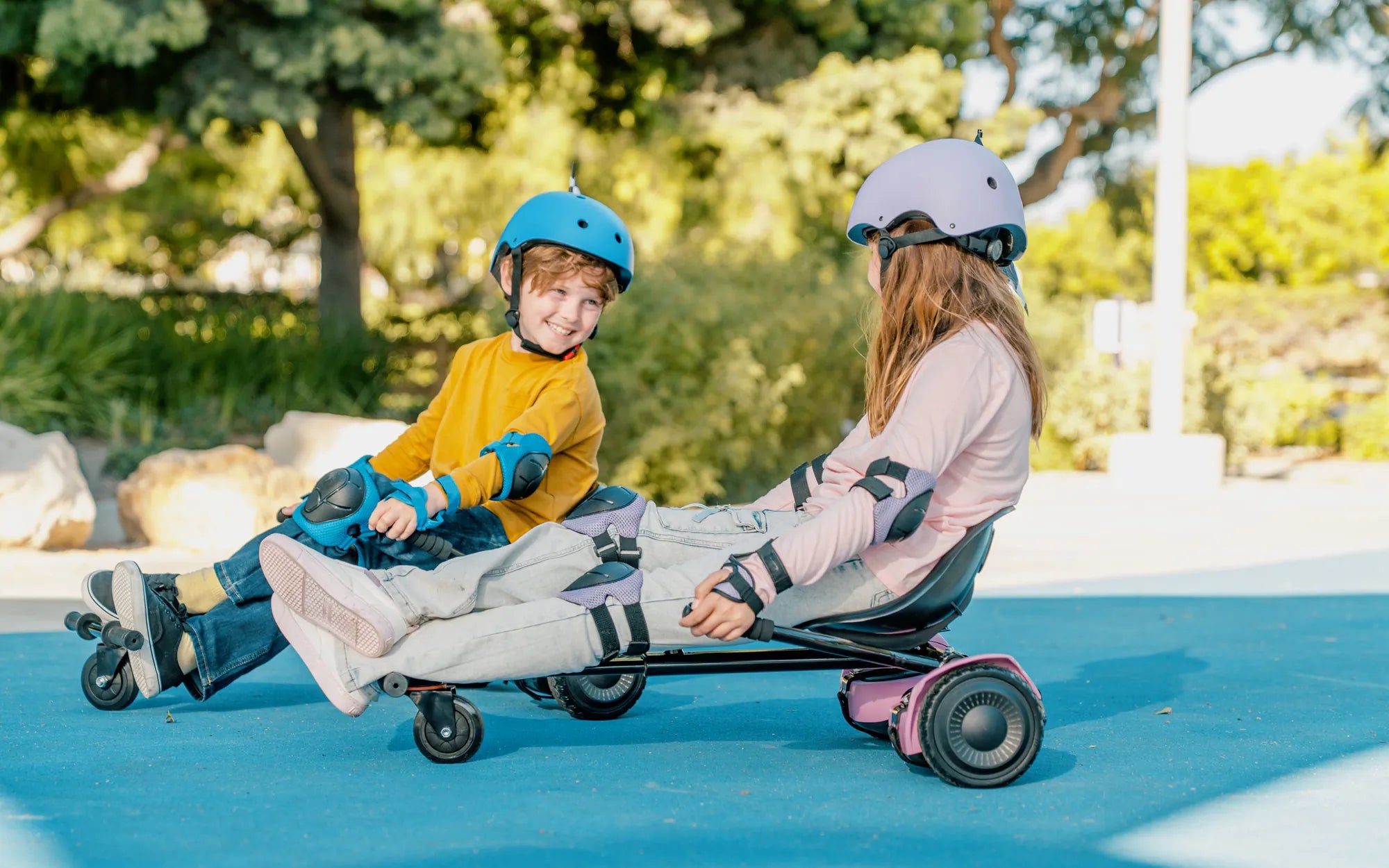
Full protective gear is mandatory, not optional. Every single riding session must begin with your child fully geared up. This non-negotiable habit instills the seriousness of the activity and provides critical physical protection.
- Helmet: A certified multi-impact bicycle or skateboard helmet is essential. It must fit snugly without wobbling.
- Knee and Elbow Pads: These are the second most frequently used pieces of gear during falls. They prevent painful scrapes and more serious joint injuries.
- Wrist Guards: Perhaps the most important for beginners. Instinct leads to putting hands out during a fall, making wrists highly vulnerable to sprains or fractures.
Investing in high-quality, comfortable gear ensures your child will wear it without complaint. Look for gear designed for action sports, as it offers better protection and durability than generic versions.
Choosing a Safe Learning Environment
The right environment is a silent teacher. The ideal practice area is a smooth, flat, paved surface free of cracks, gravel, and slopes. A empty driveway, a basketball court, a tennis court, or a quiet cul-de-sac are perfect starting points. The area should be large enough to allow for wide, uncontrolled turns initially, and completely free from vehicle traffic.
Absolutely avoid starting on grass, carpet, or uneven terrain, as these surfaces can interfere with the gyroscopic sensors and cause unexpected jerks. Also avoid areas with long downhill slopes. The goal for the first several sessions is to master balance and basic control in a predictable, hazard-free zone. Only after significant proficiency should you consider more varied terrain, and even then, with extreme caution.
How to Choose the Best Mini Hoverboard: GYROOR's Trusted Standards
Choosing the best model requires looking past colorful designs and focusing on engineering and certification. A high-quality mini hoverboard for 6 year old from a reputable brand is an investment in safety and durability. Brands like GYROOR, a leading electric scooter and e-bike brand trusted by over 100,000 riders, build their products to specific safety benchmarks that parents should use as a checklist.
These standards include certified battery systems, robust construction, and reliable customer support. A slightly higher upfront cost for a reputable brand often translates to avoiding the risks associated with poorly manufactured electronics and the frustration of a product that breaks within weeks. The peace of mind that comes with known safety standards is invaluable.
UL-Certified Battery: The Non-Negotiable Safety Standard
The UL2272 certification is the single most important safety feature on any hoverboard. This rigorous standard, developed by Underwriters Laboratories, tests the entire electrical system—battery pack, charger, and circuitry—for safety against electrical, mechanical, and environmental hazards, including fire. In the mid-2010s, incidents with uncertified batteries highlighted this critical need.
A UL2272 certified battery, like those used in all GYROOR models, has undergone extensive testing for overcharge, short circuit, and damage tolerance. It is the definitive mark that the power source is engineered for safety. Never, under any circumstances, purchase a hoverboard without this certification. It is the baseline for responsible manufacturing.
Build Quality and Durability: IPX5 Water Resistance & Robust Design
Children ride in real-world conditions, which include puddles, damp pavement, and occasional spills. An IPX5 water-resistance rating means the hoverboard can withstand water jets from any direction, making it resistant to splashes and light rain. This protects the internal electronics from moisture-related shorts and corrosion, significantly enhancing longevity and safety.
Furthermore, the frame and shell must be made of durable, impact-resistant materials. A 6-year-old's learning curve involves steps, falls, and bumps. A robust design from a brand like GYROOR, which utilizes high-grade plastics and aluminum, can withstand this abuse, whereas a flimsy shell may crack, exposing electronics or creating sharp edges. Durability is a direct component of ongoing safety.
Warranty and Support: Peace of Mind for Parents
A strong warranty is a manufacturer's vote of confidence in its product. A comprehensive 1-year warranty, such as the one offered by GYROOR, covers defects in materials and workmanship. This protects your investment and provides a clear recourse if an issue arises that is not due to misuse.
Equally important is accessible customer support. The ability to get timely answers to technical or troubleshooting questions is a crucial resource for parents. Brands that stand behind their products with clear warranties and responsive support demonstrate a commitment to the customer experience long after the sale, offering true peace of mind.
The Parent's Guide: Teaching Your 6-Year-Old to Ride
Your role as a teacher is to provide patience, encouragement, and clear, calm instructions. Break the learning process into small, manageable steps, celebrating each micro-achievement. Keep initial sessions short (15-20 minutes) to prevent frustration and fatigue. Always be physically close enough to catch or steady them during the first few attempts.
Demonstrate the actions yourself if possible, or use online videos to show them what the goal looks like. Use positive reinforcement abundantly. The objective of the first few sessions is not distance or speed, but simply for the child to feel the sensation of balanced control and to associate the hoverboard with positive feelings.
Step 1: Mounting and Finding the "Sweet Spot"
Start with the hoverboard powered OFF. Have your child stand next to it and practice placing one foot, then the other, on the deck while holding a fence, wall, or your hands. The goal is to get comfortable with the stance. Feet should be placed symmetrically, near the wheels, with a slight bend in the knees.
Once comfortable, power the board on. With support, have them step on. The "sweet spot" is the neutral, balanced position where the board does not move. Have them practice rocking their toes and heels slightly to feel the board's response while firmly holding support. This step may take a full session. Do not rush it.
Step 2: Basic Movement and Steering
With the child holding a support (like a fence), have them practice the fundamental control: leaning toes down to go forward, heels down to go backward. Encourage tiny, gentle leans. The key is minute pressure adjustments, not dramatic leans.
Once they can move forward and backward a few feet while holding on, move to a large open space. Walk beside them, holding their hand or arm, as they attempt to move forward in a straight line for a short distance. Focus on smooth starts and stops. Steering at this stage happens naturally by shifting weight; formal turning comes next.
Step 3: Mastering Turning and Stopping
To turn, the child must apply gentle pressure forward with one foot while easing pressure or applying slight backward pressure with the other. Practice wide, sweeping turns first. A good drill is to aim for a large circle or figure-eight pattern.
Controlled stopping is the most important safety skill. Practice coming to a stop by slowly and evenly leveling both feet back to the neutral "sweet spot." Emphasize that a sudden jump off is a last resort and can be dangerous. Practice stopping on command from very slow speeds until it becomes instinctive. Mastery of stopping builds the confidence to go a little faster.
Mini Hoverboard Comparison: Key Features for Safety
This comparison table outlines the critical safety and performance features parents should compare when selecting a mini hoverboard for 6 year old. Use it as a benchmark to evaluate any model you consider.
| Feature | Why It Matters for a 6-Year-Old | Ideal Specification / Benchmark |
|---|---|---|
| Max Speed | Limits risk during falls; allows for controlled learning. | ≤ 5 mph (8 km/h), with a beginner/training mode. |
| Weight Capacity | Ensures motor can safely handle rider; affects stability. | Minimum 120 lbs capacity for growth and stability buffer. |
| Battery Certification | Prevents fire/overheat risk; non-negotiable for safety. | UL2272 Certified (Mandatory). |
| Water Resistance | Protects electronics from puddles/moisture, increasing safety & lifespan. | IPX5 Rating or higher. |
| Wheel Size | Larger wheels handle cracks and bumps more smoothly. | 6.5-inch wheels for a balance of stability and agility. |
| Warranty & Support | Protects your investment and provides help if issues arise. | Minimum 1-year comprehensive warranty + accessible support. |
Frequently Asked Questions (FAQs)
Q1: What is the right age for a mini hoverboard?
While many models are marketed for ages 6+, age is less important than individual readiness. Key indicators include good physical coordination (e.g., can ride a bike with training wheels), the ability to follow multi-step safety instructions, and a genuine interest. A cautious, coordinated 5-year-old may be ready, while an impulsive 7-year-old might need to wait.
Q2: How long does the battery last on a single charge?
Most quality mini hoverboards offer 1 to 2 hours of continuous ride time on a full charge, depending on terrain, rider weight, and speed. Always follow the manufacturer's charging instructions precisely—never leave it charging unattended or overnight. Using the provided charger is essential for battery health and safety.
Q3: Can a mini hoverboard be used indoors?
It is not recommended, especially for beginners. Indoor spaces typically have hard floors, furniture, and tight turns, increasing the risk of injury to the child and damage to your home. If you have a very large, clear space like a garage, and the child is highly proficient, it may be possible, but outdoor practice is always safer and more conducive to learning.
Q4: What regular maintenance does a hoverboard need?
Basic maintenance ensures longevity and safety. Regularly check tire pressure (for air-filled tires) for wear and punctures. Wipe down the deck and body with a damp cloth to remove dirt. Store in a cool, dry place away from direct sunlight. Most importantly, follow battery care: avoid deep discharges, don't charge immediately after a long ride, and charge at least once every 2-3 months if not in use.
Q5: Are LED lights important on a kids' hoverboard?
LED lights are a valuable safety feature for visibility, not just a cosmetic add-on. If your child might ride in the early evening or in shaded areas, bright front and rear lights make them more visible to others. However, lights should be considered a secondary feature; primary focus must remain on core safety specs like battery certification and speed control.
Conclusion: Responsible Fun for Lasting Memories
Choosing and introducing a mini hoverboard for 6 year old is a journey that, when done correctly, yields immense rewards. The smiles of achievement, the increased confidence, and the encouragement of outdoor activity are powerful benefits. These positive outcomes are only possible when built on an unshakable foundation of safety—this means a UL-certified device from a reputable brand, a complete set of protective gear worn every time, and patient, supervised learning in a safe environment.
By prioritizing these principles, you transform a simple purchase into an opportunity for growth and joyful memory-making. The hoverboard becomes a tool that teaches responsibility, resilience, and the pure fun of movement. Ready to explore a range of UL-certified, child-appropriate models designed with these exact safety priorities in mind? Browse the full GYROOR collection at gyroorboard.com to find the perfect match for your young rider's adventure.
Kids Scooter Price Egypt: A Comprehensive Guide for Parents
Kids Scooter Handlebar Height: The Ultimate Guide for Parents