



Introduction: The World of Mini Hoverboards for Toddlers
Mini hoverboards for toddlers represent a thrilling entry point into the world of electric mobility for young children. These scaled-down, feature-specific devices are designed to offer excitement while prioritizing the unique safety needs of children aged 2 to 5 years old. This guide serves as your definitive resource, cutting through marketing claims to deliver data-driven advice on selecting, preparing for, and supervising the use of a mini hoverboard for toddlers. We will address core parent concerns—safety, durability, and age-appropriateness—ensuring you can make an informed decision that balances fun with fundamental security.
Navigating this market requires understanding critical differences from standard hoverboards. The right model fosters balance, coordination, and outdoor play in a controlled manner. Conversely, an inappropriate choice can lead to frustration or safety incidents. Our goal is to equip you with the knowledge to distinguish a well-engineered toy from a subpar product, focusing on verifiable specifications and certified safety standards. Let's explore how to turn a mini hoverboard for toddlers into a source of confident play and developmental growth.
What is a Mini Hoverboard? Key Features & Age Appropriateness
A mini hoverboard is a compact, self-balancing electric scooter specifically engineered for young children. It is not merely a smaller version of an adult model. Key differentiating features include a significantly reduced deck size for smaller feet, a lower maximum speed (typically 2-4 mph), and enhanced stability systems. These boards often incorporate training modes that limit speed to a crawl, helping beginners master balance without sudden acceleration. The design philosophy centers on creating a manageable, less intimidating platform for a toddler's first foray into ride-on electronics.
The core components are tailored for young riders. Motors are less powerful, providing gentle propulsion. Batteries are smaller but must still meet the highest safety certifications. The deck texture is designed for grip, even with small shoes, and the overall weight of the board is light enough for a parent to carry easily. Controls are simplified, with responsive but dampened gyroscopic sensors to prevent jerky movements. Understanding these features is the first step in recognizing a true mini hoverboard for toddlers versus a generic, poorly adapted small hoverboard.
Understanding Safety Certifications: UL 2272 and Beyond
The UL 2272 certification is the single most critical safety benchmark for any hoverboard, especially for children's models. This standard, developed by Underwriters Laboratories, rigorously tests the electrical drive train system—including the battery, charger, and circuitry—for fire and electrical safety hazards. A UL 2272 certified hoverboard has undergone tests for overcharge, short circuit, imbalance, and drop, significantly reducing the risk of battery fires. For a toddler product, this certification is non-negotiable and should be verified on the manufacturer's website or product packaging.
Leading brands build upon this foundation. Gyroor, for instance, utilizes UL-certified battery packs in all its models, which are tested for over 500 charge cycles for long-term reliability. When evaluating a mini hoverboard for toddlers, prioritize models that explicitly state UL 2272 certification. Be wary of vague claims like "certified batteries" or "meets safety standards," which may not refer to the complete system. This certification is your primary assurance that the product's fundamental power system is engineered to prevent catastrophic failure.
Top Safety Features to Look for in a Toddler Hoverboard
Beyond the essential UL 2272 certification, specific design features directly impact your child's safety and learning curve. A comprehensive safety checklist should be your primary tool when comparing models. Key items include a speed limiter with a dedicated beginner mode, wide tires with a textured tread for stability, a low deck height to minimize falls, and robust bumper or fender protection. These features work in concert to create a forgiving and controlled riding environment, which is essential for building a toddler's confidence.
Parental control capabilities, often via a Bluetooth app or a physical remote, are a significant advantage. These allow you to set maximum speed limits, monitor battery life, and even remotely stop the board if necessary. While not all mini models have this, it represents a high level of safety oversight. Additionally, look for clear, audible indicators for power status and low battery, as well as non-marking, rubberized wheels suitable for indoor use. A well-designed mini hoverboard for toddlers will make these safety features central to its product description.
The Importance of Speed Limiters and Beginner Modes
Adjustable speed settings are the cornerstone of safe learning. A true beginner mode should cap speed at 1-2 mph, allowing the child to focus entirely on balancing and gentle weight shifts without fear of sudden, uncontrolled acceleration. This mode often also makes the board less responsive to leaning, providing a more stable platform. As proficiency grows, parents can unlock higher speed tiers, typically up to a safe maximum of 4-5 mph for this age group. This graduated approach mirrors learning to ride a bicycle with training wheels.
The technology behind this is crucial. Look for models that advertise "learning modes" or "parental speed control" as core functions. This feature prevents the common beginner mistake of leaning too far forward and being startled by a rapid response. For a toddler, mastering the cause-and-effect of gentle movement is key. A mini hoverboard for toddlers without a dedicated, very slow beginner mode is unsuitable for this age group and will likely lead to falls and a reluctance to continue learning.
Stability and Balance: Wide Tires & Low Center of Gravity
Physical design dictates stability. Wide tires (often 6.5 inches in diameter or more) provide a larger contact patch with the ground, greatly improving balance and making the board less tippy on uneven surfaces. A low deck height—the distance from the ground to the standing platform—lowers the center of gravity. This design principle makes the board more stable and reduces the distance of a potential fall, which is psychologically and physically safer for a young child.
The wheel material also matters. Air-filled (pneumatic) tires offer better shock absorption on sidewalks or slightly rough pavement, while solid rubber tires are maintenance-free and ideal for smooth indoor surfaces. The board's overall weight distribution should feel solid and planted, not top-heavy. When researching, prioritize models that explicitly mention a "low-profile design" or "enhanced stability system." This focus on inherent stability is what separates a specialized mini hoverboard for toddlers from a simply miniaturized adult toy.
Durability and Weather Resistance: The IPX5 Advantage
Toddlers are not known for avoiding puddles or gentle dew on grass. A good water-resistance rating is essential for real-world use and longevity. The IP (Ingress Protection) rating system indicates protection against solids and liquids. An IPX5 rating, like that found on Gyroor hoverboards, means the unit is protected against water jets from any direction, making it resistant to wet pavement, light rain, and accidental spills.
This durability extends the hoverboard's life and maintains safety. Moisture ingress can damage electronics and battery compartments, leading to malfunctions or safety hazards. An IPX5-rated mini hoverboard for toddlers can handle the inevitable outdoor play, giving parents peace of mind. It also simplifies cleaning—a damp cloth can wipe down the board without concern. Always check the product specifications for a clear IP rating; "water-resistant" is a vague term, while a defined IPX rating is a measurable standard.
Choosing the Right Mini Hoverboard: A Parent's Buying Guide
Selecting the perfect model involves matching the product's specifications to your child's developmental stage and your family's lifestyle. Start with the manufacturer's age and weight recommendations, but consider your child's specific size and coordination level. A taller or more physically advanced 3-year-old might be ready for a model recommended for 4+, while a cautious 4-year-old might benefit from starting with a model for younger ages. The goal is to find a board that offers a challenge without being intimidating.
Next, consider the primary riding environment. Will it be used mostly indoors on hard floors, or outdoors on pavement? This influences tire choice. Also, evaluate the battery life relative to your routine; a 60-minute battery supports longer play sessions but may require less frequent charging. Finally, assess the quality of customer support. A responsive company that offers a clear warranty and accessible parts is invaluable for a product meant for active use by children. This holistic approach ensures your choice in a mini hoverboard for toddlers is a sound investment.
Age, Weight, and Height Recommendations
Adhering to manufacturer guidelines is crucial for safety and performance. The following table provides a general framework for matching a child's age with appropriate hoverboard specifications. Always verify against the specific model's manual.
| Age Range | Recommended Deck Size | Max Weight Limit | Ideal Features |
|---|---|---|---|
| 2-3 years | Small (Under 16" length) | 44 lbs (20 kg) | Speed limit ≤2 mph, extensive bumper guards, mandatory beginner mode, remote control. |
| 3-4 years | Small to Medium (16"-18") | 66 lbs (30 kg) | Speed up to 3 mph, wide tires (6.5"), LED lights for fun, Bluetooth speaker for engagement. |
| 4-5+ years | Medium (18"-20") | 88 lbs (40 kg) | Speed up to 4-5 mph, dual 200W motors for gentle inclines, app connectivity for parental controls. |
These guidelines ensure the hoverboard is proportionally sized for the child's stance, providing optimal control. A board that is too large forces an overly wide stance, compromising balance. One that is too small may feel unstable. The weight limit is a hard ceiling; exceeding it strains the motors and battery, reducing safety and lifespan. When choosing a mini hoverboard for toddlers, these specs are your primary filter.
Battery Life and Charge Time: Managing Play Sessions
Realistic battery expectations prevent disappointment. Most quality mini hoverboards offer 30 to 60 minutes of continuous ride time on a full charge, depending on rider weight, terrain, and speed mode. This is typically sufficient for a toddler's attention span. Charge times generally range from 2 to 4 hours. It's wise to establish a routine, such as charging after playtime ends, to ensure the board is always ready. Teach your child that the beeping or flashing low-battery indicator means it's time to stop, as a depleted battery can lead to a sudden loss of power.
Safety in charging is paramount. Only use the manufacturer-provided UL-certified charger. Charge the hoverboard on a hard, non-flammable surface in a well-ventilated area, away from direct sunlight or heat sources, and never leave it charging unattended for extended periods, such as overnight. Gyroor's use of UL-certified battery packs, tested for 500+ cycles, provides an added layer of assurance regarding long-term battery integrity and safe charging behavior for your mini hoverboard for toddlers.
Warranty and Customer Support: Peace of Mind for Parents
A robust warranty is a signal of manufacturer confidence. For children's electric toys, look for at least a 1-year comprehensive warranty that covers defects in materials, workmanship, and the core electrical components like the battery and motors. Gyroor, for example, offers a reliable 1-year warranty, aligning with industry-leading practices. This coverage is essential for addressing any issues that arise from normal use.
Equally important is accessible customer support. Before purchasing, test the responsiveness of the company via email or chat. Are there clear troubleshooting guides? Can replacement parts like tires or chargers be easily ordered? A brand with a strong reputation among over 100,000 riders, like Gyroor, typically has established support channels. This infrastructure provides peace of mind, knowing that if a problem occurs with your mini hoverboard for toddlers, you have a direct path to a solution.
Preparing for the First Ride: Essential Safety Gear and Setup
The hoverboard itself is only one component of the safety system. Before the first power-on, you must assemble a complete protective gear kit and prepare the riding environment. This preparation sets the stage for a positive first experience. Start by explaining to your child that the gear is as important as the board itself, much like a seatbelt in a car. Make putting on the gear part of the fun, pre-ride ritual. A proper setup mitigates risk and allows both parent and child to focus on the joy of learning.
The initial riding session should be short, positive, and pressure-free. The goal is not mastery but familiarization. With the board powered off, let your child stand on it, holding your hands, to feel the balance point. Turn it on in the slowest beginner mode only after they are comfortable with the powered-off feel. This gradual, structured approach builds confidence from the ground up and is fundamental to safe enjoyment of a mini hoverboard for toddlers.
Must-Have Protective Gear: Helmets, Knee & Elbow Pads
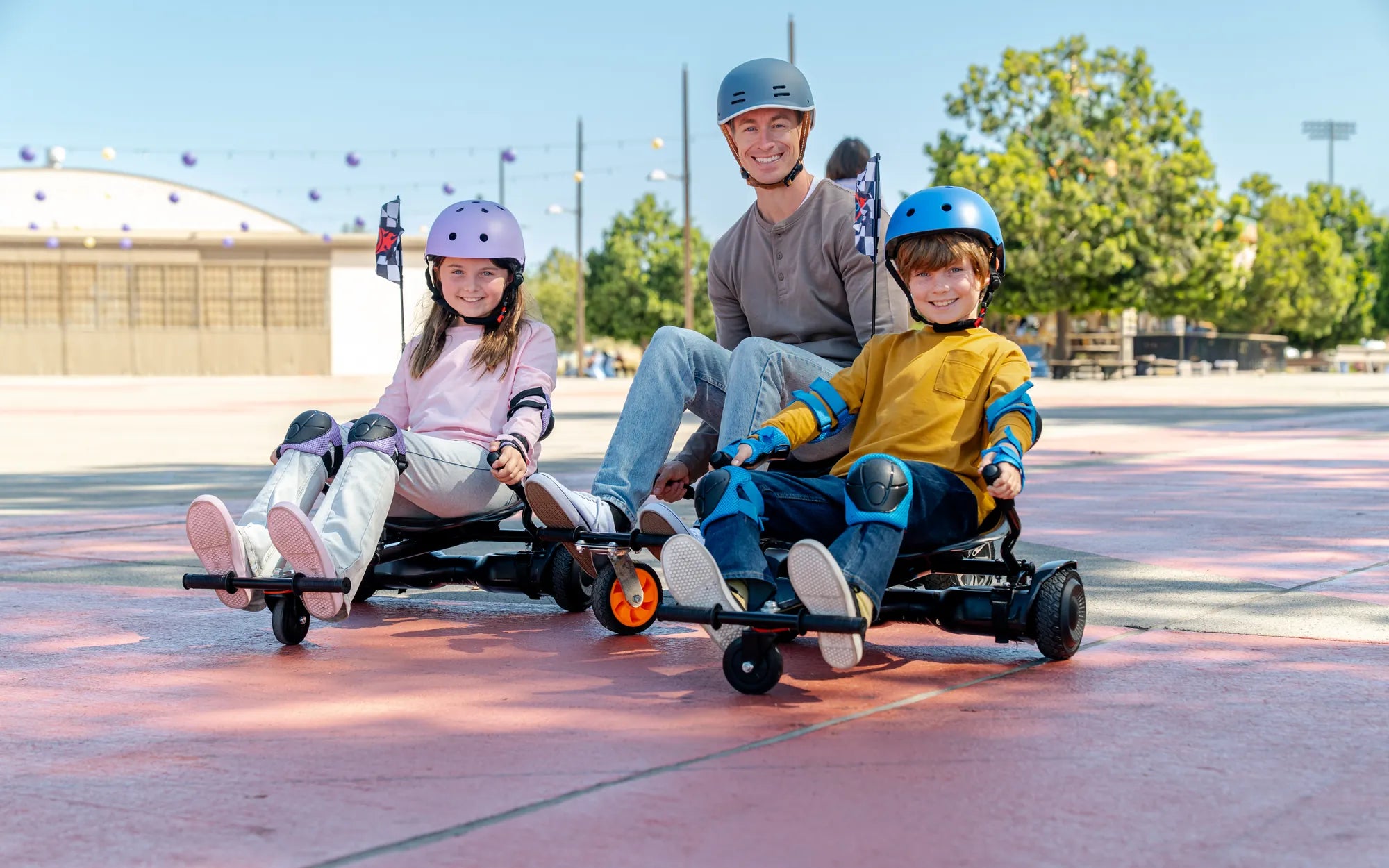
Full protective gear is non-optional. A properly fitted, CPSC-certified multi-impact helmet designed for skateboarding or cycling is essential. It should sit level on the head, covering the forehead, with snug straps. Knee and elbow pads are equally critical, as falls typically involve impacting these joints first. Wrist guards are also highly recommended, as instinct leads to putting hands out to break a fall. Ensure all pads fit snugly without restricting movement.
Invest in quality gear designed for action sports, not generic toy versions. Good pads have hard plastic caps over dense foam padding and secure, adjustable straps. Making gear a non-negotiable rule from day one establishes a vital safety habit. For a toddler using a mini hoverboard for toddlers, this gear dramatically reduces the risk of scrapes, bruises, or more serious injuries, turning a potential tumble into a minor event.
Finding the Perfect Practice Environment
The ideal first riding area is flat, smooth, spacious, and free of traffic or major obstacles. Excellent options include an empty tennis or basketball court, a smooth garage floor, a wide driveway, or a quiet cul-de-sac with fresh pavement. The surface should be dry and clean of gravel or sand, which can affect traction. Absolutely avoid areas near streets, swimming pools, steep slopes, or stairs.
This controlled environment allows the child to experiment with balance and steering without external hazards. It also gives you, as the supervisor, a clear field of view and the ability to intervene quickly. As skills improve, you can gradually introduce very gentle slopes or different surfaces. Starting in the right location is a simple yet profoundly effective safety strategy for mastering a mini hoverboard for toddlers.
Parent-Led Training: Step-by-Step Learning Activities
A structured, patient approach yields the best results. Follow this progressive training plan over several short sessions (10-15 minutes each).
Step 1: Mounting & Dismounting (Board OFF): Hold your child's hands as they step onto the board, finding their balance. Practice stepping off backward, which is more stable than stepping forward. Repeat until they are comfortable.
Step 2: Finding Balance (Board ON, Beginner Mode): With the board on at its slowest speed, have your child stand on it while you hold their hands or waist. Let them feel the board's gyroscopic self-balancing mechanism holding them upright. Encourage small weight shifts.
Step 3: Gentle Movement: While you are still supporting them, guide them to lean slightly forward to go forward and slightly back to stop or reverse. Keep movements microscopic at first. The goal is understanding the control mechanism.
Step 4: Introduction to Turning: Explain that turning is done by applying slight pressure with one toe (to turn the opposite way). Practice this with your support. Celebrate small successes to build positive association with their mini hoverboard for toddlers.
Frequently Asked Questions (FAQs) About Toddler Hoverboards
Q1: What is the youngest age for a mini hoverboard?
Most manufacturers design models for ages 3 and up, as this is when children typically develop the necessary core strength, balance, and coordination. Some models with extensive safety features (remote stop, very low speed) may be suitable for supervised 2-year-olds. Always prioritize the specific product's age recommendation and your child's individual physical development over a general rule.
Q2: Are mini hoverboards safe for indoor use?
Yes, provided they have UL 2272 certification (for electrical safety) and non-marking, soft rubber wheels that won't damage floors. Use them in open spaces with hard flooring, away from stairs, fragile furniture, and slippery rugs. Always supervise indoor use closely, as walls and furniture are proximity hazards during the learning phase.
Q3: How do I maintain and care for the hoverboard?
Regular maintenance ensures longevity and safety. Keep it dry and store it in a cool, dry place away from extreme temperatures. Avoid overcharging; unplug once fully charged. Periodically check for loose screws, especially on foot pads and fenders. Clean the deck and wheels with a slightly damp cloth. Never hose it down or submerge it, even if it is water-resistant.
Q4: What if my child is scared or hesitant to ride?
Never force it. Create positive associations. Let them decorate the hoverboard with stickers. Use it powered off as a static balance board. Demonstrate riding it yourself (if weight allows) or show them fun videos of other kids riding. Offer to hold them securely during their first attempts. Patience is key; the goal is fun, not achievement.
Q5: Can two toddlers ride a mini hoverboard together?
Absolutely not. Mini hoverboards are designed for a single rider up to a specified weight limit. Doubling up exceeds the engineering limits, strains the motors and battery, creates severe instability, and is extremely dangerous. This rule must be strictly enforced for safety.
Conclusion: Fostering Fun with Confidence and Safety
A mini hoverboard for toddlers can be a wonderful tool for developing balance, coordination, and a love for active outdoor play. The journey to fun, however, is paved with informed choices and proactive safety measures. The cornerstone is selecting a high-quality, UL 2272 certified product from a reputable brand that prioritizes toddler-specific features like speed limiters, stable design, and durable construction. Complementing this with mandatory protective gear and patient, parent-led training in a safe environment creates a holistic framework for success.
By prioritizing verifiable safety certifications, understanding key features, and engaging in the learning process, you transform a exciting toy into a secure and developmental activity. Trusted brands like Gyroor, with their commitment to UL-certified batteries, IPX5 water resistance, and robust customer support, provide a reliable foundation for this adventure. Embrace the process, celebrate the small victories, and watch as your toddler gains not just a new skill, but a boost in confidence and joy.
Ready to explore a selection of reliable, safety-focused ride-ons for your child? Browse the full Gyroor collection at gyroorboard.com to find the perfect model that matches your safety standards and your child's spirit of adventure.
Can You Ride a Hoverboard on the Sidewalk? The Complete Guide
Self Balancing Hoverboard Self Balancing Electric Scooter: The Future of Personal Mobility