



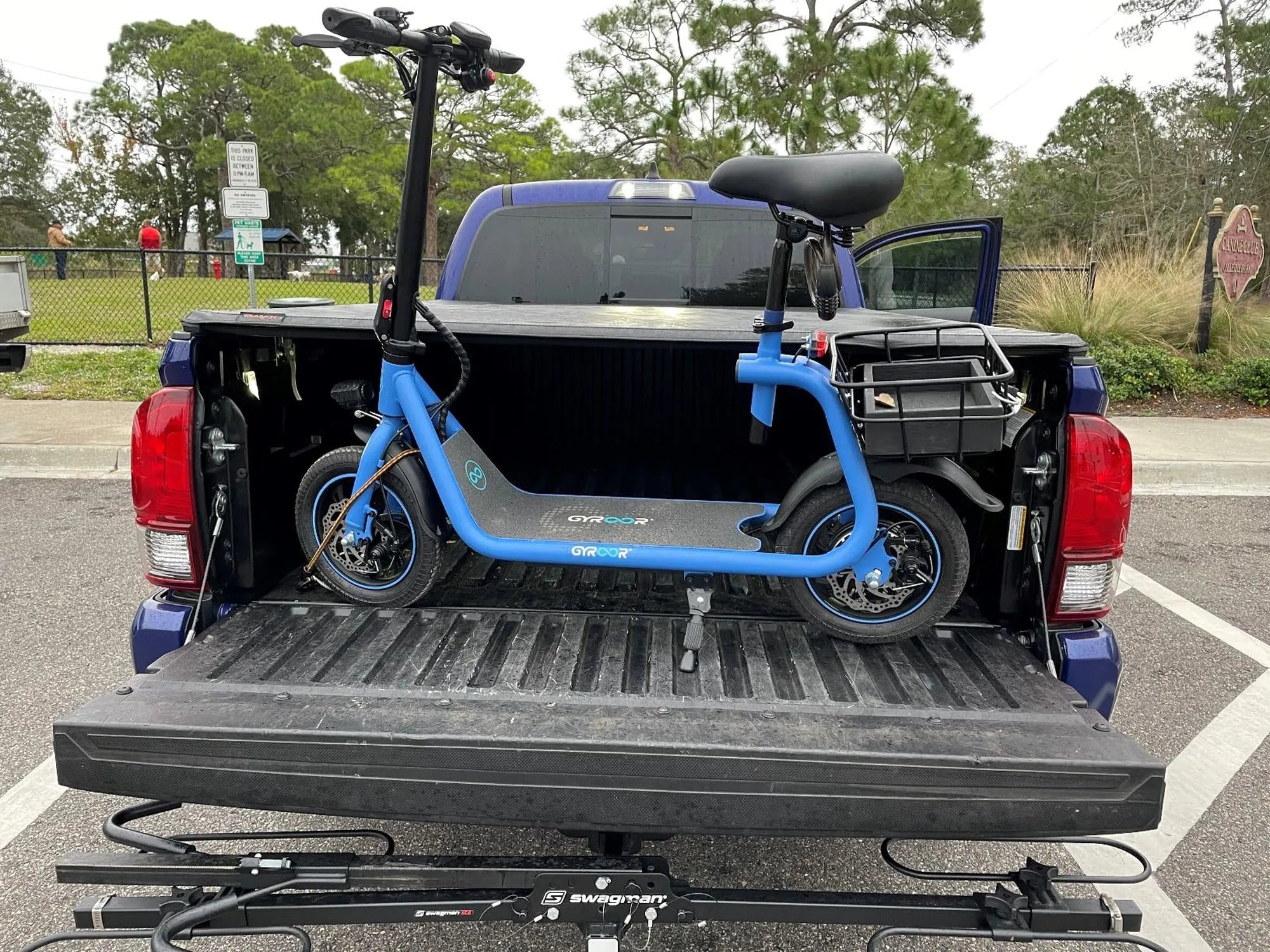
Introduction: The 2025 E-Scooter Revolution
The urban landscape is being quietly reshaped by a two-wheeled evolution. Electric scooters have moved from novelty to necessity, offering a pragmatic solution to congestion, pollution, and the first/last-mile transport gap. The year 2025 marks a pivotal maturation point. This is not merely about incremental upgrades; it's about a fundamental convergence of intelligence, safety, and durability that redefines personal urban mobility. The era of the New Electric Scooters 2025 is here, characterized by integrated connectivity, robust engineering, and a clear focus on rider trust. Leading this charge are brands like Gyroor, whose commitment to UL-certified safety and IPX5 water-resistant designs exemplifies the new standard, trusted by a community of over 100,000 riders across North America and Europe.
This article will dissect the key trends, decode essential specifications, and provide a data-driven framework for choosing your next vehicle. You will learn to distinguish marketing hype from real-world performance, understand why certain safety certifications are non-negotiable, and see how the latest models are built to last. The future of urban mobility is smarter, safer, and more sustainable, and it begins with understanding what defines the new electric scooters 2025.
Key Trends Defining 2025's New Electric Scooters
The electric scooter market is experiencing a paradigm shift. The focus has moved from raw speed and maximum range to a holistic rider experience centered on safety, convenience, and long-term value. The New Electric Scooters 2025 generation is defined by three interconnected megatrends that separate them from earlier models. These trends represent the industry's response to real-world urban challenges and rider feedback, creating products that are more integrated into daily life.
First, connectivity has become a core feature, not a gimmick. Second, safety is being engineered into the fundamental design, moving beyond basic lights and brakes. Third, sustainability is being addressed through material choices and battery technology that considers the entire product lifecycle. Together, these trends signal that the electric scooter is graduating from a recreational gadget to a reliable urban transport appliance.
Smarter, Connected Rides: App Integration & IoT
Modern scooters are no longer standalone devices. Comprehensive smartphone app integration is now a standard expectation for new electric scooters 2025. These apps serve as a digital dashboard and control center, offering far more than just speed and battery level readouts. Riders can access detailed trip histories, customize performance profiles (e.g., eco, sport, cruise modes), and lock the scooter's electronics remotely as an anti-theft measure.
The most significant advancement is Over-the-Air (OTA) firmware updates. Just like a smartphone, a connected scooter can receive software updates that improve motor efficiency, refine regenerative braking algorithms, or even add new features post-purchase. This IoT (Internet of Things) approach future-proofs the investment. Gyroor's app ecosystem, for instance, allows riders to monitor battery health at the cell level, schedule maintenance reminders, and access guided tutorials, creating a seamless ownership experience that enhances both utility and security.
Enhanced Safety as Standard: Lighting, Braking & Stability
Safety is the foremost priority for 2025 models, addressed through multi-layered hardware improvements. Lighting systems have evolved dramatically. We now see integrated, bright LED turn signals—often activated by handlebar buttons—making rider intentions clear to surrounding traffic. Automatic brake lights that illuminate upon deceleration are becoming ubiquitous, adding a critical layer of communication.
Braking systems have seen a major upgrade. The market is shifting from basic disc or drum brakes to combined braking systems (CBS) and even full hydraulic setups, offering superior stopping power and modulation with less hand fatigue. Furthermore, stability is engineered in from the ground up. Wider decks provide a more confident stance, while advanced suspension systems—often featuring dual spring or hydraulic shocks—absorb urban imperfections. These features collectively transform the scooter from a fair-weather toy into a predictable and secure vehicle for daily commuting.
The Sustainability Push: Recycled Materials & Battery Longevity
The environmental promise of electric mobility extends beyond zero tailpipe emissions. Manufacturers of new electric scooters 2025 are increasingly utilizing post-industrial recycled aluminum for frames and incorporating bio-based polymers for non-structural components. This reduces the carbon footprint associated with raw material extraction and processing.
The most critical sustainability focus is on the battery pack. Innovations in battery management systems (BMS) are crucial. A sophisticated BMS ensures optimal charging cycles, prevents over-discharge, and manages cell balancing, which can dramatically extend the pack's operational life beyond 500 full cycles. Furthermore, the industry is moving towards standardized, user-replaceable battery modules. This design philosophy, championed by forward-thinking brands, allows the scooter's core frame to last for years while enabling easy battery replacement or upgrade, combating planned obsolescence and simplifying responsible recycling at end-of-life.
In-Depth: What to Look for in a 2025 Model (Specification Deep Dive)
Navigating scooter specifications requires moving beyond peak numbers advertised on a box. Real-world urban mobility depends on a balance of performance, durability, and comfort. This section provides a practical framework for evaluating new electric scooters 2025, translating technical specs into everyday riding experience. The goal is to empower you to make an informed decision based on how you will actually use the vehicle, whether for a short daily commute, weekend recreation, or mixed-terrain exploration.
Understanding the relationship between motor power, battery capacity, and real-world range is essential. Equally important is assessing build quality through international protection ratings and warranty terms. Finally, certain features have transitioned from premium extras to non-negotiable safety and comfort standards for any scooter worthy of consideration in 2025.
Decoding Performance: Motor Power, Range & Real-World Testing
Motor power, measured in watts (W), determines acceleration and hill-climbing ability. A 350W motor is sufficient for flat terrain and lighter riders, but a 500W or 750W motor provides the headroom needed for bridges, inclines, and maintaining speed with a backpack. For heavier riders or those seeking more dynamic performance, motors of 1000W and above are becoming common in premium commuter models.
Range is the most frequently misunderstood specification. The advertised range is typically a best-case scenario: a lightweight rider on a flat, smooth surface at a constant low speed. Real-world range can be 30-50% less. Key factors that reduce range include rider weight, frequent stops and starts, hills, cold temperatures, and tire pressure. Instead of focusing solely on the maximum number, look for a scooter with a large battery capacity (measured in Watt-hours, Wh). A higher Wh rating, like the 480Wh pack in many Gyroor commuter models, provides more energy reserves to handle real-world variables, ensuring you reach your destination without anxiety.
Build Quality & Durability: IP Ratings, Frame Materials, and Warranty
Durability is defined by a scooter's ability to withstand daily urban abuse—potholes, curbs, rain, and dust. The Ingress Protection (IP) rating is your first indicator. An IPX5 rating, as found across Gyroor's lineup, means the scooter can withstand water jets from any direction. This is essential for riding in rain or through wet streets after cleaning, protecting the motor, battery, and controller from water damage that can lead to failure or safety hazards.
Frame material is equally critical. Aircraft-grade aluminum alloy remains the gold standard, offering an excellent strength-to-weight ratio. Look for welded seams and reinforced stress points, especially around the folding mechanism and stem. The warranty is the manufacturer's vote of confidence in this build quality. A comprehensive 1-year warranty that covers the motor, battery, controller, and frame, like Gyroor's standard offering, provides long-term peace of mind and protects your investment from manufacturing defects, signaling a brand that stands behind its engineering.
The Non-Negotiables: UL-Certification and Ride Comfort
When evaluating new electric scooters 2025, certain criteria are absolute must-haves. Foremost is UL 2272 certification for the entire electrical system, including the battery pack. This independent safety standard involves rigorous testing for electrical, mechanical, and environmental hazards. It is the definitive benchmark that a scooter's lithium-ion battery has been engineered to prevent thermal runaway, fire, and explosion. Never compromise on this; it is the foundation of safe operation.
Ride comfort is a non-negotiable for practicality. It is determined by a combination of tire size, suspension, and deck design. Larger air-filled tires (10-inch) provide better shock absorption than small solid tires. A dual suspension system (front and rear) is highly recommended for city riding. Finally, a deck with a textured, non-slip surface and sufficient length for a natural foot stance reduces fatigue. These elements work together to ensure you arrive at your destination feeling alert and stable, not battered by the journey.
The Gyroor 2025 Advantage: Engineering for Trust and Performance
In a market filled with options, Gyroor distinguishes itself by aligning its core engineering principles directly with the demands of the modern urban rider. The brand's philosophy centers on building trust through verifiable safety, all-weather capability, and unwavering customer support. This approach transforms the scooter from a simple product into a reliable mobility partner. For over 100,000 riders, Gyroor represents a known quantity—a brand where specifications are backed by rigorous testing and a commitment to long-term satisfaction, making it a prime example of the new electric scooters 2025 ethos in action.
By focusing on three foundational pillars—certified battery safety, proven weather resistance, and a robust warranty—Gyroor addresses the most common concerns of new and experienced riders alike. This section details how these advantages translate directly into confidence on every ride, providing a clear blueprint for what to seek in any top-tier brand.
UL-Certified Battery Packs: The Foundation of Safe Power
Gyroor's commitment to safety begins with its UL 2272 certified battery packs. This certification is not merely a sticker; it is the result of a exhaustive engineering and testing protocol. Each battery pack undergoes tests for overcharge, short circuit, imbalance, drop, crush, and immersion to ensure it will not pose a fire risk under fault conditions. The battery management system (BMS) is calibrated for precision, monitoring temperature, voltage, and current 500 times per second.
This engineering rigor ensures two things for the rider: unparalleled safety and predictable performance. Riders can trust that their scooter's power source is inherently stable. Furthermore, the sophisticated BMS optimizes every charge cycle, contributing to the battery's rated lifespan of 500+ cycles. This focus on certified safety is the most critical differentiator for any new electric scooter 2025, and it remains a non-negotiable cornerstone of Gyroor's design philosophy.
Built for the Elements: The IPX5 Water-Resistant Standard
Urban commuting is an all-weather activity. Gyroor designs its scooters to the IPX5 standard, a specification that guarantees protection against low-pressure water jets from any direction. In practical terms, this means the electronic compartments are sealed against rain, road spray, and the occasional puddle. The motor housing and wiring harnesses are similarly protected.
This capability is vital for real-world utility. It eliminates the anxiety of being caught in a sudden downpour and allows for riding on streets shortly after they have been cleaned. The IPX5 rating is a testament to build quality, indicating attention to detail in gaskets, seals, and component housing. It ensures that the scooter's reliability is not compromised by the very environments it is designed to navigate, making it a truly practical vehicle for daily use.
Confidence in Your Investment: The 1-Year Comprehensive Warranty
A warranty is a promise. Gyroor's standard 1-year comprehensive warranty on the electric scooter, including the battery, motor, and controller, is a direct reflection of the brand's confidence in its manufacturing and quality control processes. It provides a tangible safety net for the consumer, ensuring that any issues arising from materials or workmanship will be addressed without significant cost.
This warranty support, backed by a US-based customer service team, adds immense long-term value. It protects the financial investment and simplifies ownership. For riders considering new electric scooters 2025, a strong warranty is a key indicator of a brand's longevity and commitment to customer satisfaction, moving the purchase from a transactional event to the beginning of a supported ownership experience.
Comparison: 2025 Scooter Types for Different Urban Needs
Choosing the right scooter depends heavily on your primary use case. The market has segmented to offer optimized solutions for different scenarios. The following table compares three common urban rider profiles against key specifications to guide your decision. Remember, the best scooter is the one that most closely matches your daily reality, not the one with the highest top speed.
| Rider Profile & Use Case | Recommended Motor Power | Key Features to Prioritize | Gyroor Model Example |
|---|---|---|---|
|
The Short-Distance Commuter (Sub-3 mile trips, flat terrain, carrying to office) |
350W - 500W | Lightweight portability (under 30 lbs), fast folding mechanism, integrated carry handle, good IP rating. | Gyroor F1: Ultra-portable, one-step folding, perfect for multi-modal transit. |
|
The Full-City Commuter (5-10 mile daily round trip, variable terrain, need for reliability) |
500W - 750W | Real-world range (15+ miles), dual suspension, hydraulic or dual disc brakes, bright lighting, IPX5 rating, UL certification. | Gyroor S1: Balanced commuter with suspension, long-range battery, and comprehensive safety features. |
|
The Recreational Explorer (Weekend rides, park paths, moderate hills, comfort-focused) |
750W - 1000W+ | Large air-filled tires (10"), powerful motor for hills, extended range (20+ miles), wide deck for comfort, advanced suspension. | Gyroor H30: High-torque motor, all-terrain capability, and premium ride comfort for extended adventures. |
Essential Safety Tips and Maintenance for Your 2025 Scooter
Owning a high-performance vehicle comes with the responsibility of safe operation and basic upkeep. Adhering to these practices maximizes safety, extends the lifespan of your scooter, and ensures optimal performance. This is especially important for the advanced new electric scooters 2025, which are investments worth protecting.
First, always wear a helmet. It is the single most effective safety device. Consider additional gear like gloves, knee pads, and reflective clothing for night riding. Second, obey local traffic laws. Ride in bike lanes where available, signal your intentions, and never ride on sidewalks in pedestrian-heavy areas. Be predictable and defensive, assuming cars may not see you.
For maintenance, establish a simple pre-ride checklist: inspect tire pressure weekly (for air-filled tires), check that brakes are engaging properly, ensure all lights are functional, and verify that the folding mechanism is securely locked. Keep the scooter clean, especially the braking surfaces. Store it in a cool, dry place and avoid leaving the battery at full charge or completely depleted for extended periods. Following the manufacturer's charging guidelines, like those provided by Gyroor, is crucial for long-term battery health.
Frequently Asked Questions (FAQ): New Electric Scooters 2025
Q1: Are 2025 electric scooters legal to ride on city streets and bike lanes?
A: Laws vary significantly by city, state, and country. Generally, most municipalities allow e-scooters in bike lanes and on streets with speed limits at or below 25-35 mph. Key regulations often include a minimum rider age (16-18), a maximum speed limit (typically 15-20 mph), and requirements for lights and reflectors. Always check your local Department of Transportation or city council website for the most current regulations before riding.
Q2: How much maintenance does a modern e-scooter typically require?
A: Modern electric scooters require minimal but consistent maintenance. The core electrical system is largely sealed. Primary upkeep involves mechanical components: regularly checking and inflating tires (for pneumatic types), inspecting and adjusting brake pads/cables, ensuring all bolts (especially around the stem and folding mechanism) are tight, and keeping the scooter clean. A well-built model from a reputable brand may only need professional servicing once a year under normal use.
Q3: What's the realistic lifespan of a scooter's battery, and can it be replaced?
A: A quality lithium-ion battery pack from a brand using UL-certified cells, like Gyroor, is typically rated for 500+ full charge cycles before its capacity reduces to about 80% of its original state. With average use, this translates to 2-4 years. Yes, batteries can and should be replaced at end-of-life. A key advantage of brands with strong customer support is the availability of official, compatible replacement battery packs, ensuring continued safety and performance.
Q4: Can I ride a 2025 electric scooter safely in light rain?
A: Yes, but only if the scooter has a sufficient IP rating. An IPX5 rating, like those on Gyroor models, is specifically designed to protect against water jets, making the scooter safe for riding in light to moderate rain and on wet roads. Avoid deep puddles (which can submerge the deck) and torrential downpours. Regardless of the rating, always dry your scooter after a wet ride and avoid charging it until all components are completely dry.
Q5: What is the single most important safety feature to look for?
A: Without question, it is UL 2272 certification for the entire electrical system. This independent certification is the definitive proof that the scooter's battery and electronics have passed rigorous safety tests to prevent fire and electrical hazards. While good brakes, lights, and build quality are essential, they are secondary to the fundamental safety of the power system. Never purchase an electric scooter that lacks this certification.
Conclusion: Your Next Ride is Smarter, Safer, and More Sustainable
The landscape of new electric scooters 2025 represents a mature market focused on integrated solutions. The future of urban mobility is not about the fastest scooter, but the smartest, safest, and most dependable one. It's about vehicles that connect to your digital life, protect you with certified engineering, withstand daily urban challenges, and are built with longevity in mind. This evolution empowers individuals with a genuinely viable alternative to car-centric travel, reducing congestion and environmental impact one ride at a time.
As you consider your next vehicle, prioritize the benchmarks that matter: UL 2272 certification for absolute safety, an IPX5 or higher rating for all-weather capability, and a comprehensive warranty from a reputable brand that supports your investment. These are the hallmarks of a scooter designed for the future. Experience the engineering and reliability that has earned the trust of a global riding community. Browse the full Gyroor collection at gyroorboard.com to find your perfect match for the future of urban mobility.
Electric Scooters Winnipeg: The Ultimate Guide to Eco-Friendly Commuting
Are There Electric Scooters in Las Vegas? Exploring All Options