



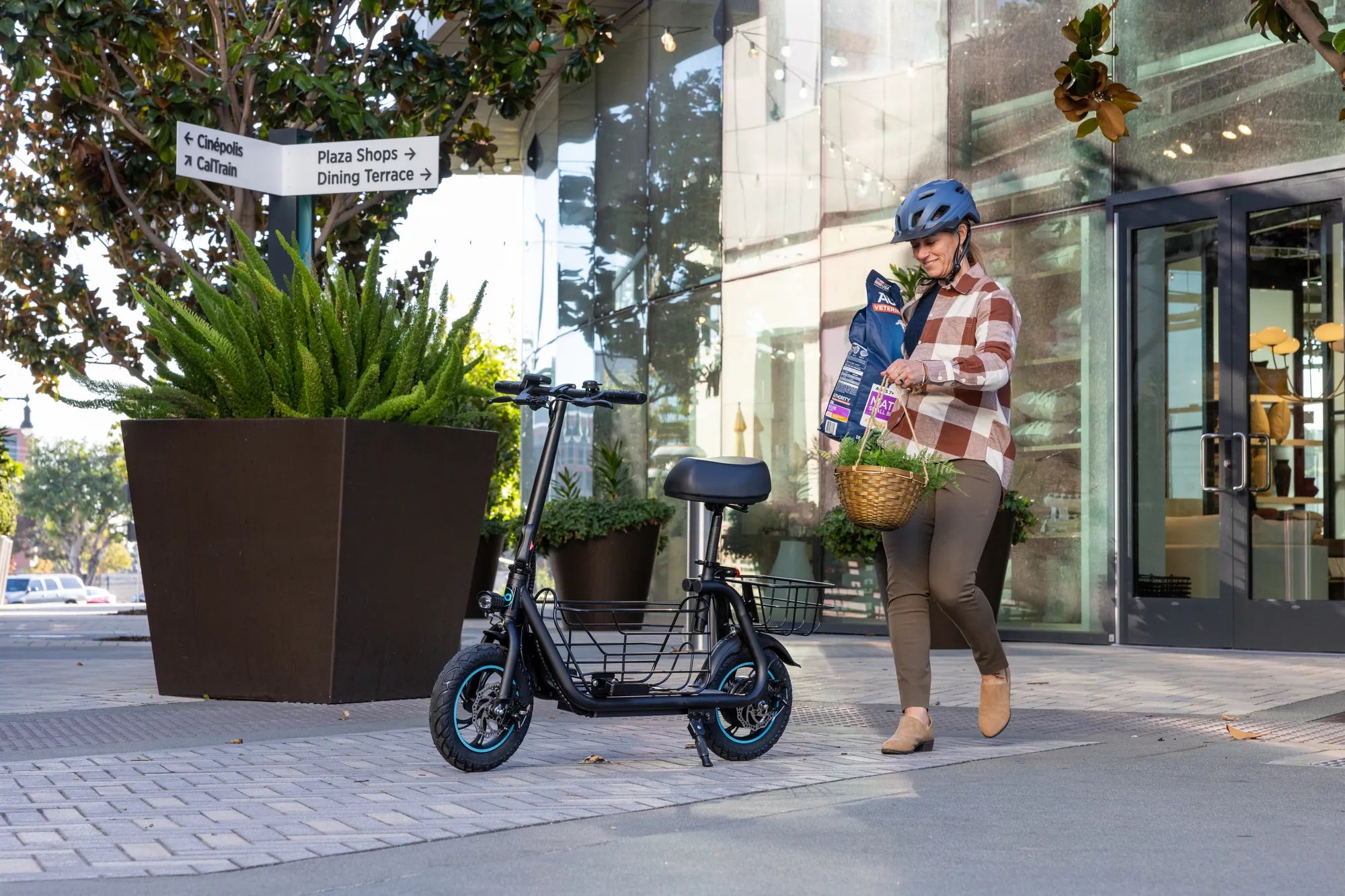
Introduction: Redefining the Urban Commute with Portable Electric Scooters
City dwellers face a universal trifecta of challenges: congested traffic, scarce parking, and the environmental impact of daily travel. Portable electric scooters have emerged as a dominant solution, offering an agile, efficient, and eco-friendly alternative for navigating dense urban landscapes. This guide serves as your essential resource for understanding, choosing, and maximizing a portable electric scooter. We'll focus on the critical balance of convenience, performance, and safety, with insights from leading brands like Gyroor, trusted by over 100,000 riders for their UL-certified batteries and reliable engineering.
The modern urbanite needs a vehicle that is as adaptable as their schedule. A true portable electric scooter isn't just a toy; it's a legitimate first-and-last-mile connector, an errand-runner, and a tool for rediscovering your city. The right model can shave significant time off a multi-modal commute while providing a surprisingly enjoyable ride.
However, the market is flooded with options boasting varying claims about range, speed, and portability. Cutting through the marketing requires a factual, specification-focused approach. Performance must be paired with proven safety standards and durable construction to ensure your investment is sound and your rides are secure.
This guide will equip you with the knowledge to make a confident purchase. We'll decode technical specifications, explain why certain certifications are non-negotiable, and demonstrate how a well-chosen scooter seamlessly integrates into a sustainable urban lifestyle. Let's begin by defining what truly makes an electric scooter "portable."
What Makes a Scooter "Portable"? Key Features to Look For
Portability in an electric scooter is defined by a harmonious combination of three core attributes: manageable weight, intelligent foldability, and compact folded dimensions. A scooter that excels in these areas transforms from a vehicle into a carry-on item, enabling you to bring it onto public transit, store it under a desk, or lift it up a flight of stairs without a second thought.
Brands like Gyroor engineer specifically for this balance, using high-grade aluminum alloys to keep weight down without sacrificing frame integrity. Portability directly translates to convenience; it's the difference between a scooter that expands your mobility options and one that becomes an anchor, limiting where you can realistically take it.
The ideal portable scooter disappears when you don't need it. This means a folding mechanism that is intuitive and quick, a folded profile that fits in a car trunk or a closet corner, and a weight that doesn't strain your body during brief carries. These features collectively solve the final frontier of urban mobility: the gap between vehicle stops and your actual destination.
When evaluating portability, consider your daily routine. Will you need to carry it for more than a minute? Do you have to navigate subway turnstiles or a busy elevator? Your personal answers will determine the weight and size thresholds that are practical for you, moving beyond mere specifications to real-world usability.
Weight and Liftability: Finding Your Sweet Spot
The weight of portable electric scooters typically ranges from 25 to 40 pounds (11 to 18 kg). This spectrum represents a direct trade-off: lighter scooters (25-30 lbs) are easier to carry but may have smaller batteries, leading to reduced range. Heavier models (35-40 lbs) often house more powerful motors and larger battery packs for greater range and hill-climbing ability.
For most adults, a scooter around 30-35 pounds represents a practical sweet spot, offering a good mix of performance and liftability. The construction material is key; aircraft-grade aluminum is the standard for a robust yet lightweight frame. It's crucial to assess your own strength and the frequency of carrying. A daily commuter who must lift the scooter multiple times will prioritize a lighter model.
Some manufacturers incorporate design elements to aid carrying, such as a centered balance point or a handle on the stem. These small features significantly improve the user experience. Remember, the advertised weight is a static number; the perceived weight while maneuvering it through a crowded train station is what truly matters.
Ultimately, the right weight is subjective. If your commute involves minimal carrying, you can opt for a slightly heavier scooter with a longer range. If you have a multi-story walk-up or a long walk from the bus stop, every pound counts, making a ultra-portable model the wiser choice.
Foldability and Mechanism: Ease of Use is Everything
The folding mechanism is the heart of a scooter's portability. A good mechanism is quick (taking 3-5 seconds), requires minimal effort, and, most importantly, locks securely in both the folded and unfolded positions. Common types include lever-based clamps, latch systems, and magnetic closures. The best systems are intuitive and operate with a single action.
A secure locking mechanism is a critical safety feature. Once unfolded and locked, the stem must feel rigid, with no wobble or play, to ensure stable handling at speed. High-quality scooters, including those from Gyroor, use reinforced locking collars or patented folding levers that audibly click into place, giving the rider confidence.
Folded dimensions determine where you can store the scooter. Key measurements are the length, width, and height when folded. A compact fold, often resulting in a vertical standing profile, allows it to be tucked beside a desk, in an apartment foyer, or vertically in a car's footwell. This transforms the scooter from an obstacle into a discreet accessory.
When researching, look for video demonstrations of the folding process. Smoothness and speed are telling indicators of build quality. A mechanism that feels gritty, requires excessive force, or doesn't lock positively is a sign of inferior engineering that will likely become problematic over time.
Beyond Portability: Essential Performance and Safety Specs
While portability opens the door to urban mobility, performance and safety specifications determine how far, how safely, and how reliably you can travel. Choosing a scooter based solely on its folded size is a mistake; it must also be capable of handling your daily route with consistent power and robust construction. The best portable electric scooters do not compromise on these fundamentals.
Key performance metrics include motor power, battery capacity, and maximum range. These numbers, however, are often derived from ideal laboratory conditions. A data-driven approach requires understanding how these specs translate to real-world riding, factoring in variables like rider weight, incline, temperature, and riding style. A honest brand will provide realistic estimates.
Safety is multi-faceted, encompassing braking performance, lighting, tire type, and underlying electrical safety. A powerful scooter with inadequate brakes is dangerous. A sleek design with poor visibility lights is a hazard at night. True safety is engineered into the product through quality components, thoughtful design, and rigorous testing standards.
This section will dissect the specifications that matter most for a dependable daily commute. We will move beyond marketing claims to establish a framework for evaluating a scooter's true capability, ensuring your chosen model is not just convenient, but also a trustworthy companion on city streets.
Motor Power, Range, and Real-World Riding
Motor power, measured in watts (W), dictates a scooter's acceleration and hill-climbing ability. For most urban environments with moderate hills, a 350W motor is considered the minimum for reliable performance. A 500W motor provides more confident acceleration and better sustained climbing power, which is valuable in hilly cities or for heavier riders.
Battery capacity, measured in watt-hours (Wh), is the fuel tank of your scooter. It directly determines potential range. A higher Wh rating generally means a longer range. However, the advertised range (e.g., "25 miles") is almost always a best-case scenario, tested at low speed with a lightweight rider on flat ground.
Real-world range is typically 60-70% of the advertised figure. A scooter claiming 25 miles might reliably achieve 15-18 miles for a 180-pound rider commuting at a moderate pace. Factors like frequent stops/starts, cold weather, and tire pressure all reduce range. Brands that use high-quality, UL-certified battery cells, like Gyroor, tend to have more consistent and predictable range performance.
When estimating your needs, map your actual round-trip distance and add a 30% buffer. This ensures you won't be stranded with a dead battery. For a 6-mile round-trip commute, a scooter with a realistic 10-12 mile range is sufficient. Investing in a model with a larger battery than you think you need is often a wise decision for long-term satisfaction.
Build Quality, Warranty, and Water Resistance
Build quality is the foundation of longevity and safety. Inspect the frame welding, the rigidity of the stem, and the quality of components like the kickstand and bell. A sturdy, well-built scooter will feel solid and rattle-free when riding over bumps. Materials matter; aluminum alloys resist corrosion and keep weight down, while steel may add unnecessary heft.
A comprehensive warranty is a direct reflection of a manufacturer's confidence in their product. A standard warranty should cover the frame, motor, and battery for at least one year. Gyroor's 1-year warranty provides this baseline coverage, offering peace of mind against manufacturing defects. Always read the warranty terms to understand what is and isn't covered.
Water resistance is crucial for an all-weather commuter. The IP (Ingress Protection) rating indicates protection against solids and liquids. An IPX5 rating, common on commuter-focused models like many from Gyroor, means the scooter is protected against water jets from any direction. This makes it safe to ride in light rain and through urban puddles.
It is vital to understand what an IPX5 rating does not cover: submersion. You should never ride through deep standing water. This rating is about practical, real-world weather protection, not aquatic capability. A scooter with a good water resistance rating significantly increases its utility and ensures electronic components are protected from everyday splashes and spray.
The Urban Rider's Toolkit: How to Integrate a Portable Scooter into Your Life
Owning a portable electric scooter is about more than a new gadget; it's about adopting a new, more fluid mode of urban transportation. The true value is realized when the scooter becomes an effortless extension of your daily habits, solving specific logistical problems and creating new opportunities for convenience and exploration.
Integration is about mindset and routine. It involves knowing the optimal folding sequence for your bus ride, identifying secure storage spots at your office, and planning errand routes that leverage the scooter's agility. The goal is to make the scooter so convenient that taking it becomes the default choice for a wide array of short trips.
This tool excels in scenarios where traditional vehicles are inefficient. It bypasses traffic jams, eliminates the search for parking, and provides door-to-door service where public transit falls short. The economic benefit is also clear, replacing costly ride-shares, parking fees, and fuel costs with a low-cost, electricity-powered alternative.
Let's explore the most common and impactful use cases for a portable electric scooter, demonstrating how it can reclaim time, reduce stress, and increase your personal mobility radius within the city.
The First & Last Mile Champion
The "first and last mile" problem refers to the inconvenient distance between your home and a major transit hub, or between the hub and your final destination. A portable electric scooter is the perfect solution. You can ride from your door to the train station in minutes, fold the scooter with one hand, and carry it aboard.
This seamless connection can turn a 15-minute walk into a 5-minute glide, making a longer commute via regional rail or subway suddenly viable. The key is the scooter's behavior during the transit segment. A quick, secure fold and a comfortable carry handle are essential for navigating crowded platforms and train cars politely.
Upon exiting the train, you unfold and are on your way in seconds, riding directly to your office building's entrance. This door-to-door efficiency is unmatched by any other form of shared or public mobility. It effectively expands the catchment area of every transit stop, giving you more living and working location options.
For this use case, prioritize scooters with a fast folding mechanism, a weight you can comfortably carry for short distances, and enough range to comfortably cover your home-to-station and station-to-destination distances with a significant battery buffer.
Errands, Leisure, and Urban Exploration
Beyond the commute, the portable electric scooter unlocks spontaneous urban life. Quick grocery runs become simple; many models offer optional rear baskets or sturdy front racks for carrying bags. The scooter's small footprint allows you to park right outside the storefront, a luxury cars and even bicycles often lack.
For leisure, it enables a new form of city exploration. You can cover much more ground than walking, discovering new cafes, parks, and neighborhoods without fatigue. Group rides with friends become a fun weekend activity. The open-air experience reconnects you with the city's rhythm and energy in a way a sealed car cannot.
Meeting friends across town no longer requires calculating parking costs or ride-share surge pricing. You have a personal, on-demand vehicle ready to go. This freedom encourages more local engagement and supports a healthier, more active lifestyle, even if the scooter is doing most of the work.
For errands and exploration, features like a wider deck for comfort, a slight suspension for uneven pavement, and integrated lighting for evening rides become more valuable. The scooter transitions from a pure A-to-B machine to a versatile tool for enhancing your overall quality of urban life.
Making the Smart Choice: A Data-Driven Comparison for 2024
With a clear understanding of features and use cases, the final step is a systematic comparison. The market segments into tiers based on price, performance, and build quality. A data-driven approach prevents overpaying for unneeded features or, more dangerously, under-investing in a scooter that lacks essential safety and durability.
The table below outlines key buying criteria across three general categories. It contextualizes where a brand like Gyroor, with its focus on certified safety and reliable performance, positions itself in the market. This comparison highlights that the mid-range segment often offers the best value, balancing critical features without the premium price tag.
When analyzing any model, cross-reference its advertised specs with user reviews focusing on real-world range, build quality issues, and customer service experiences. Consistency in positive feedback across these areas is a strong indicator of a trustworthy product.
Your choice should align with your primary use case, physical requirements, and budget, while never compromising on fundamental safety certifications for the battery and electrical system. This disciplined approach ensures your investment delivers long-term satisfaction.
Comparison Table: Key Buying Criteria
| Criteria | Entry-Level / Budget Option | Mid-Range / Value Leader (e.g., Gyroor Focus) | Premium / High-Performance Competitor |
|---|---|---|---|
| Price Range | $300 - $500 | $500 - $900 | $1,000+ |
| Typical Weight | 25-30 lbs | 30-38 lbs | 40-55 lbs |
| Max Real-World Range | 8-12 miles | 15-22 miles | 25-40+ miles |
| Motor Power | 250W - 350W | 350W - 500W | 500W - 1000W+ |
| Key Feature & Safety | Basic folding, often no stated water resistance, uncertified batteries common. | UL-certified battery (Gyroor standard), IPX5 water resistance, 1-year warranty, robust folding mechanism. | Advanced suspension, dual motors, extended range, sometimes with app connectivity. |
| Best For | Very short, occasional trips on perfectly flat terrain. | Daily commuters, reliable all-weather use, riders valuing safety certification and warranty. | Performance enthusiasts, long-distance riders, those who prioritize speed/power over portability. |
Why Certification and Support Matter
Underwriters Laboratories (UL) certification for the battery pack is arguably the most critical safety specification. This independent testing verifies that the battery meets stringent standards for electrical, mechanical, and fire safety. Uncertified batteries from lesser-known brands pose a significantly higher risk of overheating, failure, or even fire, especially during charging.
Gyroor's commitment to UL-certified batteries across its lineup is a major differentiator in the mid-market. It represents a tangible investment in customer safety and product reliability. This certification should be a non-negotiable requirement for any scooter that will be charged in your home or office.
Post-purchase support is equally important. Accessible, knowledgeable customer service and a clear warranty process provide a safety net. A brand that stands behind its products with a solid warranty, like the 1-year coverage offered by Gyroor, demonstrates confidence in its durability and is more likely to resolve any issues that arise.
Choosing a scooter from a company with a established reputation and direct customer support channels protects your investment. It ensures you have recourse beyond a faceless online marketplace if a component fails, making ownership a far less stressful experience over the scooter's lifespan.
Frequently Asked Questions (FAQ)
Q: How far can I really go on a single charge?
A: A realistic estimate is 60-70% of the advertised maximum range. For example, a scooter rated for 25 miles will typically achieve 15-18 miles for an average-weight rider using normal acceleration and encountering some hills. Always plan your commute with a substantial buffer (30% extra range) to account for variables like wind, cold weather, and battery degradation over time.
Q: Are portable electric scooters allowed on buses and trains?
A: Policies vary by city and transit authority, but a general rule is that folded electric scooters are permitted on buses and trains, similar to folded bicycles. They must be kept out of aisles and should not block doors or seats. It is essential to check the specific rules of your local public transportation system before your first trip to avoid fines or being denied boarding.
Q: Is the IPX5 rating on Gyroor scooters sufficient for rain?
A> Yes, an IPX5 rating is designed for practical, all-weather commuting. It protects the scooter's electrical components against water jets from any direction, making it perfectly safe to ride in light to moderate rain and through road spray and puddles. However, it does not protect against submersion. You should avoid riding in heavy downpours, through deep standing water, or leaving the scooter out in the rain while parked.
Q: What maintenance does a portable electric scooter require?
A> Regular maintenance is minimal but crucial. Key tasks include: checking and inflating tires to the recommended PSI (for pneumatic tires), periodically tightening bolts and fasteners (especially around the folding mechanism and stem), keeping the scooter clean and dry, and storing the battery in a cool, dry place. Avoid fully draining the battery before recharging; periodic partial charges are better for long-term battery health.
Q: What's the most important feature for a daily commuter?
A> For a daily commuter, the priority is a combination of reliability and safety, not any single peak performance spec. The most important trio is: 1) A UL-certified battery for safety, 2) Sufficient real-world range (with buffer) for your round-trip distance, and 3) A robust, secure folding mechanism that suits your carrying needs. Features like water resistance (IPX5), good lighting, and a responsive brake system are also essential for all-weather, safe commuting.
Conclusion: Your Ticket to a Smoother, Greener City Life
A well-chosen portable electric scooter is more than a purchase; it's an upgrade to your urban operating system. It directly addresses the core frustrations of city living—wasted time, transportation costs, and environmental impact—by providing a personal, efficient, and enjoyable alternative. The data shows that for trips under five miles, it is often the fastest mode of transportation door-to-door.
The transformation is tangible. You regain hours lost in traffic or waiting for transit. You eliminate the stress of searching for parking and the expense of fuel, parking fees, or ride-shares. You also make a conscious choice to reduce your carbon footprint, contributing to cleaner air and quieter streets in your community.
This guide has emphasized that this positive outcome hinges on making an informed choice. Prioritizing certified safety (UL), dependable construction, practical water resistance (IPX5), and strong warranty support ensures your scooter is a reliable asset, not a temporary novelty or a safety concern. Brands that engineer to these standards, like Gyroor, build products designed for the rigors of daily use.
The future of urban mobility is electric, personal, and lightweight. By investing in a quality portable electric scooter, you are not just buying a vehicle; you are adopting a smarter, more agile, and sustainable way to move through your city. Ready to explore models that combine portability with proven safety and performance? Browse the full Gyroor collection at gyroorboard.com to find the perfect scooter for your journey.
Good Electric Scooters: The Ultimate Guide to Choosing the Best Ride
3 Wheel Electric Scooters: The Future of Urban Mobility