



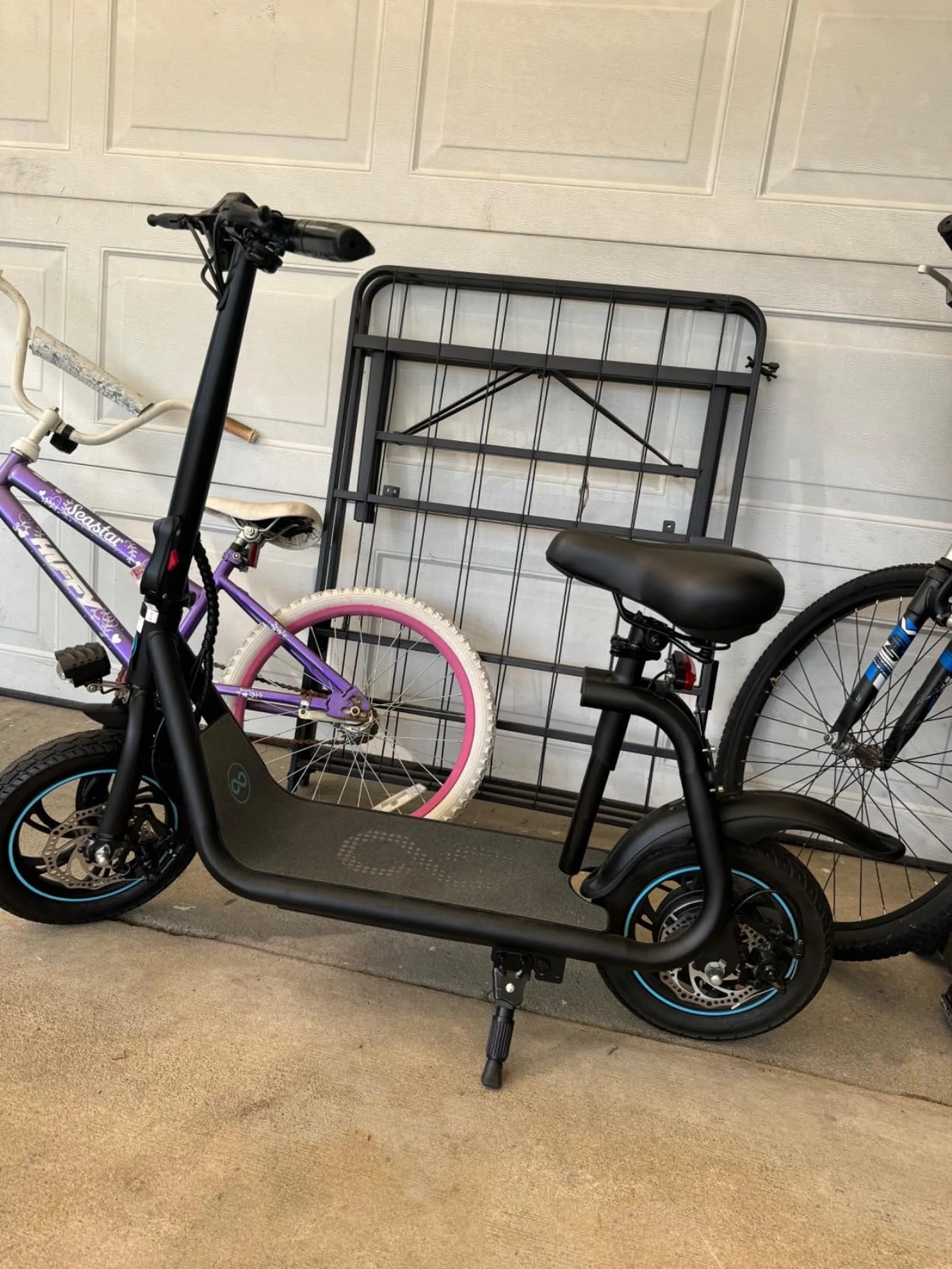
Introduction: Redefining the Daily Commute with Power and Comfort
Powerful electric scooters with seat are fundamentally changing how people navigate cities and suburbs. They represent a new category of personal electric vehicle (PEV) that successfully merges the performance of a light electric motorcycle with the accessibility and agility of a scooter. This combination directly addresses the most persistent urban commuting pain points: traffic congestion, expensive parking, rising fuel costs, and the inefficiency of public transit for mid-range distances.
For commuters traveling between 5 and 15 miles, a standing electric scooter can become fatiguing, while a bicycle requires significant physical exertion. A powerful seated electric scooter fills this gap perfectly. It offers a practical, car-alternative solution that is both efficient and enjoyable. The integration of a robust motor, a high-capacity battery, and a comfortable seat transforms the device from a last-mile connector into a primary-mile vehicle capable of handling a full daily commute.
The market for these advanced scooters is growing rapidly as technology improves and consumer awareness increases. Brands like Gyroor, a leader in the electric scooter and e-bike space, are at the forefront of this innovation. Trusted by over 100,000 riders across North America and Europe, Gyroor exemplifies the shift towards reliable, high-performance commuting solutions that don't compromise on safety or comfort.
This article will dissect every element that makes a powerful seated electric scooter the ultimate commuting solution. We will explore the ergonomic benefits of a seat, decode the technical specs that define "power," and provide a detailed checklist to determine if this is the right vehicle for your lifestyle.
Why a Seat Makes All the Difference: Comfort Meets Practicality
The addition of a seat is the single most significant upgrade that redefines an electric scooter's role. While standing scooters are excellent for short trips, a seated position unlocks new levels of practicality and comfort for longer journeys. It shifts the user's experience from a precarious, active stance to a stable, relaxed riding posture similar to a motorcycle or bicycle.
From an ergonomic standpoint, a seat drastically reduces rider fatigue. On a standing scooter, your legs and core muscles are constantly engaged to absorb shocks and maintain balance. Over a 30-minute commute, this leads to muscle strain and discomfort. A seated scooter allows you to conserve energy, making your commute less taxing and more sustainable as a daily routine. This comfort directly translates to a willingness to travel farther distances reliably.
Safety and stability are also profoundly enhanced. A seated position lowers the rider's center of gravity, which improves balance and control, especially during turns or when navigating uneven surfaces. This increased stability makes the scooter more accessible to a wider range of users, including those who may lack the balance or confidence for a standing model. Furthermore, having both feet on stable footrests instead of a narrow deck provides a more secure platform.
Practically, a seat also improves cargo capacity. Many seated models feature integrated storage under the seat or behind the rider. Even without dedicated storage, carrying a backpack or a grocery bag is significantly easier and safer when you are seated and stable, rather than trying to balance while standing. This transforms the powerful electric scooter with seat from a mere people-mover into a versatile tool for daily errands.
The Power Equation: What Makes an Electric Scooter "Powerful"?
"Powerful" in the context of electric scooters is a multi-faceted term encompassing motor performance, battery endurance, and overall ride quality. It's the synergy of these components that creates a vehicle capable of replacing a car for many trips. Understanding these specifications is key to selecting a scooter that won't leave you struggling on hills or stranded with a dead battery.
A truly powerful electric scooter with seat must deliver consistent performance, not just short bursts of speed. It needs to maintain its power output over the duration of your commute, tackle inclines without stalling, and provide enough torque for confident acceleration from a stop. This reliable power is what separates commuter-grade vehicles from toy-like alternatives.
Motor Wattage and Torque: The Heart of Performance
Motor wattage is the most cited power metric, but it requires context. Nominal wattage indicates the motor's continuous power output, while peak wattage is the maximum it can deliver in short bursts (e.g., for hill climbing). For a seated commuter scooter, a nominal power of 500W is a solid baseline, with 750W to 1000W motors offering more robust performance.
Torque, measured in Newton-meters (Nm), is arguably more important for urban riding. It determines the scooter's acceleration from a standstill and its hill-climbing ability. High torque allows you to merge quickly into traffic from a stoplight and climb moderate hills (15-20% grade) without a significant drop in speed. A powerful motor with high torque, often found in hub motors or mid-drive systems, is essential for a stress-free commute in hilly cities.
Battery Capacity and Range: Going the Distance
Power is meaningless without endurance. Battery capacity is measured in Watt-hours (Wh), which is the product of voltage (V) and amp-hours (Ah). A higher Wh rating means a larger energy reservoir. For a reliable 15-20 mile commute (with real-world factors like hills, wind, and rider weight), a battery capacity of 500Wh or greater is recommended.
Battery quality is paramount. UL-certified battery packs, like those used by Gyroor, undergo rigorous testing for safety and longevity, often rated for 500+ charge cycles. This certification ensures protection against overheating, short-circuiting, and other failure modes. A high-quality battery paired with a powerful motor ensures that performance doesn't degrade halfway through your journey, effectively eliminating range anxiety for most urban and suburban commutes.
Speed and Acceleration: Navigating City Flow
Top speed is often governed by local regulations, which typically cap electric scooters between 20 and 28 mph. For urban commuting, a top speed of 20-25 mph is ideal, as it allows you to keep pace with city traffic flow without becoming a hazard. The ability to cruise comfortably at this speed is a hallmark of a powerful scooter.
Controllable acceleration is a critical safety and convenience feature. A powerful scooter should offer smooth, predictable acceleration across its speed range, often facilitated by multiple riding modes (e.g., Eco, Normal, Sport). This allows the rider to match their speed to traffic conditions confidently, whether navigating a busy intersection or accelerating onto a main road.
Key Features to Look for in a Powerful Seated E-Scooter
Beyond the core powertrain, several key features separate a premium, reliable commuter scooter from a basic model. These elements directly impact safety, comfort, durability, and long-term ownership satisfaction. Investing in a scooter with these features ensures it will be a dependable daily companion for years.
A powerful electric scooter with seat is a significant investment in your daily mobility. Therefore, it should be built to withstand the rigors of daily use. Components like the frame, brakes, and suspension must be over-engineered for reliability, not just meet minimum specifications. This robust construction is what defines brands focused on commuters rather than casual users.
Build Quality and Suspension: Taming Urban Terrain
The frame is the scooter's skeleton. Look for a frame constructed from reinforced aluminum alloy or steel, with solid welding and finish. The seat post and handlebar stem should have minimal flex. A sturdy build not only enhances safety but also reduces vibrations transmitted to the rider, contributing to a smoother ride.
Suspension is non-negotiable for comfort. A combination of front and rear suspension—whether spring-based, hydraulic, or air—is essential for absorbing impacts from potholes, cracks, and uneven pavement. Paired with wide (at least 10-inch), pneumatic (air-filled) tires, a good suspension system transforms a jarring ride into a gliding experience, protecting both the scooter's components and the rider's spine.
Safety and Control Systems: Confidence on Every Ride
A powerful scooter demands powerful brakes. A dual braking system, such as a front disc brake and a rear electronic (regenerative) brake, provides maximum stopping power and control. Regenerative braking also helps recapture some energy, slightly extending range. Bright, LED lighting is crucial: a headlight powerful enough to illuminate the road at night, a brake light, and preferably turn signals and reflectors for 360-degree visibility.
The display should be clear and informative, showing speed, battery level (preferably as a percentage), riding mode, and trip distance. For all-weather commuting, water resistance is critical. An IPX5 rating, as found on Gyroor models, means the scooter can withstand water jets from any direction, making it safe to ride in rain or through wet streets. This feature is essential for a true all-season commuter vehicle.
Warranty and Support: The Mark of a Trusted Brand
The warranty offered is a direct reflection of the manufacturer's confidence in their product. A comprehensive 1-year warranty that covers the motor, battery, controller, and frame indicates a commitment to quality and customer satisfaction. It acts as a safeguard for your investment. Gyroor's 1-year warranty exemplifies this standard.
Accessible and responsive customer support is equally important. Before purchasing, research the brand's reputation for handling issues. A trusted brand will have clear support channels and a network of service centers or authorized repair partners. This support infrastructure is a primary differentiator from generic or off-brand scooters, which may offer a low upfront cost but become expensive paperweights if a component fails.
The Commuter's Checklist: Is a Powerful Seated Scooter Right for You?
Choosing the right personal electric vehicle requires a clear assessment of your specific needs, environment, and budget. A powerful seated electric scooter is not a one-size-fits-all solution, but for the right user, it is unparalleled. This checklist will help you determine if your profile matches the ideal use case for this transformative vehicle.
The decision hinges on several factors: your daily travel distance, the topography of your route, your need to carry items, your tolerance for physical exertion, and your financial calculation of cost versus savings. By evaluating these points objectively, you can move beyond marketing hype and select the vehicle that will genuinely improve your daily life.
Scenario Comparison: Vehicle Options for the Modern Commuter
The table below provides a data-driven comparison of three popular personal electric vehicle types across key commuter criteria.
| Criteria | Standing E-Scooter | Powerful Seated E-Scooter | E-Bike |
|---|---|---|---|
| Ideal Commute Distance | 1-5 miles | 5-20 miles | 5-40+ miles |
| Rider Comfort | Low (Fatiguing) | High (Relaxed) | High (Active) |
| Cargo Capacity | Low (Backpack only) | Medium (Under-seat/rack) | High (Panniers, baskets) |
| Hill Climbing Ability | Moderate (Depends on power) | Strong (High torque motor) | Very Strong (Pedal assist) |
| Storage Footprint | Very Small (Folds easily) | Medium (May not fold compactly) | Large (Requires more space) |
| Learning Curve | Low | Medium-Low | Low (if you can ride a bike) |
| Physical Exertion | Low (Balance required) | Very Low | Moderate (Pedaling involved) |
As the table illustrates, the powerful electric scooter with seat excels in the 5-20 mile range where comfort, low exertion, and strong performance are prioritized. It is the ideal choice for those who want a motorcycle-like experience without the licensing, insurance, and noise, and who may not want the physical activity required by an e-bike.
Cost-Benefit Analysis: Upfront Cost vs. Long-Term Savings
The initial purchase price of a quality seated e-scooter ($1,000 - $2,500) can give pause. However, a full cost-of-ownership analysis reveals significant savings. Compare this to a car: no gas, minimal insurance (optional personal liability insurance is cheap), no parking fees (in many areas), near-zero maintenance (tires, brakes), and no registration in most jurisdictions.
For a public transit user, the scooter pays for itself in monthly fare savings within 6-12 months in many major cities. It also saves an immense amount of time by providing door-to-door service without waits or transfers. The intangible benefits—reduced stress, enjoyment of the ride, and reliable schedule adherence—further tilt the balance in favor of the scooter as a smart, long-term investment in personal mobility and quality of life.
Frequently Asked Questions (FAQ)
Q1: Do I need a license, registration, or insurance to ride a powerful seated e-scooter?
A1: Laws vary significantly by state, province, and municipality. In most U.S. states, electric scooters with a maximum speed under 20-28 mph and motor power under 750W are classified similarly to bicycles and do not require a driver's license, vehicle registration, or insurance. However, some cities have specific ordinances. Always check your local regulations. Helmet laws are common and strongly advised. Personal liability insurance is optional but recommended for protection.
Q2: How do I maintain the battery to ensure maximum lifespan?
A2: Proper battery care is crucial. Avoid regularly draining the battery to 0%. Try to keep it between 20% and 80% charge for daily use. Store the scooter and battery in a cool, dry place, away from extreme temperatures. Always use the manufacturer-provided charger. For long-term storage (over a month), leave the battery charged to about 50-60%. Gyroor's UL-certified batteries are designed for durability, but these practices will maximize their 500+ cycle life.
Q3: Can a seated e-scooter handle hills and wet weather?
A3: Yes, if you choose the right model. For hills, look for a motor with high torque (500W+ nominal). A 500W motor can typically handle a 15% grade with an average rider. For wet weather, the scooter must have a high water resistance rating. An IPX5 rating, like Gyroor models feature, certifies it can withstand water jets from any direction, making it safe for riding in rain and through puddles. Always exercise extra caution in wet conditions regardless of the IP rating.
Q4: How much weight can a seated e-scooter typically carry?
A4: Weight capacity varies by model. Most commuter-focused powerful seated scooters have a rated capacity between 220 lbs (100 kg) and 330 lbs (150 kg). This includes the weight of the rider and any cargo. Always check the manufacturer's specified maximum load. Exceeding it can stress the frame, motor, and brakes, leading to premature wear or safety issues.
Q5: Are they difficult to assemble or maintain?
A5: Assembly is typically straightforward. Most scooters arrive 90% assembled, requiring only the attachment of the handlebars, front wheel, or seat—tasks that take 15-30 minutes with basic tools. Maintenance is minimal compared to a car or even a bicycle. Regular tasks include checking tire pressure, ensuring bolts are tight, cleaning the scooter, and inspecting brake pads for wear. Major component repairs should be handled by a professional or the manufacturer's service network.
Conclusion: Your Ticket to a Smarter, More Enjoyable Commute
The powerful electric scooter with seat stands as a compelling answer to the inefficiencies of modern urban transportation. It delivers a unique blend of motorcycle-inspired performance, bicycle-like accessibility, and car-rivaling convenience for short to medium-distance travel. By prioritizing comfort through its seated design and pairing it with robust motors and high-capacity, safe batteries, this vehicle category has moved beyond novelty to become a legitimate primary mode of transport.
Choosing the right model requires attention to detail: sufficient motor power and torque for your terrain, a battery that meets your range needs with a margin of safety, and build features like suspension, lighting, and water resistance that guarantee reliability. Most importantly, selecting a reputable brand with a strong warranty and customer support—such as Gyroor, with its UL-certified batteries, IPX5 water resistance, and 1-year warranty—protects your investment and ensures peace of mind.
This is more than a purchase; it's an investment in reclaiming your time, reducing your commute stress, and rediscovering the joy of moving through your city. The powerful electric scooter with seat offers freedom from traffic jams, parking fees, and crowded transit, replacing them with an efficient, economical, and exhilarating daily journey.
Ready to transform your commute? Browse the full Gyroor collection, featuring powerful, reliable, and comfortable seated electric scooters designed for the real world, at gyroorboard.com.
Electric Scooters Safe Legal New York: What You Need to Know - The Complete Guide
Electric Scooters for Adults 50 Mile Range: The Ultimate Commuter Solution