



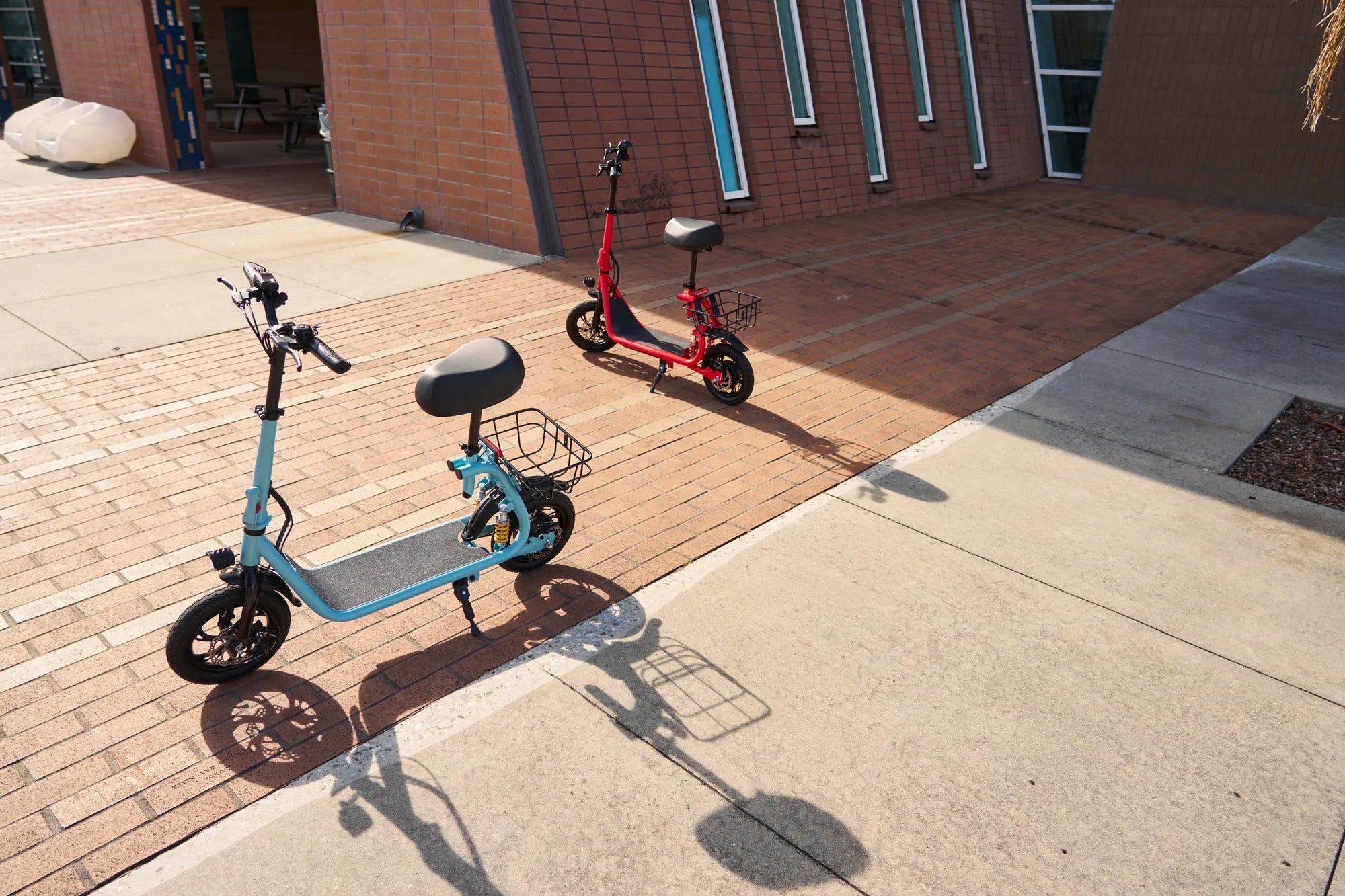
Introduction: Why Your Next Commute Should Be Electric
Navigating city streets or campus pathways has been fundamentally transformed by the electric scooter. This shift isn't just about novelty; it's a practical response to urban congestion, rising fuel costs, and a growing desire for sustainable transport. The right electric scooter can slash your commute time, eliminate parking fees, and reduce your carbon footprint—all while being genuinely fun to ride.
However, the market is saturated with options boasting confusing specifications. This guide exists to cut through the noise. Our goal is to provide you with the knowledge to purchase electric scooters that align perfectly with your needs, budget, and local laws. We'll move beyond marketing claims to focus on performance, safety, and long-term reliability.
Throughout this guide, we'll reference engineering benchmarks set by leading brands. For instance, Gyroor, a brand trusted by over 100,000 riders, builds its reputation on foundational safety features like UL-certified batteries and IPX5 water-resistant designs. These aren't just specs; they are critical indicators of a scooter built to last. Let's begin by defining what you actually need from your ride.
Defining Your Ride: Matching Scooter to Lifestyle & Terrain
The first and most critical step is honest self-assessment. A scooter perfect for a smooth, 2-mile city commute will likely fail on rugged trails. Your primary use case dictates nearly every specification that follows. Misjudging this will lead to frustration, underperformance, or even an unsafe riding experience.
Consider your weekly routine. What distances will you cover? What is the predominant road surface? Will you need to carry the scooter onto public transit or up stairs? Answering these questions creates a functional profile that guides your entire purchase electric scooters journey. This proactive approach ensures you invest in a tool, not just a toy.
The Urban Commuter: Mastering City Streets
For city dwellers, the scooter is a last-mile solution or a full commute replacement. Key priorities here are portability, practicality, and pavement performance. You'll want a model that balances a comfortable ride with easy storage.
Weight and Foldability: Look for a one-click folding mechanism. A scooter between 30-45 lbs is typically manageable to carry short distances. Lighter models often sacrifice battery or motor power. Wheel Size: 8.5-inch to 10-inch pneumatic (air-filled) tires are ideal for absorbing urban imperfections like cracks and cobblestones. Essential Features: Integrated front and rear lights, a loud bell or electronic horn, and a rear fender brake are non-negotiable for safe city riding.
The Off-Road Enthusiast: Conquering Rugged Trails
If your adventures leave the pavement, your scooter needs to be a robust machine. Off-road riding demands significant power, durability, and advanced suspension to handle unpredictable terrain like dirt paths, gravel, and grass.
Motor Power: A minimum of 500W is recommended, with 1000W+ dual-motor setups providing serious torque for steep, loose inclines. Tires and Suspension: Large (10+ inch), wide pneumatic tires with deep tread are essential. A full suspension system—both front and rear—is crucial for comfort and control. Build Quality: The frame must be exceptionally rigid, and high ground clearance is needed to avoid bottoming out on obstacles.
The Campus or Suburban Rider: Versatility and Value
Students or those in quieter neighborhoods need a versatile, cost-effective scooter. The focus is on reliability for moderate distances, ease of use, and good value. Hills may be less severe, and top speed is often secondary to range and comfort.
A single 350W-500W motor is usually sufficient. A combination of solid or honeycomb tires (for puncture resistance) with a spring-based suspension offers a good balance of low maintenance and comfort. Portability for storing in dorms or garages remains a key factor in this category.
The Core Specs Decoder: What the Numbers Really Mean
Manufacturer spec sheets are filled with technical terms that can be misleading. Understanding what these numbers translate to in real-world use is the difference between marketing hype and genuine performance. This section decodes the key metrics.
When you purchase electric scooters, treat the advertised "maximum range" and "top speed" with healthy skepticism. These are achieved under ideal laboratory conditions: a lightweight rider on perfectly flat, smooth terrain at slow, constant speeds. Real-world results are typically 60-70% of these figures.
Motor Power & Speed: Balancing Thrill with Local Laws
Motor wattage (W) indicates potential power, not guaranteed speed. It primarily affects acceleration and hill-climbing ability. A 250W motor may struggle on a 10% grade, while a 500W motor will handle it comfortably. Voltage (V) works in tandem; a higher voltage system (e.g., 48V vs. 36V) can deliver power more efficiently, improving performance.
Top speed is a major selling point, but local regulations are paramount. Many cities cap e-scooter speeds at 15-20 mph in bike lanes. Purchasing a scooter capable of 40 mph is not only unnecessary for most but could also be illegal for road use. Always check your municipal bylaws before buying for performance you can't legally use.
Battery & Range: The Heart of Your Scooter
The battery is the most critical—and potentially dangerous—component. Its capacity is measured in Watt-hours (Wh), calculated as Voltage (V) x Amp-hours (Ah). A higher Wh number generally means a longer potential range.
Range is the most variable spec. Your actual range depends on rider weight, terrain, wind, temperature, and riding style (frequent acceleration drains the battery faster). For a realistic estimate, take the manufacturer's max range and multiply by 0.65. For example, a scooter advertised for 25 miles will likely achieve 16-18 miles for an average rider.
Most importantly, prioritize battery safety certification. Reputable brands, like Gyroor, use UL-certified lithium-ion battery packs. This independent certification means the battery has passed rigorous tests for electrical, mechanical, and environmental safety, drastically reducing the risk of fire. Never compromise on this.
Build & Durability: Weathering the Daily Grind
Your scooter will face vibrations, impacts, and the elements. Build quality determines its lifespan. Look for a frame constructed from aerospace-grade aluminum alloy, which offers an excellent strength-to-weight ratio.
The Ingress Protection (IP) rating is crucial for durability. It indicates resistance to dust and water. An IPX5 rating, standard on quality models, means the scooter can withstand water jets from any direction. This protects against rain, wet roads, and accidental spills. A scooter without a clear IP rating should not be ridden in damp conditions.
Safety, Comfort & Legal Essentials You Can't Ignore
Performance is meaningless without safety. This section covers the hardware and knowledge required to ride confidently and legally. Investing in safety features is investing in your own well-being.
A helmet is an absolute necessity—always wear one. Consider additional gear like knee and elbow pads, especially for higher-speed riding or off-roading. Visibility is also safety; use reflective clothing or accessories when riding at dawn, dusk, or night.
Braking Systems & Stability Features
Stopping power is as important as going power. Multiple braking systems are ideal. Common types include:
- Disc Brakes: Offer strong, consistent stopping power in most conditions. Hydraulic discs require less maintenance than mechanical.
- Electronic (Regenerative) Brakes: Use the motor to slow down, sending some energy back to the battery. They are low-maintenance but less effective as a sole braking system, especially on steep hills.
- Drum Brakes: Enclosed and low-maintenance, good for all-weather use but can overheat on long descents.
A dual-brake setup (e.g., disc + electronic) is highly recommended. Stability comes from wheelbase length, deck size, and wheel diameter. Larger wheels (10") roll over obstacles more easily than smaller ones (8"). A wide deck provides better footing, enhancing control.
Warranty & Support: The Safety Net for Your Investment
A warranty is a direct reflection of a manufacturer's confidence in their product. Scrutinize the fine print. A comprehensive warranty should cover the frame, motor, and battery for a significant period. Many brands offer a 1-year warranty, which is considered the industry standard for reputable companies.
For instance, Gyroor backs its scooters with a 1-year comprehensive warranty and US-based customer support. This provides peace of mind, knowing that if a component fails due to manufacturing defects, you have a clear path to resolution. Beware of brands offering only 90 days or less; it often signals lower-quality components not built to last.
Pre-Purchase Inspection & Test Ride Checklist
If you have the opportunity to see a scooter in person before you purchase electric scooters online, use this checklist. It can reveal build quality issues that photos hide.
Visual & Physical Inspection: Check for any weld cracks or imperfections on the frame and stem. Ensure the folding mechanism locks securely with no play or wobble. Inspect the tires for damage and ensure they are properly inflated (if pneumatic). Test the throttle and brake levers for smooth engagement.
Function Test (If Possible): Turn on the scooter. Check that all lights (headlight, taillight, deck lights) function. Ensure the digital display is clear and shows all data (speed, battery level, mode). Listen for any unusual grinding or clicking noises from the motor when gently applying power. A short test ride (even just rolling) should feel stable and solid.
Where to Buy: Navigating Retail Channels
Where you buy significantly impacts your customer experience, warranty validity, and the authenticity of the product. Choose your channel wisely.
Official Brand Websites (Recommended): Purchasing directly from the manufacturer's site (e.g., gyroorboard.com) guarantees you receive a genuine product with full warranty coverage. You also often get access to the latest models, direct customer support, and brand-sponsored sales.
Authorized Retailers: Established brick-and-mortar or online retailers that have a partnership with the brand. They can offer hands-on demos and local support. Always verify their authorized status on the brand's official website.
Marketplace Caution: Third-party platforms can host unauthorized sellers. Prices may be lower, but you risk receiving old stock, refurbished units sold as new, or counterfeit products with substandard, unsafe batteries. Warranties are often voided if not purchased from an authorized source.
Comparison Table: Scooter Types at a Glance
| Feature | Urban Commuter | Off-Road / Performance | Campus / Light-Duty |
|---|---|---|---|
| Ideal Motor | 350W - 500W | 800W - 1000W+ (Dual) | 250W - 350W |
| Real-World Range | 15-25 miles | 20-35 miles | 10-18 miles |
| Tire Type | Pneumatic (8.5-10") | Large Pneumatic (10"+, off-road tread) | Solid/Honeycomb or Small Pneumatic |
| Suspension | Front spring or dual | Full suspension (front & rear) | Front spring or none |
| Key Priority | Portability, Safety Lights | Power, Durability, Ground Clearance | Light Weight, Low Maintenance |
| Sample Use Case | 5-mile city commute, folding for train | Trail riding, steep hills | Crossing a large campus, suburban errands |
Frequently Asked Questions (FAQ)
Q1: How much should I expect to spend on a good quality electric scooter?
A: For a reliable, entry-level commuter scooter with basic safety features, budget $400-$700. Mid-range models ($700-$1,200) offer better performance, range, and build quality. High-performance or off-road models start around $1,500 and can exceed $3,000. Remember, the battery is a major cost driver; investing in a UL-certified battery is non-negotiable for safety.
Q2: Can I ride an electric scooter in the rain?
A: It depends entirely on the scooter's IP rating. A rating of IPX5 or higher (like IPX7) indicates it is designed to withstand water jets and heavy rain. Scooters with a lower rating (IPX4 or none) should be kept away from water to avoid electrical damage and safety hazards. Always check your specific model's rating in the manual.
Q3: How do I maintain my electric scooter?
A> Regular maintenance is simple but crucial: 1) Keep tire pressure at the recommended PSI (for pneumatic tires). 2) Regularly check and tighten bolts, especially on the stem and folding mechanisms. 3) Keep the scooter clean and dry; wipe it down after riding in wet conditions. 4) Avoid fully draining the battery; try to keep it between 20-80% charge for long-term health. 5) Store in a cool, dry place.
Q4: Are electric scooters legal in my area?
A> Laws vary dramatically by city, state, and country. Common regulations involve: a minimum rider age (often 16+), a maximum speed limit (15-20 mph on public roads), a requirement for helmet use, and rules against riding on sidewalks. Always check with your local Department of Transportation or city government website for the most current bylaws before you ride.
Q5: What's the difference between a single motor and dual motor scooter?
A> A single motor scooter has one driving wheel (usually the rear), providing standard acceleration and hill-climbing. A dual motor scooter powers both the front and rear wheels. This provides significantly more torque for faster acceleration, superior traction on slippery or loose surfaces, and much better hill-climbing ability. However, dual-motor models consume battery faster and are more expensive.
Conclusion: Your Journey to the Perfect Ride Starts Here
The perfect electric scooter isn't the one with the highest top speed or the flashiest lights; it's the machine that seamlessly integrates into your life. It gets you to work reliably, unlocks weekend adventures, or simplifies campus travel—all while feeling safe, comfortable, and durable. This guide has equipped you with the framework to evaluate any model against your personal needs, separating essential features from marketing hype.
Your decision to purchase electric scooters should be grounded in verified safety standards like UL-certified batteries, robust construction with clear IP ratings, and the backing of a strong warranty from a reputable brand. These factors protect your investment and, more importantly, your safety. With over 100,000 riders trusting brands that prioritize these principles, you can join a movement towards smarter, more enjoyable urban mobility.
Ready to find your perfect match? Explore a curated selection of high-performance, safety-focused electric scooters engineered for real-world riding. Browse the full Gyroor collection at gyroorboard.com to discover models built with UL-certified batteries, IPX5 water resistance, and backed by a comprehensive 1-year warranty. Your next ride awaits.
Aluminium Electric Scooters: The Future of Urban Mobility
Best Rated Electric Mobility Scooters for Enhanced Independence and Comfort