



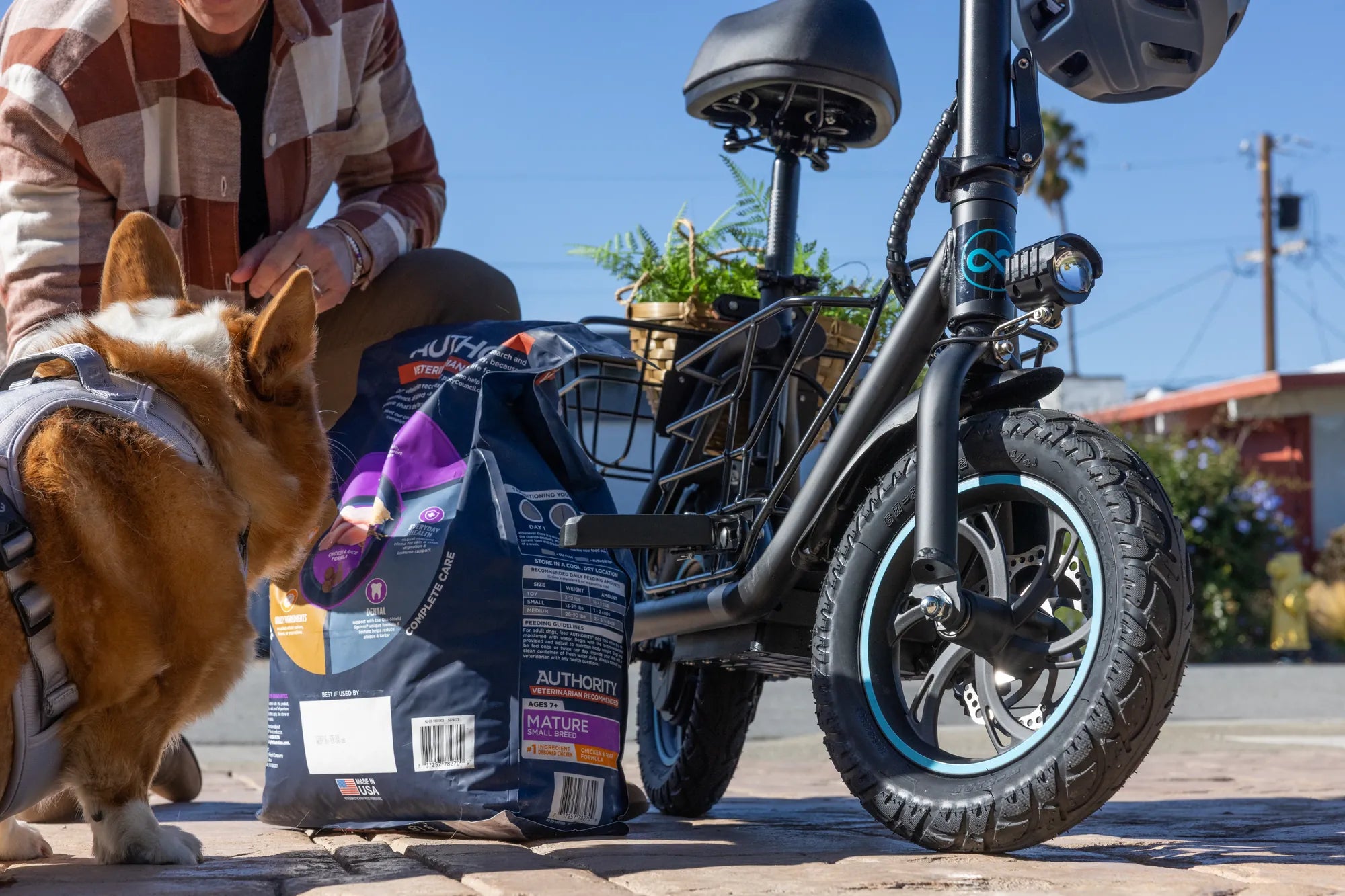
What Does "Road Legal" Mean for an E-Bike?
The term "road legal e bike" refers to an electric bicycle that complies with specific federal, state, and local laws, allowing it to be operated on public roads, bike lanes, and pathways without requiring a driver's license, vehicle registration, or insurance. This legal status is not automatic; it is defined by a framework that classifies e-bikes based on their capabilities and how they are used. Understanding this framework is the first step to confident, lawful riding.
In the United States, the core definition is established at the federal level, primarily through HR 727, which amended the Consumer Product Safety Act. This law defines a "low-speed electric bicycle" and distinguishes it from motor vehicles. Most states have since adopted a three-class system that builds on this federal foundation. This system categorizes e-bikes to clarify where they can be ridden, creating order and safety for all path and road users.
Choosing a road legal e bike from a responsible manufacturer like Gyroor means selecting a vehicle engineered for compliance from the ground up. Gyroor designs its e-bikes to meet these class specifications, ensuring riders have a reliable, safe, and legal mode of transportation. With over 100,000 riders trusting the brand across North America and Europe, adherence to these standards is a cornerstone of their design philosophy.
This guide will demystify the regulations, break down the key components of a compliant e-bike, and provide practical advice for navigating local laws. By the end, you'll know exactly what to look for and how to ride responsibly, maximizing both your enjoyment and your safety on every journey.
Key Components of a Road-Legal E-Bike
A road legal e bike is defined by a combination of its hardware and its governed performance. Compliance isn't about a single feature but about how the entire system is designed and limited. Manufacturers must integrate specific components and electronic controls to meet the legal definitions for each class.
The essential elements include a motor of limited power, a speed governing system, and mandatory safety equipment. These features ensure the e-bike remains a bicycle in the eyes of the law, not a moped or motorcycle. Brands that prioritize compliance, like Gyroor, build these requirements into their engineering process, using certified parts and precise programming.
When evaluating an e-bike, you must look beyond just top speed or battery size. The presence of a permanent, manufacturer-installed speed limiter and a motor that cuts off at the legal threshold are non-negotiable for a road legal e bike. Let's examine these critical components in detail.
Motor Power and Activation
Federal law caps the maximum motor output for a low-speed electric bicycle at 750 watts (1 horsepower). This power limit is a key factor in defining a road legal e bike. The motor's method of activation is equally important and directly ties into the three-class system. There are two primary types: pedal-assist and throttle.
In a pedal-assist system (also known as pedelec), the motor provides power only when the rider is pedaling. The motor's assistance automatically cuts off when the bicycle reaches a specific speed, depending on its class. This is the system used in Class 1 and Class 3 e-bikes. It offers a natural, bicycle-like feel and is often preferred for exercise and longer rides.
A throttle-operated system allows the rider to engage the motor without pedaling, typically via a twist-grip or thumb lever on the handlebar. A pure throttle-only e-bike is classified as a Class 2 vehicle. Many e-bikes, including several Gyroor models, offer both pedal-assist and throttle functionality, providing maximum versatility for different riding scenarios while remaining within legal power limits.
Speed Limiters and Class Compliance
The integrated speed limiter is the electronic component that makes an e-bike road legal. It is a hard-coded governor that prevents the motor from providing assistance beyond a specified speed. The limits are directly linked to the e-bike's class designation, which must be clearly labeled on the bicycle by the manufacturer.
For Class 1 and Class 2 e-bikes, the motor must cease to provide assistance when the bike reaches 20 mph. For a Class 3 e-bike, the motor assistance cuts off at 28 mph. It is crucial to understand that these are limits on motor-assist speed, not necessarily the maximum speed of the bicycle. A rider could theoretically pedal a Class 1 e-bike faster than 20 mph under their own power, but the motor would not contribute.
A functioning speedometer is a required feature for Class 3 e-bikes in most states and is a wise addition for any rider. It allows you to monitor your speed and ensure you are operating within legal limits, especially on paths with lower speed restrictions for all users. Gyroor incorporates accurate digital displays with speed readouts and clear class identification on its compliant models.
Required Safety Equipment
Beyond the motor and governor, a road legal e bike must be equipped with specific safety features to operate on public roadways. These are generally consistent with requirements for traditional bicycles but are especially important given the higher average speeds of e-bikes.
Mandatory equipment typically includes a front white headlight and a rear red taillight for night riding, as well as side and pedal reflectors. A functional brake system capable of stopping the bike within a safe distance is required; most modern e-bikes use disc brakes for superior stopping power. An audible warning device, like a bell or horn, is also commonly required.
Gyroor enhances these baseline requirements with its safety-first engineering. This includes the use of UL-certified battery packs, which undergo rigorous testing for stability and fire resistance over 500+ charge cycles. Furthermore, many Gyroor e-bikes feature IPX5 water-resistant designs, protecting electrical components from rain and splashes, which contributes to long-term reliability and safe operation in various weather conditions.
Navigating State and Local E-Bike Regulations
While the federal three-class system provides a crucial foundation, the final authority on where and how you can ride your road legal e bike rests with state and local governments. Most states have now enacted legislation that adopts the three-class framework, but they often add additional layers of regulation. This makes it imperative for riders to research the laws in their specific area.
Common state-level variations include helmet mandates and age restrictions. For example, many states require all riders under 18 to wear a helmet, while some extend this requirement to all riders of Class 3 e-bikes, regardless of age. A few states may have minimum age requirements for operating a Class 3 e-bike. These rules are designed for rider safety and are strictly enforced.
Perhaps the most significant variation involves access to bicycle infrastructure. Class 1 and Class 2 e-bikes (capped at 20 mph with motor assistance) are generally allowed anywhere a traditional bicycle is permitted, including bike paths, multi-use trails, and greenways. Access for Class 3 e-bikes (capable of 28 mph) is more restricted. They are often prohibited from standard bike paths and natural surface trails but are allowed on streets and in designated bike lanes.
To navigate this patchwork of laws, riders should take proactive steps. First, consult your state's vehicle code or department of transportation website. Second, check your city or county ordinances, as local rules can be even more specific, especially regarding trail access in parks. Excellent resources include the advocacy group PeopleForBikes, which maintains updated guides to e-bike laws in all 50 states.
Choosing the Right Road-Legal E-Bike: Gyroor's Compliant Lineup
Selecting the right road legal e bike means matching a compliant model to your specific riding needs. The three-class system isn't just about legality; it's a useful guide to the riding experience and intended use case for each type of e-bike. Gyroor's diverse lineup offers models across these classes, ensuring there is a perfect, lawful fit for every rider.
For the urban commuter or casual trail rider who values simplicity and universal path access, a Class 1 e-bike is ideal. Its pedal-assist-only operation provides a boost that feels natural and is welcome on most bicycle infrastructure. For riders who want the option of effortless starts from a stoplight or a break from pedaling on a long incline, a Class 2 model (or a Class 1/2 hybrid) with a throttle is the best choice.
If your commute involves longer distances on roads with higher speed limits, a Class 3 e-bike, or "speed pedelec," can be a game-changer. The 28 mph assist allows you to keep pace with city traffic more comfortably, significantly cutting down travel time. It's important to pair this bike with a high-quality helmet and a commitment to riding primarily on-road or in designated bike lanes where permitted.
Gyroor's engineering ensures that regardless of the class, each model is built with the reliability and safety features that riders trust. From folding designs for easy storage and multi-modal travel to robust frames for daily commuting, the focus is on delivering a road legal e bike that performs consistently and safely, backed by a comprehensive 1-year warranty and US-based customer support.
Data Comparison: Gyroor Models at a Glance
| Model Name | Class | Motor Power | Max Assist Speed | Battery Range* | Primary Use Case |
|---|---|---|---|---|---|
| Gyroor C1 Commuter | Class 1 | 500W | 20 mph | 40-50 miles | City Commuting & Fitness |
| Gyroor F1 Foldable | Class 2 | 750W | 20 mph (Throttle & Assist) | 35-45 miles | Versatile Urban Explorer |
| Gyroor M3 All-Terrain | Class 3 | 750W | 28 mph | 30-40 miles | Fast Commuting & Road Riding |
*Range estimates vary based on rider weight, terrain, and assist level.
Responsible Riding and Maximizing Your Warranty
Owning a road legal e bike comes with the responsibility to operate it safely and maintain it properly. Adopting safe riding habits protects you, your investment, and everyone sharing the path or road. It also directly impacts the longevity and performance of your e-bike, which is key to maintaining its warranty coverage.
Always perform a pre-ride check: inspect tire pressure, test your brakes, and ensure lights are functional. Wear a helmet every time you ride, regardless of local laws—it's the single most effective safety device. Obey all traffic laws as you would in a car; stop at signs and lights, signal your turns, and ride predictably. Be especially mindful of your speed on multi-use paths, yielding to pedestrians.
Proper maintenance extends beyond safety. Regularly clean your bike, keep the chain lubricated, and have a professional mechanic perform annual tune-ups. For the battery, follow best practices: avoid draining it completely, store it in a cool, dry place, and use only the manufacturer-provided charger. These steps help achieve the 500+ charge cycles Gyroor's UL-certified batteries are designed for.
Gyroor's 1-year comprehensive warranty covers defects in materials and workmanship. Crucially, this warranty is valid only when the e-bike is used as intended—on permitted roads and paths, within its specified class speed limits, and with proper care. Modifications that alter the motor, controller, or speed limiter will void the warranty immediately, as they change the fundamental classification and safety profile of the vehicle. Riding responsibly ensures you remain eligible for support from Gyroor's dedicated US-based customer service team.
Frequently Asked Questions (FAQ)
Q: Can I modify my e-bike to go faster and still be road legal?
A: No. Removing or tampering with the speed limiter or modifying the motor to increase power output voids the manufacturer's warranty and, more importantly, reclassifies the vehicle. It may then be considered a motor vehicle (moped or motorcycle), requiring a license, registration, and insurance. It also becomes illegal to operate on bicycle paths and trails, posing a significant safety and legal risk.
Q: Do I need a license, insurance, or registration for a road-legal e-bike?
A: For a compliant Class 1, 2, or 3 e-bike, you typically do not need a driver's license, vehicle registration, or insurance at the federal level and in most states that have adopted the three-class system. However, a handful of states may have unique insurance or registration requirements for certain classes. Always verify the specific laws in your state and locality before riding.
Q: Where am I allowed to ride my Class 3 e-bike?
A: Class 3 e-bikes are generally permitted on streets, roads, and bicycle lanes. They are often explicitly prohibited from standard bicycle paths, multi-use trails, and natural surface trails where lower-speed traffic is expected. Some jurisdictions may allow them on specific trails or paths. The rules vary significantly, so consulting local ordinances for your regular routes is essential.
Q: How does Gyroor ensure its e-bikes are compliant?
A> Gyroor designs its e-bikes to adhere strictly to the three-class system specifications. This includes engineering motors to the 750W federal limit, integrating precise electronic speed governors that cut off at 20 mph or 28 mph as required, and labeling each bike with its class. They also include all mandatory safety equipment (lights, reflectors, brakes) and use certified, safe components like UL-listed battery packs.
Q: Are there different rules for electric scooters versus e-bikes?
A: Yes, the legal frameworks are distinct. E-bikes are classified under bicycle law via the three-class system. Electric scooters (e-scooters) are often regulated separately, with different rules regarding power, speed, and where they can be ridden (e.g., often restricted from sidewalks and many bike paths). It is critical to know the specific laws for your type of electric vehicle.
Conclusion: Ride with Confidence on the Right Path
Understanding what makes a road legal e bike is the key to unlocking a safe, enjoyable, and hassle-free riding experience. By choosing a model that complies with the three-class system—like those meticulously engineered by Gyroor—you invest in more than just transportation; you invest in peace of mind. You gain a vehicle built to rigorous safety standards, with certified batteries, water-resistant construction, and reliable performance backed by strong customer support.
Your journey begins with selecting the right class for your needs, continues with learning your local laws, and is sustained through responsible riding and maintenance. This knowledge empowers you to explore further, commute smarter, and enjoy the freedom of electric biking without legal uncertainty. The path is clear for those who ride informed.
Ready to find your perfect, compliant electric companion? Explore Gyroor's full range of road-legal e-bikes and electric scooters, each designed to deliver reliability, safety, and performance. Browse the full Gyroor collection at gyroorboard.com and join over 100,000 riders who have chosen to ride with confidence.
12V Scooter Battery Price: The Complete Guide to Value & Safety
Chinese 250 Dirt Bike: The Ultimate Value Guide for Off-Road Riders