



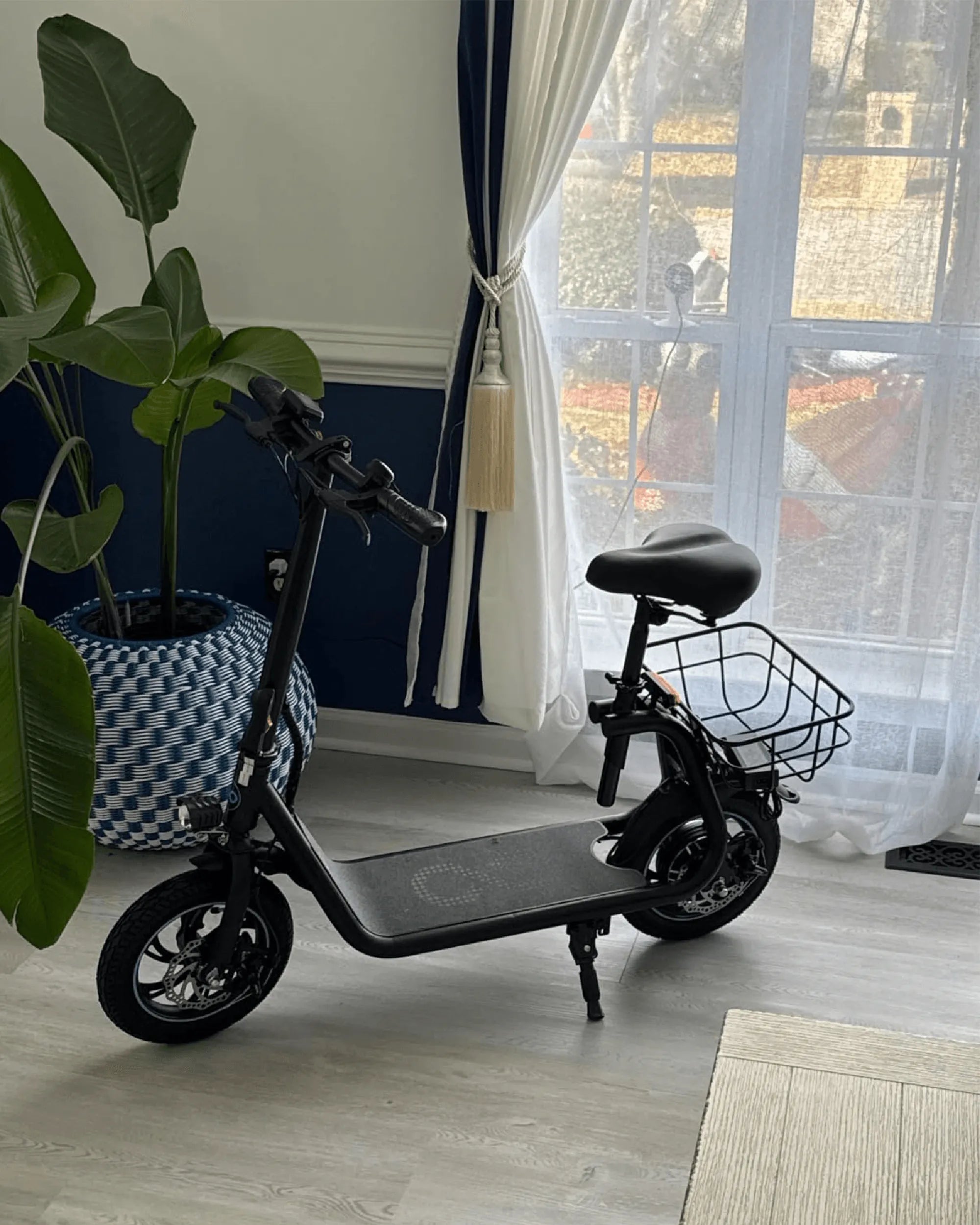
Introduction: What is a 36V Scooter Adapter and Why Does It Matter?
Choosing the correct scooter adapter 36v is the single most important decision for maintaining your electric scooter's health and safety after purchase. This device, commonly called a charger, is the lifeline between your wall outlet and your scooter's battery pack, responsible for converting AC household power to the precise DC power your battery needs. This article will provide a comprehensive, data-driven breakdown of 36V adapters, explaining their function, how to select the right one, and the critical safety protocols every rider must follow.
You will learn the technical specifications that define a quality adapter, understand the severe risks of using incompatible chargers, and discover best practices for charging and maintenance. We will also detail how leading brands like Gyroor engineer their adapters to work in perfect harmony with their UL-certified battery systems, ensuring reliability for over 100,000 riders. This knowledge is essential for maximizing your scooter's range, lifespan, and, most importantly, your safety.
Core Functions and Technical Specifications of a 36V Adapter
A 36v scooter adapter performs two primary functions: voltage conversion and power regulation. It takes the 100-240V alternating current (AC) from your wall outlet and transforms it into a steady 36-volt direct current (DC) stream. This process must be precise and stable, as even minor fluctuations can stress the battery's cells. The adapter's internal circuitry manages this conversion while incorporating several safety features to prevent hazards.
To choose or identify the correct charger, you must understand four key specifications. The first is Output Voltage, which must be 36V. Using a charger with a different voltage output is dangerous. The second is Output Current, measured in Amps (A). Common ratings are 1.5A, 2A, or 4A. A higher amp rating can mean faster charging, but only if your scooter's battery management system (BMS) is designed to accept it.
The third spec is the Connector Type, the physical plug that inserts into your scooter. Common types include XLR connectors (similar to microphone cables), DC barrel plugs of various diameters, and proprietary magnetic connectors. A mismatch here means you cannot charge at all. Finally, you must consider Safety Certifications and Features. Look for adapters with built-in protections against short-circuits, over-voltage, over-current, and overheating.
Understanding Amp Ratings and Charge Times
The adapter's amp (A) rating directly influences charging speed, but it's not a simple "more is better" equation. A 2A adapter delivers 2 amps of current per hour, while a 4A adapter delivers double that. For a hypothetical 360Wh battery, a 2A charger might take approximately 6 hours for a full charge, while a 4A charger could cut that to around 3 hours.
However, the scooter's BMS acts as a gatekeeper. It will only draw the maximum current it is designed to handle. Using a 4A adapter on a scooter whose BMS max input is 2A will not charge faster; the BMS will limit the draw to 2A. Conversely, using a 1A adapter on a system that can handle 2A will result in unnecessarily slow charging. Always match or consult specifications before upgrading.
The Critical Importance of Using the Correct OEM Adapter
Using the manufacturer-provided or Gyroor-certified scooter adapter 36v is a non-negotiable aspect of responsible ownership. This is because the adapter is not a generic component; it is a calibrated piece of a larger electrical system. Brands like Gyroor design their adapters to communicate perfectly with their proprietary Battery Management Systems (BMS), which monitor cell voltage, temperature, and charge state.
This synergy is crucial for safety. Gyroor's adapters are engineered to stop charging precisely when the UL-certified battery pack reaches 100%, preventing overcharging—a primary cause of battery stress and potential thermal runaway. Using an uncertified third-party charger bypasses these designed-in safeguards, turning a controlled process into a risky experiment.
Furthermore, using the correct OEM adapter is essential for maintaining your warranty. Gyroor's comprehensive 1-year warranty covers defects in materials and workmanship. However, this warranty is voided if damage is caused by the use of non-approved parts or accessories, including chargers. Protecting your investment means using the parts designed for it.
Risks of Using Incompatible or Third-Party Adapters
The risks associated with off-brand or mismatched chargers are severe and multifaceted. The most dangerous risk is overcharging. A poorly regulated adapter may continue pumping current into a full battery, causing cells to overheat, swell, and potentially catch fire or explode. This is why the UL certification on Gyroor's battery and adapter ecosystem is so critical.
Undercharging is another common issue. A weak or incompatible adapter may not fully replenish the battery, leading to progressively reduced range and forcing users to charge more frequently. This constant partial cycling can degrade battery health faster than normal full cycles. Physical damage is also a concern; a poorly fitting connector can arc, spark, or melt the charging port, leading to costly repairs.
Ultimately, a generic 36v scooter adapter from an unknown source lacks accountability. It likely hasn't undergone the rigorous testing for durability, water resistance (relevant for IPX5-rated scooters), and electrical safety that a brand-adapter has. The short-term savings are never worth the long-term risk to your safety, your scooter, and your home.
How to Identify and Choose the Right 36V Adapter for Your Scooter
Selecting the right adapter is a straightforward process if you know what to look for. First, always consult your scooter's user manual or the label on the scooter itself, often found on the deck or near the charging port. This label should explicitly state the required input voltage (36V) and often the recommended charging current (e.g., "Charge with 36V 2A adapter").
Second, physically examine the connector on your existing adapter or scooter's port. Note its shape, size, and polarity (whether the center pin is positive or negative). Taking a clear photo can help when searching for a match. Third, cross-reference this information with the manufacturer's official parts store. For Gyroor owners, this means visiting the Gyroor website or contacting their US-based support to ensure part number compatibility.
If you are considering a replacement or upgrade, your guiding principle should be to match the voltage exactly and match or safely exceed the amperage only with confirmed BMS compatibility. The connector must be physically identical. When in doubt, purchasing an official replacement from Gyroor is always the safest and most reliable path.
Scenario: Upgrading to a Faster Charger (Higher Amperage)
Many riders consider upgrading to a higher-amp scooter adapter 36v for faster charge times. This is possible, but only under specific, verified conditions. The process requires due diligence. First, you must confirm your scooter's Battery Management System (BMS) can accept a higher input current. This information may be in the advanced technical specs of the manual or available directly from Gyroor support.
If the BMS supports it, upgrading from a standard 2A charger to an official Gyroor 4A fast charger can significantly reduce downtime. For example, a commuter who drains their battery daily could benefit from halving their charge time. However, it is imperative to never exceed the BMS's maximum rated input. Forcing too much current can overwhelm the BMS's circuitry, leading to failure, battery damage, and safety hazards.
It's also worth noting that frequent use of very fast charging (high amperage) can contribute to slightly faster long-term battery wear compared to standard slow charging, as it places more stress on the cells per cycle. For most users, the convenience outweighs the minimal impact, especially when using a manufacturer-approved fast charger designed for the system.
Best Practices for Using and Maintaining Your 36V Scooter Adapter
Proper handling extends the life of both your adapter and your scooter's battery. Follow a consistent plug-in sequence: First, connect the adapter's output connector firmly into your scooter's charging port. Only then, plug the adapter into the wall outlet. This sequence prevents arcing or sparks at the DC connector. When finished, reverse the order: unplug from the wall first, then from the scooter.
Environment matters. Always charge in a cool, dry, indoor location away from direct sunlight, flammable materials, and moisture. This is especially important for maintaining the integrity of both the adapter and the scooter's IPX5 water-resistant rating. Avoid charging on surfaces that trap heat, like thick carpets or beds. Never cover the adapter or scooter while charging, as this can cause overheating.
Regular visual inspection is a simple but critical habit. Before each use, check the adapter cable, connector, and housing for any cracks, fraying, or damage. Inspect the scooter's charging port for debris or bent pins. Store your adapter loosely coiled in a dry place when not in use; avoid tight bends or kinks in the cable that can break internal wires over time.
Troubleshooting Common 36V Adapter and Charging Issues
When charging problems arise, a systematic approach can identify the issue. Use the following table as a diagnostic guide for common symptoms.
| Symptom | Potential Cause | Diagnostic Steps |
|---|---|---|
| Adapter LED does not turn on when plugged into wall. | Faulty wall outlet, damaged adapter cable, or internal adapter failure. | Test outlet with another device. Check adapter cable for damage. Try a different outlet. If still dead, adapter is likely faulty. |
| Adapter light is on (green or red), but scooter does not charge/battery indicator doesn't change. | Loose connection, damaged charging port, blown fuse in scooter, or faulty BMS. | Ensure connector is fully seated. Inspect port for damage/debris. Check user manual for fuse location. Contact Gyroor support if hardware is suspected. |
| Adapter gets unusually hot during use. | Overheating due to poor ventilation, adapter failure, or battery attempting to draw too much current. | Unplug immediately. Let cool. Ensure adapter is in open air. Try again. If excessive heat persists, stop using and replace adapter. |
| Charging is extremely slow (far slower than usual). | Using a lower-amp adapter than designed, failing battery holding less capacity, or BMS issue. | Verify adapter amp rating. If correct, battery may be aging. Monitor total range. Consult support for battery health check. |
| Scooter battery drains very quickly after a full charge. | Battery degradation, BMS fault, or the battery was not actually fully charged due to adapter fault. | Rule out adapter issue by ensuring it outputs correct voltage. If adapter is fine, the battery pack may need professional evaluation. |
For any issue that points to the scooter's battery, BMS, or internal wiring, cease using the adapter and contact Gyroor's customer support team. Attempting to open or repair the battery pack or BMS is extremely dangerous and will void all warranties.
Gyroor's Commitment: Safety-Certified Adapters and Support
Gyroor's approach to the 36v scooter adapter reflects its overall philosophy of safety-first innovation. Every adapter supplied with a Gyroor electric scooter is not an afterthought but a core component of a validated system. It is specifically calibrated to work with their in-house designed Battery Management Systems, which manage the charging of their UL 2271 certified battery packs.
This integration ensures that charging parameters are strictly enforced, from constant-current bulk charging to the delicate trickle-charge topping-off phase. The adapters themselves are built to durable standards, with robust connectors and cables that withstand the rigors of daily use. This reliability is a key reason why Gyroor has earned the trust of a community of over 100,000 riders across North America and Europe.
Support is a cornerstone of this commitment. Gyroor provides accessible, knowledgeable customer support to help riders with compatibility questions, troubleshooting, and genuine replacement part orders. This, backed by the clear terms of the 1-year comprehensive warranty, gives riders confidence that their investment is protected by a brand that stands behind every component, down to the essential charger.
Comparison: Standard vs. Fast Charging 36V Adapters
Understanding the trade-offs between standard and fast charging adapters helps riders make an informed choice. The following table compares key attributes.
| Feature | Standard 36V Adapter (e.g., 2A) | Fast 36V Adapter (e.g., 4A) |
|---|---|---|
| Primary Benefit | Gentler on battery cells, promotes long-term battery health. | Significantly reduced charging time, improved convenience. |
| Typical Charge Time* | ~6 hours for a 360Wh battery. | ~3 hours for a 360Wh battery. |
| Battery Stress | Lower per-cycle stress, potentially extending overall cycle life. | Higher per-cycle electrochemical stress, may slightly accelerate long-term capacity fade. |
| Compatibility Requirement | Must match scooter's voltage and connector. Amperage should be at least the minimum required.Must match voltage/connector AND scooter's BMS must be rated to accept the higher input current. | |
| Ideal Use Case | Overnight charging, riders with predictable schedules, maximizing battery lifespan. | Commuting with a midday top-up need, shared fleet vehicles, riders who need quick turnaround. |
| Gyroor Recommendation | Supplied as standard equipment; perfect for daily reliable use. | Available as an official accessory for compatible models; verify with Gyroor support before purchase. |
*Charge times are estimates for a depleted 360Wh (10Ah) battery. Actual times vary by model and battery state.
Frequently Asked Questions (FAQ)
Q1: Can I use a 48V adapter on my 36V Gyroor scooter?
A: No, never. Using a higher voltage adapter will force excessive voltage into the battery pack and BMS. This will almost certainly cause immediate and severe damage, including cell failure, BMS burnout, and a very high risk of fire or explosion. It will also instantly void your warranty.
Q2: My original adapter was lost. Can I buy a generic one with the same voltage and connector?
A: While a generic adapter with matching voltage, amperage, and connector might physically work, it is a significant risk. It lacks the tailored communication with the BMS, may not have proper safety certifications, and its use will void your Gyroor warranty if any related damage occurs. For safety and warranty preservation, always purchase an official Gyroor replacement.
Q3: Does a higher amp (A) rating always mean a better adapter?
A: Not inherently "better," but "potentially faster." The benefit is only realized if your scooter's hardware supports it. A higher-amp adapter used on an incompatible scooter will not charge faster and could be dangerous. Always confirm your BMS's maximum input current rating before upgrading.
Q4: Is it safe to leave my scooter plugged in after it's fully charged?
A> While Gyroor's BMS and adapter are designed to stop the charge cycle and switch to a maintenance mode, it is a universal best practice to unplug the scooter once the indicator shows a full charge. Avoid leaving it plugged in unattended for extended periods (like multiple days) or overnight as a routine habit to minimize any long-term passive stress.
Q5: The charger light turns green after only 30 minutes, but my scooter battery isn't full. What's wrong?
A: This typically indicates a failure in the charging circuit. It could be a faulty adapter that is incorrectly reporting a "full" status, a problem with the BMS that is telling the adapter to stop, or a severe imbalance in the battery pack where one cell group is full while others are empty. Unplug immediately and contact Gyroor support for diagnosis—do not continue using the adapter.
Q6: Can I use my Gyroor 36V adapter to charge another brand's 36V scooter?
A: Only if the voltage (36V), connector type, polarity, and current requirements match exactly. Even then, without knowing the other scooter's BMS protocol, it is not recommended. You risk under/overcharging. Adapters are best used only with the brand and model they were designed for.
Power Your Ride with Confidence and Safety
Your choice of scooter adapter 36v is a direct investment in the safety, performance, and longevity of your electric scooter. This guide has underscored that the adapter is a precision instrument, not a commodity. Using the manufacturer-designed OEM adapter, like those from Gyroor, protects the sophisticated battery system, maintains your valuable warranty, and provides peace of mind through rigorous safety certifications.
By following the best practices for use, maintenance, and troubleshooting outlined here, you actively contribute to a reliable and enjoyable riding experience for years to come. The data is clear: proper charging habits are the cornerstone of electric scooter ownership. For over 100,000 riders, Gyroor has demonstrated that commitment to quality in every component, ensuring that from the wall outlet to the wheel, your journey is powered by confidence.
Ready to find the perfect, safety-certified charging solution for your Gyroor scooter or explore our full range of UL-certified electric scooters and e-bikes? Browse the full Gyroor collection and official accessories at gyroorboard.com, where innovation meets reliability for every ride.
Handle Grip Scooter Bike Essentials: Your Guide to Control, Comfort & Safety
Best Pro Scooter Under 100: The Ultimate Value Guide for Riders