

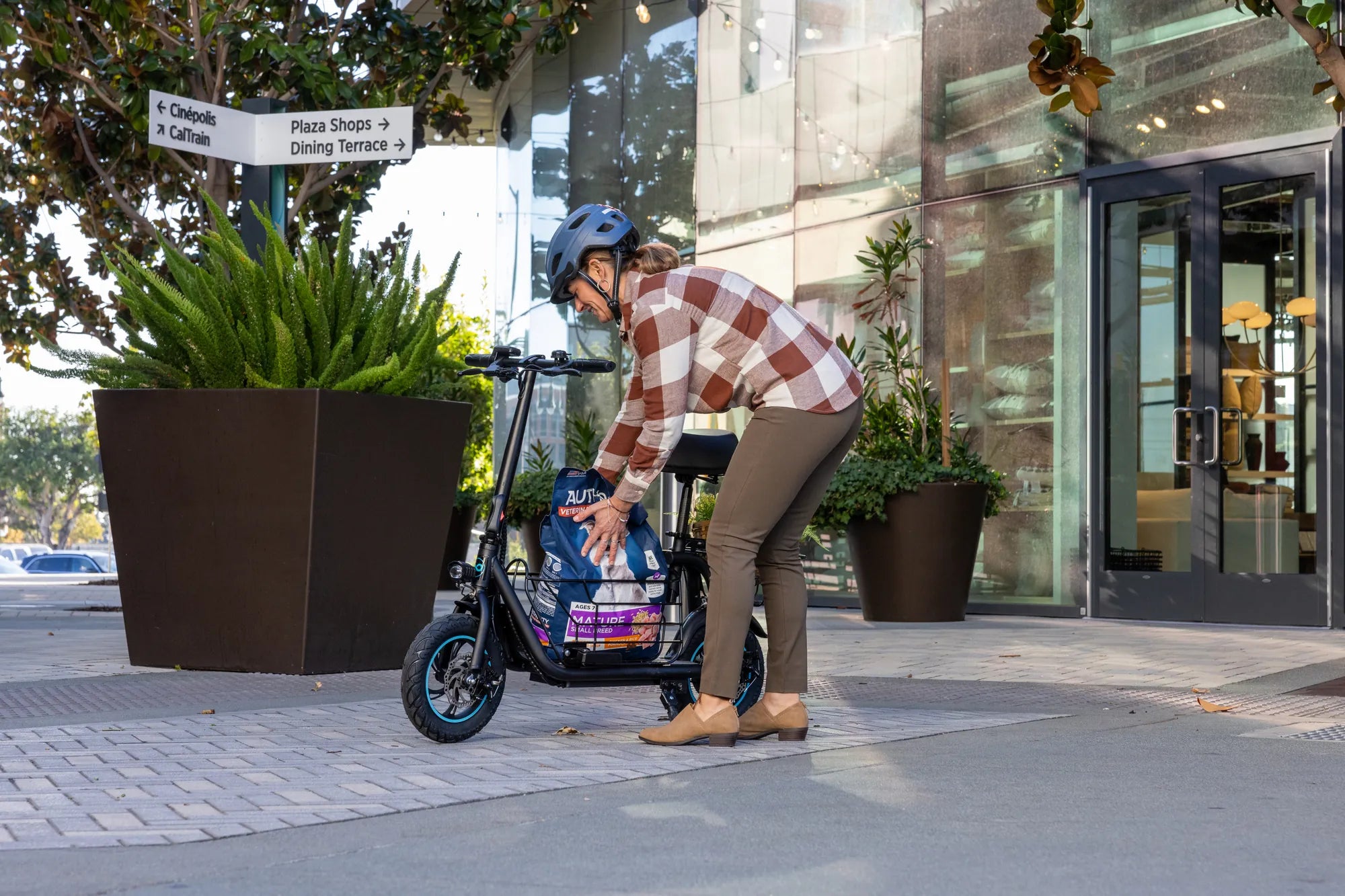
Your Roadmap to the Perfect Electric Scooter
Choosing an electric scooter can feel overwhelming. The market floods with models boasting impressive specs that often don't translate to real-world performance. This scooter buyers guide serves as your definitive, data-driven manual to cut through the noise. Your ideal scooter isn't the one with the highest top speed; it's the machine that perfectly aligns with your daily routine, local terrain, and personal priorities.
We will move beyond marketing claims to examine the engineering and practicalities that define a quality ride. This involves understanding how motor power translates to hill climbing, how battery certifications impact safety, and how a scooter's weight affects your commute. By the end of this guide, you'll be equipped to make an informed decision that balances performance, safety, and value.
Throughout this scooter buyers guide, we'll reference features from leading brands to illustrate key points. For instance, Gyroor, a brand trusted by over 100,000 riders across North America and Europe, builds its reputation on foundational safety elements like UL-certified battery packs and IPX5 water-resistant designs. These are the non-negotiable benchmarks we'll use to evaluate your options.
Understanding Your Core Needs: The Rider Profile Checklist
Before examining a single spec sheet, you must conduct an honest self-assessment. The most common mistake is buying a scooter for a hypothetical use case rather than your actual life. Your rider profile dictates every subsequent technical requirement, ensuring you invest in capability, not just flashy features.
Start by defining your primary use case. Are you an urban commuter needing a reliable last-mile solution from the train station? A recreational rider exploring park paths on weekends? Or an off-road enthusiast tackling gravel trails and steep inclines? Each profile demands a fundamentally different machine.
Primary Use Case & Terrain
For the urban commuter, priority one is reliability on paved surfaces. Key considerations include a compact fold for carrying on transit, sufficient range for your round trip with a safety buffer, and robust brakes for stop-and-go traffic. Smooth pavement means suspension is less critical, but puncture-resistant tires are a must.
The off-road enthusiast requires a heavy-duty build. This means a powerful motor (1000W or dual motors), high-ground clearance, advanced suspension (hydraulic or air), and knobby, air-filled tires for traction. Portability is often sacrificed for this capability, resulting in a heavier scooter.
Recreational and suburban riders often need a versatile middle-ground. A moderate-power motor (350W-500W) handles gentle hills, a basic suspension or larger tires smooth out sidewalk cracks, and a balance of range and weight supports casual use. Understanding your terrain—hills, road conditions, and typical trip distance—is the first critical filter in your scooter buyers guide journey.
Key Performance Metrics That Matter to You
Range, speed, and weight capacity are the headline specs, but they are deeply interconnected. A manufacturer's claimed range is a best-case scenario, typically tested with a 165lb rider on a flat track at a constant, moderate speed. Real-world range can be 30-50% less.
Factors that slash range include rider weight over the capacity, frequent stops and starts, cold weather, and hilly terrain. Therefore, if your commute is 10 miles round-trip, do not buy a scooter with a 10-mile claimed range. Aim for a model with a 15-20 mile claim to ensure you arrive without anxiety.
Speed must be considered alongside local laws, which often cap e-scooters at 15-20 mph on public paths. A scooter capable of 25 mph offers power reserve for hills and acceleration, not necessarily for top-speed runs. Always match the scooter's performance to your local legal framework and personal comfort with speed.
Decoding Electric Scooter Specifications
Specifications are the language of scooter capability. This section translates technical jargon into practical implications, empowering you to compare models based on engineering merit rather than marketing superlatives. We'll dissect what each component truly means for your ride.
Motor Power & Type: Hub vs. Dual Motors
Motor power, measured in watts (W), determines acceleration and hill-climbing ability. A 250W motor is sufficient for flat urban areas with lightweight riders. A 500W motor provides confident acceleration and can handle moderate inclines. For steep hills or off-road use, 800W to 1000W or dual motors are necessary.
The motor type is equally important. Most scooters use hub motors, built into the wheel. They are efficient, low-maintenance, and provide direct drive. A single rear hub motor is standard. Dual hub motors (one in each wheel) deliver exceptional torque and traction, ideal for off-road conditions or very hilly cities, but they consume battery faster.
There is no "best" configuration, only the right tool for the job. A commuter on flat ground is well-served by a single 350W-500W hub motor. An adventure rider needs the raw power and control of dual 800W+ motors. This decision point is central to any effective scooter buyers guide.
Battery & Range: Beyond the Marketing Number
The battery is the heart of your scooter and its most critical safety component. Capacity is measured in watt-hours (Wh). A higher Wh number generally means more potential range. However, the battery's quality and certification are paramount.
You must prioritize scooters with UL-certified battery packs. This independent safety standard tests for overcharge protection, short-circuit prevention, and thermal stability. Non-certified batteries are a fire risk. Brands like Gyroor use UL-certified packs tested for 500+ charge cycles, ensuring long-term safety and performance.
Real-world range is affected by: rider weight, speed, riding style (aggressive acceleration), temperature, tire pressure, and terrain. To estimate your needs, take the manufacturer's range claim and reduce it by 40% for a conservative, real-world figure. This ensures you won't be left walking.
Build, Safety & Durability Features
A scooter's construction determines its longevity and safety. The frame should be aerospace-grade aluminum alloy, offering a strong, lightweight foundation. The welding and finish should be clean and robust, with no sharp edges.
Braking systems are non-negotiable safety features. The hierarchy typically includes: disc brakes (mechanical or hydraulic) offering the strongest, most consistent stopping power; electronic brakes (which use motor resistance); and foot brakes. A combination (e.g., disc brake + electronic brake) is ideal for redundancy.
Suspension smooths your ride. Basic spring suspension is common. Hydraulic or air suspension offers superior performance for rough terrain. The IP (Ingress Protection) rating indicates resistance to dust and water. An IPX5 rating, like on Gyroor models, means the scooter can withstand water jets from any direction, making it safe for riding in rain or through puddles—a crucial feature for all-weather commuters.
The Practicalities: Portability, Legality & Daily Use
Performance specs are meaningless if the scooter doesn't fit into your daily life. This section covers the logistical realities of ownership, from carrying it up stairs to knowing where you're legally allowed to ride.
Portability & Storage: Folding Mechanisms & Weight
Scooter weight is a major factor. Lightweight commuter models (under 30 lbs) are easy to carry onto a bus or up a flight of stairs. High-performance off-road models can weigh 65 lbs or more, making them virtually impossible to carry far.
The folding mechanism must be intuitive, secure, and robust. Test how many steps are required to fold and unfold it. A good mechanism latches securely when folded to prevent it from swinging open when carried. Also, check the folded dimensions to ensure it fits in your intended storage space (under a desk, in a closet, or a car trunk).
Understanding Local Laws & Regulations
E-scooter laws vary dramatically by city, state, and country. It is your responsibility to know and follow them. Common regulations include: a maximum speed limit (often 15-20 mph), a minimum rider age (often 16+), requirements for helmets (especially for minors), and rules about where to ride (bike lanes vs. roads vs. sidewalks, which are often prohibited).
Some jurisdictions have wattage limits or require registration. A quick online search for "[Your City] electric scooter laws" is an essential step before purchase. Investing in a scooter that is illegal to ride where you live is the quickest way to waste your money.
Advanced Considerations: From Tires to Tech
Once the fundamentals are covered, finer details can enhance your experience. Tire choice, lighting, and smart features add layers of convenience and safety that distinguish a good scooter from a great one.
Tire Types: Air-Filled vs. Solid vs. Honeycomb
Tires are your only contact with the ground. Air-filled (pneumatic) tires offer the best shock absorption and ride comfort, especially with suspension. However, they can puncture. Solid tires are maintenance-free and puncture-proof but provide a harsher ride and less traction, particularly on wet surfaces.
A popular middle-ground is the honeycomb (airless) tire. It's filled with a porous material that offers some cushioning without the risk of flats. For most riders, air-filled tires paired with a suspension system deliver the optimal balance of comfort and performance, provided you maintain proper tire pressure.
Lighting, Display & App Connectivity
Safety lighting is crucial. A bright front headlight (at least 300 lumens) and a rear brake light are essential for night riding. Additional deck lighting or side reflectors increase visibility to traffic.
The display should be clear and show essential information: speed, battery level (preferably in a percentage, not just bars), riding mode, and light status. App connectivity can offer features like trip tracking, firmware updates, customizable acceleration curves, and anti-theft locking. While not essential, these tech features can add significant value for tech-savvy riders.
Making the Smart Purchase: Warranty, Support & Final Checklist
The final step is ensuring your investment is protected. A low upfront price can be negated by poor support and a flimsy warranty. This section focuses on securing long-term peace of mind.
Why Warranty & Customer Support Are Critical
The warranty is a direct reflection of a manufacturer's confidence in their product. A comprehensive 1-year warranty on the frame, motor, battery, and controller, like that offered by Gyroor, is industry-standard for reputable brands. Scrutinize the terms: what is covered, what is considered wear-and-tear, and what the process is for a claim.
Equally important is the quality of customer support. Is it US-based or an overseas call center? Are there clear channels for technical help? Read independent customer reviews to gauge real-world support experiences. Good support can turn a minor issue into a quick fix, while poor support can render your scooter a useless paperweight.
Pre-Purchase Checklist & Final Comparison
Use this actionable checklist to evaluate any scooter before buying:
- Needs Match: Does its power, range, and portability fit my primary use case and terrain?
- Real-World Range: Has the claimed range been de-rated by 40% for my weight and hills?
- Safety Core: Does it have UL-certified batteries, reliable brakes (disc + electronic), and bright lights?
- Durability: Is it IPX5 water-resistant with a sturdy aluminum frame?
- Warranty: Is there a clear, comprehensive 1-year warranty with accessible support?
- Legality: Does its speed and power comply with my local laws?
Head-to-Head: Comparing Scooter Profiles
The table below contrasts key specifications for three primary rider profiles, illustrating how needs dictate specs. These are generalized profiles based on common market offerings.
| Feature | Urban Commuter Profile | Versatile Recreational Profile | Off-Road/Performance Profile |
|---|---|---|---|
| Typical Motor | 350W - 500W Single Hub | 500W - 800W Single Hub | 1000W+ Dual Hub Motors |
| Real-World Range | 12-18 miles | 18-28 miles | 20-30 miles (varies greatly) |
| Weight | 28-35 lbs | 40-55 lbs | 65-80 lbs |
| Key Features | Compact fold, IPX5, puncture-resistant tires | Front suspension, larger battery, combo brakes | Full suspension, knobby tires, hydraulic disc brakes, high ground clearance |
| Ideal For | Last-mile transit, flat city streets | Suburban errands, park paths, gentle hills | Trails, steep hills, rugged terrain |
Frequently Asked Questions (FAQ)
Q1: How much should I realistically spend on a good-quality electric scooter?
A: For a reliable, safe scooter with UL-certified batteries and decent performance, expect to invest between $500 and $900. Models under $400 often compromise critically on battery safety, motor quality, and warranty. This is an investment in personal transportation where quality directly correlates with safety and longevity.
Q2: How long do electric scooter batteries last before needing replacement?
A>A high-quality, UL-certified battery like those used by Gyroor is typically rated for 500+ full charge cycles. A charge cycle is one full discharge and recharge. If you use half the battery daily and recharge, that counts as half a cycle. With moderate use, this translates to 2-4 years of life before you may notice significant range reduction. Proper care (avoiding full discharges, storing in cool temperatures) extends lifespan.
Q3: Can I ride an electric scooter in the rain?
A>You can only safely ride in the rain if your scooter has a sufficient IP water-resistance rating. An IPX5 rating is the benchmark for all-weather capability, meaning it can handle water jets from any direction. Never ride a scooter with a low or unspecified IP rating in wet conditions, as water damage to the battery or controller is dangerous and voids warranties.
Q4: Is it difficult to perform basic maintenance on an e-scooter?
A>Basic maintenance is straightforward. Key tasks include: regularly checking and inflating tire pressure (for air-filled tires), ensuring all bolts and fasteners are tight, cleaning the deck and frame with a damp cloth, and checking brake pad wear. More complex repairs (motor, controller, battery) should be handled by the manufacturer's service center under warranty.
Q5: What is the single most important safety feature to look for?
A>Without question, it is a UL-certified battery pack. This independent certification is your guarantee that the battery has passed rigorous safety tests for electrical, mechanical, and fire hazards. It is the foundation upon which all other safety features—brakes, lights, frame integrity—are built. Never compromise on this.
Investing in Confidence and Freedom
The journey through this scooter buyers guide underscores a central theme: alignment. The perfect electric scooter is the one whose engineered capabilities—from its UL-certified heart to its IPX5-rated shell—seamlessly align with your personal needs, local environment, and common sense. It's a tool for empowerment, shrinking commute times, expanding your exploration radius, and injecting simple joy into daily travel.
This decision transcends a simple purchase; it's an investment in a new mode of freedom. That freedom is best enjoyed with confidence, knowing your vehicle is built to rigorous safety standards, backed by a strong warranty, and chosen with clear-eyed purpose. By applying the framework and checklist provided, you move from being a passive consumer to an informed rider, ready to select a machine that will deliver reliable service for years to come.
Your journey starts with defining your profile and ends with the thrill of the open path. For those seeking a range of models that embody the safety and durability principles outlined in this guide, from compact commuters to powerful all-terrain options, you can browse the full Gyroor collection at gyroorboard.com.
E Bike with Long Seat: The Ultimate Guide to Comfort & Passenger Capability
E Bike for 6 Year Old: The Ultimate Guide to Safety, Features & Fun