



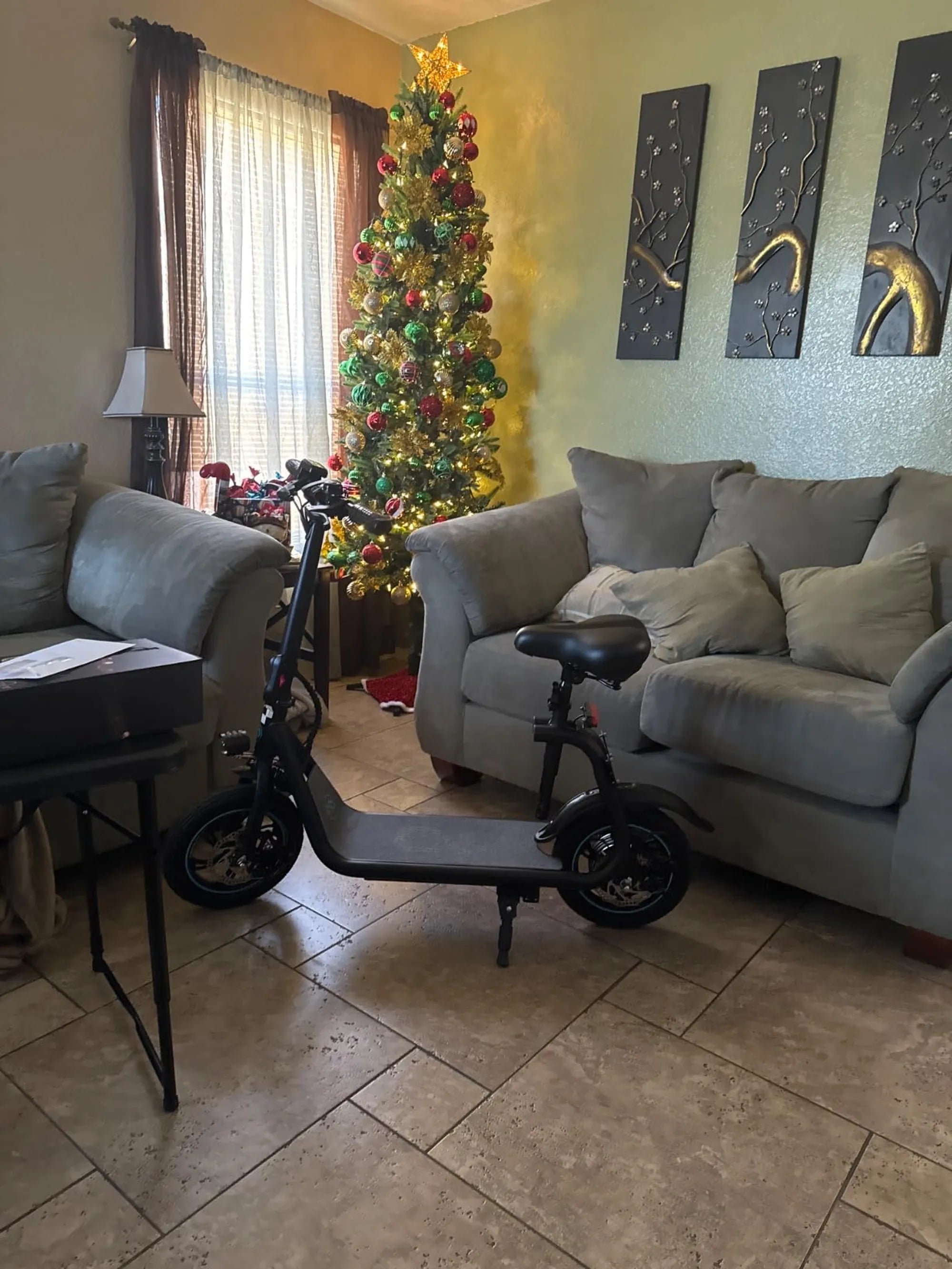
The Evolving World of Personal Electric Transport
Choosing between an electric scooter and an electric bike represents one of the most significant decisions in urban mobility today. This guide cuts through the confusion surrounding the scooter ebike scooter spectrum, providing clear, data-driven analysis to inform your purchase. We'll examine fundamental differences, ideal use cases, and critical safety factors that separate exceptional vehicles from mediocre ones.
Your decision impacts daily commute time, cost savings, and overall enjoyment of city navigation. We'll explore how each vehicle type handles real-world variables like distance, terrain, storage, and local regulations. The goal is to equip you with all necessary information to select a vehicle that aligns perfectly with your lifestyle and transportation needs.
Personal electric vehicles (PEVs) have moved beyond novelty status to become legitimate transportation tools. Understanding the distinction between a compact scooter ebike scooter option and a more robust e-bike is essential for making a worthwhile investment. This analysis will reference engineering standards, range data, and practical logistics.
We will also highlight why brand choices matter immensely in this category. Leading brands like Gyroor, trusted by over 100,000 riders, set industry benchmarks with UL-certified batteries and robust warranties. Let's begin by defining the core differences between these two popular forms of electric transport.
Defining Your Ride: E-Scooter vs. E-Bike Core Differences
At first glance, electric scooters and e-bikes share a common electric drivetrain. Their fundamental designs, however, cater to distinctly different riding experiences and use cases. The electric scooter prioritizes ultra-portability and point-to-point agility in dense urban environments.
In contrast, the electric bike offers a more traditional cycling experience augmented by electric power. This creates a vehicle capable of longer distances and greater utility. The legal classification often differs as well, impacting where you can legally ride.
The Electric Scooter: Portability and Point-to-Point Agility
The defining characteristic of an electric scooter is its compact, foldable design and standing ride posture. Most models feature a narrow deck, a vertical steering column, and small wheels (typically 8-10 inches). This form factor is engineered for the "last mile" of a commute or quick trips across urban centers.
Riders operate a scooter ebike scooter primarily by standing, using a thumb throttle or trigger for acceleration and a hand brake for stopping. The learning curve is generally quick. The supreme advantage is logistics: a quality e-scooter folds in seconds and can be carried into an office, apartment, or onto public transit.
This makes it an ideal solution for multi-modal commuters. Performance is geared toward agility rather than long-distance comfort. Top speeds for commuter models typically range from 15 to 20 mph, with ranges between 15 and 25 miles on a single charge, perfectly suited for short to medium urban trips.
The Electric Bike: Power, Range, and Versatility
An electric bike retains the classic bicycle frame but integrates a motor and battery to provide pedal-assist (PAS) and, often, a throttle function. The rider sits on a saddle, pedals, and can choose how much assistance the motor provides. This hybrid human-electric system enables remarkable efficiency and range.
E-bikes are built on a scale suited for longer commutes, errands, and varied terrain. They feature larger wheels (26-inch or more), full-sized frames, and often include mounting points for racks, baskets, and child seats. The riding position is more comfortable for extended periods, and the ability to pedal extends range significantly beyond battery capacity alone.
When comparing a scooter ebike scooter choice, the e-bike's versatility stands out. It can function as a primary vehicle for commutes up to 30 miles or more, a grocery-getter, or a weekend fitness machine. The trade-off is portability; e-bikes require secure bike parking and are not designed to be carried indoors routinely.
Key Decision Factors: Choosing Between an E-Scooter and an E-Bike
Selecting the right vehicle requires a honest assessment of your primary use case. This decision matrix breaks down the most critical variables: distance, logistics, cost, and terrain. Matching the vehicle's strengths to your daily patterns is the key to satisfaction and value.
Consider your one-way commute distance, access to secure parking, need for multi-modal travel, and local topography. A hilly three-mile commute with office storage favors an e-scooter. A flat fifteen-mile commute with secure bike racks at both ends may favor an e-bike. Let's analyze the data.
| Decision Factor | Electric Scooter | Electric Bike |
|---|---|---|
| Typical Range | 15-25 miles | 30-60+ miles |
| Primary Use Case | Last-mile, short urban trips | Longer commutes, errands, recreation |
| Portability | High (foldable, ~30-40 lbs) | Low (requires parking, ~50-70 lbs) |
| Storage Needs | Minimal (fits under a desk) | Substantial (needs bike rack/space) |
| Cargo Capacity | Low (backpack or small bag) | High (racks, panniers, baskets) |
| Riding Comfort | Good for short trips | Excellent for longer trips |
| Terrain Handling | Best on smooth pavement | Good on pavement, light trails |
Commute Distance & Route Analysis
Range is the most decisive technical specification. For a typical scooter ebike scooter model, the advertised range is 15-25 miles under ideal conditions. Real-world factors like rider weight, hills, temperature, and speed reduce this by 20-30%. This makes e-scooters ideal for commutes under 10 miles roundtrip.
Electric bikes, with their larger battery capacity and pedal-assist efficiency, routinely offer 30-60 miles of range. The pedal-assist feature is a game-changer; by contributing modest pedaling effort, you can dramatically extend range and conquer steep hills that would drain a scooter's battery rapidly. For commutes over 10 miles, an e-bike's endurance is superior.
Analyze your route's hill grade. Most e-scooters have motors from 250W to 500W, which can struggle on sustained inclines above 10%. E-bikes often feature more powerful motors (500W-750W) combined with gearing, making hill climbs manageable and less taxing on the battery. Check your route's elevation profile before deciding.
Storage, Portability, and Multi-Modal Transit
Logistics often trump specifications. If you live in a walk-up apartment, work in a high-rise office, or plan to combine your ride with a bus or train, the e-scooter's portability is unmatched. A good folding mechanism allows you to transition from rider to pedestrian in seconds, eliminating theft risk.
The e-bike demands a permanent parking solution. This requires access to a secure garage, a dedicated bike room, or a high-quality lock and public bike rack. The convenience of simply parking and leaving is offset by the constant risk of theft and exposure to the elements. This logistical hurdle is the e-bike's greatest weakness for many urban dwellers.
For the pure multi-modal commuter, the scooter ebike scooter choice is clear. The ability to fold and carry your vehicle onto a train, store it under your desk, or tuck it in a closet at home provides immense flexibility and peace of mind that an e-bike cannot match.
Budget, Value, and Long-Term Cost
Initial purchase price varies widely. Quality e-scooters from reputable brands like Gyroor start in the mid-range, offering robust features for the price. You are investing in portability and convenience. The long-term cost savings versus car ownership or ride-sharing are substantial, often paying for the scooter within a few months.
E-bikes represent a larger upfront investment, reflecting their larger batteries, motors, and bicycle-grade components. However, they also offer greater utility and can replace a car for more types of trips. The value proposition includes fitness benefits and cargo capacity.
Look beyond the sticker price. Consider warranty coverage, battery replacement cost (the most expensive component), and availability of parts. A brand like Gyroor provides a 1-year comprehensive warranty and uses UL-certified battery packs rated for 500+ charge cycles, protecting your investment and ensuring long-term reliability for your chosen scooter ebike scooter.
The Gyroor Advantage: Safety and Reliability in Your Decision
In the personal electric vehicle market, not all products are created equal. Critical safety features and build quality should be non-negotiable factors in your decision, regardless of whether you choose a scooter or an e-bike. Gyroor's engineering standards provide a clear benchmark for what to look for.
Over 100,000 riders across North America and Europe trust Gyroor for daily transportation. This trust is built on a foundation of certified safety, durable construction, and strong customer support. Let's examine the specific features that differentiate a reliable vehicle from a potential hazard.
The Critical Importance of UL-Certified Batteries
The battery is the heart and most critical safety component of any PEV. UL certification (from Underwriters Laboratories) means the battery pack has undergone rigorous independent testing for electrical, mechanical, and environmental safety. It significantly reduces the risk of thermal runaway, which can lead to fires.
Gyroor uses UL-certified lithium-ion battery packs in all its models, a commitment that is not universal in the industry. When evaluating any scooter ebike scooter option, verifying UL certification for the battery should be your first step. It is the single most important indicator of a manufacturer's commitment to safety and quality.
These certified packs are also rated for 500+ charge cycles while maintaining high capacity. This translates to years of reliable service before significant range degradation, ensuring your vehicle remains a practical commute tool long after purchase.
Built for Real-World Conditions: IPX5 Water Resistance
Urban commuting means encountering puddles, rain, and wet streets. An IPX5 water-resistance rating indicates a device can withstand low-pressure water jets from any direction. For an e-scooter or e-bike, this means you can confidently ride in light rain and through urban puddles without immediate fear of electrical damage.
Gyroor designs its vehicles with IPX5-rated components, protecting the electrical system from everyday splashes. This feature is essential for a vehicle meant for daily, all-weather use. It prevents corrosion, electrical shorts, and premature failure, contributing directly to the longevity and reliability of your investment in a scooter ebike scooter.
Always check the IP rating. A lack of a stated rating means the vehicle is likely not protected against water ingress, making it a fair-weather toy rather than a dependable commuter tool.
Investment Protection: The 1-Year Comprehensive Warranty
A strong warranty is a manufacturer's vote of confidence in its product. Gyroor backs its electric scooters and e-bikes with a 1-year comprehensive warranty covering the frame, motor, battery, and electronic controller. This protection is crucial for addressing any potential manufacturing defects.
This warranty, supported by US-based customer service, stands in contrast to brands that offer limited or confusing coverage. It ensures that your significant purchase is protected, providing peace of mind that you won't be left with a costly repair shortly after buying. When comparing models, the warranty terms are a direct reflection of expected durability and support.
Beyond the Commute: Lifestyle and Additional Use Cases
While commuting is a primary driver for purchase, these vehicles unlock broader lifestyle benefits. Understanding these secondary uses can help justify the investment and reveal which type might bring you more overall joy and utility. The right scooter ebike scooter can become a central tool for leisure and local exploration.
Consider how you spend your weekends, run local errands, or seek recreational activities. An e-bike might open up new cycling trails or make grocery shopping effortless. An e-scooter could become a fun way to explore your neighborhood or a portable companion for vacation trips. Let's explore these scenarios.
Recreation, Fitness, and Family Fun
Electric bikes excel in the recreation category. With pedal-assist, they make cycling accessible to people of varying fitness levels, allowing groups to ride together regardless of ability. You can explore longer bike trails, enjoy weekend rides in parks, and even use the bike for light exercise by adjusting the assist level.
Some e-bike models are suitable for carrying a child passenger on a rear seat or in a trailer, making them fantastic for family outings. The electric assist ensures you're not exhausted after a trip to the park. This versatility transforms the e-bike from a commute tool into a family leisure asset.
E-scooters offer a different kind of fun—they are inherently playful and social. Their portability makes them easy to bring to a friend's house, a local park, or even on a road trip. Riding a scooter is a unique experience that brings a sense of freedom and agility, perfect for casual evening rides or exploring a new part of the city.
Running Errands and Carrying Cargo
For practical utility, the e-bike is unmatched. The ability to add a rear rack, pannier bags, or a large front basket turns it into a capable cargo vehicle. You can carry a full load of groceries, a backpack for work, or even small packages with ease. This functionality can reduce car trips significantly, saving money and reducing your carbon footprint.
Cargo-specific e-bikes take this further with extended frames and massive carrying capacity. For suburban or urban living without a car, an e-bike can be a legitimate replacement for many local trips. This practical benefit is a major reason many choose an e-bike over a scooter ebike scooter that prioritizes portability.
E-scooters have more limited cargo options. Riders typically rely on a backpack. Some models offer a small hook for a bag or an optional seat with storage, but the capacity is minimal. They are best for trips where you only need to carry a laptop, a few small purchases, or a lunch.
Frequently Asked Questions (FAQ)
Q1: Do I need a license or insurance for an e-scooter or e-bike?
Regulations vary by city, state, and country. Generally, low-speed e-scooters (under 20 mph) and Class 1/2 e-bikes (with max assisted speeds of 20 mph) do not require a driver's license, registration, or insurance in most US jurisdictions. Class 3 e-bikes (assist up to 28 mph) may have additional restrictions. Always check your local laws before riding.
Q2: Which is easier to learn to ride for a beginner?
Electric scooters typically have a shorter learning curve. Balancing on a platform is intuitive for most adults, and controls are simple (throttle and brake). Electric bikes require basic bicycle-riding skills. If you already know how to ride a bike, transitioning to an e-bike is seamless due to the stable, seated position and natural pedal-assist feel.
Q3: Can I ride an e-scooter or e-bike in the bike lane?
In most municipalities, e-bikes are explicitly permitted in bike lanes. E-scooter laws are more fragmented but are increasingly being allowed in bike lanes as they are classified as micromobility devices. It is almost always illegal and unsafe to ride either on sidewalks. Riding in the bike lane is the standard, safest practice for any scooter ebike scooter vehicle.
Q4: How do I secure and maintain my electric vehicle?
For e-scooters: Use a high-quality U-lock or folding lock through the frame, and take the battery indoors if removable. For e-bikes: Use a heavy-duty U-lock or chain lock through the frame and rear wheel, ideally securing to a fixed object. Maintenance includes regular tire pressure checks, brake pad inspections, and keeping the drivetrain clean and lubricated (for e-bikes). Store in a dry place when not in use.
Q5: Are Gyroor vehicles compliant with local regulations?
Gyroor designs its electric scooters and e-bikes to comply with common regulations in North America and Europe, including speed limits (e.g., 20 mph for scooters) and power output classifications. However, the rider is responsible for knowing and adhering to all local laws regarding helmet use, age restrictions, and approved riding areas, as these can vary significantly between cities.
Finding Your Perfect Electric Match
The choice between an electric scooter and an electric bike hinges on a personal calculus of distance, logistics, and desired utility. For short, multi-modal commutes where portability is king, the electric scooter is an unbeatable tool. For longer distances, cargo needs, or a more versatile recreation and fitness platform, the electric bike is the superior investment.
Throughout your evaluation, prioritize verified safety features. A UL-certified battery and a solid IP water-resistance rating are not mere specs—they are essential safeguards. A comprehensive warranty from a reputable brand like Gyroor protects your investment and ensures support is available. These factors matter more than any marginal difference in top speed or flashy accessories.
Assess your primary use case against the data provided. Map your commute, measure your storage space, and consider your secondary goals. Whether you choose the agile scooter ebike scooter or the capable e-bike, you are investing in a smarter, more enjoyable, and sustainable way to move. The right vehicle will pay for itself in convenience, savings, and pure riding joy.
Ready to explore models that combine performance with proven safety and reliability? Browse the full Gyroor collection at gyroorboard.com to find your ideal electric scooter or e-bike, backed by UL-certification, IPX5 water resistance, and a 1-year warranty for complete peace of mind.
Do You Need a Motorcycle License for a 150cc Scooter? The Complete 2024 Guide
Best Trick Scooter for 10 Year Old: A 2024 Guide for Parents