



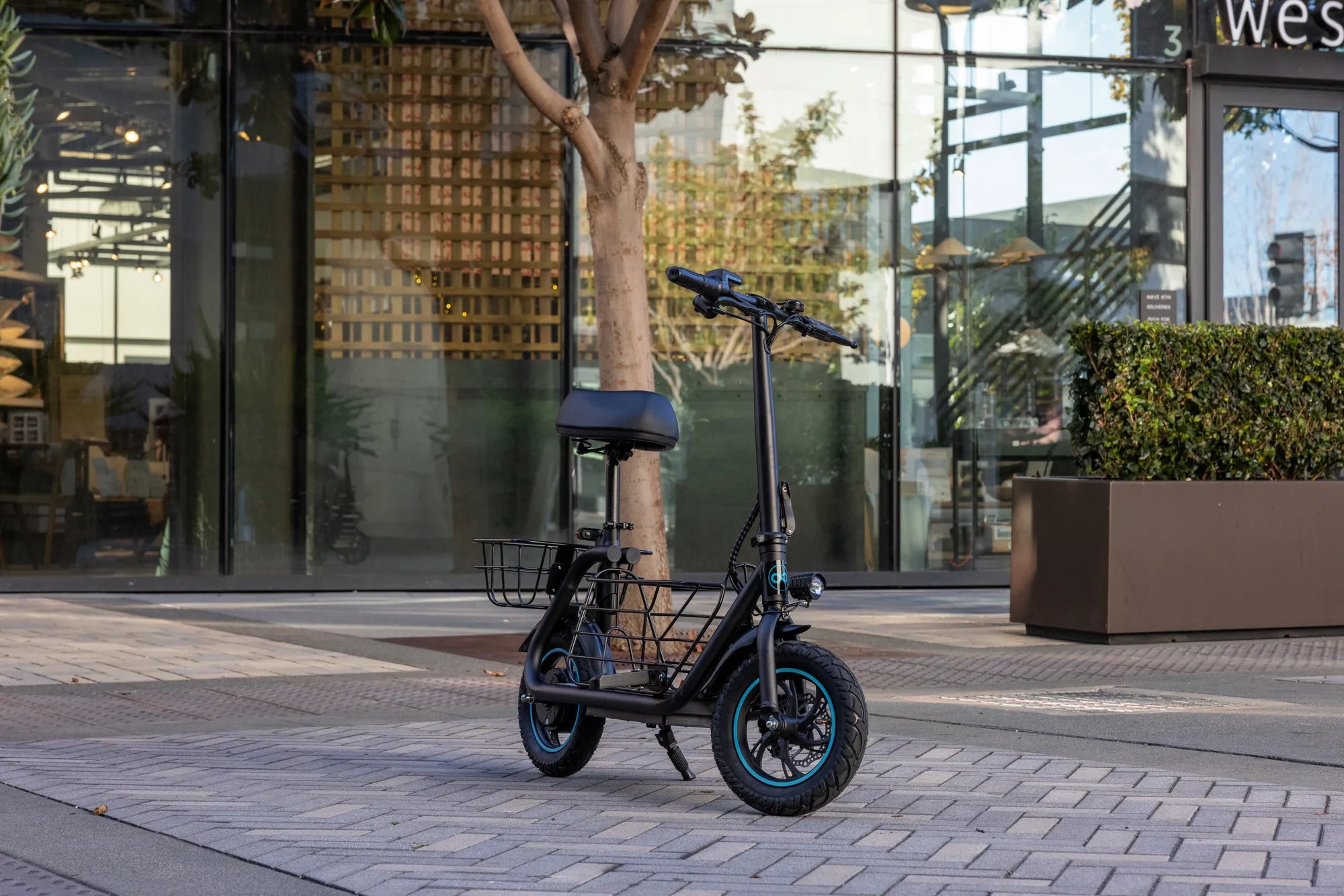
Introduction: Choosing the Perfect First Ride for Your 1-Year-Old Boy
Selecting a first scooter for your 1 year old boy is an exciting milestone that blends the joy of independent movement with crucial developmental benefits. This decision is far more nuanced than picking a colorful toy; it involves matching specific safety engineering to your toddler's physical capabilities. The ideal scooter for a 1 year old boy is not a traditional two-wheel kick scooter but a specialized ride-on or trike designed for maximum stability and controlled motion.
This guide provides a data-driven, parent-focused roadmap to navigate the market. You'll learn to identify key safety non-negotiables, understand which scooter styles align with developmental milestones, and discover features that encourage growth. The goal is to find a balance where safety features enable fun, fostering coordination, balance, and confidence in a secure environment. Making an informed choice now sets the foundation for a lifelong love of active, responsible riding.
Brands like Gyroor, trusted by over 100,000 riders for their focus on safety and durability, apply principles like stable construction and reliable warranties even to their youth-oriented designs. While they don't market products for 1-year-olds, their engineering philosophy underscores the industry standards for quality we should seek. Let's explore how to apply these principles to your toddler's first wheels.
Understanding Developmental Milestones: Is Your 1-Year-Old Ready?
Before considering any purchase, assessing your child's physical and cognitive readiness is essential. Most children begin walking independently between 12 and 15 months, but scooter readiness requires more than just walking. Key signs include the ability to stand steadily without support for extended periods, confidently navigate slight inclines or uneven surfaces while walking, and demonstrate interest in push-or-pull toys that require coordinated movement.
Cognitively, readiness involves the capacity to follow simple, one-step instructions like "push" or "stop," and show curiosity about cause-and-effect play. A child who enjoys sitting on a ride-on car and propelling it with their feet is likely demonstrating the foundational skills for a first scooter. It's critical to understand that for this age group, a "scooter" refers exclusively to stable, multi-wheeled ride-ons, not gliding two-wheel models.
The primary motor skills developed through early scooter use are gross motor coordination, leg strength from pushing, core stability for sitting or standing balance, and spatial awareness. Introducing a scooter too early, before a child has mastered confident walking, can lead to frustration and a negative association with the activity. The sweet spot for introducing a first scooter is typically between 15 and 24 months, depending on individual development.
Parents should look for low-energy, exploratory play rather than structured riding. The scooter should be a tool for discovery, not a performance vehicle. This mindset ensures the activity remains pressure-free and aligns with the toddler's natural pace of learning, turning the scooter into a catalyst for developmental progress rather than a source of anxiety.
Key Safety Features: Non-Negotiables for a 1-Year-Old's Scooter
Safety is the paramount concern when selecting any mobility toy for a toddler. The design must account for unsteady balance, unpredictable movements, and a high center of gravity. Every feature should be evaluated through the lens of preventing tip-overs, minimizing fall impact, and ensuring the child remains in control at all times. Compromise on these core safety elements is not an option.
The construction materials must be non-toxic, free from harmful chemicals like BPA or phthalates, and have no sharp edges or pinch points where small fingers can get caught. All fasteners should be recessed or covered. Durability is a safety feature; flimsy plastic that cracks under stress can create hazardous sharp edges. Look for robust, high-quality polymers or coated metals designed to withstand toddler use.
A critical but often overlooked aspect is the product's certification. Reputable manufacturers will have their products tested to meet strict international toy safety standards, such as ASTM F963 (U.S.) or EN71 (Europe). These certifications ensure rigorous checks for mechanical hazards, chemical safety, and flammability. Always verify that the scooter model carries appropriate safety certifications for your region.
Stability and Wheel Configuration: The Foundation of Safety
The wheel configuration is the single most important safety determinant for a scooter for a 1 year old boy. A traditional two-wheel scooter is completely unsuitable and dangerous for this age group. The only appropriate configurations are three or four wheels, which provide a stable polygon of support that prevents lateral and forward tipping.
The most stable design is a three-wheel configuration with two wheels in the front and one in the rear, forming a stable triangle. This setup offers excellent directional stability and makes it very difficult for the scooter to tip over during normal use. Some models use a four-wheel design, similar to a quadracycle, which offers maximum stability but may be slightly less maneuverable.
The wheelbase—the distance between the front and rear axles—should be wide. A longer, wider wheelbase lowers the center of gravity and increases stability, much like the design principles behind adult electric scooters from brands like Gyroor, which prioritize a stable riding platform. The deck must be low to the ground, allowing the child to easily place their feet flat on the floor for braking and stability, minimizing the distance of any potential fall.
Speed Limiters and Control: Ensuring Manageable Motion
Toddlers have minimal impulse control, so the scooter's design must physically limit speed. The maximum speed should be very slow, essentially a brisk walking pace that an adult can easily match. This is achieved through several design elements: small-diameter wheels that limit rotational speed, high-friction wheel materials (like rubber or EVA foam) that create rolling resistance, and sometimes physical speed limiters built into the wheel hubs or drivetrain.
For scooters with a seated option, the design should prevent the child from building up excessive momentum by pushing too hard. Some models achieve this through a weighted design or a gentle resistance mechanism. The steering mechanism should also have a control limit, preventing sharp, sudden turns that could cause a rollover. A lean-to-steer design often has a built-in maximum turning angle for this reason.
Parental control is another layer of safety. Some advanced models include a removable push handle that allows the parent to guide, steer, and brake the scooter, effectively taking control when navigating curbs, slopes, or crowded areas. This feature extends the useful life of the scooter and provides an extra layer of security during the initial learning phase.
Top Scooter Styles & Types for 1-Year-Old Boys
The market offers several distinct styles of first scooters, each with unique advantages. Understanding these categories helps parents match the product to their child's temperament, their living environment, and their long-term goals for the toy. The primary styles are sit-to-stand trikes, push-along ride-ons, and lean-to-steer 3-wheelers.
Sit-to-Stand Scooter Trikes (3-in-1 Convertible Models): These are the most versatile and popular options. They typically start as a parent-steered trike with a safety harness and canopy for younger toddlers, convert to a stable trike the child can pedal or push themselves, and often transform again into a traditional two-wheel bike as the child grows. For a 1-year-old, the initial stable trike mode is the relevant phase. They offer maximum safety, adjustability, and longevity, though they are often the bulkiest and most expensive option.
Push-Along Ride-On Scooters: These are simple, low-to-the-ground scooters with three or four wheels and a wide deck. The child stands or sits on the deck and propels themselves forward with their feet Flintstones-style. They are minimalist, lightweight, easy to store, and fantastic for developing leg strength and coordination. Their simplicity means fewer parts can break, but they offer less growth adjustment than convertible models.
Lean-to-Steer 3-Wheel Scooters: These introduce the basic steering mechanics of a traditional scooter in a safe format. Instead of turning handlebars, the child leans their body to the left or right, and a special mechanism turns the front wheel(s) in that direction. This design teaches balance and steering intuition without the risk of sharp, handlebar-induced turns. They are excellent for building foundational skills for future two-wheel scooters but may have a slightly steeper learning curve initially.
What to Look For: A Parent's Buying Checklist
Use this detailed checklist when evaluating any scooter for a 1 year old boy. It consolidates safety, practicality, and developmental considerations into a practical tool for comparison shopping.
- Wheel Configuration: Three or four wheels only. Prefer a 2-front/1-rear triangle setup for optimal stability.
- Deck Height: Low enough for the child to plant feet flat on the ground easily while seated or standing.
- Adjustable Handlebars: Must have a height range to accommodate growth over 12-24 months of use.
- Weight Limit: Check the maximum supported weight (usually 40-50 lbs) to ensure longevity.
- Speed Control: Design should inherently limit speed to a safe, slow walking pace.
- Materials: Durable, non-toxic plastic or coated metal. No sharp edges or pinch points.
- Safety Certifications: Look for ASTM F963, EN71, or equivalent marks on the product or packaging.
- Assembly: Should require minimal, tool-free assembly with clear instructions.
- Portability & Storage: Consider weight and whether it can be folded or easily carried.
- Ease of Cleaning: Smooth surfaces that can be wiped down after outdoor play.
Beyond the checklist, consider your specific environment. For small apartments, a lightweight, compact push-along may be ideal. For families who frequent parks, a more robust convertible trike with a parent handle might be better. The scooter for a 1 year old boy should fit seamlessly into your lifestyle to encourage regular use.
Comparison of Primary Scooter Types for Toddlers
| Feature | Sit-to-Stand Trike (3-in-1) | Push-Along Ride-On | Lean-to-Steer 3-Wheeler |
|---|---|---|---|
| Best For Age | 12-36+ months (grows with child) | 15-30 months | 18-36 months |
| Primary Skill Developed | Sequential mobility (pushing, pedaling) | Leg strength & coordination | Balance & steering intuition |
| Stability Rating | Very High | High | Moderate-High |
| Parental Controls | Often includes push handle & harness | Typically none | None |
| Longevity & Adjustability | Excellent (multiple configurations) | Fair (limited adjustability) | Good (handlebar height adjusts) |
| Typical Price Range | Higher | Lower | Mid-Range |
Beyond the Scooter: Essential Safety Gear for Toddlers
The scooter itself is only one part of the safety equation. Appropriate protective gear is non-negotiable, even for slow-speed, low-to-the-ground play. A fall from a seated or standing position can result in a head impact against hard pavement or a curb. Establishing the "gear-up" habit from the very first ride is crucial for lifelong safety consciousness.
Helmet: This is mandatory. You must select a helmet specifically certified for toddlers (CPSC bicycle helmet standard in the U.S.). It should fit snugly without being tight, sitting level on the head and covering the forehead. The straps should form a "V" under each ear, and the buckle should be secure with room for only one or two fingers between the strap and the chin. Never use a second-hand helmet or one that has been involved in an impact.
Knee and Elbow Pads: While slightly less critical than the helmet for very slow speeds, pads are highly recommended. Toddlers often fall directly onto their knees or put their hands out. Pads prevent scrapes and bruises, making the experience less scary and encouraging the child to get back on. Look for pads designed for small children with soft, flexible caps and secure, non-pinching straps.
Make putting on the gear part of the fun ritual before riding. Consistency is key. By always requiring a helmet, you normalize its use, making it an unquestioned part of riding culture for your child as they graduate to faster bikes and scooters, such as those in the Gyroor collection for older kids and adults, where safety remains the top priority.
Frequently Asked Questions (FAQs)
Q1: Can a 1-year-old really use a scooter safely?
A: Yes, but with critical distinctions. A 1-year-old can safely use a scooter-style ride-on or trike specifically engineered for toddlers aged 12-24 months. These have three or four wheels, a low deck, and inherent speed limiters. They are not traditional two-wheel kick scooters, which are inappropriate and unsafe for this age group.
Q2: What is the absolute safest scooter type for a 1-year-old boy?
A: The safest type is generally a wide-based, three-wheeled sit-to-stand trike in its initial configuration. The two-front, one-rear wheel triangle provides exceptional stability, the low deck minimizes fall height, and many models include a parent steering handle and safety harness for ultimate control during early use.
Q3: Are helmets truly necessary for such a slow-moving toy?
A: Absolutely. Head injury risk exists any time a child is elevated, even a few inches. A CPSC-certified toddler helmet is essential for protecting against traumatic brain injury from an impact with the ground or a fixed object. It also establishes a non-negotiable safety habit from day one.
Q4: How can I encourage my son to use his new scooter without fear?
A> Start indoors or on a smooth, safe surface like a driveway or empty tennis court. Let him explore it stationary first. Sit him on it and gently push. Use positive reinforcement, not pressure. Keep sessions very short (5-10 minutes). Always be close by to offer a steadying hand and a cheerful demeanor. Model the behavior by wearing your own helmet if you're on a bike or scooter nearby.
Q5: How much should I expect to spend on a good quality first scooter?
A: Prices vary significantly by type and features. A simple push-along ride-on can cost between $30 and $60. A robust lean-to-steer model ranges from $50 to $100. A high-quality, convertible sit-to-stand trike from a reputable brand typically falls between $80 and $150. Investing in a well-constructed, safety-certified model from a known brand is more prudent than opting for the lowest-cost option, which may compromise on durability and safety.
Conclusion: Fostering Confidence and Fun on Wheels
Choosing the right scooter for your 1 year old boy is an investment in his physical development and joyful independence. The perfect model prioritizes unwavering stability, controlled speed, and durable, safe construction to create a secure platform for exploration. By selecting a scooter that matches his developmental stage—be it a stable trike, a simple push-along, or a balance-focused lean-to-steer—you provide a tool that builds leg strength, coordination, and spatial awareness.
Remember, this first wheelset is not about distance or speed; it's about foundational experiences. The giggles from a first successful push, the concentration while navigating a gentle turn, and the pride in moving independently are the true milestones. These positive early experiences, framed by consistent safety rules like always wearing a helmet, lay the groundwork for a healthy, active lifestyle.
As your child grows and his skills advance, he may eventually graduate to more advanced ride-on toys and, in time, to the youth electric scooters and bikes that brands like Gyroor expertly craft for older children, emphasizing the same core principles of safety, reliability, and fun that you established with his very first scooter.
Ready to explore more riding options as your family grows? Browse the full Gyroor collection of UL-certified electric scooters and e-bikes for older kids, teens, and adults at gyroorboard.com, where advanced safety engineering meets the joy of the ride.
Mountain Ebike Sale: Your Guide to Finding a Trail-Ready E-MTB Deal
125cc Dirt Bike Exhaust: The Complete Performance Upgrade Guide