


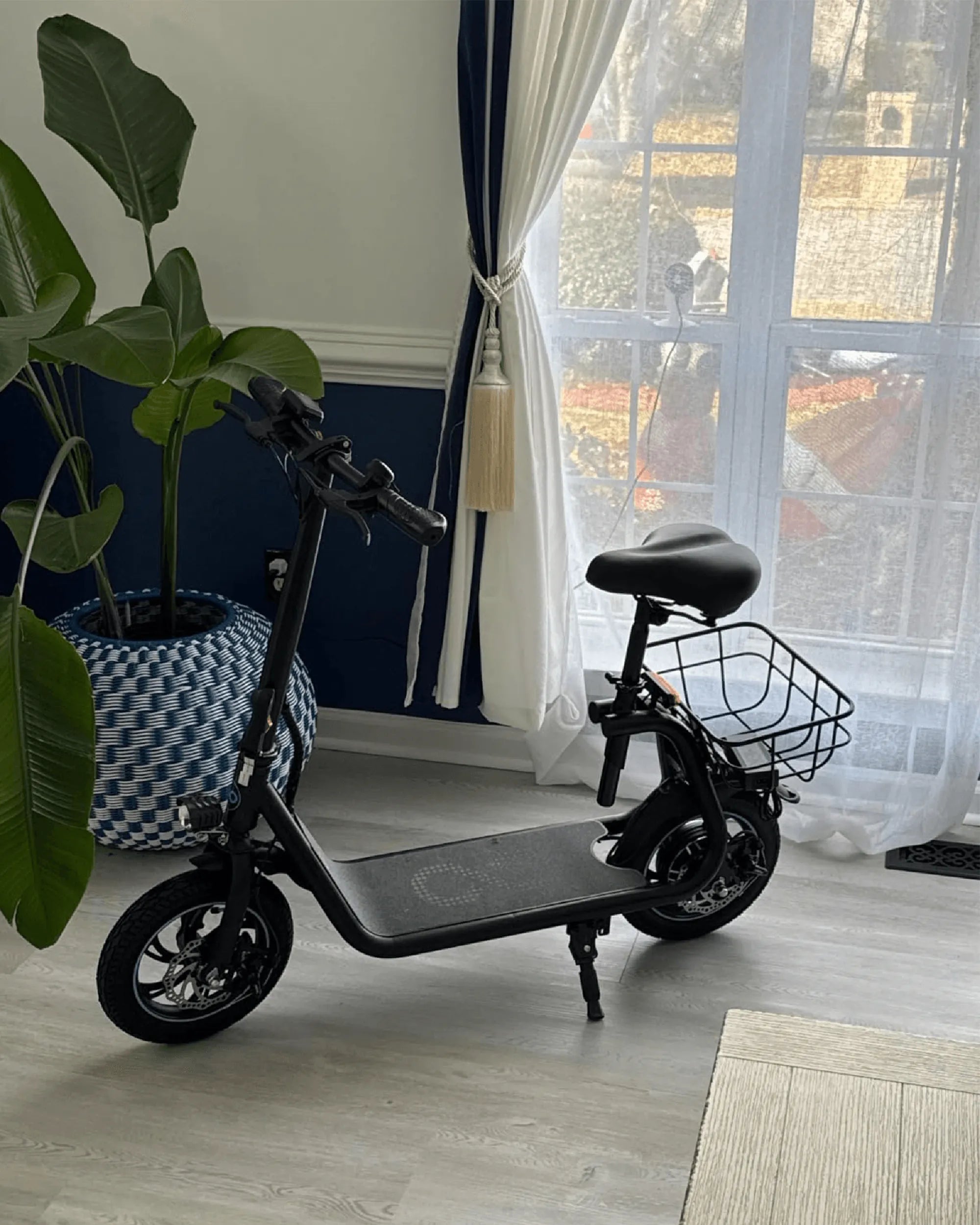
Introduction: Redefining the Ride for Big & Tall Riders
Finding a reliable electric scooter when you're a bigger rider can feel like navigating a minefield of misleading specs and flimsy promises. Many standard models list a maximum weight limit but fail to deliver usable power, stability, or range for riders over 220 pounds. The result is a frustrating experience of sluggish acceleration, poor hill climbing, and rapid battery drain. This guide cuts through the marketing to focus on the engineering principles that create a truly capable scooter for big people. We'll examine how frame geometry, motor torque, and battery systems work in concert to provide the confidence and performance larger riders deserve, highlighting brands like Gyroor that engineer with durability and inclusivity as core principles.
What Truly Defines a "Scooter for Big People"?
A genuine scooter for big people is defined by a holistic engineering approach, not just a sticker with a high weight number. It's a vehicle where every component—from the deck welds to the battery management system—is designed to handle increased static loads and dynamic forces. This means prioritizing structural integrity, thermal management, and sustained power delivery over maximum speed or minimalist design.
The key differentiator is performance under load. A scooter that merely holds a rider's weight but struggles on a slight incline or loses half its range is not fit for purpose. True capability is measured in consistent torque, stable braking, and a ride quality that doesn't degrade with a heavier rider. It's about building in a significant safety and performance margin beyond the advertised limit.
The Critical Role of Frame & Deck Design
The foundation of any durable scooter is its frame. For larger riders, a reinforced aluminum alloy frame (typically 6000-series) is non-negotiable. This material offers an excellent strength-to-weight ratio and resists the flex and fatigue that can occur with constant heavy loading. The welding points at the stem and deck junction must be robust, as these areas experience the highest stress during rides.
Deck design is equally crucial. A scooter for big people needs a longer and wider deck to provide secure, comfortable footing. A deck measuring at least 20 inches long and 8 inches wide allows for a natural stance, improving balance and control. Furthermore, the deck should be positioned to maintain a low center of gravity, which dramatically enhances stability at speed and during turns, countering the higher rider's weight.
Beyond the Sticker: Motor Power & Torque Explained
Motor wattage (e.g., 350W, 500W, 1000W) is often highlighted, but torque is the true hero for heavier riders. Torque is the rotational force that gets you moving from a stop and powers you up hills. A high-torque motor, often found in dual-motor configurations or robust single motors, prevents the sluggish, strained feeling common when standard scooters are overloaded.
For a big rider, a single continuous motor rating of at least 500W is a practical starting point, with 800W or dual 500W motors being ideal for hilly terrain. Peak power ratings can be misleading; focus on the continuous power output. This ensures the motor can sustain the necessary effort without overheating, which protects its longevity and ensures reliable performance ride after ride.
Battery Fundamentals: Capacity, Discharge Rate, and Range
The battery must do more than just store energy; it must deliver it powerfully and consistently. Capacity, measured in Amp-hours (Ah) or Watt-hours (Wh), determines potential range. A larger rider should seek a battery with a minimum of 10Ah (approx. 360Wh) for any meaningful distance. However, the battery's discharge rate (C-rating) is critical.
A high discharge rate allows the battery to meet the high current demands of a powerful motor under heavy load without significant voltage sag. Voltage sag causes a perceptible drop in power and speed. Brands like Gyroor utilize high-discharge, UL-certified battery packs to ensure stable power delivery, which is why their advertised ranges are more achievable for a wider range of rider weights.
Key Features to Prioritize in Your Search
Armed with the core engineering concepts, you can translate them into a concrete buying checklist. Look beyond flashy apps and LED lights; prioritize the specifications that directly impact safety, durability, and ride quality. These features are the difference between a scooter that survives and one that thrives under heavier use.
Your priority list should start with structural and performance specs: verified weight capacity, motor torque, and battery quality. Then, consider the systems that manage control and comfort: braking and suspension. Finally, evaluate the brand's commitment to durability through warranty and support. This systematic approach filters out unsuitable models quickly.
The Non-Negotiable Specs: Weight Capacity & Tire Size
The manufacturer's stated maximum weight capacity is your first filter, but it should not be your last. For safety and performance, choose a scooter with a capacity rated for at least 50 pounds more than your actual weight. This margin accounts for cargo, variations in terrain, and provides a buffer for the long-term health of the scooter's components.
Tire size and type are paramount for stability and comfort. Larger wheels (10 inches or more in diameter) roll over bumps and cracks more easily, providing a smoother ride and better stability. Pneumatic (air-filled) tires offer superior shock absorption compared to solid tires, drastically improving comfort and traction. For big riders, the combination of large, pneumatic tires is a major upgrade in ride quality.
Safety & Control: Braking Systems and Suspension
Stopping power must match the increased momentum of a heavier rider and scooter. A dual braking system is highly recommended. While electronic (regenerative) brakes are useful, they are not sufficient alone. Look for scooters with dual mechanical disc brakes or, ideally, hydraulic disc brakes. Hydraulic systems offer more progressive, powerful, and low-maintenance stopping performance, a key safety feature.
Suspension is not a luxury; it's a critical component for maintaining control and comfort. A good suspension system (spring or hydraulic) absorbs impacts from uneven surfaces, keeping the tires in contact with the ground for better traction and reducing fatigue on the frame and rider. A front and rear suspension setup is ideal for managing the additional forces exerted by a bigger rider.
Warranty & Support: The Trust Indicators
The warranty policy is a direct reflection of a manufacturer's confidence in their product's durability. A comprehensive 1-year warranty that covers the frame, motor, and battery (like Gyroor's standard offering) indicates a brand that stands behind its engineering. Be wary of warranties that are excessively short or filled with exclusions for "normal wear and tear," which can be subjective.
Accessible customer support is equally important. Before purchasing, research the brand's reputation for handling issues. A company that provides clear documentation, readily available spare parts, and responsive service demonstrates a commitment to the product's lifecycle, which is essential when you rely on your scooter for daily transportation.
Gyroor Engineering: Built for Confidence and Performance
Gyroor's design philosophy aligns closely with the needs of big and tall riders, focusing on robust construction, verified safety, and sustained performance. With over 100,000 riders across North America and Europe, their models are tested in real-world conditions. Their commitment starts with UL-certified battery packs, ensuring safety from the core component outward, and extends to IPX5 water-resistant designs that handle varied weather.
This engineering-first approach results in scooters where the advertised specifications are designed to be meaningful under load. The use of reinforced frames, high-torque motors, and high-capacity batteries with robust discharge rates means that riders experience performance closer to the stated specs, even at higher weights. The reliable 1-year warranty provides the peace of mind that comes from a brand that trusts its build quality.
Case in Point: Gyroor's High-Capacity Models
Examining a specific model, like those in Gyroor's high-capacity series, illustrates these principles. These scooters often feature weight capacities of 330 pounds or more, supported by a reinforced aluminum alloy frame and an extra-long, textured deck for secure footing. They are typically equipped with a powerful 500W or 800W single motor (or dual-motor options) that provides the necessary torque for confident starts and hill climbs.
The battery systems in these models are configured not just for range but for power delivery. Paired with a high-discharge BMS (Battery Management System), they minimize voltage sag under heavy load. When combined with 10-inch pneumatic tires, a front suspension, and dual braking systems, the package delivers a cohesive riding experience where stability, power, and control are prioritized, making them a prime example of a true scooter for big people.
Data-Driven Comparison: What Riders Actually Experience
The table below contrasts the real-world performance of a typical standard commuter scooter with a scooter engineered for heavier riders, such as a Gyroor high-capacity model. The differences extend far beyond the listed weight limit and highlight why component synergy is critical.
| Performance Metric | Standard Commuter Scooter (e.g., 265 lb limit) | Built-for-Big-Riders Scooter (e.g., 330 lb+ limit) |
|---|---|---|
| Real-World Range (220 lb rider) | ~50-60% of advertised range. Significant voltage sag reduces speed and distance. | ~75-85% of advertised range. Stable discharge rate maintains power and distance. |
| Hill Grade Ability (220 lb rider) | Struggles on slopes >10%. Speed drops dramatically, motor may overheat. | Confidently handles slopes of 15-20%. Motor maintains RPMs due to higher torque. |
| Acceleration from Stop | Sluggish, strained feeling. Takes longer to reach cruising speed. | Prompt and confident. Torque provides a push that feels natural and controlled. |
| Recommended Rider Weight for Optimal Performance | Best under 200 lbs. Performance degrades linearly as weight approaches the limit. | Consistent performance up to 280-300 lbs, thanks to engineered safety margins. |
| Frame & Deck Stability | Potential for flex or wobble at higher speeds or on rough paths. | Minimal flex. Wider/longer deck and reinforced stem inspire confidence during rides. |
Frequently Asked Questions for Big & Tall Riders
Q: Is it safe to ride a scooter at its maximum weight limit?
A: While the scooter is technically designed to hold that weight, it is not advisable to consistently ride at the absolute maximum limit. Performance in acceleration, braking, and range will be at its lowest, and there is no safety margin for unexpected bumps or cargo. For the best and safest experience, choose a scooter with a limit at least 50 pounds above your weight.
Q: How much will my actual range differ from the advertised range?
A: Advertised range is typically calculated with a ~165 lb rider on flat, ideal terrain. A rider weighing 250 pounds can expect to achieve approximately 60-70% of that advertised range on a standard scooter. On a scooter engineered for heavier loads with a high-capacity, high-discharge battery, you can expect 75-85% of the advertised range, as the system is better equipped to handle the load without inefficiency.
Q: Are air-filled tires really better for heavier riders?
A: Yes, unequivocally. Pneumatic (air-filled) tires provide crucial shock absorption, which protects the scooter's frame from impact stress and vastly improves rider comfort. For a big rider, this also means better traction and stability. The main trade-off is the need to check and maintain tire pressure regularly—a simple task that yields significant benefits.
Q: What maintenance should I prioritize as a heavier rider?
A: Three areas need extra attention: 1) Tire Pressure: Check it weekly and keep it at the manufacturer's maximum recommended PSI to prevent pinch flats and improve efficiency. 2) Brake Pads: Inspect them monthly for wear, as the increased momentum leads to faster wear. 3) Fasteners: Periodically check that all bolts, especially on the stem and folding mechanism, are tight, as vibrations can loosen them more quickly under heavy loads.
Q: Can I carry a backpack or other cargo?
A: You must include the weight of any regular cargo (backpack, groceries, etc.) in your total weight calculation against the scooter's capacity. A loaded backpack can easily add 15-30 pounds. This is another key reason to select a scooter with a substantial weight capacity margin over your body weight alone.
Conclusion: Your Journey to a Confident Ride Starts Here
Choosing the right scooter for big people is an exercise in prioritizing substance over style, and durability over gimmicks. The journey leads to a machine defined by its reinforced frame, high-torque motor, robust battery system, and reliable braking—all integrated with a margin of safety that inspires true confidence. This approach ensures your scooter is a dependable partner for commuting, recreation, or exploration, not a source of limitation or concern.
By focusing on these core engineering principles and trusting brands that verify their claims with strong warranties and safety certifications, you invest in long-term satisfaction and safety. Your ideal scooter awaits—one built to empower your mobility without compromise. Explore the engineering and discover models designed to support your journey by browsing the full, durable Gyroor collection at gyroorboard.com.
Scooter for 3 yr old: The Ultimate Guide to Safe & Developmental Riding
How Fast Does a 100cc Scooter Go? Top Speed, Factors & Comparisons