



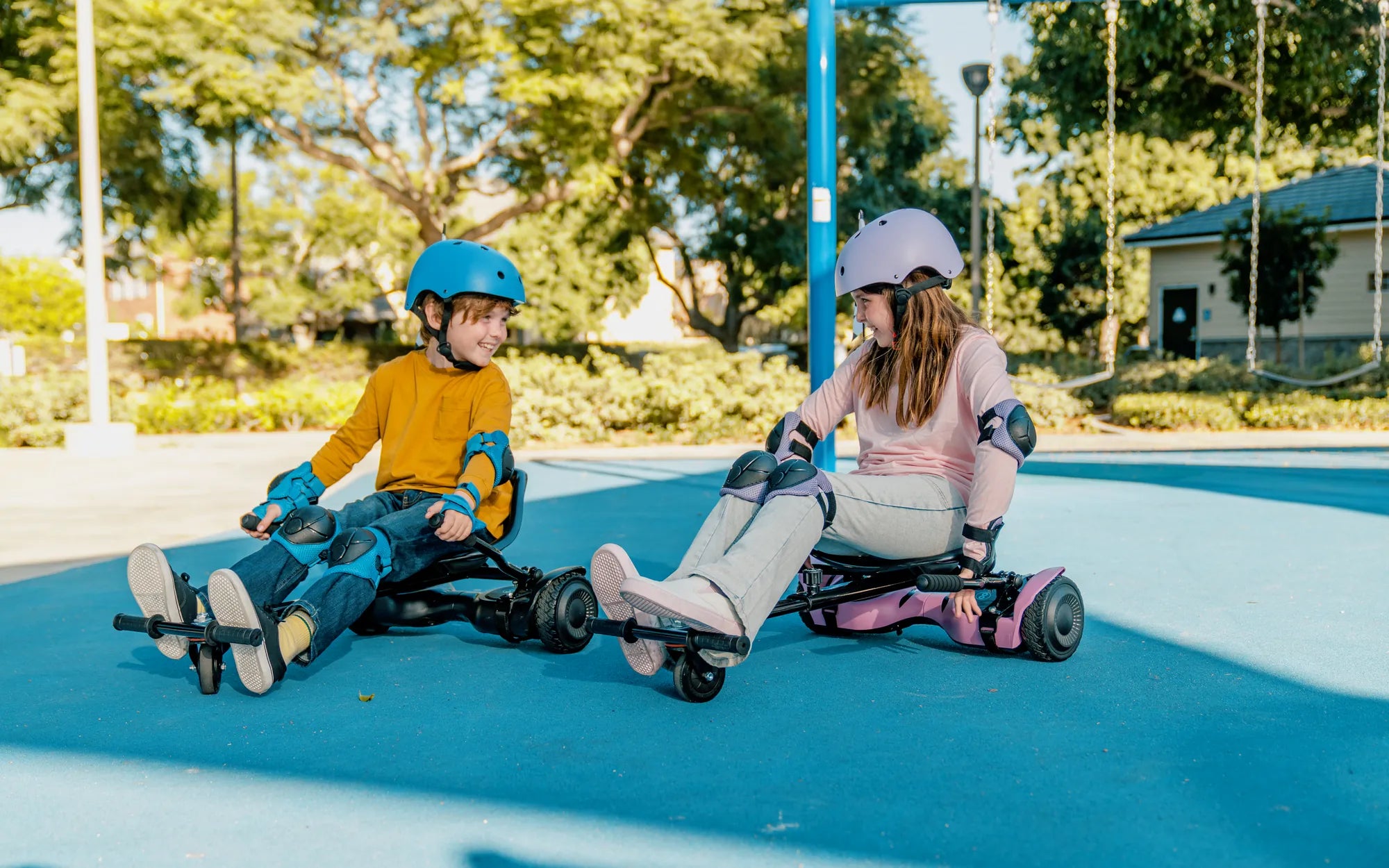
Choosing the right scooter for a 10-year-old is a critical decision that balances exhilarating fun with fundamental safety. At this pivotal age, children seek independence and adventure, yet they require equipment that can reliably support their growing skills and boundless energy. This guide serves as your comprehensive resource, cutting through the marketing noise to focus on the factual, engineering-based features that truly matter. You will learn how to evaluate safety certifications, match scooter specifications to your child's development, and understand the long-term value of investing in a durable, well-designed ride from a trusted brand like Gyroor, a leader in personal electric transport trusted by over 100,000 riders.
Why the Right Scooter Matters for Your 10-Year-Old
A 10-year-old is at a unique developmental crossroads. They possess improved coordination and judgment compared to younger children but are not yet ready for adult-level vehicles. The ideal scooter for kids 10 years old must bridge this gap, offering controlled performance to build confidence while incorporating non-negotiable safety features. A poorly chosen scooter can lead to frustration, disuse, or worse, preventable accidents.
Selecting a scooter is an investment in your child's outdoor activity, independence, and understanding of responsible mobility. It's not merely a toy; it's a first vehicle. This decision impacts where they can go, how they interact with their environment, and the safety habits they will carry into adolescence. The market is flooded with options, making it essential to prioritize verified quality over flashy aesthetics or unrealistic performance claims.
Brands that engineer specifically for young riders, such as Gyroor, build models with this delicate balance in mind. Their designs incorporate speed limiters, robust braking systems, and stable geometries that cater to a 10-year-old's physique and skill level. Understanding this context is the first step in making an informed choice that delivers years of reliable service and safe enjoyment.
Key Factors to Consider When Buying a Scooter for a 10-Year-Old
Navigating the purchase requires a structured evaluation of several interconnected factors. These elements determine not only immediate satisfaction but also the scooter's suitability as your child grows. The core considerations are safety, size, durability, and intended use. Each factor must be weighed against your child's specific maturity, commute needs, and local riding environment.
Ignoring any of these pillars can result in a mismatch. For instance, a scooter with excessive power but poor brakes is a clear hazard. Similarly, a heavy, non-adjustable model may be quickly outgrown or become a chore to handle. A systematic approach ensures the scooter for kids 10 years old you select is a perfect fit, promoting safe riding habits from day one.
Safety First: Non-Negotiable Features
Safety is the paramount concern. The foundational features include a reliable, multi-method braking system. Look for models that combine an electronic brake (regenerative or foot) with a mechanical disc or drum brake. This redundancy ensures stopping power is maintained even if one system is wet or experiences a minor fault. Bright, always-on LED headlights and taillights are essential for visibility, not just at dusk but during daytime rides.
The deck should have a textured, slip-resistant surface and be wide enough for stable foot placement. Perhaps the most critical hidden safety component is the battery. Insist on a UL-certified battery pack, like those used in all Gyroor scooters. This certification means the battery has passed rigorous independent testing for electrical, mechanical, and fire safety, offering peace of mind that is absolutely non-negotiable for a child's vehicle.
Size & Adjustability: Matching the Scooter to Your Growing Child
A properly sized scooter is crucial for control and confidence. The handlebar height should be adjustable to sit between your child's waist and lower chest when standing on the deck. This range allows for an upright, comfortable riding posture with optimal steering leverage. Most 10-year-olds will fit a scooter with an adjustable range of approximately 30 to 40 inches.
The deck length should accommodate both feet standing side-by-side or in a comfortable staggered stance. A deck that is too short feels unstable. Furthermore, consider the overall weight of the scooter. While durability often adds weight, a model that is too heavy becomes unmanageable for a child to carry up stairs or lift onto a bus rack. A target weight of 20-30 pounds is typically manageable for an average 10-year-old.
Durability & Build Quality: Withstanding the Test of Time
Ten-year-olds are not gentle. A scooter must withstand jumps off curbs, rides over rough pavement, and the occasional tip-over. The frame material is the skeleton; aerospace-grade aluminum alloy offers an excellent strength-to-weight ratio, resisting corrosion and fatigue. Welds should be clean and consistent, not rough or globby.
Tire choice is a key durability factor. Air-filled (pneumatic) tires provide superior shock absorption and traction but require occasional inflation and are prone to punctures. Solid or honeycomb tires are maintenance-free and puncture-proof but offer a harsher ride. For general use, many quality scooters for kids 10 years old use robust solid tires. Additionally, an IPX5 water-resistance rating, a standard on Gyroor models, means the scooter can handle spray from puddles and light rain, protecting its electrical components from moisture damage.
Electric vs. Kick Scooters: Which is Right for Your 10-Year-Old?
This fundamental choice dictates the riding experience, cost, and required responsibility. The decision should be based on your child's primary use case, maturity level, and your willingness to manage charging and maintenance.
| Feature | Electric Scooter | Kick Scooter |
|---|---|---|
| Power Source | Rechargeable Battery & Motor | Human Power (Kicking) |
| Typical Use | Commuting, Longer Rides, Fun | Recreation, Short Trips, Tricks |
| Physical Exertion | Low to Moderate | High |
| Top Speed | 10-15 mph (with limiters) | Determined by kicking strength |
| Range | 10-15 miles per charge | Unlimited |
| Cost | Higher Initial Investment | Generally Lower Cost |
| Responsibility | Charging, Speed Awareness | Basic Coordination & Balance |
The Case for Electric Scooters: Power, Range, and Responsibility
Electric scooters unlock new possibilities for a 10-year-old. They are ideal for longer trips to school or a friend's house, provide assist on hills, and deliver a thrilling sense of autonomy. Modern electric models designed for kids prioritize controlled performance through multiple speed modes (e.g., a beginner mode capped at 7 mph) and robust parental controls.
Choosing an electric scooter for kids 10 years old is also a lesson in responsibility. It teaches children about energy management (monitoring battery levels), safe charging practices, and heightened situational awareness due to higher consistent speeds. Brands like Gyroor engineer these lessons into their products with features like clear battery indicators, smart battery management systems, and speed limiters that parents can set.
The Benefits of Kick Scooters: Simplicity, Exercise, and Fundamental Skills
Kick scooters remain a fantastic choice. They are inherently simple, with no batteries to charge or motors to maintain. They provide excellent cardiovascular exercise and help develop core strength, balance, and coordination—fundamental skills that translate to biking, skating, and other sports. The lower cost and virtually unlimited range make them perfect for recreational use around the neighborhood or park.
For a child new to wheeled sports, a kick scooter is the perfect training tool. It builds the foundational balance and steering proficiency that makes transitioning to an electric model later on much smoother and safer. It’s a low-stakes way to learn road etiquette and maneuvering before adding powered acceleration into the mix.
Top Features to Look For in a 10-Year-Old's Scooter
Beyond the broad categories, specific features define a superior riding experience. These details separate a generic product from one that is thoughtfully engineered for a young rider's needs.
Motor Power & Speed Settings: Controlled Performance
For electric scooters, motor power is measured in watts (W). A 250W to 350W motor is typically sufficient for a 10-year-old, providing adequate torque for hills and acceleration without being excessive. Far more important than peak power is the presence of multiple, configurable speed settings. A scooter should start in a beginner mode (≤8 mph) and allow progression to intermediate (10-12 mph) and possibly advanced modes (15 mph) as skills and judgment improve. This graduated approach is a critical safety and confidence-building tool.
Battery Life & Range: Planning for Adventures
Advertised range is often based on ideal conditions. For real-world planning, assume a range of 10-15 miles on a single charge for a typical kid's model, factoring in stops, starts, and slight inclines. This is more than enough for several days of neighborhood use or a round-trip commute. The battery's quality is paramount. Again, a UL-certified battery, like those from Gyroor, ensures not only safety but also consistent performance over its 500+ charge cycle lifespan, meaning it won't significantly degrade after a single season of use.
Portability & Weight: Can Your Child Manage It?
Portability is a practical daily concern. A folding mechanism is highly valuable, allowing the scooter to be compactly stored in a closet or car trunk. However, the folding latch must be robust and secure. The overall weight, as mentioned, should allow your child to comfortably carry the scooter for short distances. A scooter that is a struggle to lift will often be left at home, defeating its purpose. Balancing durability (which adds weight) with portability is a key design challenge that quality brands solve with advanced materials.
The Gyroor Advantage: Engineered for Safety and Peace of Mind
When evaluating brands, Gyroor's specifications directly address the core concerns of parents seeking a scooter for kids 10 years old. Their engineering philosophy is built on three pillars that translate directly to peace of mind.
First, every Gyroor scooter uses a UL-certified lithium-ion battery pack. This isn't just a feature; it's a fundamental safety standard. It means the power source has been independently verified to mitigate risks of overheating, short-circuiting, or fire. Second, the IPX5 water-resistant rating ensures the scooter's electronics are protected from water spray from any direction. This durability feature means a sudden rain shower or a ride through a puddle won't end the scooter's life.
Finally, Gyroor backs its products with a comprehensive 1-year warranty and responsive, US-based customer support. This commitment guarantees long-term value and provides a direct line for assistance, ensuring your investment is protected. For a parent, these are not mere specifications—they are tangible promises of reliability, safety, and support.
Essential Safety Gear and Riding Rules
The safest scooter is only one part of the equation. Proper gear and clear rules are equally vital in creating a safe riding environment.
Must-Have Protective Gear
This gear is non-negotiable and must be worn for every ride:
- Helmet: Must be CPSC (U.S.) or ASTM certified. Ensure it fits snugly and is replaced after any significant impact.
- Knee and Elbow Pads: These protect the joints most vulnerable in a fall.
- Wrist Guards: Crucially important, as instinct leads to putting hands out during a fall, making wrists highly susceptible to fractures or sprains.
- Closed-Toe, Sturdy Shoes: No sandals or flip-flops. Shoes provide ankle support and protect toes.
Establishing Ground Rules for Safe Riding
Before the first ride, establish and consistently enforce these rules:
- Protective gear is always worn, no exceptions.
- Riding is permitted only on sidewalks, bike paths, or parks—never on roads with vehicle traffic.
- Obey all pedestrian traffic signals and crosswalks.
- Be hyper-aware of surroundings: watch for cars backing out, pedestrians, and road hazards like cracks or gravel.
- No riding after dark unless the scooter has excellent lights and the rider is accompanied by an adult.
- Never carry passengers.
Frequently Asked Questions (FAQs)
Q: What is a good top speed for a 10-year-old's electric scooter?
A: A maximum speed of 15 mph is generally appropriate for a responsible 10-year-old, but the scooter must have a beginner mode starting around 7-8 mph. The ability to limit speed as they learn is more important than the top speed.
Q: How important is water resistance?
A: Extremely important. An IPX5 rating or similar protects the scooter's electrical components from rain and puddle splash. It dramatically increases the scooter's durability and usability in real-world conditions.
Q: Can the scooter handle a small hill?
A: A scooter with a 250W+ motor should handle moderate inclines. However, steep hills may reduce speed and battery range significantly. Always test on local terrain.
Q: What maintenance does an electric scooter require?
A>Regular maintenance includes checking tire pressure (if pneumatic), ensuring bolts are tight, cleaning the deck and frame, keeping the battery charged between 30-80% for storage, and inspecting brakes for wear.
Q: Why is a UL-certified battery critical?
A: It is the benchmark for electrical and fire safety. Certified batteries undergo strict testing for overcharge, short circuit, and extreme temperature performance. For a child's product, this independent verification is essential for risk mitigation.
Investing in Fun, Freedom, and Safety
Selecting the ideal scooter for kids 10 years old is an investment that pays dividends in outdoor activity, developing responsibility, and pure joy. The process hinges on prioritizing verified safety features like UL-certified batteries and robust brakes, ensuring a proper and adjustable fit for growing bodies, and choosing a scooter type—electric or kick—that matches your child's maturity and your family's needs. By focusing on durability from reputable brands and coupling the scooter with non-negotiable safety gear and rules, you create a foundation for countless hours of safe adventure. This ultimate guide empowers you to make a confident, informed decision that values long-term reliability and peace of mind as much as immediate excitement.
Ready to explore scooters built to these exacting standards? Browse the full collection of UL-certified, IPX5 water-resistant electric scooters and kick models engineered for young riders at Gyroor. Visit gyroorboard.com to find the perfect ride that delivers safety, durability, and fun for your 10-year-old's next adventure.
Hoverboard Types: A Comprehensive Guide to Choosing the Right One
Black Kids Scooter: The Ultimate Guide to Fun and Safety for Young Riders