



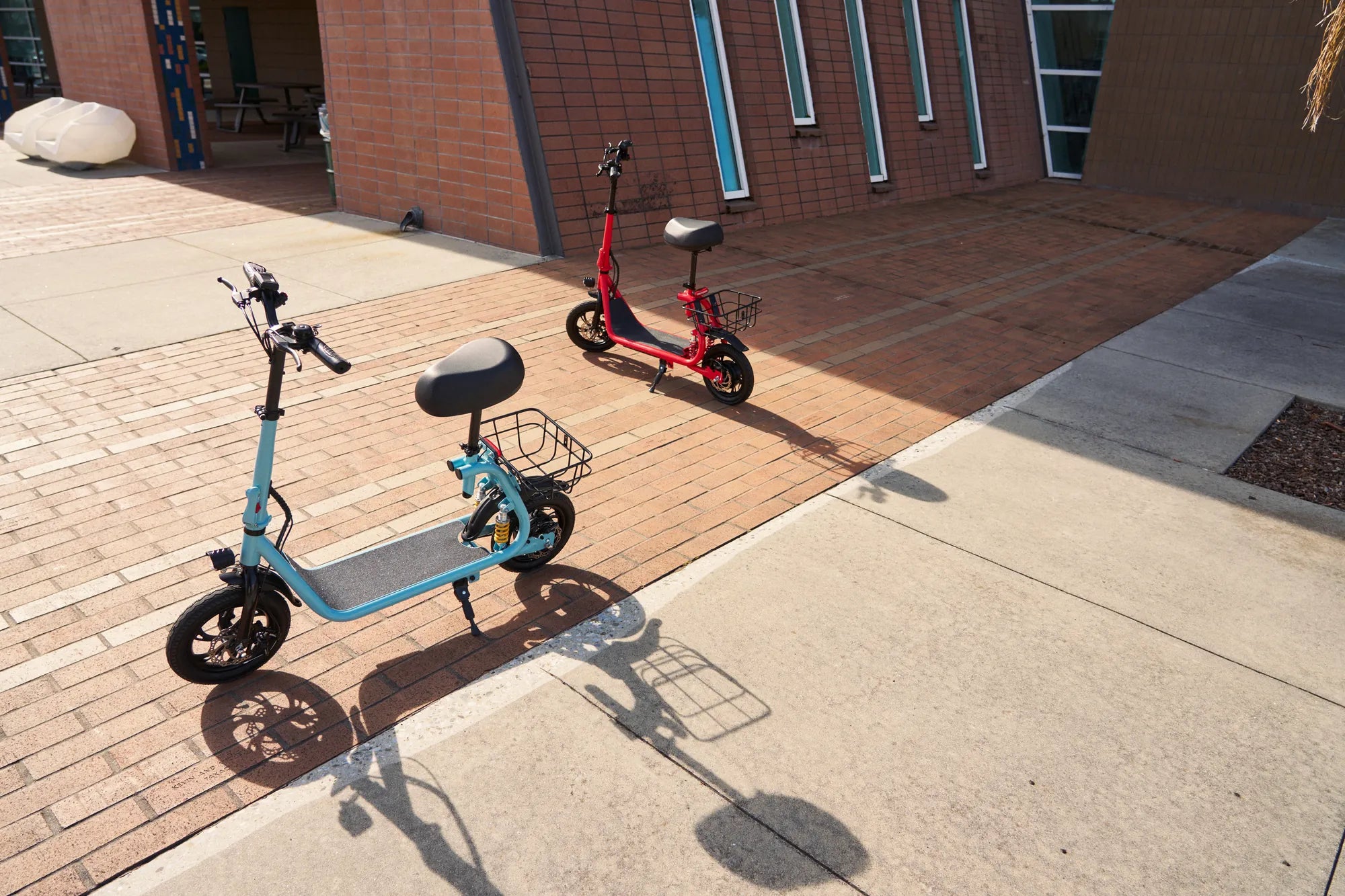
Conquering Winter on Two Wheels
Winter transforms familiar streets into challenging obstacle courses of ice, compacted snow, and treacherous slush. For electric scooter riders, this season demands more than just bundling up—it requires a fundamental upgrade to the only points of contact with the ground: your tires. Standard fair-weather tires become liabilities in freezing conditions, drastically increasing the risk of slips, falls, and loss of control.
This article provides a comprehensive, data-driven guide to scooter winter tires, the critical component for maintaining safety and performance when temperatures drop. You will learn the engineering behind winter-specific tires, how to select the right type for your local climate, and the practical steps for installation and complementary scooter preparation. As a brand trusted by over 100,000 riders, Gyroor designs its electric scooters with durability for diverse conditions, but understanding tire technology is key to unlocking true all-weather capability.
Why Standard Scooter Tires Fail in Winter
Most stock electric scooter tires are designed for optimal performance on clean, dry pavement. Their failure in winter is not a flaw but a consequence of their fair-weather design meeting incompatible conditions. The primary issue is the rubber compound. Standard tires use harder rubber for longevity and low rolling resistance, but this compound hardens further in cold temperatures, becoming glass-like and losing its ability to conform to road surfaces.
This loss of pliability destroys grip. On ice or packed snow, a hard tire simply skates across the surface. The tread pattern is another critical failure point. Summer tires often feature minimal tread or slick designs for maximum asphalt contact, which are utterly ineffective at evacuating snow, slush, or water. This leads to hydroplaning even at low speeds on wet winter roads.
Puncture risks also skyrocket. Winter roads hide debris like sharp ice shards, chunks of road salt, and broken pavement under snow. The standard casing on many commuter tires offers insufficient protection against these hazards. Relying on standard scooter winter tires is a significant safety compromise, turning a routine commute into a high-risk activity.
Key Features of True Scooter Winter Tires
True winter tires are engineered from the ground up to address the specific challenges of cold, wet, and icy riding. Their design incorporates three fundamental features that differentiate them from all-season or summer models.
Softer, Cold-Adapted Rubber Compound
The core innovation is a specialized rubber compound infused with silica and other additives. This formulation remains flexible and pliable in sub-zero temperatures, allowing the tire to maintain conforming contact with the road. Where a hard tire skids, a soft winter compound grips, providing crucial traction for acceleration, braking, and cornering. This compound is designed to perform in a specific temperature range, typically below 45°F (7°C).
Aggressive, Multi-Directional Tread Patterns
Winter tire tread is a masterpiece of functional geometry. It features deep, biting edges (lugs) to dig into snow and slush, coupled with thousands of tiny slits called sipes. These sipes flex and create multiple gripping edges on ice and wet surfaces. The pattern also includes wide circumferential and lateral channels to quickly channel water, slush, and snow away from the contact patch, preventing buildup and maintaining control.
Enhanced Puncture Protection and Casing
To combat winter debris, quality winter tires often incorporate a reinforced casing or a belt of puncture-resistant material like Kevlar. This layer sits between the tread and the inner tube (or the liner in a tubeless setup), providing a robust shield against penetration from ice, salt, and hidden curbs. This durability is essential for reliable winter commuting.
Studded vs. Studdable vs. All-Weather: Choosing Your Winter Tire
Selecting the right type of winter tire depends on your local winter severity, legal restrictions, and riding style. The following table provides a clear, data-driven comparison to guide your decision.
| Tire Type | Best For | Key Feature | Traction on Ice | Noise/Ride on Dry Pavement | Legal Considerations |
|---|---|---|---|---|---|
| Studded Tires | Extreme ice; frequent riding on frozen surfaces | Metal studs (60-120 per tire) embedded in tread | Exceptional | Noisy; reduced grip & higher wear | Often restricted; check local laws |
| Studdable Tires | Versatile performance; mixed ice/snow/dry conditions | Pre-drilled holes for adding/removing studs as needed | Excellent (with studs) | Moderate (without studs) | Depends on if studs are installed |
| Advanced All-Weather Tires | Mild winters; cold, wet roads & light snow | Winter-optimized compound & tread, no studs | Good | Quiet; good performance | Universally permitted |
Studded Tires are the ultimate solution for sheer ice. The tungsten carbide or ceramic studs act like cleats, biting directly into the ice surface. However, they are often prohibited by local ordinances due to road wear, and they perform poorly on bare pavement, feeling slippery and causing accelerated wear.
Studdable Tires offer maximum flexibility. You can install studs for an icy week and remove them for a dry spell, making them a cost-effective choice for variable climates. They rely on the same aggressive tread and soft compound as dedicated winter tires when used without studs.
Advanced All-Weather Tires are a high-performance option for urban riders facing cold, rain, and occasional snow. Brands like Gyroor may equip certain models with tires that balance a longer lifespan with a tread pattern and compound better suited to cooler, wet conditions than standard summer tires, though they are not a substitute for true scooter winter tires in severe winter.
Practical Guide: Sourcing and Installing Winter Tires
Upgrading to winter tires is a systematic process. First, verify compatibility. Check your scooter's manual for the exact wheel size (e.g., 8.5x2, 10x2.125). Ensure there is sufficient clearance between the current tire and the scooter's fender and fork, as some winter treads may be slightly larger.
Source your tires from reputable retailers or the manufacturer's official parts store. Gyroor, for instance, may offer compatible winter-ready tires or recommendations for its models, ensuring fit and maintaining warranty coverage. For installation, you have two primary options. A professional bike or scooter shop is highly recommended. They have the tools and expertise to handle tight tire beads, ensure proper tube seating, and balance the wheel, which is crucial for safety at higher speeds.
For the experienced DIYer, the process requires tire levers, a valve core tool, and patience. Key steps include: fully deflating the old tire, using levers to pry the bead off the rim, removing the tube, seating one side of the new winter tire, inserting the tube (ensuring no twists), and carefully working the second bead onto the rim. Post-installation, inflate to the recommended PSI (often slightly lower in winter for better contact, but check manufacturer specs), and spin the wheel to check for any wobbles or rubbing against the frame.
Beyond Tires: Essential Winter Riding Gear & Scooter Prep
Winter tires are the most critical upgrade, but they are part of a holistic winter riding system. For the rider, gear is paramount. An insulated full-face helmet or a balaclava under your helmet is essential. Cold-weather motorcycle or snowboarding gloves provide dexterity and warmth. A clear visor or goggles prevents fogging and protects from wind and precipitation.
Your scooter also needs attention. Brake performance can diminish in wet and cold conditions; check pad wear and ensure cables are lubricated. Battery range will decrease in the cold. Store your scooter in a temperate place when not in use, and allow the battery to warm to room temperature before charging. Always use the manufacturer's charger, like the UL-certified ones provided with Gyroor scooters, which are tested for over 500 charge cycles.
Use your lights constantly for visibility in gloomy conditions. Finally, after riding on salted roads, wipe down your scooter's frame, stem, and undercarriage with a damp cloth to prevent corrosion and rust, protecting your investment for seasons to come.
Frequently Asked Questions (FAQ) on Scooter Winter Tires
Q: Can I just ride slower on my all-season tires instead of buying winter tires?
A: While reducing speed mitigates risk, it does not solve the fundamental physics problem. All-season tires harden and lose grip in the cold. Slower speeds may reduce the severity of a fall, but they do not prevent the initial loss of traction during braking or turning. Winter tires are an active safety system, not just a cautionary measure.
Q: Are winter tires worth the cost if I only ride occasionally in winter?
A> Yes, if you ride at all in freezing or icy conditions. The cost of a set of tires is significantly lower than the medical bills or scooter repair costs from a single slip. For occasional riders, a set of high-quality all-weather or studdable tires (without studs) can be a worthwhile investment for peace of mind and safety.
Q: How do winter tires affect my scooter's range and speed?
A> The softer rubber compound and aggressive tread create slightly higher rolling resistance, which can reduce range by 10-15%. The impact on top speed is usually minimal (1-3 mph). This is a worthwhile trade-off for vastly improved safety and control. Proper tire inflation is key to minimizing range loss.
Q: Can I install winter tires myself?
A> It is possible for mechanically inclined individuals with the right tools (tire levers, pump, valve tool). However, improper installation can lead to pinched tubes, poor seating, or an unbalanced wheel, causing vibrations or sudden deflations. For most riders, professional installation is the safer, more reliable choice.
Q: How should I store my standard summer tires during winter?
A> Clean them thoroughly with soap and water to remove road grime. Ensure they are completely dry. Store them in a cool, dark, and dry place away from direct sunlight, ozone sources (like motors), and extreme temperatures. Ideally, hang them or lay them flat without putting weight on them to prevent deformation.
Ride Confidently Through the Cold
Navigating winter on an electric scooter is not about enduring the elements, but about equipping yourself to master them. The decision to invest in proper scooter winter tires is the single most effective step you can take to ensure your safety, preserve your scooter's integrity, and extend your riding season. By understanding the technology, choosing the right tire for your climate, and preparing your gear and scooter holistically, you transform a daunting challenge into a confident, year-round commuting solution.
Gyroor's commitment to rider safety is embodied in durable, IPX5 water-resistant designs and UL-certified batteries built for reliability. Pairing that engineering with the right tires unlocks your scooter's full all-weather potential. Don't let winter ground you. Equip your scooter with the right tires, gear up, and experience the freedom of riding in every season. Explore compatible options and gear up for safe riding by checking the official Gyroor collection.
50cc 2 Stroke Dirt Bike Top Speed: Real-World Data & Performance Factors
What Happens If My Scooter Gets Wet? A Complete Water Damage Guide