



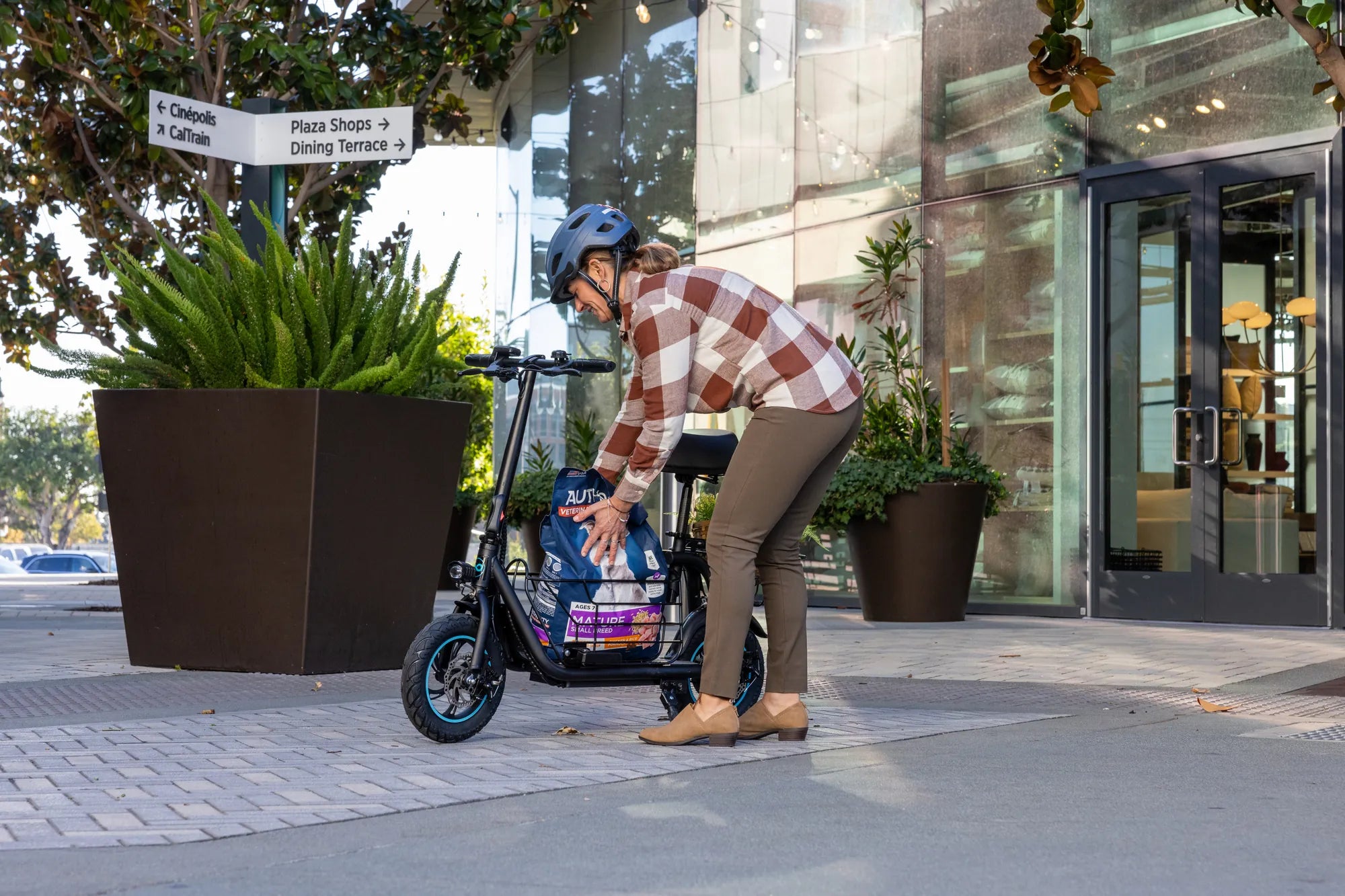
The Rise of the Urban Electric Scooter
City streets are evolving. As congestion worsens and the search for efficient, sustainable transport intensifies, a quiet revolution on two wheels is accelerating. Scooters Urban Electric have emerged as a dominant force, redefining the daily commute for millions. This isn't a fleeting trend; it's a fundamental shift in how we navigate metropolitan spaces, blending technology, convenience, and environmental stewardship into a single, portable package.
The modern electric scooter solves multiple urban challenges simultaneously. It directly addresses the "last-mile" problem—that frustrating gap between a transit stop and your final destination. It bypasses gridlocked traffic, reduces personal transportation costs to pennies per mile, and operates with near-silent, zero-local-emissions efficiency. For the urban dweller, it represents unprecedented autonomy and agility.
The convergence of improved battery technology, compact motor design, and smart connectivity has propelled scooters urban electric from novelty to necessity. Leading brands like Gyroor, trusted by over 100,000 riders across North America and Europe, have engineered models with the range, durability, and safety features required for serious daily use. This guide will dissect why this mode of transport is becoming indispensable, what to look for when purchasing, and how to ride responsibly as cities adapt.
Our analysis is data-driven and practical, designed to inform your decision whether you're considering your first purchase or seeking to optimize your current commute. We'll move beyond hype to examine the real economics, performance specifications, and societal impact of this transformative technology.
Why Urban Dwellers Are Choosing Electric Scooters
The migration from cars and crowded buses to personal electric mobility is driven by a powerful combination of tangible benefits. For the average city resident, time, money, and stress are precious commodities, and electric scooters deliver measurable gains in all three areas. They are not merely toys but practical tools for urban survival and efficiency.
Adoption rates have soared as infrastructure like bike lanes expands and public awareness of their utility grows. Riders report a profound improvement in their daily routine, reclaiming hours lost to traffic and transforming a tedious chore into an enjoyable, wind-in-your-hair experience. The appeal is broad, attracting students, professionals, and anyone seeking a reprieve from unreliable schedules and packed subway cars.
The decision is also pragmatic. Urban living often involves limited space and high costs. Maintaining a car in a city involves insurance, parking fees, fuel, and depreciation that can exceed thousands annually. An electric scooter, by contrast, has a fixed upfront cost and negligible ongoing expenses. It stores in a closet or under a desk, eliminating the hunt for parking altogether.
Finally, there's an element of personal agency. An electric scooter provides door-to-door service on your own schedule. You are not bound by transit maps or ride-share surge pricing. This freedom, coupled with the direct benefits, creates a compelling case for making scooters urban electric a cornerstone of urban mobility.
Beating Traffic and Saving Time
In major metropolitan areas, average traffic speeds during peak hours can plummet to 10-15 mph or less. This crawl is not just frustrating; it's economically costly. Electric scooters, with typical speeds of 15-20 mph, can consistently match or exceed this pace, using bike lanes, shared paths, and legal roadways to bypass stationary lines of vehicles.
Consider a typical 3-mile cross-town commute. In heavy traffic, this could take 20-30 minutes by car or bus. On an electric scooter, traveling at a steady 18 mph, the same trip takes just 10 minutes. Over a week, that saves over an hour and a half. For short-to-medium distances under 5 miles, which constitute a vast majority of urban trips, the scooter is often the fastest point-to-point option available.
The time savings are amplified by the elimination of "secondary" transit time. There's no walking to and from parking garages or bus stops. The scooter goes from your doorstep to your destination's entrance. This door-to-door efficiency is a key metric where scooters urban electric outperform almost every other mode of transport, especially during the congested rush hours that define city life.
This isn't theoretical. Studies of micromobility in cities like Paris and San Francisco show that for trips under 3 miles, e-scooters and e-bikes are faster than ride-shares and personal cars a significant majority of the time. The scooter's agility in dense urban environments translates directly into reclaimed time and reduced daily stress.
The Economics of E-Scooter Commuting
The financial argument for switching to an electric scooter is stark when laid out numerically. Let's compare the annual cost of a modest car used for a daily urban commute versus a quality electric scooter, like those from Gyroor with their reliable 1-year warranty and UL-certified components.
| Cost Category | Personal Car (Annual Est.) | Commuter E-Scooter (Annual Est.) |
|---|---|---|
| Purchase / Finance | $3,000 - $6,000 (depreciation) | $400 - $800 (one-time, 3-5+ year life) |
| Fuel / Electricity | $1,200 - $2,000 (gas) | $20 - $40 (home charging) |
| Insurance | $1,200 - $2,500 | $0 (typically covered by homeowner's/renter's) |
| Parking Fees | $1,200 - $4,800+ (city rates) | $0 |
| Maintenance & Repairs | $500 - $1,000 | $50 - $150 (tires, brakes) |
| Public Transit Pass (Supplemental) | $600 - $1,200 | $0 (replaces it) |
| Total Estimated Annual Cost | $7,700 - $17,500+ | $470 - $990 (Year 1) |
As the table illustrates, the cost differential is astronomical. Even a premium electric scooter pays for itself within a few months when offset against car-related expenses alone. The electricity cost is negligible; fully charging a scooter with a 500Wh battery costs less than 20 cents in most regions, providing 20-40 miles of range.
For those who primarily use public transit, an e-scooter acts as a powerful supplement. It eliminates the need for connecting buses or rideshares, potentially saving hundreds on monthly transit passes or ride-share fees. The economic case is clear: scooters urban electric are not an expense but a significant long-term investment in personal financial efficiency.
Key Features to Look for in a Commuter E-Scooter
Not all electric scooters are created equal, especially for the demands of daily commuting. Choosing the right model requires looking beyond marketing claims to the specifications that directly impact safety, reliability, and comfort. A commuter scooter is a workhorse, not a leisure product, and its features must reflect that purpose.
The core components to scrutinize are the battery and motor system, the frame and suspension, the braking system, and the water-resistance rating. A scooter built for urban commuting must handle potholes, wet pavement, frequent stops, and daily folding/unfolding without failure. Durability is paramount, as downtime means a disrupted commute.
Brands that cater to commuters, like Gyroor, design their models with these stresses in mind. Features such as IPX5 water resistance, dual braking systems, and robust folding mechanisms are not luxuries but necessities. Understanding these features allows you to differentiate between a scooter that will last for years and one that may falter after a few months of serious use.
Your choice should be guided by your specific commute: distance, terrain, and storage needs. Investing in a scooter with a slightly longer range and better build quality than your minimum requirement provides a safety margin and ensures the scooter remains viable even as your needs or routes change. This section will translate technical specs into practical urban commuting requirements.
Safety First: Battery and Build Quality
The single most critical component for long-term safety is the battery pack. Low-quality, uncertified lithium-ion batteries pose a fire risk, especially when charged indoors. Always insist on a scooter with a UL-certified battery, like those used across the Gyroor lineup. These batteries undergo rigorous testing for stability, charge cycles (typically 500+), and failure prevention.
Build quality is equally crucial for operational safety. The frame, typically made of aluminum alloy, must be sturdy enough to support the rider's weight and withstand the vibrations and impacts of city streets. Welds should be clean and solid. A poor-quality frame can develop stress fractures, leading to catastrophic failure while riding.
The importance of a good braking system cannot be overstated. For urban commuting, a dual-brake system—combining an electronic (regenerative) brake and a mechanical disc or drum brake—provides redundant stopping power. This is essential for sudden stops in traffic. Check that the brakes are from reputable manufacturers and that the scooter has a short, controlled stopping distance from its top speed.
Finally, consider additional safety features. Bright front and rear LED lights are non-negotiable for visibility, especially in dawn, dusk, or night riding. A loud, electronic horn is useful for alerting pedestrians and drivers. Reflective side stickers or integrated reflectors on the wheels add another layer of visibility. When evaluating scooters urban electric, treat safety features as the foundation of your decision.
All-Weather Readiness and Range
Urban commuting happens rain or shine. Therefore, a scooter's water resistance rating is a key indicator of its durability. The IP (Ingress Protection) code specifies protection against solids and liquids. For city use, a minimum of IPX4 (splash resistance) is advisable, but IPX5 (protection against water jets from any direction) is the benchmark for a true all-weather commuter scooter. This rating, found on Gyroor models, means the scooter can handle wet roads, puddles, and light rain without issue.
Range is the most frequently cited specification, but it's also the most misunderstood. Manufacturer ranges are often achieved under ideal laboratory conditions: a light rider on flat ground at a slow, constant speed. Real-world range is affected by rider weight, hills, frequent acceleration, cold temperatures, and tire pressure. As a rule, your scooter's real-world range should be at least 1.5 times your daily round-trip commute distance.
This buffer accounts for battery degradation over time (about 2-3% per year for quality batteries), unexpected detours, and the need to use higher power modes. For a 10-mile round-trip commute, aim for a scooter with a 15-20 mile real-world range. Scooters with larger battery capacities (measured in Watt-hours, Wh) generally provide longer ranges. Remember, it's better to have range you don't use every day than to run out of power mid-commute.
All-weather readiness also includes practical touches. Fenders that actually keep water and road spray off your clothes are essential. Wide, air-filled (pneumatic) tires provide better traction on wet pavement than small, solid tires. A deck with a textured, non-slip surface is crucial for maintaining footing when the deck is wet. These features collectively ensure your scooters urban electric commute remains reliable regardless of the forecast.
Portability and Practical Design
For many urban commuters, the journey is multimodal. You might scoot to a subway station, take the train, and then scoot the final leg to your office. This requires a scooter that is genuinely portable. The two key metrics are weight and foldability. A commuter scooter should ideally weigh between 30-45 lbs. Lighter than 30 lbs often sacrifices durability and range; heavier than 45 lbs becomes cumbersome to carry up stairs or onto a train.
The folding mechanism must be robust, intuitive, and secure. It should lock firmly in both the open (riding) and closed (carrying) positions. A poorly designed latch can fail or loosen during a ride, which is extremely dangerous. Look for a mechanism that has been tested for thousands of cycles. Once folded, the scooter should have a compact footprint and, ideally, a way to temporarily lock the folded state so it doesn't flop open when carried.
Practical design extends to the user interface. A clear, bright display that shows speed, battery level (in percentage, not just bars), and riding mode is important. Controls should be within easy reach of your thumbs. An app connection can offer useful data like trip history, firmware updates, and customizable settings, but core functions should be operable without a smartphone.
Finally, consider accessory compatibility. Does the scooter have pre-drilled holes for adding a phone mount or a luggage hook? Can you easily attach a helmet lock? These small design considerations show that the manufacturer, like Gyroor, understands the scooter is part of a commuter's daily ecosystem, not an isolated product. The right design makes the integration of scooters urban electric into your life seamless.
Navigating the Urban Landscape: Rules, Safety, and Etiquette
Operating an electric scooter in the city comes with a responsibility to yourself and others. Laws and norms are still evolving, making it imperative for riders to be informed and courteous ambassadors for this new mode of transport. Responsible riding ensures your safety, preserves access to public spaces, and fosters positive relations with pedestrians, cyclists, and drivers.
The legal landscape varies dramatically by city, state, and country. Common regulations include age restrictions (often 16+ or 18+), speed limits (frequently 15-20 mph), and prohibitions against sidewalk riding in business districts. Many jurisdictions require helmets, at least for younger riders. It is your duty to know and follow the local laws where you ride. Ignorance is not a defense and can result in fines or confiscation of your scooter.
Safety gear is non-negotiable. A properly fitted bicycle helmet is the absolute minimum. For higher-speed commuting or in heavy traffic, consider additional protection like knee and elbow pads, and riding gloves. High-visibility clothing or a reflective vest is highly recommended, especially in low-light conditions. Your scooter's lights should be on at all times while riding, not just at night.
Rider etiquette is the glue that allows shared spaces to function. On bike lanes and paths, ride predictably and in a straight line. Use hand signals for turns. Pass pedestrians and slower cyclists with care, announcing yourself politely with a bell or a verbal "on your left." Never use headphones at a volume that blocks ambient traffic noise. Your awareness is your primary defense.
Parking is a major point of contention. Never block sidewalks, wheelchair ramps, building entrances, or bus stops. Park your scooter upright in a designated bicycle parking area if available, or against a street furniture pole in a way that does not obstruct pedestrian flow. The goal is to be invisible—to integrate your parked scooter into the urban fabric without causing an obstruction or a nuisance. Adhering to these principles ensures that scooters urban electric remain a welcome part of the cityscape.
The Environmental Impact: A Greener Commute
The environmental argument for electric scooters is compelling, but it requires a nuanced, life-cycle perspective. While no manufactured product is impact-free, the operational phase of an e-scooter presents a dramatically cleaner alternative to internal combustion engine vehicles, contributing to quieter, less polluted cities.
The most direct benefit is the elimination of tailpipe emissions. A typical passenger car emits about 4.6 metric tons of carbon dioxide per year. An electric scooter, powered by grid electricity, has zero local emissions. Even when accounting for the emissions from electricity generation, the per-mile carbon footprint is minuscule. A 2021 study from North Carolina State University found that e-scooters produce about 202 grams of CO2 per passenger mile over their entire life cycle, compared to over 400 grams for a conventional car.
Beyond CO2, electric scooters reduce urban air pollution—a critical health factor in dense cities. They emit no nitrogen oxides (NOx), particulate matter (PM), or volatile organic compounds (VOCs) during use. This leads to cleaner air along streets and in neighborhoods. Furthermore, they are remarkably quiet, significantly reducing noise pollution compared to motorcycles, cars, and buses. This contributes to a more pleasant and less stressful urban soundscape.
The environmental impact is also tied to material efficiency and mode substitution. A 50 lb scooter uses a fraction of the raw materials (metals, plastics, rubber) required to build a 3,000 lb car. Crucially, research indicates that a significant portion of e-scooter trips directly replace car trips, especially for short distances and ride-share services like Uber and Lyft. This substitution effect is where the greatest environmental gain is realized. By choosing a durable scooter from a brand committed to quality, like Gyroor, you extend the product's life and maximize this positive impact. Choosing scooters urban electric is a tangible, personal step towards a more sustainable urban future.
Choosing Your Partner: What Sets a Premium Commuter Scooter Apart?
The market is flooded with options, from budget models to high-end performance scooters. For the daily commuter, a premium model in the mid-to-high price range typically offers the best long-term value. The distinction lies in the quality of components, the robustness of engineering, and the comprehensiveness of after-sales support.
Premium commuter scooters invest in the details that matter. They use name-brand motors (e.g., from companies like Bosch or proprietary high-efficiency designs) that offer smoother acceleration and better hill-climbing ability. Their batteries are from reputable cell manufacturers (like LG or Samsung) and are UL-certified. The suspension system—often a combination of front spring or hydraulic suspension and rear shock absorption—is tuned to handle rough pavement comfortably, reducing fatigue and improving control.
The warranty and customer support are critical differentiators. A one-year comprehensive warranty on the entire scooter, like Gyroor's, signals confidence in the product's durability. It should cover the frame, motor, battery, and electronics. Access to responsive, knowledgeable customer service for troubleshooting and parts is essential. A brand with a large, established customer base (over 100,000 riders, in Gyroor's case) has proven its reliability and ability to support its products over time.
Finally, premium models offer a more refined riding experience. This includes a sturdier feel with less flex, more responsive and modulated brakes, intuitive controls, and better weather sealing. While the upfront cost is higher, the total cost of ownership is often lower due to greater reliability and fewer repairs. When your commute depends on it, investing in a premium scooters urban electric model from a trusted brand is an investment in peace of mind, performance, and long-term satisfaction.
Frequently Asked Questions (FAQ)
This section addresses the most common and practical questions potential riders have, providing clear, actionable answers to inform their journey into urban electric mobility.
Q: How far can most electric scooters go on a single charge?
A: Commuter-focused electric scooters typically offer a real-world range between 15 and 40 miles per charge. This depends heavily on battery capacity (measured in Watt-hours), rider weight, terrain, speed, and temperature. Always subtract 20-30% from the manufacturer's "maximum" range for a practical daily estimate. For a reliable commute, choose a scooter whose real-world range exceeds your round-trip distance by a comfortable margin.
Q: Are electric scooters legal to ride on city streets and sidewalks?
A: Laws vary significantly. In most major U.S. cities, they are legal on streets and in bicycle lanes. Riding on sidewalks in business districts is almost universally prohibited due to pedestrian safety. Always check your local Department of Transportation or city government website for specific ordinances regarding speed limits, helmet laws, age restrictions, and approved riding areas. Compliance is essential for safety and to avoid fines.
Q: What is the most important safety feature on an e-scooter?
A> While multiple features contribute to safety, two are paramount: the braking system and the battery certification. A reliable dual-brake system (electronic + mechanical) is critical for controlled stopping in traffic. Equally important is a UL-certified battery pack, which ensures protection against fire hazards, especially during charging. Brands like Gyroor prioritize both, alongside essential features like bright lighting.
Q: Can I ride an electric scooter in the rain?
A> Yes, if your scooter has an adequate water resistance rating. A rating of IPX5 (like many Gyroor models) means it is protected against water jets from any direction, making it safe for riding in light to moderate rain and on wet roads. However, you should avoid heavy downpours, deep puddles, and submerging any part of the scooter. Always dry the scooter after a wet ride and avoid charging it until it is completely dry.
Q: How much maintenance does an electric scooter require?
A> Regular maintenance is minimal but crucial. Key tasks include: checking and maintaining proper tire pressure weekly (for pneumatic tires), testing brake function and adjusting pad tension as needed, ensuring all bolts and fasteners are tight, and keeping the scooter clean, especially after wet rides. The battery should be stored in a cool, dry place and not left fully discharged for extended periods. A quality scooter will require less frequent, more straightforward maintenance.
Your Ticket to a Smarter, Smoother Commute
The evidence is overwhelming: urban electric scooters have matured into a legitimate, powerful, and sustainable pillar of city transportation. They are no longer a speculative gadget but a proven solution to the intertwined problems of congestion, cost, and carbon emissions. For the individual commuter, they represent a reclaiming of time, money, and personal agency in the daily journey.
The future of city commuting is not a single technology but an integrated ecosystem. Scooters urban electric excel as the flexible, efficient connector within that system—perfect for first-mile, last-mile, and everything in between. As cities continue to adapt infrastructure and regulations, their role will only solidify. The riders who adopt them now are pioneers in a more agile and intelligent urban mobility model.
Your choice in scooter matters. Prioritize safety through certified batteries and robust brakes. Demand durability through quality construction and weather resistance. Value the long-term peace of mind that comes from a comprehensive warranty and established brand support. These are the hallmarks of products designed not just to sell, but to serve you reliably for thousands of commutes.
Ready to transform your commute? Explore a range of UL-certified, IPX5 water-resistant models engineered for the realities of city life. Browse the full Gyroor collection at gyroorboard.com and find the perfect electric scooter to unlock a faster, cheaper, and greener way to navigate your city.
Las Vegas Electric Scooters: The Ultimate Guide to Eco-Friendly City Exploration
Best Battery Powered Electric Scooters for a Smooth and Efficient Ride: The 2024 Guide