



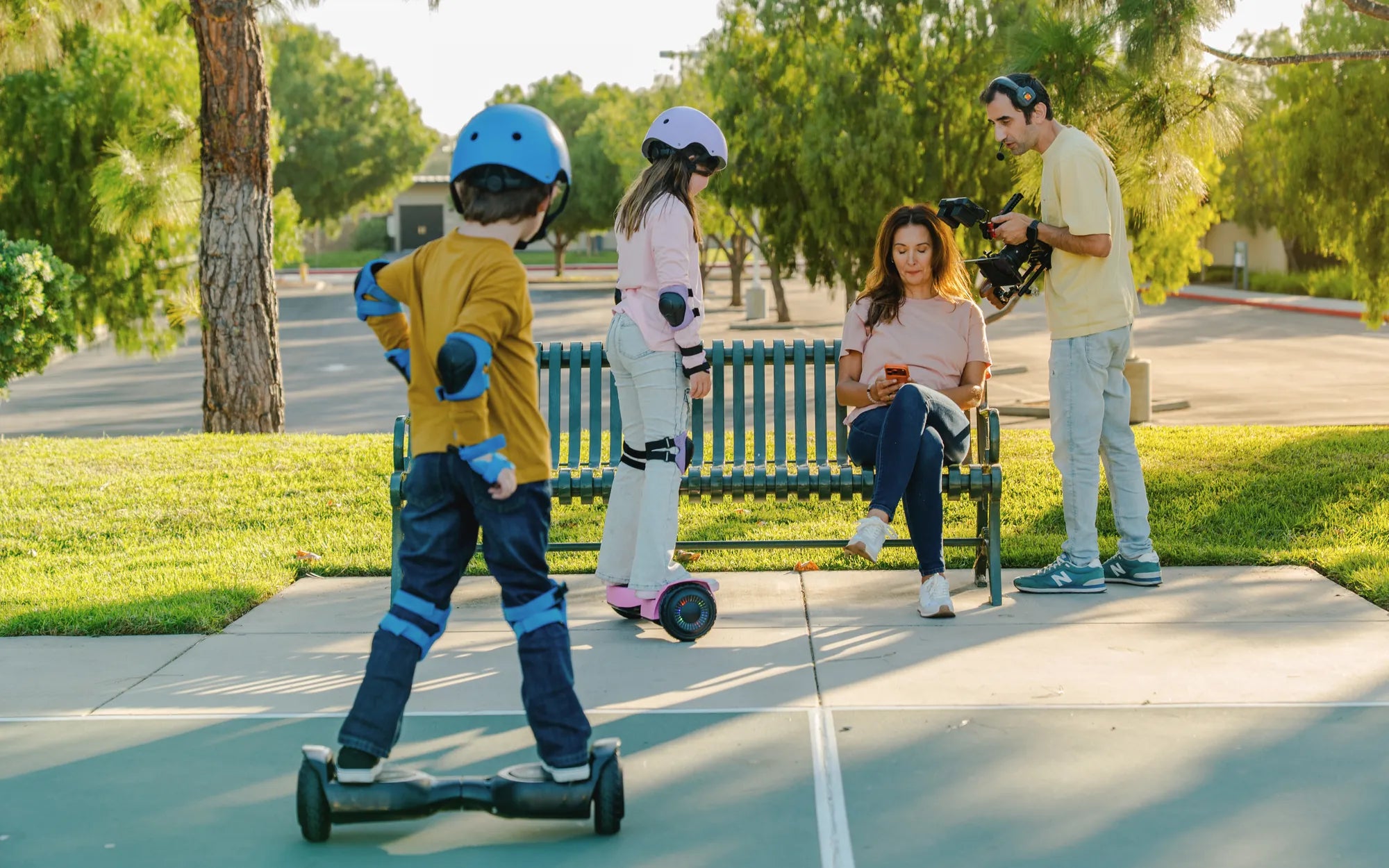
Introduction: What is a Scooty Kids Scooter Bike?
The Scooty Kids Scooter Bike represents a fundamental shift in how young children learn to ride. It is a hybrid vehicle, seamlessly blending the intuitive standing posture of a scooter with the seated, balanced glide of a bike. Designed primarily for toddlers and preschoolers aged approximately 2 to 5 years, its core mission is to develop a child's innate sense of balance, coordination, and spatial awareness in a fun, engaging, and safe manner.
Unlike traditional bicycles with training wheels, a scooter bike, often called a balance bike, removes the complexity of pedals. Children propel themselves by pushing off the ground with their feet, focusing entirely on mastering steering, braking, and most importantly, balancing on two wheels. This foundational skill is the single biggest hurdle in learning to ride a pedal bike. The Scooty Kids Scooter Bike directly addresses this, making the eventual transition to a pedal bicycle smooth, natural, and often tear-free.
This guide will serve as your complete resource. We will delve into the science-backed developmental benefits, provide a detailed checklist for selecting the perfect model, outline non-negotiable safety practices, and explain why choosing a well-engineered scooter bike from a trusted brand is a critical investment in your child's confidence and physical development.
Key Benefits of Scooter Bikes for Child Development
The Scooty Kids Scooter Bike is far more than a toy; it is a powerful developmental tool. Its design promotes holistic growth, targeting both physical prowess and cognitive skills in an environment of playful exploration.
Physical Development: Riding a scooter bike is a full-body workout for a small child. It builds core strength as they sit upright and stabilize their torso. Gross motor skills are significantly enhanced through the coordinated actions of pushing, gliding, and steering. This activity also improves leg strength, reflexes, and overall cardiovascular health, establishing a positive association with physical activity from an early age.
Cognitive and Emotional Growth: Navigating a scooter bike requires constant decision-making. Children learn to assess their speed, judge distances, and navigate around obstacles, which sharpens their spatial awareness and risk assessment abilities. The immediate feedback loop—successful balance leads to a longer, smoother glide—builds tremendous confidence, independence, and resilience as they learn from minor falls and try again.
Scooty vs. Traditional Training Wheels: A Developmental Comparison
The debate between balance bikes and training wheels is settled by developmental science. Training wheels are an artificial crutch that teaches a child to pedal while leaning the bike to one side, completely bypassing the essential skill of balancing. When the training wheels come off, the child must relearn how to ride from scratch, often with fear and frustration.
In stark contrast, a Scooty Kids Scooter Bike teaches balance from the very first ride. The child learns to counter-steer and make micro-adjustments to stay upright instinctively. This method aligns with natural motor learning progression. Data from pediatric occupational therapists and cycling instructors consistently shows that children who start on balance bikes typically transition to pedal bikes without training wheels years earlier, often by age 4 or 5, and with far greater confidence.
| Feature | Scooty Kids Scooter Bike (Balance Bike) | Bicycle with Training Wheels |
|---|---|---|
| Primary Skill Taught | Natural Balance & Steering | Pedaling Only |
| Transition to Pedal Bike | Seamless & Fast (Often < 5 mins) | Difficult & Fearful (Re-learning Balance) |
| Typical Age of Mastery | 2-5 years | 5-8 years |
| Developmental Focus | Core Strength, Coordination, Confidence | Leg Strength (Pedaling) |
| Common Outcome | Independent, confident rider | Dependent on stabilizers, then fearful transition |
Choosing the Right Scooty Kids Model: A Parent's Checklist
Selecting the ideal Scooty Kids Scooter Bike requires careful consideration of several factors to ensure safety, comfort, and longevity. The right fit will empower your child, while the wrong one can hinder progress and cause frustration.
1. Adjustability: This is the most critical feature. Look for a model with an easily adjustable seat post AND handlebar height. This allows the scooter bike to grow with your child over 2-3 seasons, providing the best return on investment. The seat should be low enough that the child can sit with knees slightly bent and feet flat on the ground.
2. Weight: The bike's weight should be appropriate for your child's size. A good rule of thumb is that the scooter bike should weigh no more than 30% of your child's body weight. A bike that is too heavy will be difficult to maneuver, pick up, and control, especially for younger riders.
3. Tire Type: You'll typically choose between air (pneumatic) tires and foam (EVA) tires. Air tires offer superior cushioning and traction on varied surfaces like grass, gravel, and bumpy pavement, providing a smoother ride. Foam tires are maintenance-free (no flats) and are ideal for perfectly smooth, indoor surfaces. For most children, air tires offer a more versatile and comfortable experience.
4. Build Quality & Safety: Examine the frame for sturdy construction—typically steel or lightweight aluminum. Check that all bolts are capped or recessed to prevent snagging. A steering limiter is a valuable safety feature that prevents the handlebars from turning too sharply, reducing the risk of tipping over during sharp turns.
Age and Size Guidelines: Ensuring a Perfect Fit
Manufacturer age ranges are helpful starting points, but your child's inseam measurement is the true deciding factor for a Scooty Kids Scooter Bike. The goal is a perfect fit where the child can stand over the frame comfortably and place their feet flat on the ground while seated.
Measuring for Fit: Have your child stand against a wall in socks. Place a book snugly between their legs, spine up, and measure from the top of the book to the floor. This is their inseam. The scooter bike's minimum seat height (the lowest the seat can be set) should be 1-1.5 inches LESS than your child's inseam. This ensures they can easily push off and stabilize themselves.
- Typical Fit for 2-3 Year Olds: Inseam 12"-14". Minimum Seat Height: 11"-13".
- Typical Fit for 3-4 Year Olds: Inseam 14"-16". Minimum Seat Height: 13"-15".
- Typical Fit for 4-5 Year Olds: Inseam 16"-18". Minimum Seat Height: 15"-17".
Never buy a scooter bike your child will "grow into." An improperly sized bike is unsafe and discouraging. The adjustable range should accommodate their growth for the next few years.
Safety First: Essential Gear and Riding Best Practices
While a Scooty Kids Scooter Bike is a low-speed vehicle, safety must be the absolute priority. Establishing good habits from day one protects your child and gives you peace of mind.
Mandatory Protective Gear: A properly fitted bicycle helmet is non-negotiable for every single ride, no matter how short. Ensure it sits level on the head, covers the forehead, and the straps form a "V" under the ears with the chin strap snug. For beginners, knee and elbow pads are highly recommended to protect against scrapes during inevitable wobbles and falls. Closed-toe shoes are essential.
Choosing the Right Environment: Start in a safe, controlled, car-free zone. A flat, smooth driveway, empty tennis court, or paved park path is ideal. Avoid areas with slopes, traffic, or significant gravel at the beginning. The surface should be firm and predictable to help the child build confidence.
Parental Supervision and Teaching: Your role is to encourage, not control. Initially, you can hold the child lightly under the armpits or on the back of the seat to help them find their balance, but let go as soon as they feel steady. Let them set the pace. Encourage them to look ahead, not at their feet. Most children intuitively understand the "walk, then stride, then glide" progression. Celebrate small victories to build positive reinforcement.
The Gyroor Commitment: Why Trust Matters for Your Child's First Ride
When selecting your child's first vehicle, trust in the manufacturer's engineering and safety standards is paramount. Gyroor, a leading brand in personal electric mobility, applies its rigorous design philosophy to the principles behind a great Scooty Kids Scooter Bike.
Gyroor's expertise in creating stable, reliable rides for older children and adults translates into an understanding of what makes a safe foundational product. This includes a focus on robust frame construction that can withstand the rough-and-tumble use of a toddler, reliable components that won't fail during play, and a design centered on stability and intuitive control.
Just as Gyroor's electric scooters for older riders prioritize safety with features like UL-certified batteries and IPX5 water-resistant designs, the principles for a child's scooter bike are similar: durability, reliability, and built-in safety. Parents deserve the same peace of mind—knowing the product is built to a high standard, with a reliable warranty—whether it's an e-scooter for commuting or a balance bike for a preschooler. Investing in a well-made scooter bike from a reputable company ensures it will be a safe, durable tool throughout your child's learning journey.
Maintenance and Care for Longevity
A well-maintained Scooty Kids Scooter Bike will provide years of reliable service, potentially for multiple children. Simple, regular checks are all that's required.
Pre-Ride Safety Check: Before each use, especially after storage or a fall, perform a quick inspection. Ensure all nuts and bolts (especially on the handlebar stem, seat clamp, and wheels) are tight. Check that the handlebars turn smoothly and the wheels spin freely without wobble. For models with air tires, ensure they are properly inflated to the recommended PSI (found on the tire sidewall) for optimal performance and a smooth ride.
Cleaning and Storage: Use a damp cloth to wipe down the frame, seat, and tires after riding on dirty or wet surfaces. Avoid high-pressure hoses, which can force water into bearings. Store the scooter bike in a dry place, out of direct sunlight and away from extreme temperatures, to prevent premature aging of rubber and plastic components.
Long-Term Upkeep: Periodically inspect the bike for wear. Check tire tread for excessive wear and replace if bald spots appear. If the bike develops persistent looseness or squeaks that tightening doesn't fix, consult the manufacturer's guide or a local bike shop. Lubricate moving parts like the headset bearings with a light bicycle grease if specified in the manual.
Frequently Asked Questions (FAQs) for Parents
Q: What is the best age to start my child on a Scooty Kids Scooter Bike?
A: Most children are ready between 18 months and 2.5 years old, once they are walking and running confidently. Readiness is more about physical ability and interest than a specific age. If they can walk steadily and are curious about wheels, they can likely start.
Q: Can it be used on grass or gravel?
A: Models with wide, air-filled (pneumatic) tires can handle gentle grass and hard-packed gravel well, providing good traction and cushioning. Models with narrow, solid foam tires are best suited for very smooth, hard surfaces like pavement, indoor floors, or tennis courts.
Q: How do I teach my child to use it? Do they need brakes?
A>Teaching is simple: let them explore. Lower the seat so their feet are flat. Encourage them to walk while sitting, then take longer strides, and soon they'll naturally lift their feet to glide. Hand brakes are typically not necessary for young riders on balance bikes; they learn to control speed with their feet, which is intuitive and safe at low speeds. Brakes are more common on larger models for older kids.
Q: What maintenance does it need?
A>Very little. Regularly check and tighten bolts, keep air tires inflated, and clean off dirt. Unlike a pedal bike, there is no chain to lubricate or gears to adjust, making it incredibly low-maintenance.
Q: Is a Scooty Kids Scooter Bike worth it compared to a tricycle or a regular scooter?
A>Absolutely, for its specific purpose. A tricycle teaches pedaling but not balance. A kick scooter teaches standing balance but uses different muscles and steering mechanics. A scooter bike is the only tool specifically designed to teach the exact balancing and steering skills needed for a two-wheeled bicycle, making it a direct and highly effective investment in your child's cycling future.
Fostering a Lifetime of Riding Confidence
The journey with a Scooty Kids Scooter Bike is about much more than learning to balance. It's about nurturing a sense of independence, celebrating small achievements, and building a foundation of physical confidence that will serve your child for years to come. This humble vehicle transforms the daunting milestone of "learning to ride a bike" into a series of joyful, self-directed discoveries.
By choosing a well-designed scooter bike and prioritizing safety, you are not just buying a toy; you are investing in your child's developmental journey. You are providing the tool that turns apprehension into excitement, wobbles into glides, and ultimately, creates a confident rider ready to embrace pedal bikes, and perhaps one day, the wider world of cycling and eco-friendly personal transport.
The skills learned here—balance, coordination, risk assessment, and perseverance—are life skills. The joy of self-propelled motion experienced on a Scooty Kids Scooter Bike can ignite a lifelong passion for active, outdoor play. It’s the first step in a journey of mobility, freedom, and fun.
Ready to find the perfect gear for your young rider's next adventure? Explore a range of durable, well-engineered options designed with safety and fun in mind. Browse the full Gyroor collection at gyroorboard.com.
Mini Electric Scooter for Kids Quotes: Safety, Fun, and Parental Insights
Easy Tricks to Do on a Hoverboard: Master These Moves Like a Pro