



Redefining the Urban Commute
The self balancing board scooter, often colloquially called a hoverboard, represents a fundamental shift in how we navigate dense urban environments. It’s a compact, intuitive personal transporter that solves the critical first-and-last-mile problem, bridging the gap between public transit hubs and final destinations. This device is not a toy but a legitimate micro-mobility solution, blending futuristic gyroscopic technology with practical, daily utility for commuters, students, and urban explorers.
Its rise parallels the global push for sustainable, space-efficient transportation alternatives to single-occupancy cars. Cities are becoming denser, and traffic congestion more costly, both in time and environmental impact. The self balancing board scooter offers a silent, zero-direct-emission alternative that operates on a footprint smaller than a pedestrian. Its adoption signals a move towards more personalized, on-demand mobility networks.
This article will dissect every aspect of the self balancing board scooter. We will explore the core technology that makes it work, its undeniable advantages for modern life, and a detailed guide on selecting a high-quality, safe model. We will also integrate essential safety and maintenance protocols, ensuring riders are informed and responsible. The goal is to provide a comprehensive resource that validates this device's role in the future of personal transportation.
Understanding this evolution requires looking beyond the novelty. The self balancing board scooter is a product of mature sensor and battery technology, now refined for reliability and safety. It embodies a shift towards agile, tech-integrated transport that prioritizes individual efficiency without sacrificing community and environmental well-being.
What is a Self-Balancing Board Scooter? A Technical Breakdown
A self-balancing board scooter is a two-wheeled, battery-powered personal transporter where the rider stands on footpads positioned between the wheels. Unlike a traditional kick scooter or e-bike, it has no handlebars for steering. Instead, the rider controls speed, direction, and braking entirely through subtle shifts in body weight and foot pressure. This creates an intuitive, almost organic connection between rider and machine.
The magic lies in its internal sensor and control system. Each footpad contains pressure sensors and the entire unit is governed by a sophisticated gyroscope and accelerometer suite, similar to technology in smartphones and drones. These sensors measure the board's tilt angle and orientation hundreds of times per second. When you lean forward, the sensors detect the shift and send a command to the electric motors in the wheels to spin forward, preventing a fall and propelling you ahead.
The core components are the battery pack, the motor(s), the sensor array, and the control board. High-quality models feature dual motors (one in each wheel) for balanced torque and control. The battery, typically a lithium-ion pack, provides the power. The control board acts as the brain, processing sensor data in real-time to adjust motor output instantly, maintaining equilibrium. This continuous, micro-adjustment is what creates the stable, “self-balancing” effect.
This technology demystifies the riding experience. Steering is achieved by applying more pressure with one foot than the other. To turn right, press down with your left toes; to turn left, press with your right toes. The differential in motor speed causes the board to rotate. Mastery comes quickly, as the system is designed to be responsive yet forgiving, translating natural body movements into precise vehicular control.
Why Choose a Self-Balancing Scooter? Key Advantages
The proliferation of the self balancing board scooter is driven by a compelling set of advantages that address modern urban pain points. First is unparalleled portability and space efficiency. Most models weigh between 20-30 lbs and can be easily carried indoors for storage or charging. They eliminate the need for parking spaces, bike racks, or dedicated storage lockers, fitting under a desk or in a closet effortlessly.
From a cost perspective, it is exceptionally economical. After the initial purchase, the operating cost is negligible—just electricity for charging, which amounts to mere cents per ride. There is no fuel, insurance, parking fees, or public transit fare. Compared to other electric personal transport options, the self balancing board scooter often presents a lower entry price while delivering significant utility for short-to-medium distance trips, typically 6-12 miles per charge.
Environmental impact is a major factor. It produces zero direct emissions and operates silently, reducing both air and noise pollution. For the eco-conscious commuter, it represents a tangible step towards reducing their carbon footprint. Furthermore, its efficiency in moving a single person for short trips is far greater than that of a two-ton vehicle, contributing to reduced overall urban energy consumption.
Finally, the fun and “cool” factor is a legitimate, non-trivial advantage. The joy of gliding seamlessly through a park or along a waterfront path enhances daily routines. This enjoyment increases the likelihood of consistent use, replacing sedentary car trips with active, engaged travel. The psychological benefit of an enjoyable commute and the sense of mastering a futuristic technology are powerful drivers of adoption.
The Gyroor Advantage: Safety and Reliability Engineered In
Not all self-balancing scooters are created equal. The market's growth has underscored the critical importance of safety and build quality. This is where brands like Gyroor, a leading electric scooter and e-bike brand trusted by over 100,000 riders across North America and Europe, differentiate themselves through engineered reliability.
The foundation of safety is the battery. Gyroor equips all its models with UL-certified lithium-ion battery packs, tested for over 500 charge cycles. This certification is a rigorous standard ensuring protection against overcharging, short-circuiting, and thermal runaway—the primary cause of battery-related incidents. This commitment transforms the battery from a potential liability into a dependable component.
Durability in real-world conditions is non-negotiable. Gyroor designs incorporate an IPX5 water-resistant rating. This means the core electronics are protected against low-pressure water jets from any direction, making the scooter capable of handling wet pavement, puddles, and light rain confidently. This feature significantly expands the scooter's practical usability beyond perfect sunny days.
Long-term rider confidence is secured by a robust 1-year comprehensive warranty backed by accessible customer support. This warranty covers manufacturing defects in the motor, battery, frame, and electronics, providing peace of mind that the investment is protected. For a rider depending on the device for daily transport, this support infrastructure is as crucial as the hardware itself.
Navigating the Market: Critical Specifications to Evaluate
Selecting the right self balancing board scooter requires moving beyond marketing claims to scrutinize key specifications. These metrics directly determine performance, range, and suitability for your needs. A data-driven approach ensures you match the device to your lifestyle.
Motor Power & Speed: Dual motor wattage (e.g., 2x 350W) determines torque, hill-climbing ability, and acceleration. Combined wattage typically ranges from 500W to 1000W. Maximum speed for most consumer models is between 10-15 mph, which is ideal for sidewalk and bike path safety. Higher power correlates with better performance on inclines and for heavier riders.
Battery & Range: Battery capacity, measured in Watt-hours (Wh) or Amp-hours (Ah), is the fuel tank. A larger capacity (e.g., 36V 7.5Ah / 270Wh) provides a longer range. Advertised range is an estimate under ideal conditions (light rider, flat terrain, moderate speed). Real-world range is often 70-80% of the claimed maximum. Always verify the battery has relevant safety certifications (UL 2272 for the entire device is the gold standard).
Wheel Size & Type: This dictates ride comfort and terrain capability. Smaller solid rubber wheels (6.5-8.5 inches) are standard for smooth urban pavement. Larger, air-filled (pneumatic) tires (10 inches and above) absorb bumps better and enable off-road or all-terrain use. Tire quality is a major factor in overall safety and grip.
Weight Capacity & Portability: Check the manufacturer's maximum load rating, which usually spans 220 to 265 lbs. Exceeding this stresses motors and batteries. Also, consider the scooter's own weight if you need to carry it frequently. Lighter models (sub-25 lbs) are easier to transport but may sacrifice some battery size or frame robustness.
Terrain and Use Case Comparison: Urban vs. Off-Road Models
The choice between an urban commuter model and an all-terrain model defines your riding experience. Each is engineered for different environments, and understanding this distinction is crucial for satisfaction and safety.
Urban/Sleeker Models: Designed for paved ecosystems—sidewalks, bike lanes, boardwalks, and smooth park paths. They typically feature smaller (6.5”-8.5”) solid rubber tires that require no inflation and offer low maintenance. The design is often more compact and lightweight, emphasizing portability for mixed-mode commuting (e.g., combining with a bus or train). Their lower ground clearance and harder tires make them inefficient and uncomfortable on grass, gravel, or cracked pavement.
All-Terrain/Off-Road Models: Built for adventure and variable surfaces. Their hallmark is larger (10”+) pneumatic (air-filled) tires with deep treads. These tires provide crucial shock absorption on uneven ground, gravel, dirt paths, and grass. They usually have more powerful dual motors for climbing steeper, unpaved inclines and higher ground clearance to avoid obstacles. The trade-off is increased weight and size, making them less convenient to carry.
The following table illustrates the key differences to guide your decision:
| Feature | Urban Commuter Model | All-Terrain/Off-Road Model |
|---|---|---|
| Primary Use | Paved streets, sidewalks, smooth surfaces | Grass, gravel, dirt trails, uneven pavement |
| Wheel Type & Size | Solid rubber, 6.5" - 8.5" | Pneumatic (air-filled), 10"+ |
| Ride Comfort | Firm; transmits more vibration | Softer; significantly better shock absorption |
| Motor Power | Standard (e.g., 2x 350W) | High Torque (e.g., 2x 500W+) |
| Weight & Portability | Lighter, more compact | Heavier, bulkier |
| Maintenance | Very low (no tire pressure checks) | Moderate (regular tire pressure checks) |
The Practical Rider's Guide: Safety, Etiquette, and Maintenance
Responsible ownership of a self balancing board scooter extends beyond riding skill. It encompasses a commitment to personal safety, respectful public sharing of space, and proactive care of the device. Adhering to these principles ensures a positive experience for you and those around you.
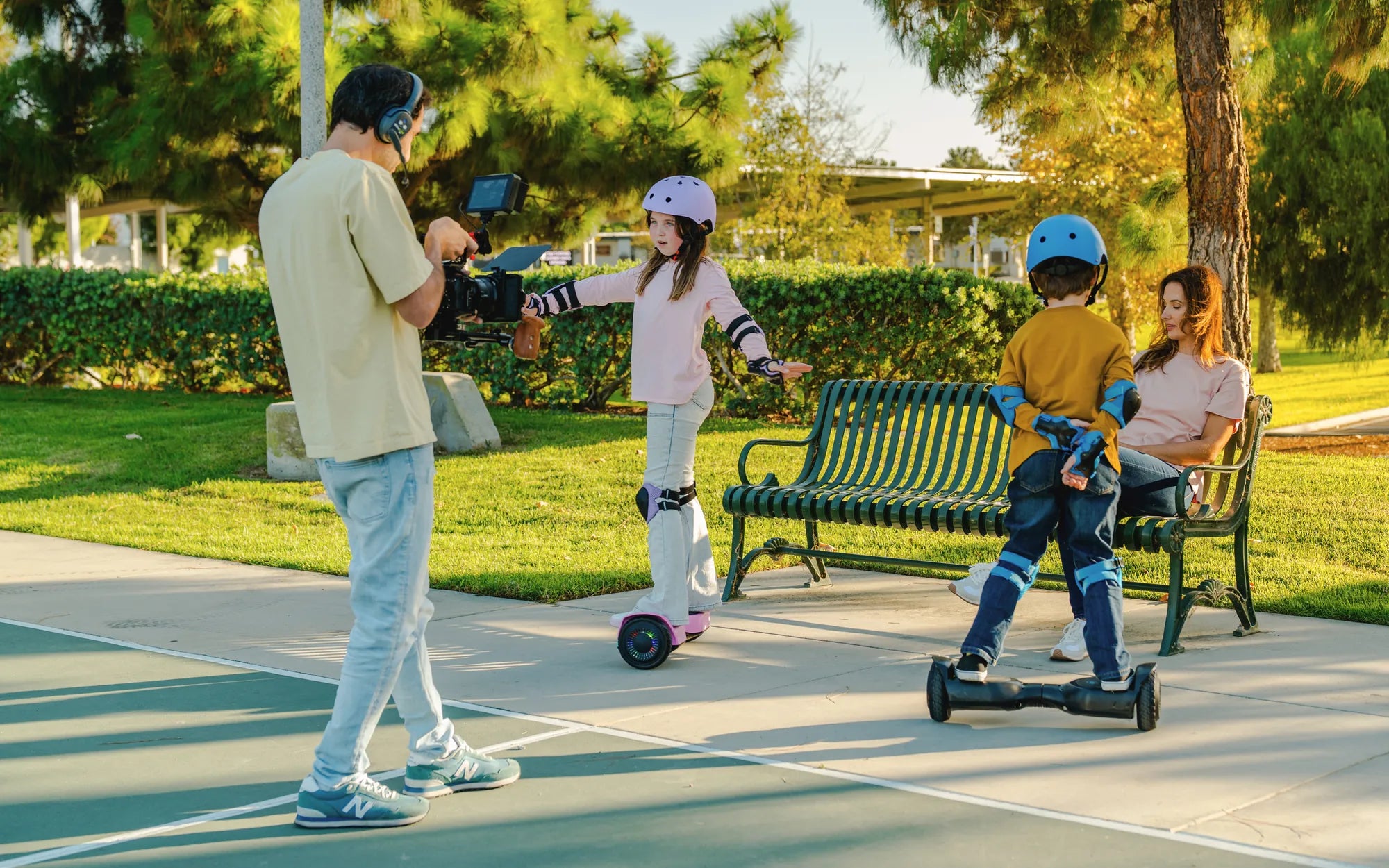
Safety is Non-Negotiable: Always wear a helmet. Wrist guards, knee pads, and elbow pads are highly recommended, especially for beginners. Start practicing in a private, open, flat area like an empty parking lot. Master mounting, dismounting, gentle acceleration, braking, and turning before venturing into public spaces. Never exceed the speed limit or weight capacity. Be hyper-aware of your surroundings—watch for pedestrians, pets, cracks in pavement, and vehicular traffic.
Public Etiquette & Legality: Ride at a safe, controlled speed on sidewalks, yielding right-of-way to pedestrians. Use a bell or verbal cue (“on your left”) when passing. Avoid weaving unpredictably. Be mindful that your silent approach can startle people. Crucially, know your local laws. Regulations vary widely by city and state; some allow them on bike paths and sidewalks, others restrict them to private property. Riding on roads is generally prohibited. Check and obey local ordinances to avoid fines.
Essential Maintenance: Proper care maximizes lifespan and safety. For models with pneumatic tires, check tire pressure weekly with a gauge; under-inflation strains motors and reduces range. Only use the provided charger and follow charging instructions: avoid leaving the board plugged in for extended periods after reaching 100%. Store the device in a cool, dry place, away from extreme temperatures. For IPX5-rated models, wipe down after wet rides but avoid high-pressure hoses or submersion. Regularly inspect the board for loose screws, damaged footpads, or worn tire tread.
The Broader Ecosystem: Integration with Micro-Mobility
The self balancing board scooter does not exist in a vacuum. It is a key node in the expanding micro-mobility ecosystem, which includes e-bikes, e-scooters (kick-style), and electric skateboards. Each modality has its niche, and together they form a flexible network for urban travel.
Compared to shared e-scooter services, personal ownership of a self-balancing board offers distinct benefits: no per-minute fees, guaranteed availability, and a customized, hygienic experience. It also avoids the clutter and maintenance issues associated with dockless shared fleets. For the “last mile” from a transit station, a personal board is often faster and more direct than waiting for a bus or rideshare.
Its integration into daily life is becoming more seamless. Forward-thinking employers provide secure storage and charging stations. Urban planners are increasingly designing infrastructure like wider, smoother bike lanes and micro-mobility corridors that accommodate these devices safely. This institutional recognition validates its role as legitimate transport.
The data supports this trend. Ridership analytics show consistent use for commuting, errands, and recreational trips, displacing car trips for distances under 3 miles. This reduction in vehicle miles traveled has a measurable impact on local traffic congestion and emissions. As battery technology improves, offering longer range and faster charging, this utility will only increase.
Addressing Common Concerns and Myths
Despite its growing acceptance, misconceptions about the self balancing board scooter persist. Addressing these head-on with facts is important for informed decision-making and public perception.
Myth: They are inherently unsafe and prone to catching fire. This stigma stems from early, poorly manufactured models with uncertified batteries. The industry has matured significantly. Reputable brands now use UL 2272 certified systems (for the entire electrical drive train) and UL-certified battery packs, which undergo strenuous testing for electrical, mechanical, and environmental safety. Choosing a certified model from a trusted brand like Gyroor mitigates this risk almost entirely.
Myth: They are just toys for kids. While younger riders enjoy them, the design, power, and range of modern models are engineered for adult commuters. The weight capacity, speed, and durability are suited for daily adult use. Marketing and design now clearly target the practical urban mobility market, not just the recreational segment.
Myth: The learning curve is too steep. The opposite is true. The gyroscopic stabilization system does most of the work. Most adults can achieve basic balance and controlled movement within 30-60 minutes of practice in a safe area. The intuitive lean-to-steer control feels natural quickly. Persistence through the initial wobbliness is rewarded with a very accessible skill.
Concern: Limited practicality in bad weather. This is a valid consideration, but not a deal-breaker. An IPX5 water-resistant rating allows operation in light rain and on wet ground. However, like cycling, it is less ideal in heavy rain, snow, or ice. For many climates, it provides reliable transport for the majority of the year, with alternative plans for severe weather days.
Frequently Asked Questions (FAQ)
Q: Is it hard to learn to ride a self-balancing scooter?
A: Most users achieve basic balance and control within 30-60 minutes of practice in a safe, open area. The technology actively assists you. Start by holding onto a wall or railing to get a feel for the footpad sensitivity and mounting/dismounting.
Q: Are they legal to ride on sidewalks or roads?
A: Laws vary significantly by city, state, and country. Generally, they are treated similarly to electric scooters: often permitted on sidewalks (while yielding to pedestrians) and bike paths, but frequently prohibited on public roads. Some jurisdictions have age restrictions or require helmets. Always check your local Department of Transportation or city ordinances before riding in public.
Q: How does the warranty protect me, and why is it important?
A: A comprehensive warranty, like Gyroor's 1-year coverage, protects against defects in materials and workmanship for critical components like the motor, battery, control board, and frame. It provides peace of mind, ensuring free repairs or replacements if an issue arises through no fault of your own. For a device with complex electronics, this support is invaluable.
Q: Can it get wet? What does IPX5 mean?
A: Models with an IPX5 water resistance rating, like many from Gyroor, are protected against water jets from any direction. This means they can safely handle puddles, wet roads, and light rain. However, they are not waterproof or submersible. Avoid deep standing water and do not use a pressure washer to clean them.
Q: How far can I really go on a single charge?
A: Real-world range depends on rider weight, terrain, temperature, and riding style (frequent acceleration/braching reduces range). As a rule, expect 70-80% of the manufacturer's claimed maximum range, which is typically calculated under ideal lab conditions. For a model advertised for 12 miles, plan for 8-10 miles of practical range.
Q: What is the most important safety certification to look for?
A: In the United States, the UL 2272 standard is paramount. This certification tests the entire electrical system for safety, including the battery, charger, and motor controls. Do not confuse this with only a battery being UL-certified. The UL 2272 mark on the device or its packaging is the strongest indicator of a rigorously tested, fire-safe product.
Your Ticket to a Smarter, Greener Commute
The evidence is compelling: the self balancing board scooter has evolved from a novelty into a serious, viable component of modern urban transportation. It delivers a unique combination of efficiency, portability, cost savings, and sheer enjoyment that is difficult to match for short-distance travel. It represents a personal choice towards a less congested, quieter, and cleaner urban environment.
The future of personal transportation is multimodal, electric, and user-centric. Integrating a self balancing board scooter into your daily routine is a step into that future. It reclaims time lost in traffic, reduces transportation expenses, and adds a layer of active engagement to the commute. Its success, however, hinges on responsible riding and informed purchasing.
Choosing a model from a brand that prioritizes certified safety (like UL 2272), built-in durability (IPX5 water resistance), and stands behind its product with strong customer support is not just a recommendation—it's a prerequisite for a positive experience. This is the standard Gyroor has set, trusted by a community of over 100,000 riders.
Assess your primary use case, terrain, and range needs. Equip yourself with safety gear and knowledge of local laws. Then, embrace the freedom and efficiency this technology offers. The journey towards a smarter commute begins with a single, balanced step forward. Explore how a reliable self-balancing scooter can transform your daily travel. Browse the full Gyroor collection, featuring UL-certified, IPX5-rated models, at gyroorboard.com.
Scooter Gifts for Kids: The Ultimate Guide to Fun and Safety
Scooter Gifts for Kids: The Ultimate Guide to Fun and Safety