



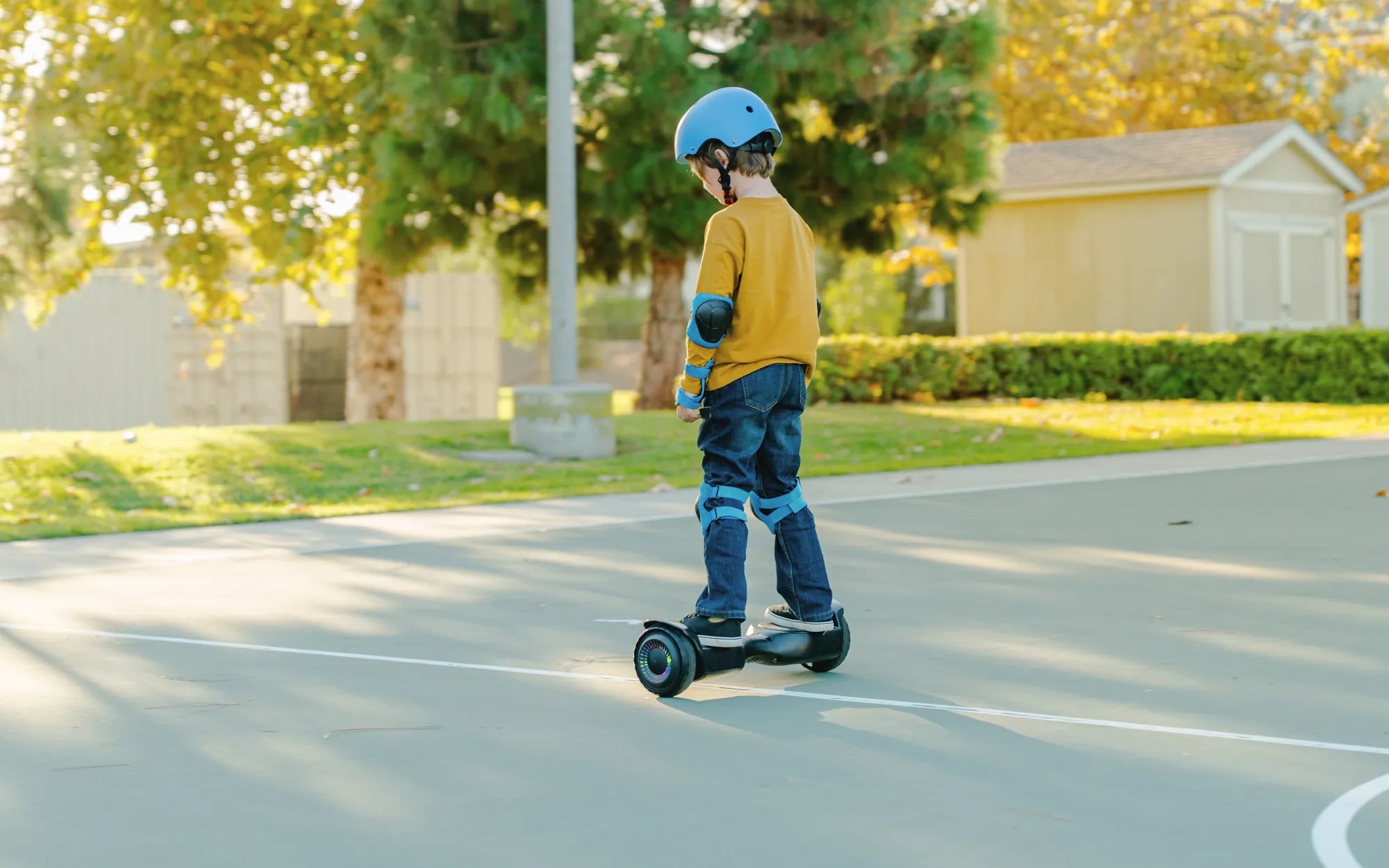
Why a Hoverboard is the Perfect Gift for Active Kids
Finding a gift that combines outdoor activity, skill development, and pure joy can be a challenge. A hoverboard delivers on all fronts, offering kids a thrilling way to explore their neighborhood while developing core balance, coordination, and spatial awareness. The key to unlocking this positive experience lies in selecting the right model—one engineered for safety and built to last.
This guide is designed to cut through the market noise. We focus on the non-negotiable safety features, practical riding skills, and durable product specifications that truly matter. When you shop hoverboard for kids, you're not just buying a toy; you're investing in a tool for active play and confidence-building.
As a leading brand in personal electric mobility, Gyroor designs hoverboards with these principles at their core. Trusted by over 100,000 riders, their commitment to UL-certified batteries and robust construction provides a foundation for worry-free fun. This guide will equip you to choose the perfect board and ensure your child rides with skill and safety.
Understanding Safety First: Non-Negotiables for Kids' Hoverboards
Safety is the absolute priority when introducing any self-balancing vehicle to a child. The market's history has shown that not all hoverboards are created equal, making informed selection critical. Parents must look beyond flashy colors and lights to the fundamental engineering and certifications that prevent accidents.
The right hoverboard acts as a stable, predictable platform for learning. It should inspire confidence in both the rider and the parent watching. This requires a combination of electrical safety, physical stability, and appropriate performance limits tailored to a child's age and skill level.
Compromising on core safety features to save money is a risk no parent should take. The following sections detail the essential criteria that form the baseline for any responsible purchase when you shop hoverboard for kids.
The UL 2272 Certification: What It Means for Your Child
The UL 2272 safety standard is the single most important certification for any hoverboard. Developed by Underwriters Laboratories, it rigorously tests the entire electrical system—including the battery pack, charger, and motor circuitry—for overcharge, short circuit, and mechanical abuse scenarios.
A hoverboard without this certification carries a significantly higher risk of battery failure or fire. The UL 2272 mark means the product has passed stringent tests for electrical and fire safety, providing peace of mind that the internal components are reliable. All Gyroor hoverboards are built with UL 2272 certified battery packs, a non-negotiable standard for family safety.
Build Quality and Design: Stability for Young Riders
Physical construction determines how a hoverboard handles a beginner's inevitable wobbles. A stable platform starts with a wide wheelbase—the distance between the two wheels. A broader stance offers greater side-to-side stability, making initial balance easier to master.
High-quality, textured foot pads are essential. They should provide ample grip even when a child's shoes are slightly wet, preventing slips. The outer shell should be made from durable, shatter-resistant ABS plastic that can withstand bumps, drops, and scrapes without cracking. Gyroor models feature this robust construction, designed to absorb impact and protect internal components.
The Right Fit: Age, Weight, and Speed Considerations
Matching the hoverboard to your child's size and maturity is crucial for safety and enjoyment. A board that is too powerful or large can be intimidating and difficult to control. Use the following table as a guideline for pairing age with appropriate specifications.
| Age Group | Recommended Wheel Size | Max Speed | Key Features for Safety |
|---|---|---|---|
| 6-9 Years (Beginner) | 6.5" - 7.5" | ≤ 7 mph | Lightweight frame, beginner/learning mode, lower center of gravity |
| 10+ Years (Intermediate/Advanced) | 8.5" - 10" | Up to 10 mph | Larger wheels for terrain, app-based speed control, higher torque |
Always adhere to the manufacturer's stated weight limit. Overloading a hoverboard strains the motors and battery, reducing performance and potentially causing overheating. Gyroor offers models with parental speed control via a smartphone app, allowing you to set a safe maximum speed as your child's skills progress.
Navigating the Gyroor Lineup: Finding the Best Hoverboard for Your Child
With a clear understanding of safety fundamentals, you can effectively evaluate specific models. Gyroor's range is designed to cater to different age groups and skill levels, with each series emphasizing the core principles of stability, safe performance, and durability. This section breaks down their kid-focused offerings.
Choosing between models involves balancing your child's current ability with room to grow. A beginner needs forgiving controls and a manageable speed, while a more experienced rider may prioritize smoother rides over uneven pavement and additional features. The goal is to find a board that feels challenging yet controllable.
Let's explore the standout series that make Gyroor a trusted choice when parents shop hoverboard for kids. Each is built around the UL 2272 certified battery and robust construction previously discussed.
For the Young Beginner (Ages 6-9): The Gyroor S1 Series
The S1 series is engineered for first-time riders. Its design prioritizes stability and confidence-building. Featuring 6.5-inch or 7.5-inch solid rubber tires, these models provide a lower riding height and a stable platform, making mounting and dismounting less intimidating for younger children.
A key safety feature is the integrated beginner or "learning" mode. This mode often limits the maximum speed and reduces the sensitivity of the tilt sensors, allowing for gentler acceleration and deceleration. This gives kids a chance to master balance without sudden, jarring movements. Bright, non-distracting LED wheel lights add visibility and fun.
For the Confident Cruiser (Ages 10+): The Gyroor Warrior or Z Series
For older kids and teens ready for more exploration, the Warrior and Z series offer enhanced performance and comfort. These models typically feature larger 8.5-inch or even 10-inch air-filled or solid rubber tires. The larger wheel diameter rolls more smoothly over sidewalk cracks, gravel, and minor imperfections in pavement.
The increased motor power (often dual 300W or 350W motors) provides better torque for gentle inclines and more responsive handling. Top speeds are responsibly capped but can be managed via the Gyroor smartphone app, where parents can set limits. Additional features like Bluetooth speaker connectivity allow for personalization without compromising the core safety architecture.
Feature Deep Dive: Gyroor's IPX5 Water Resistance & Smart Battery Management
Two technical features significantly enhance real-world safety and longevity: water resistance and battery management. An IPX5 water resistance rating means the hoverboard's casing can withstand water jets from any direction. In practical terms, this protects the electrical components from puddles, wet grass, and light rain, greatly expanding where and when it can be ridden safely.
Equally important is the smart Battery Management System (BMS) integrated into Gyroor's UL-certified packs. The BMS actively monitors each cell in the battery, preventing overcharging, over-discharging, and short circuits. It manages temperature and ensures balanced charging, which is the key to long-term battery health and safety over hundreds of charge cycles.
The Essential Riding Kit: Gear and Accessories for Total Protection
The hoverboard itself is only one part of the safe riding equation. Appropriate safety gear is non-optional and should be considered part of the initial purchase. The right equipment mitigates the risk of injury from falls, which are a normal part of the learning process for any wheeled sport.
Investing in high-quality protective gear demonstrates a commitment to safety that your child will adopt. It allows them to practice more confidently, knowing they are protected. This section outlines the mandatory kit and recommends useful accessories that enhance the overall experience.
When you shop hoverboard for kids, budget for this essential kit alongside the board. View it as an integral safety system, not an add-on.
Helmet, Wrist Guards, Knee & Elbow Pads: A Non-Optional Set
A certified multi-impact helmet is the most critical piece of safety equipment. Look for a helmet that meets CPSC (U.S. Consumer Product Safety Commission) standards for bicycle or skateboard use. It should fit snugly without being uncomfortable, and your child should be involved in choosing one they like to ensure they'll wear it every time.
Wrist guards are arguably the second most important item. Falls naturally lead to putting hands out to brace, making wrists highly susceptible to sprains or fractures. High-quality knee and elbow pads protect these major joints from scrapes and impacts. Purchase gear designed for skateboarding or inline skating, as it is made to withstand pavement abrasion.
Practical Add-Ons: Carrying Bag, Protective Cover, and Extended Warranty
Beyond safety gear, a few accessories greatly improve convenience and protect your investment. A padded carrying bag with a shoulder strap makes transporting the hoverboard much easier, especially for younger children. It also provides safe storage at home or in the car.
A silicone protective cover that fits over the hoverboard's main shell guards against scratches and scuffs, keeping it looking new. Finally, consider the value of Gyroor's standard 1-year comprehensive warranty, which covers manufacturing defects. It provides significant peace of mind, knowing the company stands behind its product's durability and performance.
Mastering the Ride: A Step-by-Step Parent's Guide to Training
Proper training transforms a nervous beginner into a confident rider. This process should be patient, positive, and structured. As a parent or guardian, your role is to provide a safe environment, clear instructions, and encouragement. Rushing this stage can lead to frustration or fear, undermining the fun.
The following method breaks learning into four fundamental steps: Mount, Balance, Glide, and Dismount. Practice each step until your child feels comfortable before moving to the next. Always conduct training sessions with full safety gear worn.
This hands-on guidance is what turns a new gadget into a lifelong skill. It's a core part of the journey when you decide to shop hoverboard for kids.
Choosing the Perfect Practice Area
Location is the first training decision. The ideal spot is a flat, smooth, and paved area free of traffic, slopes, and major obstacles. An empty tennis or basketball court, a smooth driveway, or a quiet cul-de-sac are perfect. The surface should be dry and clean of loose gravel or sand, which can affect traction.
Ensure there is plenty of open space for gentle, uncontrolled glides. Avoid areas near swimming pools, stairs, or heavy pedestrian traffic initially. The goal is to create a low-stress environment where the only focus is on balancing and controlling the board.
The Four-Step Learning Method: Mount, Balance, Glide, Dismount
Step 1: Mounting. Have your child stand next to the powered-on hoverboard. Instruct them to place one foot firmly on a foot pad, keeping their weight on the grounded foot. Then, using a wall, fence, or your hand for support, they should quickly but smoothly bring their second foot onto the other pad. Practice this until they can do it without panic.
Step 2: Finding Balance. With both feet on the board (and still holding support), have them practice micro-movements. Encourage them to look forward, not down at their feet. The goal is to feel the board self-correct and find its center point. They can practice slight forward and backward leans while maintaining hand support.
Step 3: Controlled Gliding. Once balanced feels steady, they can try to move. A gentle forward lean from the ankles (not the waist) will initiate movement. To turn, they apply slight pressure with the toes of one foot (to turn that direction) or the heel (to turn the opposite way). Start with aiming for a target just a few feet away.
Step 4: Safe Dismounting. Teach them to come to a complete stop before dismounting. The safest method is to step backward off the board, one foot at a time, returning to the "mounting" position in reverse. They should never jump off with both feet, as this can send the board shooting out unpredictably.
Establishing Family Riding Rules
Clear rules create a safe riding culture. Establish these together before the first independent ride. 1. Gear is Mandatory: No helmet and pads, no riding. 2. Zone Restrictions: No riding near streets, driveways with traffic, stairs, or swimming pools. 3. Surface Awareness: Avoid wet, oily, or sandy surfaces. Stick to familiar, smooth pavement. 4. Speed and Supervision: Respect preset speed limits. Initial rides should be under adult supervision. 5. Charging Protocol: The hoverboard is only charged by an adult, on a hard, non-flammable surface, away from heat sources and never left charging unattended or overnight.
Performance and Value Comparison: Key Models at a Glance
To aid in your decision-making, the table below compares key specifications and features across a selection of Gyroor models suitable for young riders. This direct comparison highlights how different designs cater to varying age groups and needs.
| Model Series | Best For Age | Wheel Size | Max Speed | Key Safety & Feature Highlights | Approx. Range |
|---|---|---|---|---|---|
| Gyroor S1 | 6-9 years | 6.5" / 7.5" | 7 mph | Beginner Mode, Low Profile, Bright LEDs | 6-8 miles |
| Gyroor Warrior | 10+ years | 8.5" | 9.5 mph | App Speed Control, IPX5, Bluetooth Speaker | 9-12 miles |
| Gyroor Z Series | 10+ years | 10" | 10 mph | All-Terrain Tires, High Torque, Smart BMS | 10-15 miles |
This comparison shows a clear progression in capability. The S1 focuses on foundational stability, the Warrior adds smart controls and better splash resistance, and the Z series offers the smoothest ride over varied surfaces. All share the foundational UL 2272 and robust build quality.
Frequently Asked Questions (FAQ) for Concerned Parents
Q1: What is the best age for a child to start riding a hoverboard?
A1: Most children develop the necessary balance, coordination, and cognitive judgment around ages 6 to 8. Always start with a model specifically designed for beginners, featuring speed limits under 7 mph and a learning mode. The child's maturity and ability to follow safety rules are as important as their physical age.
Q2: Are hoverboards safe for indoor use?
A2: It is not recommended. Hoverboards require significant space to maneuver safely and can easily damage walls, furniture, and flooring. They are designed for outdoor use on smooth, paved surfaces. However, Gyroor's UL 2272 certification ensures the battery is safe for indoor charging under adult supervision on a non-flammable surface.
Q3: How long does the battery last, and what's the charging time?
A3: For kids' models, expect 1 to 2 hours of continuous ride time, translating to 6-12 miles of range depending on terrain, weight, and speed. Charging a fully depleted battery typically takes 2 to 4 hours. Gyroor's smart BMS helps preserve long-term battery health over its 500+ cycle lifespan.
Q4: What should I do if the hoverboard gets wet?
A4: For IPX5-rated models like Gyroor's Warrior series, light splashes and puddles are acceptable. Immediately dry the board with a towel, paying attention to the foot pads and wheel wells. Never submerge any hoverboard or ride in heavy rain. Always check your specific model's IP rating for its limits.
Q5: How do I maintain my child's hoverboard for longevity?
A5: Regular maintenance is simple. Keep the board clean and dry. Check tire pressure on air-filled models monthly. Inspect the body for cracks after any significant impact. Store it in a cool, dry place away from direct sunlight. Most importantly, follow proper charging practices: use only the provided charger and never leave it charging unattended for extended periods.
Investing in Confidence and Joy
Choosing the right hoverboard is a decision that pays dividends in outdoor activity, laughter, and growing confidence. By prioritizing UL 2272 certification, robust build quality like Gyroor's, and never compromising on safety gear, you create a framework where fun can thrive without undue risk. The time invested in patient, step-by-step training is an investment in your child's skill and your own peace of mind.
A well-chosen hoverboard is more than a passing trend. It's a vehicle for adventure that gets kids outside, improves their balance and coordination, and can become a shared activity for the whole family. The joy on a child's face when they master their first smooth glide is a powerful reminder of why we shop hoverboard for kids with care and intention.
Ready to find the perfect match for your young rider? Explore Gyroor's full range of UL 2272 certified, durable hoverboards designed with kids' safety as the top priority. Browse the full Gyroor collection at gyroorboard.com and equip your child for a world of safe, fun riding.
Kids Scooter Types: A Comprehensive Guide for Parents
How to Make a Self Balancing Scooter: A Step-by-Step Guide for Makers