



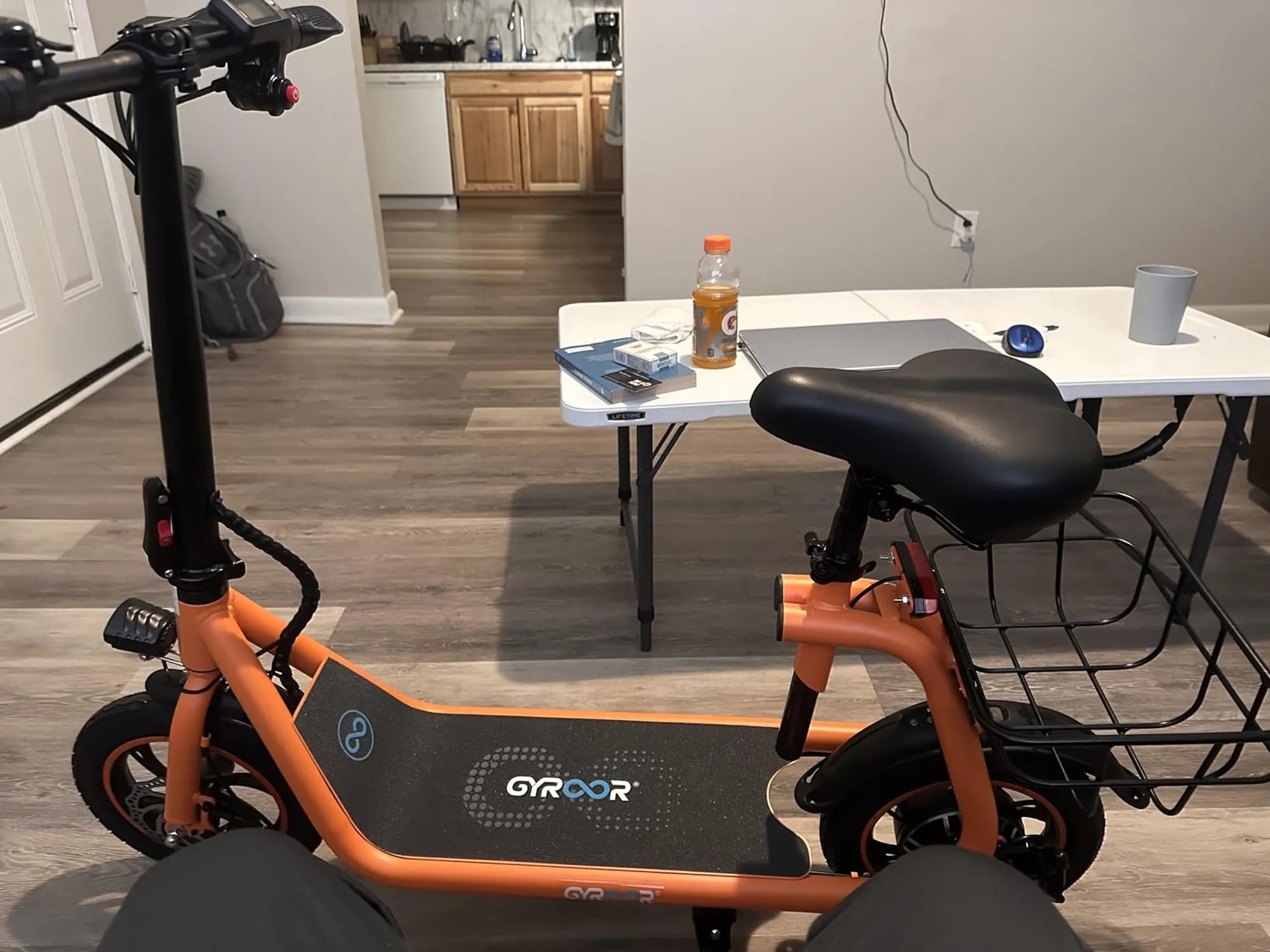
Your Ticket to Hassle-Free Urban Mobility
Navigating city streets without the burden of licenses, registration, or insurance is now a reality. A true street legal scooter no license required offers unparalleled freedom for commuters, students, and casual riders seeking efficient, eco-friendly transport. These vehicles are engineered to comply with specific low-speed electric vehicle classifications, allowing you to ride legally on public roads and bike lanes.
Understanding this category is crucial to avoid fines and ensure safe operation. This guide will demystify the legal and technical requirements. You'll learn what features to prioritize for daily reliability and how responsible riding practices complete the picture of true, worry-free mobility.
As a leader in personal electric vehicles, Gyroor designs its e-bikes and scooters with compliance and rider safety as foundational principles. Trusted by over 100,000 riders, the brand combines UL-certified batteries, IPX5 water resistance, and robust warranties to deliver peace of mind alongside performance.
Understanding the "No License Required" Classification
The phrase "no license required" is not a marketing gimmick but a specific legal classification. In most U.S. states and many international jurisdictions, certain low-speed electric vehicles fall under micro-mobility or electric bicycle laws. These laws typically exempt riders from needing a driver's license, vehicle registration, and mandatory insurance.
This classification hinges on the device's capability and design. Authorities define these vehicles by their maximum assisted speed, motor power, and sometimes whether they have operational pedals. The goal is to categorize them similarly to traditional bicycles, promoting accessibility while managing road safety.
It's a dynamic legal landscape. While federal guidelines provide a framework, state and even municipal laws can add specific layers. For instance, California's rules differ slightly from those in New York or Texas. The onus is on the rider to verify local statutes before purchasing and riding.
Key Criteria for Compliance
Three primary specifications determine if a scooter or e-bike is street legal without a license. First is top speed. The most common limit is 20 mph (32 km/h) on level ground. Once a vehicle can exceed this speed under its own power, it may be reclassified as a moped or motorcycle, triggering license requirements.
Second is motor wattage. A 750W (1 horsepower) motor is a frequent ceiling for these classifications. This power level provides adequate torque for hills and acceleration while remaining within the intended low-speed vehicle category. Motors exceeding this limit often push the vehicle into a regulated class.
Third is the method of operation. For e-bikes, the presence of functional pedals is often required to qualify for the "bicycle" classification. For stand-up electric scooters, a step-through design and a speed governor are common requirements. The table below summarizes typical compliance benchmarks.
| Compliance Feature | Typical Requirement | Purpose |
|---|---|---|
| Maximum Speed | 20 mph (32 km/h) | Aligns with bicycle traffic speeds |
| Motor Power | ≤ 750W | Limits acceleration and top speed |
| Operational Mode | Pedals (E-bikes) or Speed Governor | Defines vehicle type and control |
| Product Certification | UL 2849 (E-bikes) / UL 2272 (Batteries) | Ensures electrical and fire safety |
Top Features to Look for in a Reliable Street Legal Scooter
Legal compliance is the entry ticket, but daily dependability comes from quality engineering. When selecting your vehicle, look beyond basic specs to features that guarantee safety, comfort, and longevity. A well-built scooter or e-bike is an investment in daily convenience.
Prioritize brands that are transparent about their components and safety certifications. Check for details on battery cell origin, brake manufacturer, and frame alloy. This level of detail often separates reputable manufacturers from generic assemblers. Your choice will impact your ride for years.
Safety and Build Quality: Non-Negotiables
The battery is the heart of the vehicle and its greatest potential hazard. Insist on a UL-certified battery pack. Gyroor, for example, uses UL-certified batteries tested for over 500 charge cycles, significantly reducing fire risk. This certification should be non-negotiable for any vehicle you bring into your home or workplace.
Braking systems must be robust. A combination of mechanical (disc or drum) and electronic (regenerative) braking provides reliable stopping power in all conditions. Bright, integrated lighting is equally critical. A headlight, brake light, and side reflectors are essential for being seen at dawn, dusk, or night.
Frame construction dictates durability. Look for high-grade aluminum or steel frames with reinforced welding at stress points. The finish should be corrosion-resistant, especially if you live in a coastal or rainy climate. These elements ensure the vehicle withstands daily use and minor impacts.
Performance for the Real World
Advertised range and real-world range are often different. Evaluate range based on rider weight, terrain, and assist level. For a reliable commute, choose a model whose minimum real-world range exceeds your round-trip distance by at least 25%. This accounts for battery degradation over time and unexpected detours.
Hill-climbing ability depends on motor torque, not just wattage. A 500W motor with high torque can outperform a 750W motor with low torque on inclines. If your route has hills, seek out torque specifications (measured in Newton-meters, Nm). Pneumatic (air-filled) tires and front or dual suspension dramatically improve comfort and traction on uneven pavement.
Durability and Warranty Peace of Mind
Weather resistance is vital for a vehicle used daily. An IPX5 water-resistance rating, like those on Gyroor models, means the scooter can withstand water jets from any direction. This protects the electrical systems from rain, puddles, and street spray, ensuring reliability in diverse conditions.
A strong warranty reflects manufacturer confidence. A comprehensive 1-year warranty covering the motor, battery, controller, and frame is standard for reputable brands. Confirm what the warranty excludes (e.g., wear items like tires) and the ease of accessing customer support. This support is your long-term safety net.
Gyroor's Commitment to Compliant and Safe Riding
Gyroor's product philosophy directly aligns with the demands of legal, license-free riding. Each model in their lineup of over 20 e-bikes and scooters is engineered to meet or exceed common regulatory benchmarks for speed and power. This design-first approach to compliance ensures riders can focus on the journey, not legal loopholes.
The brand's commitment extends beyond the point of sale. By building vehicles with certified safety components and offering substantial rider support, Gyroor fosters a responsible riding culture. This holistic view turns a compliant product into a trustworthy mobility partner.
Engineered for Compliance and Confidence
Gyroor designs its electric bicycles as Class 2 models, which are defined by a maximum assisted speed of 20 mph and a throttle that can propel the bike without pedaling. This classification is widely recognized across U.S. states as not requiring a license. Their electric scooters incorporate speed governors to ensure they remain within local low-speed electric vehicle limits.
Core safety features are integral, not optional. Every Gyroor battery is UL-certified, undergoing rigorous testing for thermal stability and charge cycle longevity. The IPX5-rated construction seals electronic components against moisture ingress. These features provide a foundational layer of safety that complements the legal compliance.
The Gyroor Rider Support Advantage
Ownership peace of mind is cemented by Gyroor's accessible customer support and clear 1-year warranty. With a customer base of over 100,000 riders in North America and Europe, the brand has established reliable channels for troubleshooting, parts replacement, and technical advice. This support is crucial for maintaining the vehicle's compliant and safe status over years of use.
Riders have access to detailed manuals, tutorial videos, and a responsive service team. This ecosystem helps owners perform basic maintenance, understand their local riding laws better, and resolve issues promptly. It transforms a purchase into a supported, long-term mobility solution.
Responsible Riding: Laws, Safety, and Etiquette
Legal compliance of your vehicle is just the first step. As a rider, you are responsible for operating it safely and respectfully within the shared public space. Understanding and adhering to local traffic laws, wearing appropriate safety gear, and practicing defensive riding are essential components of the true "no-hassle" experience.
Ignorance of local ordinances is not a valid defense. A scooter may be federally compliant, but a city may have specific helmet laws, age restrictions, or no-ride zones. Proactive research prevents encounters with law enforcement and, more importantly, reduces accident risk.
Knowing Your Local Rules
Always check with your city's transportation department or local police precinct for micro-mobility laws. Key questions to answer: Is a helmet mandatory for all ages or only for minors? Are electric scooters allowed in bike lanes, on roads with speed limits under a certain threshold, or on sidewalks? Where are you permitted to park the device?
Rules can be hyper-local. A downtown business district may have different regulations than a suburban park path. Apps and websites for local bike coalitions are often excellent resources for up-to-date information. Treat this research as part of your pre-ride checklist.
Safety Gear and Defensive Riding Tips
Even if not legally required, a helmet is essential. Consider a multi-impact bicycle or skateboard helmet as a minimum. For higher-speed commuting, gloves, knee pads, and elbow pads can prevent serious abrasions. High-visibility clothing or a reflective vest is crucial for low-light conditions.
Defensive riding means assuming car drivers and pedestrians do not see you. Signal your intentions clearly, avoid riding in blind spots, and make eye contact with drivers at intersections. Obey all traffic signals and signs as if you were driving a car. Ride predictably, in a straight line, and never weave between stopped traffic.
Frequently Asked Questions (FAQ)
Q1: Do I really not need any license or insurance for these?
A: For vehicles that strictly meet the "low-speed electric bicycle" or similar micro-mobility definitions (≤20 mph, ≤750W), a driver's license, registration, and insurance are generally not required. However, this is based on state law. You must verify the specific statutes in your state and municipality, as a handful of localities may have unique requirements. Contact your local Department of Motor Vehicles (DMV) or transportation authority for definitive guidance.
Q2: Can I ride on the sidewalk with a street-legal scooter?
A: Almost universally, no. Riding motorized vehicles on sidewalks is prohibited in most cities for pedestrian safety. Street-legal scooters and e-bikes are intended for use in bike lanes or on roads where the speed limit is typically 35 mph or less. Some cities may allow riding on multi-use paths or trails. Always check and follow local ordinances regarding permitted riding surfaces.
Q3: How does Gyroor's warranty handle wear and tear from daily commuting?
A: Gyroor's 1-year warranty covers manufacturing defects in core components like the motor, battery, controller, and frame. It is not a maintenance plan. Normal wear and tear from commuting—such as tire tread wear, brake pad degradation, or scratches to the finish—are the rider's responsibility. The warranty ensures that if a component fails due to a factory defect, it will be repaired or replaced, providing crucial long-term reliability for your commute.
Q4: What is the difference between a street-legal e-bike and a street-legal electric scooter in terms of regulations?
A: The regulatory difference often hinges on the presence of pedals. E-bikes are typically classified under a three-class system (1, 2, 3) and are almost universally treated as bicycles if they have functional pedals and meet speed/power limits. Stand-up electric scooters are a newer vehicle class, and laws are still evolving. Some states treat them similarly to e-bikes, while others have specific scooter statutes. Both can be "no license required," but the exact legal path may differ. Always check your state's specific definitions for each vehicle type.
Q5: How can I ensure my scooter remains compliant if I modify it?
A: We strongly advise against modifying your scooter or e-bike, especially any modifications that remove speed limiters or increase motor power. Doing so will almost certainly void your warranty and, more importantly, make the vehicle illegal to operate on public roads without a license, registration, and insurance. It also introduces significant safety risks, as the vehicle's brakes, frame, and electrical systems were not designed for higher speeds or power outputs. For safe, legal, and reliable operation, use the vehicle as designed by the manufacturer.
Smart, Sustainable Mobility Starts Here
Choosing a genuine street legal scooter no license required model is a decision for smarter urban living. It combines personal freedom with practical transportation, reducing carbon footprints and traffic congestion. The key is selecting a vehicle built for compliance, safety, and durability from a reputable brand that stands behind its products.
Prioritize UL-certification for batteries, clear warranty terms, and robust construction. Pair your vehicle with a commitment to learning local laws and practicing defensive riding. This comprehensive approach ensures your journey is not just legal, but also smooth, safe, and sustainable for the long term.
Ready to experience hassle-free mobility? Explore a range of engineered, compliant, and reliable electric scooters and e-bikes designed for the real world. Browse the full Gyroor collection at gyroorboard.com and find the perfect ride for your city life.
How Many Miles Does an Ebike Last? Lifespan vs. Range Explained
Tiny eBike: The Ultimate Guide to Compact Electric Mobility