



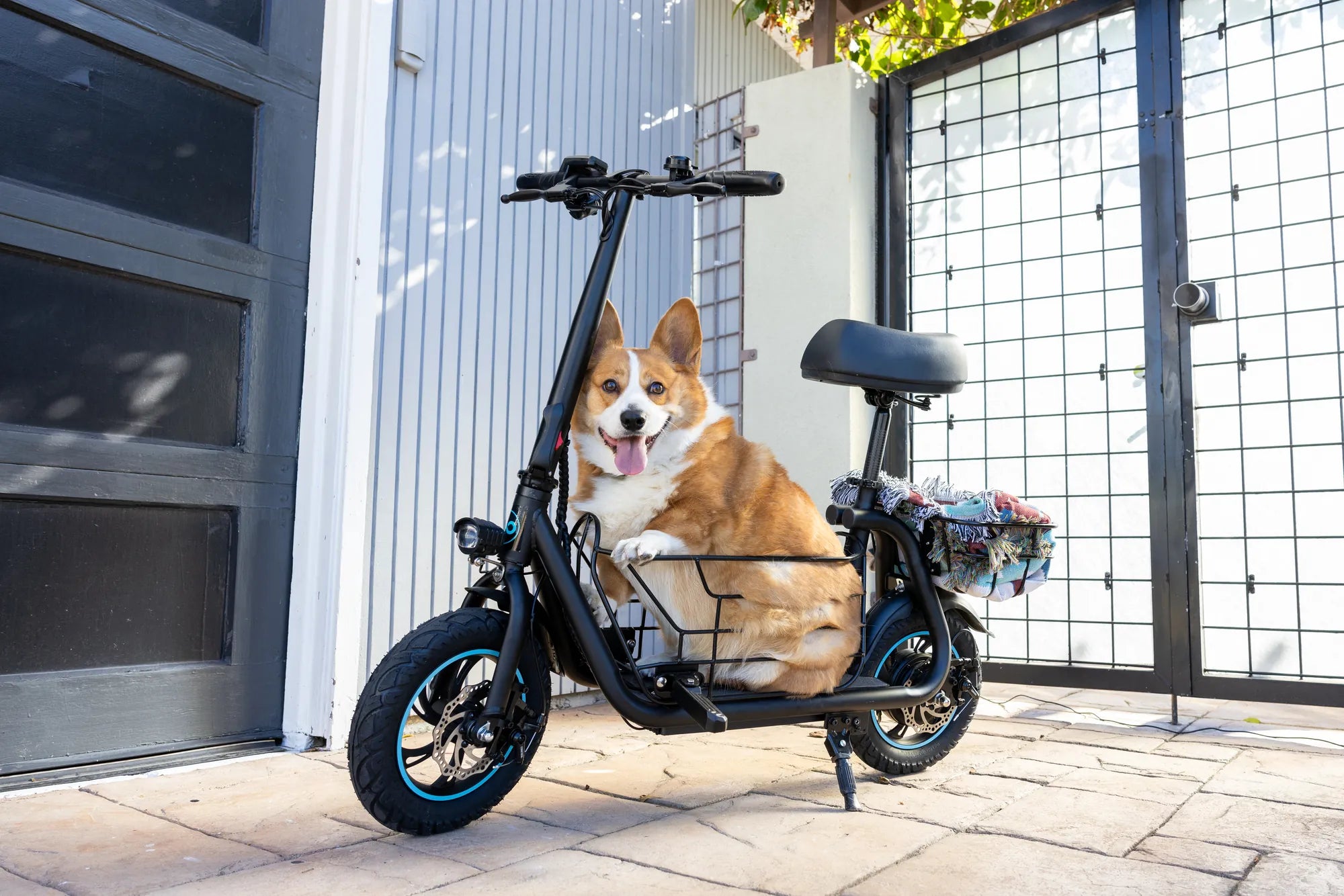
Navigating the E-Scooter Brand Landscape
The electric scooter market has exploded with options, creating a paradox of choice for consumers. Identifying truly top electric scooter brands requires moving beyond marketing claims to examine hard data on safety, reliability, and real-world performance. This guide is designed to cut through the noise, providing a structured framework for making an informed purchase decision.
We will dissect the key evaluation criteria that separate leading brands from the rest. You will learn how to match brand strengths to specific rider profiles, whether you're an urban commuter, an off-road enthusiast, or a budget-conscious first-time buyer. The goal is to equip you with the knowledge to select a scooter that delivers safety, value, and riding joy for years to come.
Understanding the landscape means recognizing that not all brands invest equally in critical areas like battery safety certification or durable waterproofing. A lower upfront cost can sometimes mean higher long-term risk and expense. We will highlight brands that set the standard in these fundamental areas.
By the end of this guide, you will have a clear checklist for evaluation. This will empower you to confidently navigate specifications, warranties, and brand reputations to find your ideal match among the top electric scooter brands.
What Makes a Top Electric Scooter Brand? Key Evaluation Criteria
Judging a brand's standing requires objective metrics and qualitative assessments of long-term reliability. A top electric scooter brand consistently excels across several interconnected pillars, with safety as the non-negotiable foundation. Performance specs are meaningless if the vehicle isn't built to last or protect its rider.
These criteria form the essential lens for evaluating any brand. They help you distinguish between hollow marketing and genuine engineering quality. Let's break down each critical component.
Safety & Certification (The Non-Negotiables)
Safety is the foremost priority. The core of this is battery and electrical system certification. UL 2272 certification is a rigorous standard for the scooter's entire electrical system, while UL 2849 encompasses the full e-bike and scooter system. These certifications involve extensive testing for overcharge, short circuit, and thermal stability, drastically reducing fire risk.
Equally important for real-world use is water resistance, indicated by an IP (Ingress Protection) rating. A rating of IPX5 means the scooter can withstand water jets from any direction, making it suitable for riding in rain or on wet roads. For daily commuting, this is a practical minimum. Brands that prioritize these certifications from the outset demonstrate a commitment to user safety.
Performance & Reliability
Performance is more than just peak numbers on a spec sheet. It's about consistent, real-world delivery. Key metrics include motor wattage (with a focus on sustained nominal power rather than peak), battery capacity measured in Watt-hours (Wh) for accurate range comparison, and real-world tested range, which is typically 60-70% of the manufacturer's ideal claim.
Reliability is proven through build quality: robust deck construction, reliable folding mechanisms, and durable tires. A top brand's scooters deliver their advertised performance consistently over hundreds of charge cycles, with minimal performance degradation. This long-term reliability is what separates premium brands from disposable alternatives.
Warranty & Customer Support
A strong warranty is a brand's vote of confidence in its own product. Look for comprehensive coverage, ideally 1 year on the vehicle and 6 months to 1 year on the battery. The clarity and accessibility of the warranty terms are as important as their length.
Customer support quality is revealed during issues. Top brands offer multiple support channels (email, phone, chat), maintain accessible parts inventories, and provide clear troubleshooting guides. Some, like Gyroor, supplement this with US-based support teams, ensuring quicker resolution times and better communication for riders in North America and Europe.
Value & Price-to-Performance Ratio
Value isn't about being the cheapest; it's about optimal return on investment. A top brand in the value segment delivers robust safety features, adequate performance for the intended use, and durable construction at its price point. The price-to-performance ratio evaluates what you get for your money: a $800 scooter with UL certification, IPX5 rating, and a 1-year warranty offers far better value than a $600 scooter lacking all three.
This ratio must be assessed holistically, including the total cost of ownership. A slightly higher initial investment in a reliable brand often saves money on repairs, premature replacements, and potential safety hazards down the line.
Spotlight on Leading Electric Scooter Brands
The market features brands that excel in different areas, catering to distinct rider priorities. This overview categorizes brands by their core strengths and market position, providing a clearer picture of where each shines. Remember, a "top" brand is one that best matches your specific needs based on the established criteria.
Gyroor: The Benchmark for Certified Safety & All-Weather Commuting
Gyroor has established itself as a leader for riders who prioritize verified safety and daily reliability. Its foundational commitment is to certified safety, with UL-certified lithium-ion battery packs standard across its lineup. This is a critical differentiator, providing peace of mind that the power source meets stringent independent safety standards.
For the practical commuter, all Gyroor models feature an IPX5 water-resistant rating, ensuring reliable operation in wet conditions. Coupled with robust 350W to 500W motors and real-world ranges suitable for city travel, these scooters are built for all-weather utility. The brand backs its products with a clear 1-year comprehensive warranty and is trusted by over 100,000 riders globally, emphasizing its focus on durable, safety-first design.
Premium Performance Brands
This category includes brands historically associated with cutting-edge personal transportation. They often focus on maximum performance metrics: exceptionally high top speeds (40+ mph), long ranges (50+ miles), advanced dual or triple suspension systems, and powerful dual-motor configurations. Their target audience is the performance enthusiast or long-distance rider for whom cost is a secondary concern to capability and technology.
These brands invest heavily in proprietary engineering, premium materials like aerospace-grade aluminum, and sophisticated electronic control systems. They often set the pace for technological innovation in the industry, though their premium pricing reflects this focus on peak performance over pure commuter utility.
Value-Focused & Commuter-Oriented Brands
Several brands successfully target the core urban commuter by balancing essential features with accessible pricing. The best in this category offer solid, no-frills performance—typically 15-25 mph top speeds and 15-30 mile ranges—in a portable and reliable package. Their success hinges on optimizing the price-to-performance ratio without cutting critical corners.
The most reputable value brands still incorporate essential safety features, even if their model range varies. It remains imperative for buyers in this segment to actively check for UL certifications and meaningful water resistance, as these are sometimes compromised to hit lower price points. A good warranty from a value brand is a strong positive indicator.
Niche & Specialty Brands
The market also supports brands that cater to specific niches. Ultra-portable brands focus on minimizing weight and foldability for last-mile connectivity and mixed-mode transit. Extreme off-road brands prioritize high-ground clearance, knobby tires, and ultra-rigid frames for trail riding.
There are also brands that target the hyper-affordable segment. While increasing accessibility, this niche requires extreme diligence from buyers, as safety certifications and long-term durability are often not the primary focus. Understanding a niche brand's singular focus is key to evaluating if it aligns with your very specific needs.
How to Choose Your Best Brand: A Rider-Centric Decision Matrix
With an understanding of brand categories, the next step is personalization. Your ideal brand is the one whose strengths align perfectly with your primary use case, riding environment, and budget. This decision matrix translates general criteria into personalized checklists.
The Urban Commuter's Checklist
For daily city travel, your brand choice must prioritize reliability, safety, and practicality. Must-have features include: IPX5 or higher water resistance, UL-certified batteries, a real-world range that exceeds your daily round-trip distance by 30%, and a weight/portability that suits your need to carry it onto transit or into an office. Compliance with local speed and power regulations is also crucial.
Integrated safety features like bright headlights, taillights, brake lights, and audible horns or bells are essential. Brands like Gyroor, which build these features into a commuter-focused package with certified safety, are often an optimal fit for this rider profile, ensuring all-weather dependability.
The Off-Road & Adventure Enthusiast's Priorities
Off-road riding demands durability, power, and control. Your brand must specialize in robust construction. Key priorities are: a high-torque motor (500W minimum, often 1000W+), large pneumatic off-road tires (10+ inches), advanced suspension (dual spring or hydraulic), and a high-capacity battery (approx. 15Ah or higher) for extended trail range.
The frame must be exceptionally rigid to handle jumps and rough terrain. Water resistance (IPX5 or better) remains vital for trail conditions. Brands in the premium performance or dedicated off-road niche categories are typically the only ones that meet these stringent requirements, which come at a higher price point.
The Budget-Conscious & First-Time Buyer's Guide
For those with limited funds or just starting out, smart compromises are key. Where to safely compromise: top speed (15-20 mph is sufficient), extreme range, and premium materials like carbon fiber. Where never to compromise: basic build quality, functional brakes, and—whenever possible—fundamental safety certifications.
Focus on value brands that offer the clearest, longest warranty you can find within your budget. This warranty acts as a safety net. A brand like Gyroor, which brings UL-certified safety into accessible price segments, represents a strategic choice, offering peace of mind that is often missing in the budget category. Prioritize a scooter that will be safe and reliable for a year over one with flashy but unsustainable specs.
Beyond the Brand: Essential Pre-Purchase Considerations
Choosing a brand is a major step, but finalizing your purchase requires looking at the broader context of ownership. These final considerations ensure your new scooter integrates seamlessly into your life legally and financially.
Understanding Local Laws and Regulations
E-scooter laws vary dramatically by city, state, and country. Ignorance is not a legal defense. You must research: where you can legally ride (bike lanes, roads, sidewalks), local speed limits, minimum age requirements, helmet laws, and whether registration or insurance is mandatory. Some jurisdictions limit motor wattage or require specific safety equipment.
Purchasing a scooter that exceeds local legal power or speed limits can lead to fines and confiscation. A responsible brand often designs models with key regional regulations in mind, but the ultimate compliance responsibility lies with the rider.
The Total Cost of Ownership
The purchase price is just the entry fee. Budget for essential accessories: a high-quality helmet (non-negotiable), a sturdy lock, and potentially a storage bag or phone mount. Factor in ongoing maintenance costs: replacement tires, brake pads, and inner tubes wear out.
Consider the potential cost of proprietary parts versus generic ones. Brands with good parts availability and service networks can lower long-term TCO. While not always required, liability insurance is a wise consideration to protect against potential accident-related costs.
Test Rides, Reviews, and Community Feedback
If possible, seek a test ride at a local dealer or through a rental service. Feel is subjective; handlebar height, deck size, and acceleration curve matter. Supplement this with extensive research from independent review channels on YouTube and tech websites that conduct stress tests.
Finally, dive into brand-specific user communities on forums or social media. Here, you'll find unfiltered long-term reliability reports, common issue threads, and tips. This real-world feedback is invaluable for confirming a brand's durability claims and understanding the actual support experience.
Brand and Model Comparison Table
| Brand Category | Typical Price Range | Key Strengths | Ideal Rider Profile | Safety Focus |
|---|---|---|---|---|
| Safety-Focused Commuter (e.g., Gyroor) | $500 - $1,200 | UL-Certified Batteries, IPX5+ Water Resistance, Reliable Warranty, Practical Range | Daily Urban Commuter, All-Weather Rider, Safety-Conscious Buyer | Highest Priority (Certification-driven) |
| Premium Performance | $1,500 - $4,000+ | High Top Speed & Range, Advanced Suspension, Premium Materials, Tech Features | Performance Enthusiast, Long-Distance Rider, Tech Adopter | Varies (Often high, but check per model) |
| Value-Focused Commuter | $300 - $700 | Competitive Price, Good Portability, Sufficient Commuter Speeds | First-Time Buyer, Light/Infrequent Commuter, Tight Budget | Must be actively verified per model |
| Ultra-Portable / Last-Mile | $400 - $900 | Lightweight (<30 lbs), Compact Fold, Easy Carry | Multi-Modal Commuter, Apartment Dweller, Those with Storage Limits | Often basic; check for key certifications |
Frequently Asked Questions (FAQ)
Q: What is the single most important safety feature to look for?
A: Without question, it is independent safety certification for the battery and electrical system, specifically UL 2272 or UL 2849. This certification is the best objective proof that the scooter's most critical—and potentially hazardous—component has been rigorously tested for fire and electrical safety.
Q: Is a more expensive brand always a better choice?
A: Not necessarily. A more expensive brand is better if its specific strengths (e.g., extreme performance, premium materials) align with your needs. For a pure urban commuter, a moderately priced brand that excels in safety certifications, water resistance, and reliability (like Gyroor) often represents a better, more targeted value than a generic premium brand.
Q: How important is water resistance for casual use?
A: It is critically important for any real-world use. Even casual riders encounter morning dew, wet streets after rain, or accidental puddles. An IPX5 rating ensures the scooter's electronics are protected from water jets, greatly enhancing long-term reliability and preventing sudden failures. It's a feature that pays for itself.
Q: Can I trust a brand that only offers a 90-day warranty?
A: A short warranty is a major red flag. It typically indicates lower confidence in the product's long-term durability. Brands that trust their build quality stand behind it with at least a 1-year warranty on the vehicle. Prioritize brands with longer, clearer warranties; they are a sign of reliability and better customer protection.
Q: Are higher wattage (W) and voltage (V) numbers always better?
A: Higher numbers generally indicate more potential power and speed, but context is key. A 350W motor is ample for flat city commuting. Higher wattage (e.g., 500W+) is needed for hills or off-road. Voltage affects efficiency and top speed. The best metric is the combination that delivers the performance you need efficiently, not the highest abstract number on the box.
Your Journey Starts with an Informed Choice
Selecting from the top electric scooter brands is ultimately about aligning engineering integrity with your personal riding life. The journey begins by prioritizing verified safety through certifications, matching performance specs to your actual routes, and ensuring the brand offers robust support for the long haul. This guide has provided the framework to make that alignment clear and actionable.
For the vast majority of riders, especially daily commuters, the ideal choice balances certified safety, all-weather durability, and dependable performance. Brands that are transparent about their certifications and build quality, such as Gyroor with its UL-certified batteries and IPX5 water resistance, offer a foundation of trust that enhances every ride. Their 1-year warranty and established customer base of over 100,000 riders provide additional assurance.
Use the criteria and checklists outlined here as your personal buying guide. Compare specifications against your checklist, research real-world reviews, and invest in the brand that demonstrates a commitment to your safety and satisfaction, not just a sale. The right electric scooter is a gateway to efficient, enjoyable mobility.
Ready to explore a brand built on certified safety and commuter-ready reliability? Browse the full Gyroor collection, featuring UL-certified scooters for every need, at gyroorboard.com.
Adult Size Electric Scooters: The Ultimate Guide to Choosing the Right One
Adult Size Electric Scooters: The Ultimate Guide to Choosing the Right One