



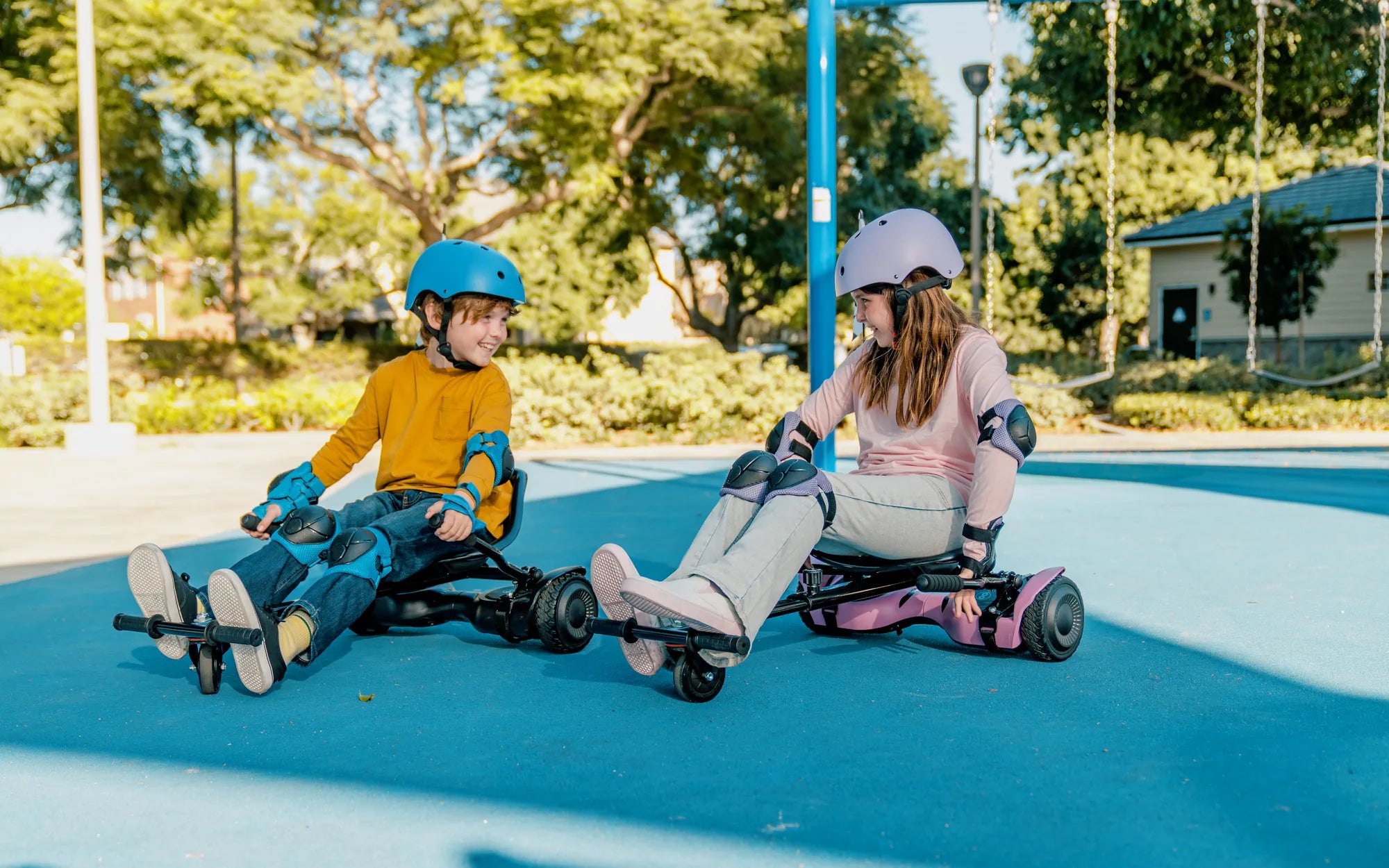
Introduction to Toy Hoverboards
A toy hoverboard is a self-balancing, two-wheeled electric scooter designed primarily for recreation and skill development. Unlike high-speed personal transporters used for commuting, these devices prioritize controlled speed, stability, and durability for younger riders. Their appeal lies in offering kids a fun, futuristic way to play outdoors, develop core balance, coordination, and confidence. This guide focuses on the Toy Hoverboard: The Ultimate Guide to Fun and Safety for Kids, ensuring parents can make informed decisions. Brands like Gyroor, a leading electric scooter and e-bike manufacturer, engineer these products with family safety as a core principle, combining exciting play with rigorous safety standards trusted by over 100,000 riders.
Understanding the distinction between a toy and a transport device is crucial. A true toy hoverboard for kids will have built-in speed limiters, robust construction for inevitable bumps, and certifications specifically for residential use. The goal is managed fun, not high-velocity travel. This guide will walk you through selecting, safely operating, and maintaining a hoverboard to provide your child with a rewarding and secure experience.
The evolution of hoverboard technology has significantly improved safety. Modern units from reputable brands incorporate gyroscopic sensors for smoother balance, non-slip foot pads, and lights for visibility. The journey from a novel gadget to a recognized toy category underscores the importance of informed purchasing and supervised use. Let's begin by breaking down the key features you must evaluate.
Choosing the Right Hoverboard for Your Child: Key Features
Selecting a hoverboard isn't just about color or flashy lights. The right choice hinges on specifications that directly impact safety, age-appropriateness, and long-term enjoyment. Prioritize features that ensure control and durability over maximum speed.
Key evaluation points include motor power, battery certification, weight capacity, and wheel design. Each element contributes to how the hoverboard performs in your specific environment, be it a smooth indoor floor or a slightly rugged driveway. Ignoring these specs can lead to a frustrating or unsafe experience.
Data-driven decisions are essential. For instance, a hoverboard with a 200-watt motor and a beginner mode is fundamentally different from a 350-watt model without one, even if they look similar. We will dissect these features to empower your choice.
Motor Power and Speed Settings
Motor power, measured in watts (W), determines torque, hill-climbing ability, and top speed. For children, a motor between 200W and 300W is typically sufficient. Higher wattage doesn't automatically mean better; it must be paired with appropriate speed controls.
The most critical feature for beginners is a dedicated training or beginner mode. This software setting caps the top speed, often between 4-7 mph, and makes the acceleration and braking responses less sensitive. It allows the child to learn balance and control without the device being overly responsive. Gyroor models often include such programmable modes, allowing the hoverboard to "grow" with the rider's skill.
Always verify the maximum speed. A safe toy hoverboard for kids should not exceed 10 mph even in its advanced setting. Speed should be a reward for mastered skill, not a default. This controlled approach aligns with the core premise of a toy hoverboard designed for fun and safety.
Battery Safety and Certification
This is the most non-negotiable safety feature. You must only consider hoverboards with a battery pack certified to the UL 2272 standard. This certification, developed by Underwriters Laboratories, tests the electrical system for fire and electrical safety under various stress conditions.
A UL 2272 mark means the battery management system, wiring, and cell construction have passed rigorous tests. It is your primary defense against the thermal runaway incidents associated with older, uncertified models. Gyroor utilizes UL-certified lithium-ion battery packs tested for over 500 charge cycles, ensuring both safety and longevity.
Battery life translates to playtime. Look for a range of 7-12 miles per charge, which typically offers 1-2 hours of intermittent use. Charge time is also important; a 2-4 hour full charge is standard. Teach your child to stop riding when the low-battery warning activates, as a depleted battery can affect balance.
Weight Limit and Build Quality
The manufacturer's stated maximum weight limit is not a suggestion but a critical engineering parameter. Exceeding it can strain the motors, damage the frame, and lead to premature battery drain or failure. Most kids' models support riders between 44 lbs and 220 lbs.
Build quality is directly tied to durability. The shell should be made of high-impact, ABS plastic that can withstand drops and bumps. Check the quality of the foot pad material—it should be textured and non-slip. A well-built hoverboard feels substantial, not hollow or flimsy.
Internal frame construction matters. A sturdy metal chassis provides stability and protects the internal components. Brands like Gyroor design their products to endure the active play of children, contributing to their reliable 1-year warranty and high customer satisfaction ratings.
Wheel Size and Terrain Compatibility
Wheel size dictates where the hoverboard can comfortably and safely operate. Smaller wheels (6.5 inches) are designed for very smooth, flat surfaces like indoor hardwood floors or perfectly paved driveways. They offer quicker turning but are less stable on bumps.
Larger wheels (8.5 inches or more) provide more stability and can handle common outdoor terrain like sidewalk cracks, slight gravel, and grass. These "all-terrain" or "off-road" style wheels have deeper treads and better shock absorption. For general backyard and neighborhood use, larger wheels are often the safer, more versatile choice.
Consider your primary use case. If riding will be 90% indoors on smooth surfaces, standard wheels suffice. For any outdoor adventure, investing in a model with larger, air-filled or rubber-tired wheels significantly enhances safety and fun, making the toy hoverboard a more versatile play companion.
The Non-Negotiables: Essential Safety Gear and Precautions
Safety gear is not optional. A helmet is as essential to hoverboarding as it is to cycling. The foundation of fun is security, and proper equipment mitigates the risk of scrapes, sprains, or more serious injuries from falls, which are a normal part of the learning process.
Beyond gear, establishing and enforcing riding rules and a pre-ride checklist creates a culture of safety. This proactive approach ensures the hoverboard itself is in safe operating condition every time. Let's break down the mandatory kit and routines.
Must-Have Protective Gear
Every ride requires a full set of protective equipment. This includes a certified helmet, wrist guards, knee pads, and elbow pads. Each piece serves a distinct purpose in protecting the body's most vulnerable areas during a fall.
- Helmet: Must be certified (CPSC for the U.S., ASTM). It should fit snugly, sitting level on the head and covering the forehead. Replace after any significant impact.
- Wrist Guards: These are critical, as instinct leads to putting hands out during a fall. They support the wrists and prevent fractures or severe sprains.
- Knee and Elbow Pads: Protect the joints from painful abrasions and impacts. Ensure they are sized correctly and stay in place during movement.
Proper fit is paramount. Gear that is too loose will not protect effectively; gear that is too tight will be uncomfortable and discourage use. Investing in quality, comfortable safety gear is an investment in your child's continued enjoyment and safety.
Pre-Ride Safety Checks and Riding Etiquette
Develop a simple pre-ride routine performed with your child. This habit instills responsibility and ensures the device is safe to operate. The checklist should take less than a minute.
Pre-Ride Checklist: 1) Inspect the tires for proper inflation (if applicable) and debris. 2) Check the battery level; never start a ride with less than 20% charge. 3) Ensure all lights (if equipped) are functioning for visibility. 4) Test the self-balancing mechanism by gently powering on the board on a level surface and seeing if it remains steady.
Basic Riding Rules (Etiquette): Always supervise children under 12. Ride only on smooth, paved, private surfaces—never on public roads or near traffic. Avoid wet, sandy, or oily surfaces as they compromise traction. Be mindful of pedestrians and obstacles. Do not allow doubling or carrying passengers. These rules create a safe environment for everyone.
Learning to Ride: A Step-by-Step Guide for Beginners
The learning curve for a hoverboard can be swift with the right approach. The key is patience, positive reinforcement, and a progression from simple, supported actions to independent maneuvering. This step-by-step guide is designed for a parent to coach their child effectively.
Start each session when the child is rested and focused. Keep initial practice sessions short (15-20 minutes) to avoid frustration. Celebrate small victories to build confidence. The goal is to make the process fun and pressure-free.
Mounting, Dismounting, and Finding Balance
Mastering the mount and dismount is the first crucial skill. Place the hoverboard on a flat, level surface next to a wall or a sturdy chair for support. Have the child power on the board.
To Mount: Instruct the child to place one foot firmly on the foot pad, keeping their weight on the grounded foot. Then, using the wall or chair for balance, they should quickly but smoothly place their second foot on the other pad. The board will activate and try to balance. Encourage them to look forward, not down at their feet, and to keep their knees slightly bent.
To Dismount: Teach the "step-off" method. While stationary, the child should shift their weight to one foot and step backwards off the board with the other, then bring the remaining foot down. They should never jump off with both feet simultaneously, as this can send the board shooting out unpredictably.
Mastering Basic Movements and Turning
Once comfortable standing still, practice moving forward and backward. The control is all in the lean. A very slight forward lean of the ankles (not the whole body) will initiate forward motion. A slight backward lean will cause it to reverse or stop if moving forward.
For turning, it's about differential pressure. To turn right, apply gentle forward pressure with the left toes/ball of the foot. To turn left, apply gentle pressure with the right toes. The key is subtlety—large, jerky movements will cause instability. Practice large, slow figure-eights to get a feel for smooth turning.
Braking is simply a controlled backward lean. Practice accelerating to a slow walk speed, then leaning back smoothly to come to a complete stop. Mastering stop-and-go control is more important than top speed.
Practicing in a Safe Environment
The practice environment is critical for success and safety. Choose a flat, open, and smooth area free of traffic, slopes, and major obstacles. An empty basketball or tennis court, a smooth driveway, or a quiet cul-de-sac are ideal.
Use cones or other soft markers to create a simple course for practicing turns and stops. Start with wide paths and gradually make them more challenging as skills improve. Always ensure the child is wearing all their safety gear during these practice sessions.
Supervision is key. Stay close, offer verbal guidance, and be ready to assist if they lose balance. Avoid holding them upright as they ride, as this prevents them from learning the self-balancing feel of the toy hoverboard. Instead, let them use a wall for support until their confidence grows.
Maintenance and Care for Long-Lasting Fun
Proper maintenance extends the life of the hoverboard, ensures consistent performance, and upholds safety standards. Simple, regular care prevents most common issues. Teach your child to be part of this process to foster responsibility for their toy.
Focus on three main areas: battery care, cleaning, and mechanical inspection. Establishing good habits from day one will keep the hoverboard running smoothly for years.
Battery Care and Charging Best Practices
Lithium-ion batteries require specific care. Always use the manufacturer-provided charger. Do not leave the hoverboard plugged in for extended periods after it's fully charged (overnight is generally not recommended). Overcharging can degrade battery health over time.
Store the hoverboard in a cool, dry place, away from direct sunlight and extreme temperatures (both hot and cold). Avoid storing it with a completely depleted battery; aim for a charge level around 50% for long-term storage. If the hoverboard won't be used for a month or more, charge it to 50% and power it off completely.
Adhering to these practices protects the integrity of the UL-certified battery pack and ensures the promised 500+ charge cycles. Gyroor's battery systems are designed for reliability, but proper user care is the final, essential component.
Cleaning and Routine Inspection
Regular cleaning prevents dirt and debris from damaging moving parts. Always power off the hoverboard and disconnect the charger before cleaning. Use a slightly damp cloth to wipe down the shell and foot pads. Never hose it down, submerge it, or use chemical cleaners, as water and liquids can damage the electronics despite water-resistant ratings.
Perform a weekly visual and auditory inspection. Check the tires for wear, cuts, or embedded debris. Spin the wheels to ensure they rotate freely and quietly. Listen for any unusual grinding, clicking, or whining sounds from the motors or wheel hubs, which could indicate a problem.
Tighten any visible screws on the frame if they become loose. By incorporating this quick 5-minute check into your routine, you can identify small issues before they become major repairs, ensuring your toy hoverboard remains a source of safe fun.
Hoverboard Comparison: Key Features for Different Needs
Selecting the right model depends on your child's age, skill level, and where they'll ride. This table compares common hoverboard types based on critical specifications to help you make an informed choice.
| Hoverboard Type | Best For | Typical Wheel Size | Motor Power | Key Features | Ideal Age Group |
|---|---|---|---|---|---|
| Beginner/Indoor | Smooth floors, first-time riders | 6.5" | 200W | Training mode, lower speed limit, LED lights | 6-9 years |
| All-Terrain | Driveways, sidewalks, light grass | 8.5"+ | 300W-350W | Rubber tires, better suspension, higher weight limit | 9+ years |
| Feature-Rich | Older kids seeking fun extras | 6.5"-8.5" | 250W-300W | Bluetooth speakers, app connectivity, customizable LED lights | 10+ years |
| Pro/Self-Balancing Scooter | Teens with experience | 10" | 400W+ | Higher speed (not recommended for young kids), longer range | 13+ years |
This comparison illustrates why a dedicated toy hoverboard for kids, like many in Gyroor's lineup, focuses on the Beginner/Indoor and All-Terrain categories. They balance capability with essential safety controls appropriate for younger riders.
Frequently Asked Questions (FAQs) for Parents
Q: What is the right age for a hoverboard?
A: Most manufacturers recommend ages 8 and up. However, age is less important than the child's individual maturity, coordination, and ability to understand and follow safety rules. A responsible 7-year-old with good balance may be ready, while some 9-year-olds may need more time. Always base your decision on your child's specific capabilities.
Q: Are hoverboards safe for indoor use?
A: They can be used indoors on hard, smooth, unobstructed floors like hardwood, tile, or laminate. Always supervise closely. Avoid use on carpets (which can overheat the motors), near stairs, or in rooms with fragile furniture. Ensure the space is large enough for safe maneuvering and stopping.
Q: How do I know if a hoverboard is UL 2272 certified?
A> Look for the official UL mark directly on the product, its retail packaging, or the manufacturer's website in the product specifications. Reputable sellers like Gyroor prominently display this certification. Never purchase a hoverboard without this certification, as it is the benchmark for electrical and fire safety.
Q: What should I do if the hoverboard gets wet?
A> Immediately power it off. Wipe it down thoroughly with a dry cloth. Do not charge it. Place it in a dry, well-ventilated area and allow it to dry completely for at least 24-48 hours before attempting to turn it on or charge it. While some models like Gyroor's have IPX5 water-resistant ratings for protection against light splashes, they are not waterproof and should not be ridden in rain or through puddles.
Q: Can the battery be replaced?
A> Yes, but it must be replaced with an identical, manufacturer-approved, UL 2272 certified battery pack. Using a non-certified or incompatible battery voids the warranty and creates a serious safety hazard. Contact the manufacturer or authorized service center for genuine replacement parts and professional installation if needed.
Conclusion: Prioritizing Smart Fun with Gyroor
The ultimate hoverboard experience seamlessly blends exhilarating fun with unwavering safety. This guide has equipped you with the knowledge to choose a device based on certified components like UL 2272 batteries, to insist on comprehensive protective gear, and to teach riding skills in a structured, safe manner. The joy a child gets from mastering this futuristic toy is immense, but it is a joy built on a foundation of responsible preparation.
Choosing a reputable brand is the first and most critical step in that preparation. Gyroor's commitment to safety—through certified batteries, robust build quality, IPX5 water-resistant designs, and a reliable warranty—provides the peace of mind that allows fun to flourish. Their experience with over 100,000 riders translates into products engineered for real-world, family-friendly use.
Embrace this modern play activity with confidence. Equip your child, establish the rules, and enjoy watching them develop new skills. The right hoverboard is more than a toy; it's a tool for outdoor activity, coordination, and responsible play. For a selection of hoverboards that meet all the safety and performance criteria outlined in this Toy Hoverboard: The Ultimate Guide to Fun and Safety for Kids, browse the full Gyroor collection at gyroorboard.com.
Christmas Gift Ideas for 11-12 Year Old Girls: Creative and Fun Picks
Why Does My Hoverboard Turn Off When I Ride It? Troubleshooting Guide