



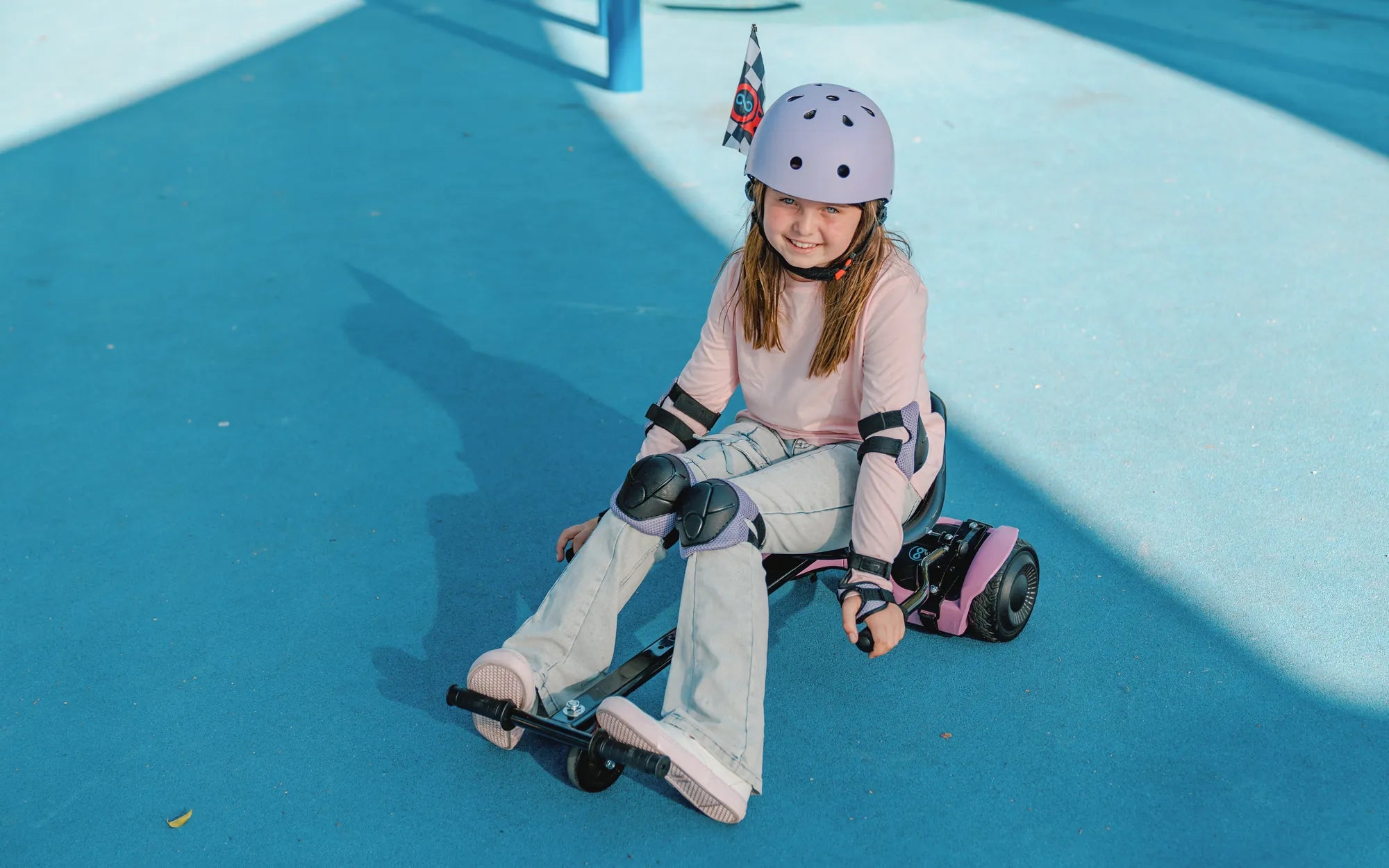
Introduction to Kids' Tricycle Scooters
A tricycle scooter for kids represents a brilliant fusion of stability and excitement. This hybrid vehicle combines the three-wheeled confidence of a trike with the thrilling, self-propelled motion of a scooter. It's more than just a toy; it's a powerful developmental tool that builds balance, coordination, and independence while encouraging active, screen-free play.
This guide serves as your definitive resource. We will navigate the essential features, compare critical specifications, and outline paramount safety practices. Our goal is to empower you to make an informed decision that maximizes fun and security for your young rider.
Why Choose a Tricycle Scooter for Your Child?
The primary advantage of a tricycle scooter is its inherent stability. The triangular three-wheel design provides a wide, secure base that prevents the tipping common with two-wheeled scooters. This builds immediate confidence in toddlers and preschoolers, allowing them to focus on steering and propulsion without fear of falling.
This vehicle offers a natural progression in motor skill development. Children master pushing, steering, and braking on a stable platform before potentially transitioning to two-wheeled bikes or scooters. It promotes crucial physical development, including leg strength, core stability, and spatial awareness, all through the lens of play.
For electric models, the addition of a motor introduces kids to the fundamentals of powered transportation in a controlled, low-speed environment. They learn to manage acceleration, understand battery life, and operate a vehicle responsibly, laying groundwork for future cycling or driving etiquette.
Safety First: Engineering You Can Trust
When it comes to children's vehicles, safety is non-negotiable. A well-engineered tricycle scooter integrates multiple layers of protection. The foundation is a robust, child-appropriate frame constructed from high-grade aluminum or steel, designed to withstand bumps and jumps without compromising integrity.
For electric models, battery safety is paramount. Reputable brands utilize UL-certified lithium-ion battery packs. This certification means the battery has undergone rigorous testing for overcharge protection, short-circuit prevention, and thermal stability, significantly reducing any risk of fire or failure. Brands like Gyroor build this certification into their core design philosophy.
Further protection comes from water-resistance ratings. An IPX5 rating, for example, indicates the scooter can withstand water jets from any direction. This means a sudden puddle or light rain won't cause electrical damage, allowing play to continue safely in various conditions and making the scooter easier to clean.
Key Features to Compare When Shopping
Selecting the right tricycle scooter requires careful comparison of several key features. Parents should evaluate based on their child's current size, skill level, and intended use environment. The right combination ensures the scooter grows with the child and provides lasting value.
Start with the core construction. Examine the frame material—aluminum alloys offer a good balance of lightness and strength. Check the welding and finish for quality. The deck should be wide and textured for secure footing. These elements directly impact durability and the overall safety experience.
Age, Weight, and Size Guidelines
Matching the scooter to your child's physical development is critical. Manufacturers provide recommended age ranges, but a child's height and weight are more accurate metrics. Most tricycle scooters suit children aged 3 to 8 years, with weight capacities typically between 44 and 110 lbs.
Adjustable handlebars are a vital feature for longevity. Look for models that offer a range of height adjustments, often from about 20 to 30 inches. This allows the scooter to adapt as your child grows, ensuring proper posture and control for years, not just a single season.
Motor Power, Speed Modes, and Battery Life
Electric tricycle scooters vary in performance. Motor power, measured in watts (W), generally ranges from 80W to 150W for kids' models. A higher wattage provides better torque for climbing gentle slopes but must be paired with appropriate speed controls.
Multiple speed modes are essential for safety and skill progression. A beginner mode may limit speed to 3-4 mph, while advanced modes can reach 7-10 mph. Parental control via a remote or app is a valuable feature for younger riders. Battery life is expressed in Amp-hours (Ah) and voltage (V). A common 24V 4Ah battery can provide 45 to 60 minutes of continuous ride time, depending on terrain and speed mode.
Build Quality, Tires, and Braking Systems
Tire choice affects ride comfort and traction. Air-filled (pneumatic) tires offer superior shock absorption on uneven sidewalks and better grip, but require occasional inflation. Solid rubber or foam-filled tires are maintenance-free and puncture-proof but provide a firmer ride.
The braking system is a critical safety component. Common setups include a hand-operated disc or caliper brake on the rear wheel and a foot brake on the deck. Electronic brakes, which engage when the throttle is released, provide additional stopping power. A redundant system—having two ways to stop—is ideal for safety.
| Feature | Entry-Level Model | Mid-Range Model | Advanced/Convertible Model |
|---|---|---|---|
| Recommended Age | 3-5 years | 4-7 years | 5-8+ years |
| Motor Power | 80W - 100W | 100W - 120W | 120W - 150W |
| Max Speed | 3.5 mph | 7 mph (with modes) | 10 mph (with modes & parental control) |
| Battery & Range | 24V/3Ah (~35 min) | 24V/4Ah (~50 min) | 24V/5Ah (~65 min) |
| Tire Type | Solid Rubber | Pneumatic (Air-Filled) | Pneumatic, Off-Road Options |
| Key Safety Feature | Wide Wheelbase, Low Speed | Hand + Foot Brake, Speed Modes | UL-Certified Battery, IPX5 Rating, Remote Control |
The Gyroor Advantage: Built for Real-World Fun
Gyroor brings its expertise in adult electric mobility to the kids' segment, engineering tricycle scooters that prioritize certified safety and real-world durability. As a brand trusted by over 100,000 riders, their approach is grounded in reliable performance and parent-friendly design.
Every Gyroor electric model is powered by a UL-certified battery pack. This provides peace of mind during charging and use, knowing the power source meets stringent international safety standards. The batteries are tested for 500+ charge cycles, ensuring long-term reliability throughout childhood.
The integration of IPX5 water-resistant engineering means these scooters are built for adventure. A spilled drink, a wet driveway, or a post-rain ride won't end the fun or risk damage. Combined with a robust frame and a comprehensive 1-year warranty backed by US-based support, Gyroor delivers a product where safety and longevity are engineered in from the start.
Essential Safety Gear and Riding Tips
The safety features of the scooter itself are only one part of the equation. Proper protective gear is mandatory. A properly fitted CPSC-certified bicycle helmet is the absolute minimum. For beginners, add knee pads, elbow pads, and wrist guards to protect against falls.
Footwear matters. Children should always wear closed-toe shoes with grippy soles—no sandals or flip-flops. This ensures solid footing on the deck and protection for their toes.
Supervision and environment are key. Young children should always be actively supervised. Choose safe riding areas like empty parking lots, paved park paths, or smooth sidewalks away from traffic, steep hills, and bodies of water. Establish clear rules: no riding near roads, no riding at dusk or in the dark, and always yielding to pedestrians.
Conduct a pre-ride check together. Make it a habit to check tire pressure (if applicable), test the brakes, ensure the handlebars are tight, and verify the battery is adequately charged. This ritual teaches responsibility and prevents accidents caused by mechanical issues.
Frequently Asked Questions (FAQ)
Q1: What is the right age to start my child on a tricycle scooter?
A1: Most children are ready between 3 and 4 years old, once they have the coordination to stand, balance, and steer. Always refer to the manufacturer's specific age and weight recommendation, as sizes vary. Non-motorized push models can be introduced as early as 2.5 years for balance practice.
Q2: How long does the battery last, and how do I maintain it?
A2: Battery life per charge typically ranges from 35 to 75 minutes of continuous use, depending on the model, terrain, and speed mode. To maintain battery health, avoid fully draining it. Recharge after use and store in a cool, dry place. For a Gyroor scooter with a 4Ah battery, expect about 45-50 minutes of ride time under normal conditions.
Q3: Is assembly difficult? What tools are required?
A3> Most quality tricycle scooters are 90% pre-assembled. Final assembly usually involves attaching the handlebars to the stem and possibly securing the front wheel or fender. Gyroor models are designed for tool-free or minimal-tool assembly, often taking just 15-20 minutes with the included hex keys.
Q4: Can it be used indoors?
A4> It is not recommended. Tricycle scooters, especially electric ones, require space for safe maneuvering and can damage hardwood floors, tile, or carpet. They are designed for outdoor use on paved, flat surfaces like driveways, sidewalks, and playgrounds.
Q5: What regular maintenance should I perform?
A5> Regular maintenance ensures safety and extends the scooter's life. Monthly, check and tighten all bolts (handlebar, stem, wheels). For pneumatic tires, check air pressure. Inspect brake pads for wear and test braking function. Wipe down the scooter to remove dirt and debris, and keep the battery terminals clean. Follow the manufacturer's specific lubrication guidelines for moving parts.
Q6: Are there models that can convert from three wheels to two?
A6> Yes, some advanced models are designed as convertible tricycle scooters. They start as a stable three-wheeler for beginners. As the child's balance improves, you can often remove or modify a rear component to convert it into a more challenging two-wheeled scooter, extending the product's useful life through different skill stages.
Conclusion: Rolling Towards Confidence and Joy
Choosing the right tricycle scooter is an investment in your child's physical development, confidence, and joy. It represents a gateway to outdoor exploration, active play, and the proud achievement of mastering a first vehicle. By prioritizing certified safety features like UL-approved batteries, robust construction, and appropriate speed controls, you create a foundation for countless safe adventures.
The ultimate goal is to foster a love for movement and independence in a secure framework. A well-chosen scooter from a trusted brand like Gyroor, combined with consistent safety practices and protective gear, allows you to step back and watch as your child rolls toward new horizons with a smile. The memories created—the first solo ride, the races up the driveway, the sense of freedom—are priceless.
Ready to find the perfect match for your young adventurer? Explore a range of thoughtfully engineered options designed for fun and safety. Browse the full Gyroor collection at gyroorboard.com to discover the model that will kickstart your child's next great adventure.
When Did the Hoverboard Come Out? The Fascinating History of a Futuristic Ride
Bluey Kids Scooter: The Ultimate Guide for Parents and Children