

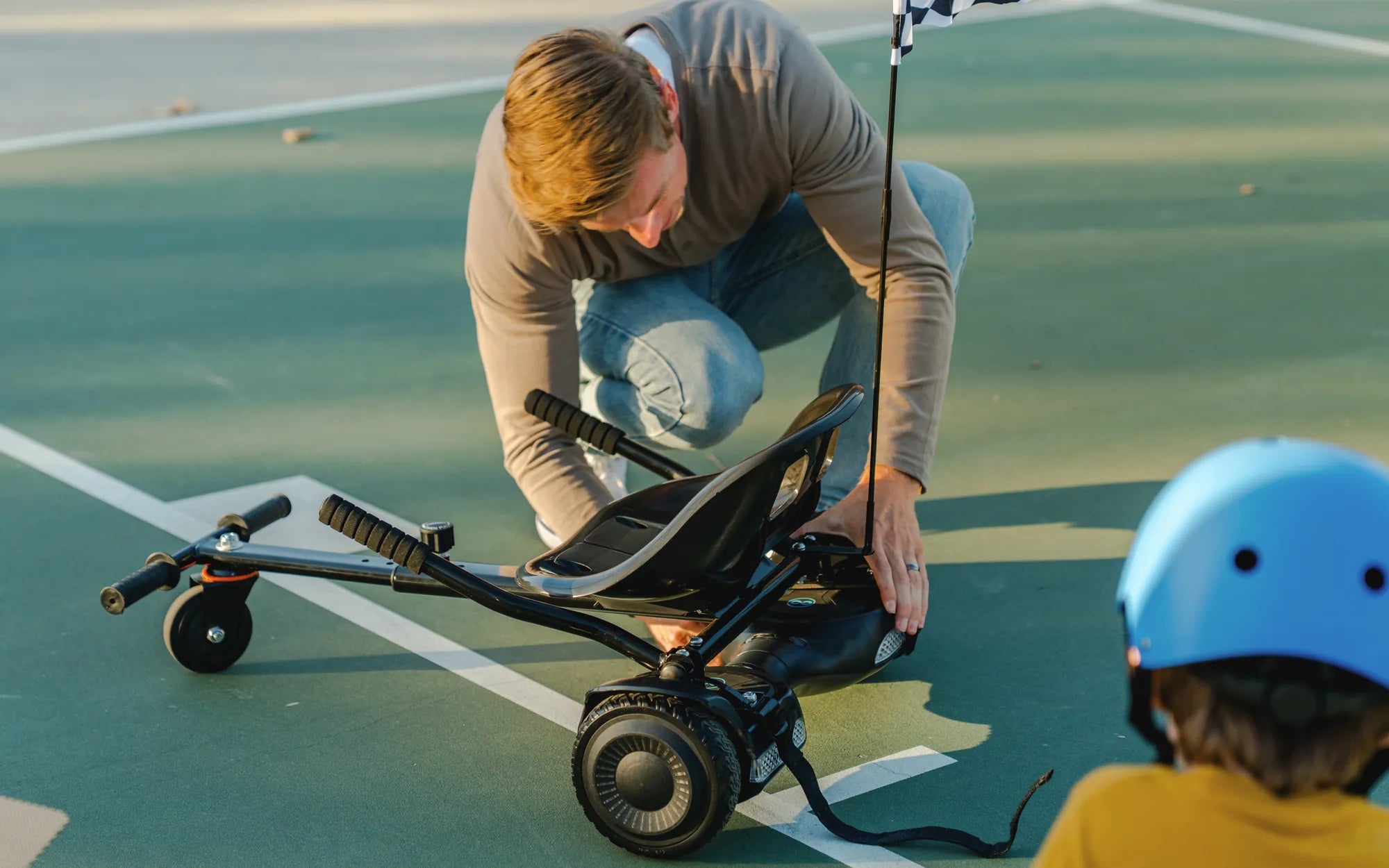
Navigating the World of Kids' Self-Balancing Scooters
Choosing the right two wheel self balancing electric scooter for kids is a significant decision that blends fun with serious considerations of safety and value. This guide cuts through the marketing noise to give you the factual, data-driven information needed to make a confident choice. You will learn how the technology functions, which features directly impact safety and longevity, and how to establish best practices for your young rider. We'll reference specific engineering standards and product features from leading brands like Gyroor, trusted by over 100,000 riders for their commitment to certified safety and reliable performance.
Understanding the Technology: How Self-Balancing Scooters Work
The magic of a two-wheel self-balancing electric scooter lies in a sophisticated yet intuitive system of sensors and gyroscopes. When your child steps onto the foot pads, internal gyroscopic sensors detect the angle of tilt hundreds of times per second. A central processing unit (CPU) interprets this data and instantly commands electric motors in each wheel to move forward or backward to maintain equilibrium.
This creates the "lean-to-steer" mechanism. To move forward, the rider leans slightly forward; the scooter accelerates to "catch" them and prevent a fall. Leaning back commands deceleration or reverse. Turning is achieved by applying subtle pressure with one foot, causing one wheel to spin faster than the other. This direct cause-and-effect control is surprisingly quick for most children to master, as it mimics natural balance instincts.
Understanding this technology is crucial for safety. The system has physical limits. Excessively steep inclines, sudden weight shifts, or low battery power can overwhelm the sensors and motors, potentially causing a shutdown or loss of balance. Recognizing these limits informs where and how your child should ride.
The Gyroor Advantage: Safety and Reliability Engineered for Young Riders
When selecting a two wheel self balancing electric scooter for kids, brand engineering choices are paramount. Gyroor builds its models with core safety principles that directly address common parental concerns. The most critical component is the battery. Gyroor uses exclusively UL-certified battery packs, which have undergone rigorous independent testing for short-circuit, overcharge, and thermal stability safety.
This certification is a non-negotiable for fire safety, far surpassing generic, uncertified power cells found in some models. Furthermore, Gyroor designs its scooters with IPX5 water resistance. This rating means the scooter can withstand low-pressure water jets from any direction, making it resistant to puddles, wet pavement, and accidental splashes, which enhances durability and electrical safety.
Backing this engineering is a reliable 1-year warranty and accessible customer support. This commitment provides peace of mind, ensuring that your investment is protected against manufacturing defects. For a parent, these features—UL-certification, IPX5 rating, and a solid warranty—transform a toy into a responsibly engineered personal transporter.
Key Features to Compare: Your Parental Checklist
Evaluating a two wheel self balancing electric scooter for kids requires a systematic approach. Break down your comparison into safety, performance, and usability categories. Use the following checklist as your objective framework when reviewing any model.
Motor Power & Speed Settings
Motor wattage, typically ranging from 250W to 350W per motor, directly influences torque and hill-climbing ability. A 2x350W system will handle gentle grassy slopes or driveway inclines more effectively than a 2x250W system. More importantly, look for models with adjustable speed modes. A beginner mode (often capped around 5-7 mph) is essential for safe initial practice, allowing the child to master balance without excessive speed.
Intermediate and advanced modes can then be unlocked as their skill and confidence grow. This progressive learning feature is a critical safety tool built into the scooter's software.
Battery Life & Range Per Charge
Battery capacity is measured in Watt-hours (Wh). A higher Wh rating generally translates to a longer range. For example, a scooter with a 36V, 4.0Ah battery has 144Wh. Under typical riding conditions for a child (variable speed, some stops/starts), this can equate to 7-10 miles of range. Always consider the manufacturer's tested range but factor in real-world use.
Charging time is also key; most quality scooters fully charge in 2-4 hours. Teach your child to charge the scooter on a hard, non-flammable surface and to avoid leaving it plugged in indefinitely to maximize the battery's 500+ charge cycle lifespan.
Weight Limit & Build Quality
Adhering to the manufacturer's maximum weight limit is a strict safety rule. Exceeding it can overstress the motors, drain the battery dangerously fast, and compromise structural integrity. Limits commonly range from 120 to 220 pounds. Build quality is revealed in the frame material. A robust ABS plastic shell combined with an internal aluminum alloy frame offers a good balance of impact resistance and lightweight strength for easy carrying.
Tire Type: All-Terrain vs. Solid Rubber
This choice defines the riding experience. Air-filled (all-terrain) tires, typically 8.5 inches or larger, provide superior shock absorption on bumpy sidewalks, gravel paths, or grass. They offer a smoother ride but require occasional pressure checks and are susceptible to punctures.
Solid rubber tires are maintenance and puncture-proof, ideal for perfectly smooth pavement. However, they transmit more vibration from cracks and bumps to the rider. Choose based on your local terrain: variable surfaces favor all-terrain, while smooth blacktop is fine for solid tires.
Learning Curve & Rider Modes
The initial learning phase typically takes a few hours over 1-2 days. The best models support this journey. Beyond speed modes, some include a "balance assist" or training mode that makes the scooter less responsive to lean, preventing sudden acceleration. A few designs incorporate removable training wheels for absolute beginners, though purists argue they can hinder learning the true balance feel. A supportive, padded environment for practice is the most effective tool.
Prioritizing Safety: Non-Negotiable Gear and Best Practices
The scooter's features are only one part of the safety equation. The rider's preparedness is equally critical. Before the first ride, assemble a complete safety kit: a CPSC-certified bicycle or multi-sport helmet, knee pads, elbow pads, and wrist guards. Wrist guards are particularly important, as falls often involve putting hands out to brace.
Establish clear riding rules. Practice should begin in a vast, open, and smooth area like an empty parking lot or basketball court, away from traffic, pedestrians, and slopes. Riding should be confined to daylight hours and fair weather; avoid wet conditions even with water-resistant models. Insist that the scooter is never used on public roads. Supervised, controlled practice is the foundation of safe, long-term enjoyment.
Frequently Asked Questions (FAQs) for Concerned Parents
Q: What is the right age for a self-balancing scooter?
A>Age is less important than physical coordination, weight (meeting the minimum and maximum limits), and maturity to follow safety rules. Most manufacturers recommend ages 8 and up, as children typically have the necessary balance, core strength, and cognitive ability to understand the lean controls by that age.
Q: How long does it take a child to learn?
A>Most children progress from first wobbles to basic controlled riding within 1-2 hours of total practice over a couple of days. Confidence for turns, slight inclines, and obstacle avoidance usually develops over a week or two of regular, short practice sessions. Patience and encouragement are key.
Q: Are they safe for indoor use?
A>It is not recommended. Indoor spaces have hard floors, furniture corners, stairs, and fragile items. The scooter's speed, even in beginner mode, is too high for a confined area. The risk of collision and injury is significantly greater indoors. Always start and primarily use the scooter in a safe, open outdoor area.
Q: What maintenance does it require?
A>Regular maintenance is simple but essential. For air-filled tires, check pressure weekly. Wipe down the scooter with a damp cloth to remove dirt and debris. Store it in a cool, dry place away from extreme temperatures. Follow proper battery care: avoid full discharges, don't charge immediately after a hot ride, and use only the provided charger.
Q: How do I know if the battery is safe?
A>Look for the UL certification mark (UL 2272) on the battery pack and product description. This is the benchmark for electrical and fire safety. Reputable brands like Gyroor prominently feature this certification. Avoid any model that does not specify UL-certification for its battery system.
Comparison Table: Key Scooter Specifications
| Feature | Entry-Level Focus | Performance/All-Terrain Focus | Why It Matters |
|---|---|---|---|
| Motor Power | 2x250W | 2x350W or higher | Determines hill-climbing ability and acceleration. |
| Max Speed | ~7.5 mph (with modes) | ~10 mph (with modes) | Adjustable modes allow for safe skill progression. |
| Battery & Range | ~7-9 miles | ~10-12 miles | Defines adventure length; look for UL-certification. |
| Tire Type | 6.5" Solid Rubber | 8.5" Air-Filled (All-Terrain) | Air tires absorb bumps; solid tires are maintenance-free. |
| Weight Limit | Up to 165 lbs | Up to 220 lbs | Must accommodate the rider's weight for safety. |
| Key Feature | Beginner Speed Modes | IPX5 Water Resistance, All-Terrain Tires | Modes aid learning; water resistance adds durability for outdoor play. |
Making the Final Decision: Aligning Your Choice with Your Child's Needs
Synthesize the information by matching specs to your child's profile. A cautious 8-year-old riding on a smooth driveway will thrive with a model featuring strong beginner modes, solid tires, and a lower speed ceiling. An adventurous 12-year-old who wants to explore park paths needs a scooter with all-terrain tires, higher motor power for slight inclines, and a longer range.
Consider the local terrain and intended use as primary filters. Ultimately, the decision should be weighted toward verified safety certifications and build quality from a reputable brand. This is an investment in fun that should not be compromised by uncertified electrical components or flimsy construction. The right two wheel self balancing electric scooter for kids provides endless entertainment while giving parents demonstrable peace of mind.
Empowering Adventures with Confidence
A well-chosen two wheel self balancing electric scooter for kids is more than a toy; it's a gateway to outdoor activity, motor skill development, and responsible fun. This guide has equipped you with the knowledge to evaluate technology, prioritize certified safety features like UL-certified batteries and IPX5 water resistance, and establish a foundation of safe riding practices. By choosing a responsibly engineered model and pairing it with proper gear and supervision, you can confidently unlock a world of balanced adventure for your child. Discover scooters built to these rigorous standards and explore the full range of family-friendly options engineered for real-world fun.
Browse the full Gyroor collection at gyroorboard.com.
Two Wheel Self Balancing Scooter Parts: Your Complete Maintenance & Upgrade Guide
Self Balancing Fully Electric Scooter: The Future of Urban Mobility