



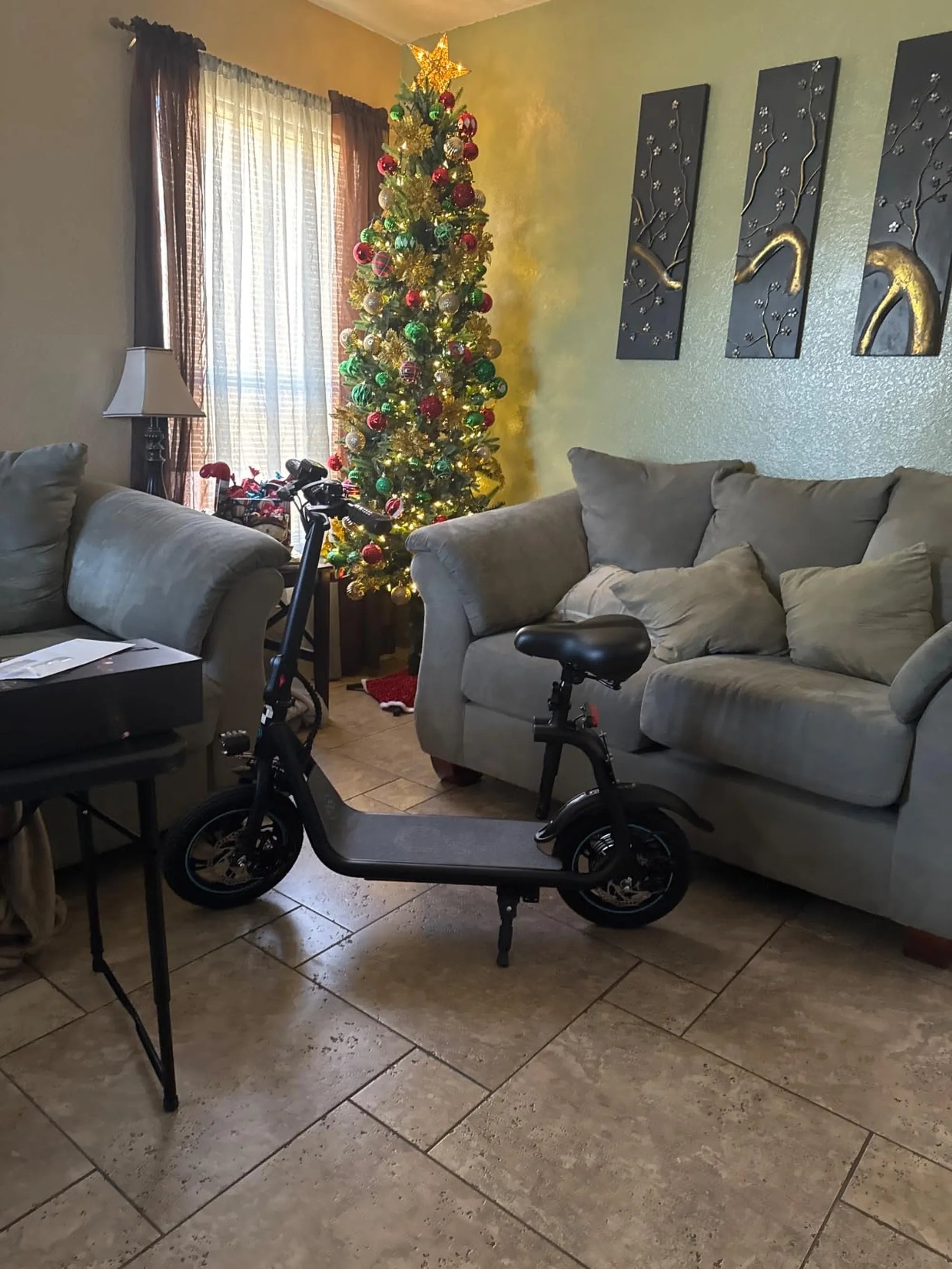
Introduction to Ultra-Lightweight Mobility Scooters
An ultra lightweight mobility scooter is a personal electric vehicle designed for maximum portability, typically weighing under 30 pounds. These compact devices empower individuals with mobility challenges to regain independence, navigate daily errands, and travel with unprecedented ease. Unlike bulky traditional scooters, the core purpose of an ultra-light model is to seamlessly integrate into an active lifestyle, from public transport to air travel.
This guide will provide a comprehensive, data-driven analysis of ultra lightweight mobility scooters. You will learn how to evaluate key specifications, understand the critical importance of certified safety features, and match a scooter to your specific needs. We will also examine how leading brands like Gyroor apply their engineering expertise in electric mobility to this specialized category, prioritizing reliability and user safety.
Key Benefits of Choosing an Ultra-Lightweight Model
The primary advantage of an ultra lightweight mobility scooter is unparalleled portability. Models under 30 lbs can be easily lifted into a car trunk, carried onto a bus, or stored in a closet. This transforms the scooter from a cumbersome device into a true companion for spontaneous outings and complex multi-modal journeys, removing the logistical barriers that heavier models impose.
Ease of storage is another significant benefit. For urban apartment dwellers or those with limited space at home, the compact folded dimensions of an ultra-light scooter are a game-changer. It can be tucked away without requiring a dedicated parking spot or garage space, making it a practical solution for compact living environments where every square foot counts.
Reduced physical strain during loading and unloading cannot be overstated. Standard mobility scooters often require ramps, assistance, or significant effort to transport. An ultra lightweight mobility scooter minimizes this burden, allowing the user or a caregiver to handle it confidently. This independence in management is a crucial factor for maintaining an active routine without reliance on others.
Finally, these scooters often feature quicker disassembly and a more agile form factor. This makes them ideal for navigating crowded spaces like supermarkets, airports, or indoor events where a larger base would be obstructive. The combination of light weight and nimble handling directly enhances usability in real-world scenarios.
Critical Features to Evaluate Before Purchase
Selecting the right ultra lightweight mobility scooter requires careful analysis of specifications beyond just weight. A data-driven approach ensures your investment meets daily demands. Key evaluation points must include verified weight capacity, real-world battery range, and the practical mechanics of the folding system.
Ignoring these specs can lead to premature wear, safety issues, or a device that fails to perform as needed. The following sections break down these critical features to create a practical checklist for any informed buyer considering an ultra lightweight mobility scooter.
Weight Capacity and Real-World Performance
The advertised weight limit is a maximum engineering threshold, not a recommendation for optimal performance. Exceeding it can stress the frame, motor, and battery, leading to reduced speed, quicker battery drain, and potential mechanical failure. Always choose a scooter with a capacity that exceeds your body weight by a comfortable margin.
Real-world performance is heavily influenced by total load. This includes your weight, plus any bags, groceries, or personal items carried. A scooter rated for 250 lbs carrying a 240-lb user with a 15-lb bag is already operating at its limit. For sustained performance and longevity, it's advisable to target a model with a capacity at least 20-30 lbs above your total typical load.
Terrain directly impacts performance. While ultra-light models excel on smooth, paved surfaces, inclines, grass, or gravel will demand more power. A scooter operating near its weight capacity will struggle significantly on even mild slopes, reducing speed and range. Consider your most common routes and choose a model with a motor powerful enough for your local terrain.
Battery Life and Charging Considerations
Battery range is typically the most variable specification. Manufacturers often cite a "maximum" range under ideal conditions: a light rider on flat, smooth pavement at low speed. Real-world range can be 30-50% less. For an ultra lightweight mobility scooter, expect a practical range between 6 and 12 miles per charge, depending on the battery capacity.
Battery technology and safety are non-negotiable. Lithium-ion batteries are standard for their high energy density and light weight. However, not all are equal. UL-certification (like those used in Gyroor scooters) means the battery pack has passed rigorous independent safety tests for electrical, mechanical, and environmental hazards, drastically reducing fire risk.
To maximize battery health, avoid fully draining the battery regularly. Partial charges are better for longevity than always charging from 0% to 100%. Store the scooter in a cool, dry place and use only the manufacturer-provided charger. A quality UL-certified battery should retain over 80% of its original capacity for 500+ charge cycles.
Design and Portability: Folding Mechanisms & Transport
The folding mechanism is the heart of portability. Designs vary from simple one-step folds to more complex multi-point systems. The best mechanisms are intuitive, require minimal force, and can be operated by the user while seated. Test the fold/unfold process for smoothness and stability—a wobbly latch can become a safety issue.
Folded dimensions determine where you can store or transport the scooter. Key measurements are length, width, and height. Compare these to your car's trunk space, closet shelf, or under-seat storage on public transport. Some ultra lightweight mobility scooters disassemble into two or more pieces, offering even more compact storage but requiring reassembly time.
For airline travel, regulations are strict. While an ultra-light scooter is a candidate for cabin storage, it is never guaranteed. You must contact the airline well in advance. Criteria include battery watt-hour (Wh) rating (often must be under 160Wh for cabin), folded size, and airline policy. Ground transport via buses and trains is generally more straightforward, but folded size remains critical.
How Gyroor's Engineering Sets a New Standard
Gyroor brings its extensive experience from the electric scooter and e-bike markets to the mobility sector, applying rigorous engineering standards to the ultra lightweight category. This translates into tangible benefits that address common pain points: reliability in diverse conditions, foundational safety, and dependable support.
The IPX5 water-resistant rating is a prime example. This certification means the scooter's electrical components can withstand low-pressure water jets from any direction. In practice, this protects against rain, puddles, and accidental spills, ensuring the ultra lightweight mobility scooter is a reliable daily tool, not a fair-weather device. This all-weather capability is often overlooked in basic models.
Battery safety is paramount, especially in a compact device used near the user. Every Gyroor model utilizes a UL-certified battery pack. This independent verification is a critical differentiator, providing assurance against overheating, short-circuiting, and other failure modes. In an ultra lightweight mobility scooter where the battery is a major component, this certification is not a luxury—it's a necessity for peace of mind.
Finally, Gyroor backs its products with a comprehensive 1-year warranty and US-based customer support. For a mobility aid, this support structure is invaluable. It means access to parts, troubleshooting, and service from a brand trusted by over 100,000 riders. This commitment to post-purchase support ensures your investment in freedom is protected for the long term.
Making the Right Choice: Comparison and Use-Case Scenarios
Choosing the best ultra lightweight mobility scooter involves matching technical specifications to your lifestyle. The ideal model balances weight, range, comfort, and durability for your specific patterns of use. The following scenarios illustrate how priorities shift based on user needs.
For the frequent traveler or commuter, the absolute lowest weight and most compact fold are paramount. Range can be secondary (6-8 miles may suffice) if charging opportunities exist at destinations. Airline compliance (battery Wh rating) is a critical check. A simple, robust folding mechanism that can withstand frequent handling is more valuable than extra features.
For the urban apartment dweller, folded dimensions and ease of the folding process are key. The scooter must fit in an elevator, a small apartment entryway, or a designated storage closet. A slightly higher weight might be acceptable if the fold is compact and stable. Range should accommodate several days of local errands without daily charging.
For the active user seeking longer daily range, battery capacity becomes the priority, even if it adds a few pounds. A more powerful motor to handle varied neighborhood terrain is also important. In this case, the ultra lightweight mobility scooter is a primary vehicle for community engagement, so comfort (seat type, handlebar adjustability) and a longer range (10+ miles) are worth the trade-off in minimal weight.
| Use Case | Priority Features | Potential Trade-offs |
|---|---|---|
| Frequent Traveler | Minimal weight (<25 lbs), Airline-compliant battery, Ultra-compact fold | Shorter range, Less powerful motor |
| Urban Apartment Dweller | Compact folded dimensions, Easy one-step fold, Durable construction | Moderate weight, Basic comfort features |
| Active Community User | Extended range (10+ mi), Comfortable seat, Stronger motor for slopes | Higher weight (28-32 lbs), Larger folded size |
Safety and Maintenance Best Practices
Safe operation of an ultra lightweight mobility scooter begins with pre-ride checks. Inspect tires for proper inflation and wear, test the brakes, ensure the folding mechanism is fully locked, and verify the battery charge. Always wear appropriate footwear and consider additional visibility lights if riding in low-light conditions.
Regular maintenance is simple but essential. Keep the scooter clean and dry, especially the charging port. Check and tighten any bolts or fasteners periodically, as vibrations from use can loosen them. Lubricate moving parts on the folding mechanism as recommended by the manufacturer to ensure smooth operation and prevent corrosion.
Battery care is the most important maintenance task. Store the scooter and battery in a dry environment with moderate temperatures. Avoid leaving it fully discharged for extended periods. If not using the scooter for several weeks, store it with a 50-70% charge. Using only the official, compatible charger prevents damage to the battery management system.
Finally, understand the scooter's limits. Avoid steep inclines beyond its rated gradeability. Be cautious on wet or uneven surfaces despite water-resistant ratings. Never modify the scooter's electrical system. Adhering to these practices maximizes the lifespan of your ultra lightweight mobility scooter and ensures safe, reliable operation for years.
Frequently Asked Questions (FAQ)
Q: What is the lightest mobility scooter available?
A: The lightest folding mobility scooters on the market can weigh as little as 21-25 pounds without the battery, and around 28-35 pounds with a standard lithium-ion battery. The exact weight depends on frame materials and battery size. True ultra lightweight mobility scooters prioritize this spec above all else.
Q: Can I take an ultra lightweight mobility scooter on an airplane?
A> It is possible, but not automatic. You must contact the airline for approval. Key factors are the battery's watt-hour (Wh) rating (often must be under 160Wh for cabin carry), the scooter's folded dimensions, and the airline's specific policy. It is typically carried as assistive equipment, but regulations vary.
Q: How does water resistance (like an IPX5 rating) protect my investment?
A> An IPX5 rating means the scooter is protected against water jets from any direction. This safeguards the motor, controller, and wiring from rain, splashes from puddles, and accidental spills. This protection prevents corrosion and electrical shorts, significantly enhancing the scooter's durability and reliability for everyday use in various weather conditions.
Q: What is the realistic range I can expect on a single charge?
A> Real-world range is typically 60-70% of the manufacturer's maximum claim. For an ultra lightweight mobility scooter, a realistic range is between 6 and 12 miles. This depends on user weight, terrain, speed, and temperature. For accurate planning, assume the lower end of the advertised range for your typical riding conditions.
Q: What does a comprehensive warranty typically cover?
A> A strong warranty, like Gyroor's 1-year warranty, should cover defects in materials and workmanship for the frame, motor, and controller. It should explicitly include the battery, often prorated after a certain period. Crucially, it should be backed by accessible customer support for troubleshooting and facilitating repairs, not just a return-to-factory process.
Conclusion: Embracing Freedom with Confidence
An ultra lightweight mobility scooter represents a powerful tool for reclaiming independence and spontaneity. The right model dissolves barriers related to transport and storage, integrating seamlessly into daily life. The journey to selecting one, however, must be guided by data and a focus on verified safety and reliable engineering.
Prioritizing certified components—especially UL-certified batteries—and a robust warranty from an established brand is not an extra cost; it's an investment in long-term safety and reliability. By matching key features like weight capacity, real-world range, and folding design to your personal use-case, you can find a scooter that truly enhances your mobility.
Brands like Gyroor demonstrate that expertise in personal electric transport translates directly into building better, safer ultra lightweight mobility scooters. Their commitment to water resistance, certified battery safety, and customer support provides a trustworthy foundation for this important purchase.
Ready to explore models that combine portability with proven engineering and safety? Browse the full Gyroor collection at gyroorboard.com to discover electric mobility solutions designed for real-world freedom and reliability.
Best Beginner Pro Scooter: Your Guide to a Safe, Powerful Start
Best Range Ebike: The 2024 Guide to Maximizing Your Electric Journey